Search results
93 results found.

On The Edge of the Edge – The U.S. – Mexico Border
93 results found.
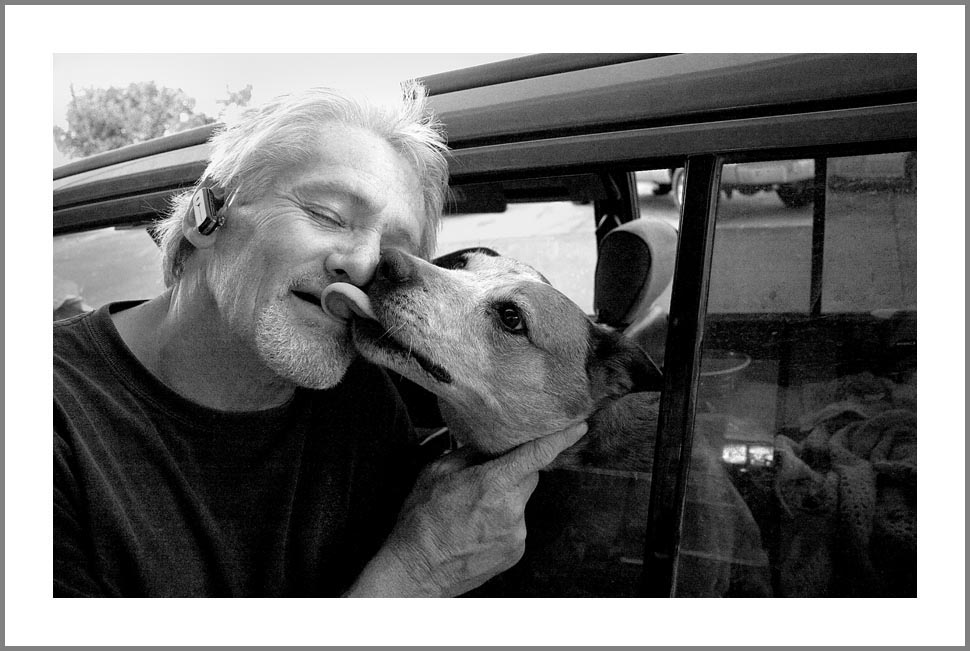
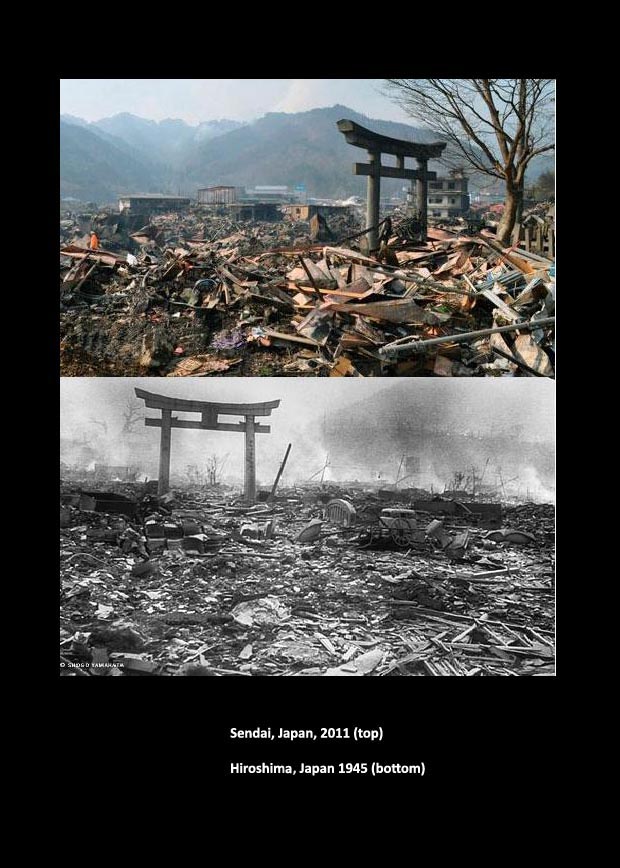
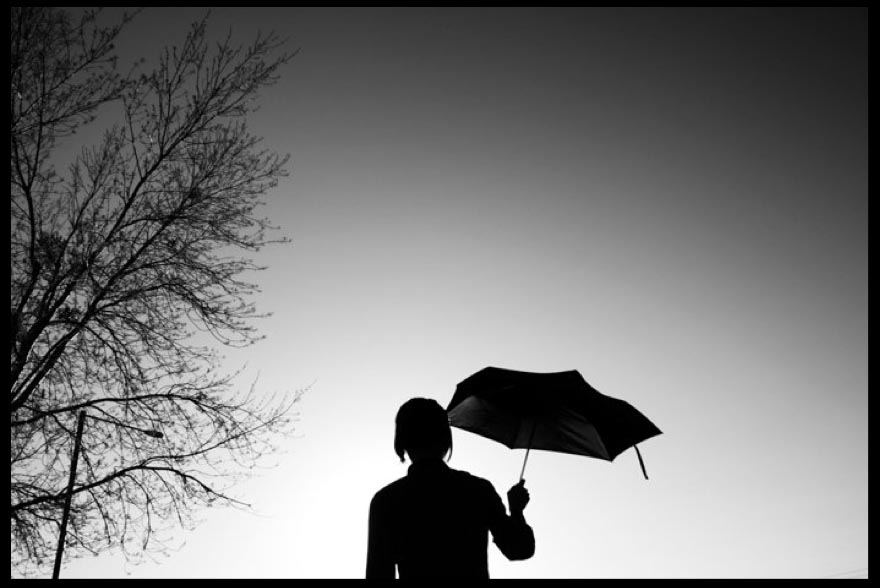
Japan –One takes one’s blows. Japan, oil-less for so long, bitten by the need for energy for so long, powered by spirit, hard work and, now, uranium, has received a blow. A blow is either fatal or forgettable.
We will see.
I receive a message from my old student, in Osaka. He is going to have an exhibition in September (and begin his studies in photography anew). Yeah! Forward. The horizon. Onward. His show will be work that he began in my documentary class: Smokers. Pure defiance! So cool.

What do you die from first: smoking, radiation or loss of defiance?
Go Keita! Go Japan! Live your future. It’s good .
Life goes on.
[flagallery gid=8 name=”Gallery”]
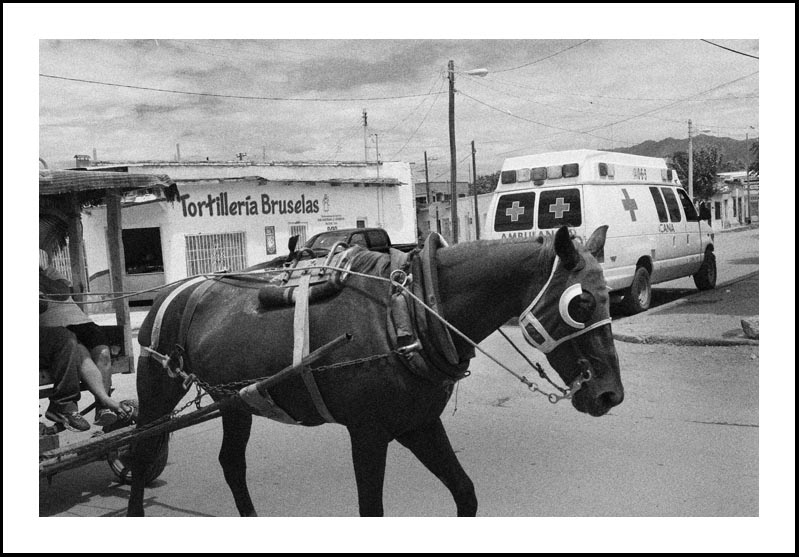
JUAREZ, Mexico – Juarez still stands. It is still Juarez. It is a city of my heart. I am not alone. It is insane what has happened in Juarez. There is no reference or metaphor: it just stinks. I walk the streets and there are “tastes,” of the old city. The “new city,” the one of Malls and chrome and green eco-glass, the nightclubs and shiny new cars has disappeared more than the old city has.
This might say something about what the condition of the city was before “The Troubles.”
[flagallery gid=6 name=”Gallery”]
Is there any Light at the end of Juárez’s tunnel?
There are a lot of things in Juárez these days: widows, widowers, killers, thugs, riddled bodies, drug addicts, every day normal people, kids going to school, people being married, bombs and death across the street (almost) from the old “City Market.” Everything.
There is very little Light.
The city seems to have turned from sunny and bright and colorful to Black and White, like an old photograph, one that wasn’t “fixed,” very well and is losing it’s contrast and fading away. The brightness is gone. Light is at a premium, right now, for sure, in Juárez.
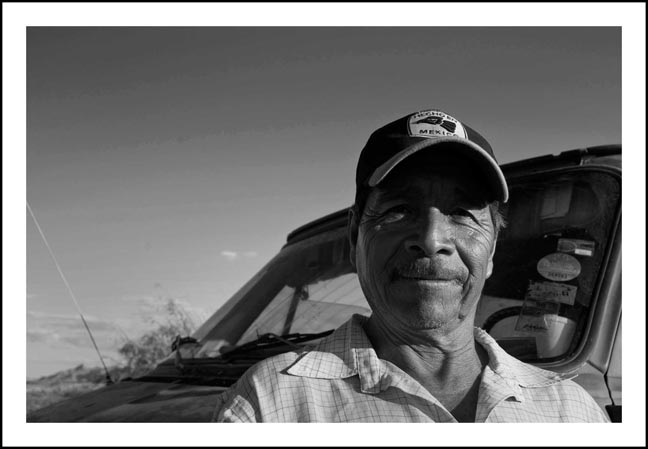
Dear Martin,
I said I would be back to Lomas and I haven’t been back in a year now. It’s crazy. I drive to work in Las Cruces three times a week and I look to the west and I can see you, I can see Lomas, right there, the flat top mesa poking out from behind Cristo Rey.
No, I haven’t been back. I am sorry. Life caught up with me and I had to do my labors, take care of biz, run around like a chicken without a head. And, in the meantime, I have fallen in love with a photo project, far away from here, up in Nuevo Mexico, and I have given it a lot of my attention.
All weak excuses.
I said I’d be back and continue the work we began and I haven’t.
You -and sus vecinos, sus compañeros in Lomas del Poleo- are never out of my thoughts.
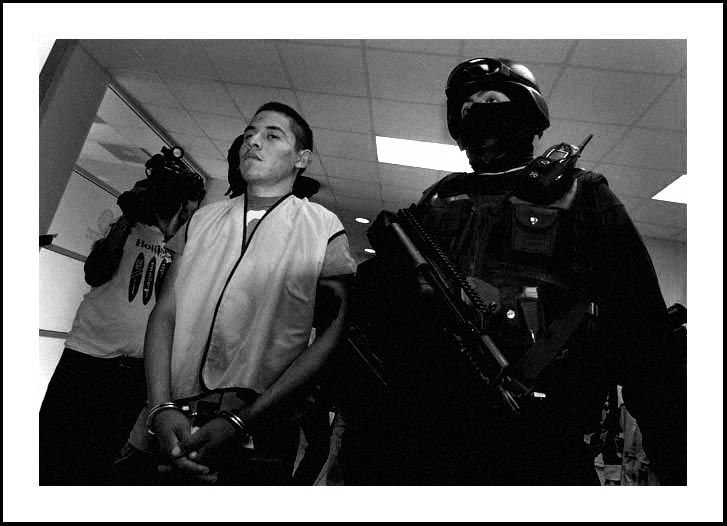
Iasi Emanuel Rodriquez Gamez , aka “El Enano (the dwarf),” 22, is led down a hallway, by a member of the Federal Police at the Ministry of Justice (Procuraduria de Justicia del Estado) in Cd. Juarez, Chihuahua, Mexico.
He is accused of being the leader of a kidnapping gang that kidnapped at least 19 people. Authorities alleged Rodriguez, 22, took orders from suspected kidnappers Ernesto “El Neto” Piñon de la Cruz and Jesus Eduardo “El
Lalo” Soto Rodriguez. This group is accused of committing 39 kidnappings since December 2008. The “El Lalo y de Neto,” gang has operated in Juarez over the past three years.
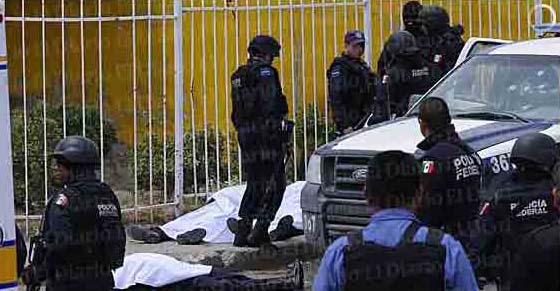
Today in Juarez. More of the same. If this were anywhere else we’d be sending aide and 120,000 troops. Instead we send DEA Agents (under the terms of the “Merida Initiative”) and clandestine military “trainers,” to train soldiers and police…to do what, exactly?
The last time I heard the term “trainers,” it was the early and mid sixties and the trainers were being sent to Viet Nam.
How’d that work out for us?
More importantly, how’d that work out for Viet Nam?
Watch out Mexico, there are many many dollars seeking calamities. Buy cheap, wait, sell strong.
Anyway, six Federales and one murderer (sicario), today, so far.
Same old…
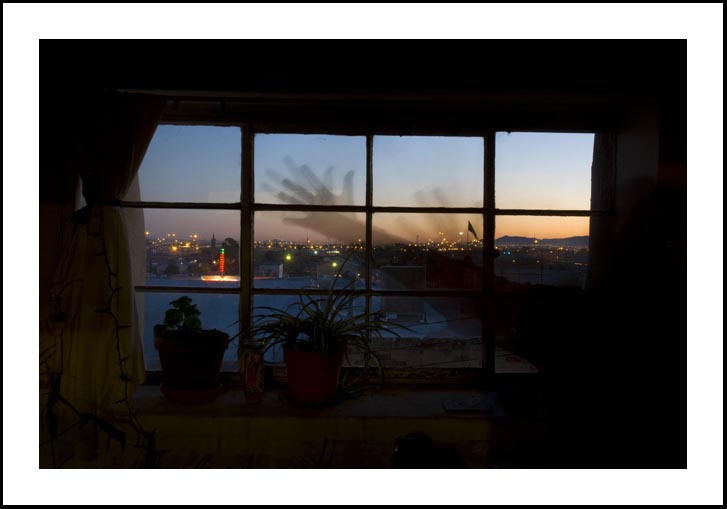
Three of the last four posts have involved this window. The view to the south. One block to Alameda Street, two more down Stevens and, voila, you’re at the bridge, then you’re in Juarez, then if you keep going you’re on the carretera to Ciudad Chihuahua, then Torreon, then Puebla and Mexico and then… well who knows where this ends?
This is the last one of this window for awhile. I’ve been clinging to it. Home. I’ve been shooting from this window and the roof right out my back door for decades. The view hasn’t changed that much.
I have.
A piece written to my photography students at the end of a fine semester at New Mexico State University. Forgive the “first person.” Originally posted on their class website at www.nmsu.documentaryshooters.com:

So it comes to this, the semester ends, we go our own way, we know more for having known each other.
We have had our ambitions and we have had our disappointments but, what we mostly have had, I think, is a journey of discovery.
At least, it’s has been that way for me.
I was given something wonderful today: a very warm blanket from a very good and thoughtful friend (she had heard that my Loft is frigid in the winters, a concrete old factory building of a palace, not designed to be lived in).
I stopped on the way home for some Christmas lights. First time in my life I have bought any. How can one not succumb to this Season when such kind gestures are extended?
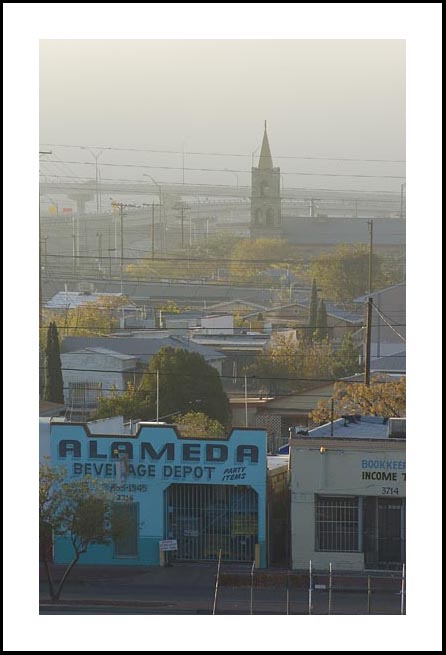
The view south, across Alameda street, across the Chamizal, three blocks beyond, across the bridge, into Juarez, into Chihuahua, into Mexico, beyond.
Usually the view is razor sharp. The last few days have fuzzed things up: snow, rain, and, now, this morning, fog.
Been looking south across this razor sharp landscape for a long time and, finally, a little fuzz feels right. There will be no clarity. Better people than I have written and viewed this border, came up with “clarifications,” and “explanations,” and “revelations,” and yet it goes on, untamed, inexplicable, roque.
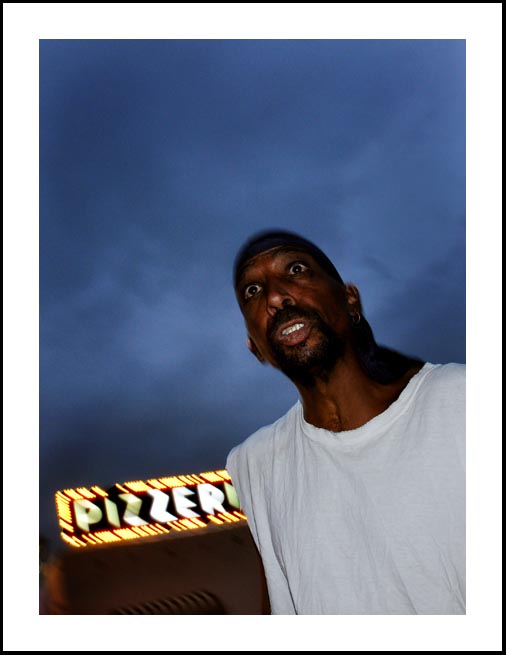
Been thinking about this guy and borders and the idea of the Big Picture versus the small picture ever since I made it (the photo) this summer, on an almost rainy night, in the northeast section of town, out by the military base.
John Hughes.
Angry. Joyous. Funny. Dangerous. Sweet. Full of love, hate and ambivalence. Boozed up, half mad, half brilliant.
“I am free,” he shouts at the night. “I am free and I am in hell.”
I ask him if he ever goes across the border?
“I am borderless,”he replies, “aren’t you?” He shakes his hand and does a twirl, almost stepping into busy Saturday night traffic.
He does a little dance and steps so close to the edge of the curb that I go to grab him but he spins back onto the sidewalk and does a very theatrical bow. He is a tight rope walker and it looks like he has done this toe dance forever.
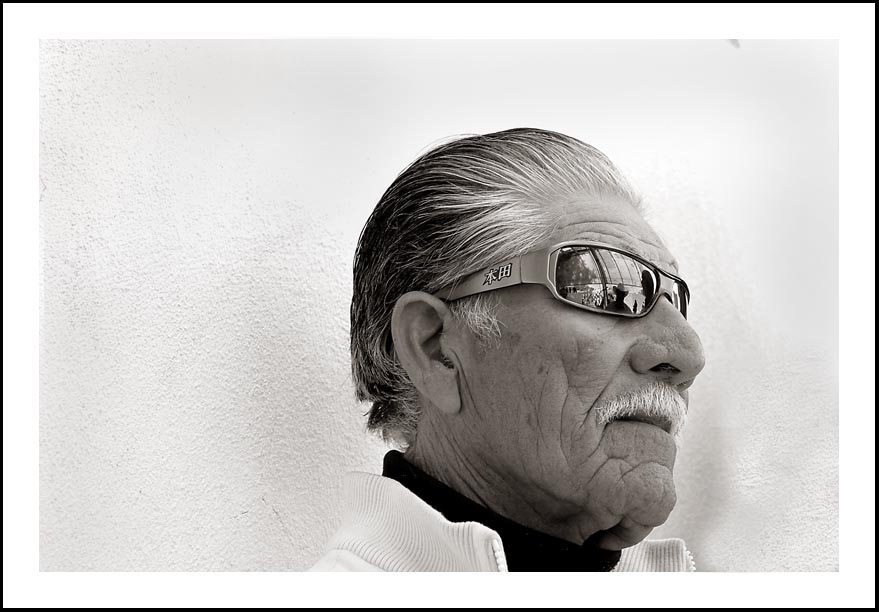
Juarez/13 June 2009
So what else is there in Juarez besides murder and catastrophe?
Right now, it doesn’t seem like anything.
But, then, there are those moments.
Tender Mercies.
I walk the streets. I walk the beaten down downtown. I bus through the factory landscape with For Lease signs more plentiful every time. I walk through the night clubs on Avenida Lincoln, defying myself, defying my fear.
But it’s there. The noise comes out of the clubs, loud, but not the joyous sound, more like the power-driven sound of defiance and booze.
People wait for the situation to end. It will. Someday.
Daily, the murder rate climbs, like an upward missile, slicing through the inherent good nature of this state and city, through this sunny northern Mexico metropolis that was turned into, first, a factory for first world consumption and, then, a monument to the future of world global wage reality. It was that, just a few years ago.
Seems like an entire epoch ago.
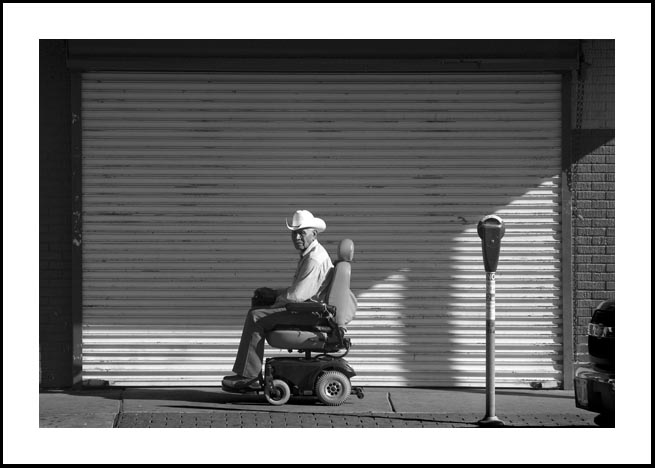
There are a lot of viejos in the Sagundo barrio. They get around.
There are a lot of kids too.
Like it always was but just fewer. It’s the heart of this isolated town.
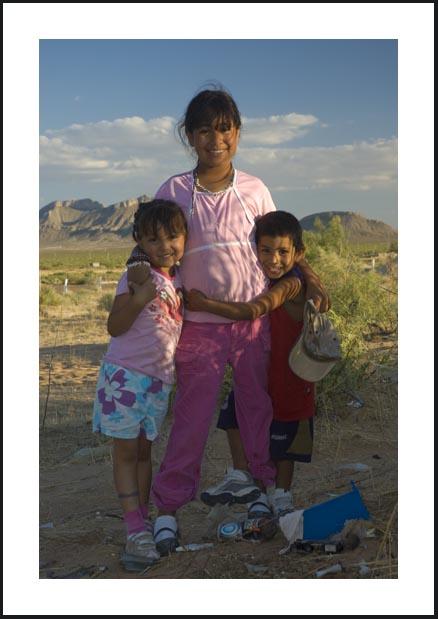
Lomas del Poleo/Juarez, Chihuahua/Mexico
June 20, 2009
Lomas del Poleo. The battle goes on. More people leave. People fight to stay. A mean strip of ten lane highway has snaked its way through Lomas del Poleo (see previous posts or Google it). The Developers got what they needed and left what they didn’t, more or less. They don’t even blink as they plow ahead. This highway is going to happen, no matter what. The development will follow, is gonna happen, no matter what. Nothing stops the grinder. The Grid viene: Diamond Shamrock, The Chicken Colonel, Pemex, trucks full of electronic crap, three bedrooms, two baths, probably a Wal Mart (whoa..let’s not get too crazy!), the same vexing and stinking Grid that we hate and that people fight to have (Iran, Cuba, Libya, you, too, can have it!). There goes the texture, and, in the case of Lomas del Poleo, the isolation and faux rural vibe, the farm at the edge of the city, the special dream that has been Lomas: get out of the city, raise some chickens, leave us alone. A quiet hope on the edge of always possible chaos that is Juarez.
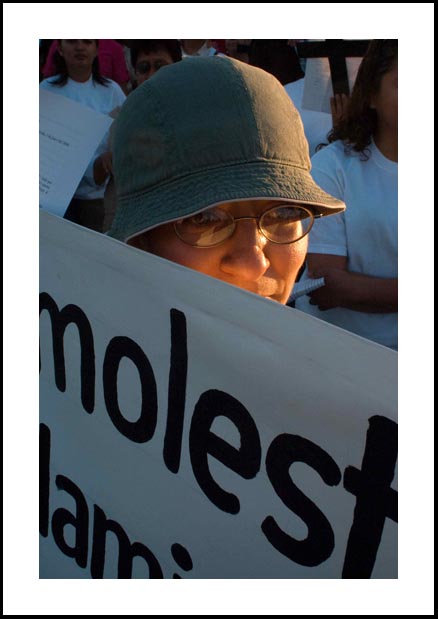
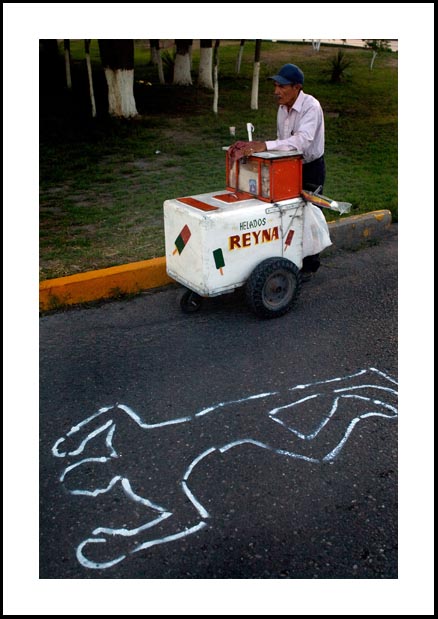
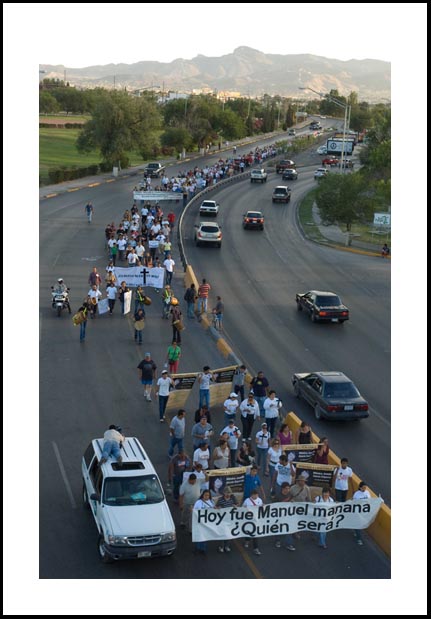
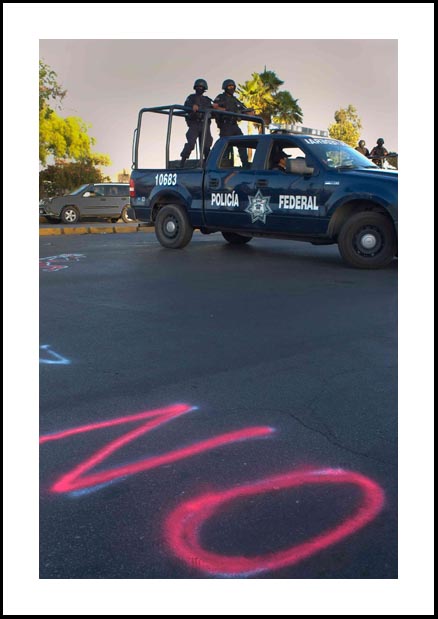
The Megabandera (giant flag) in the Chamizal Park in Juarez is usually the place for joy and pleasure, a meeting place for families, lovers and tourists.
That was before la catástrofe.
The catastrophe.
Before the Cartel War.
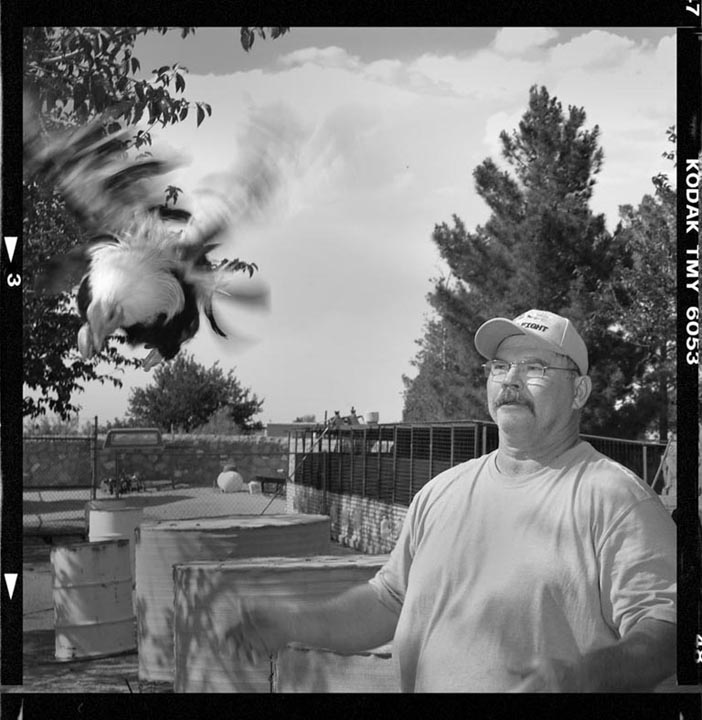
He has been raising these birds since he was a teenager. Fighters are they, he and his birds.
Now, cockfighting is illegal in New Mexico. Outlawed. “Civility,” has come to the funklands. God help us. Now come the thiefs with pens. They been fighting this since Billy the kid.
The rooster man keeps raising his birds. Doesn’t know what else to do.
He speaks of the “Old Man,” and “Ralph,” “Juan Pedro,”and the others. Each has a name. There are hundreds.
When he speaks, he says their names softly, a Lover’s murmur whispering his loves’ names.

Violence? What violence?
Wha-a-a-a…we need distractions?
Si. Si se hace (I am scolding myself right now!).
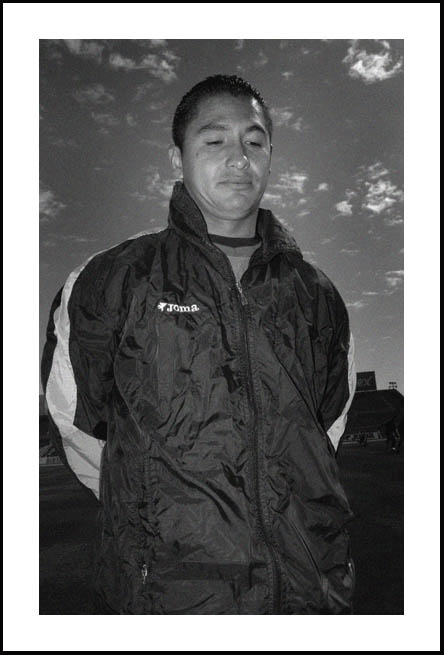
The Juarez Indios are a professional futbol team(soccer). They are in the middle of the Cartel Drug War. Much of the city of Juarez has rallied around the Indios, finding some “normalacy,” in the middle of the troubled Juarez violencia. Julio Daniel “Maleno” Frias is a star of the team, a “striker,” a troubled city’s hero. The city loves him, he’s a hero in the middle of bad news caused by rats. When “Maleno,” was younger he joined a gang. He got shot. He decided to change his life and he did. Maybe this is why the city fell in love with him, he’s a living metaphor for a city’s hopes. Maybe they just like the way he plays: smooth, quiet and intense.
Some players have left the team and others have sent their families back to the cities they came from (some in Mexico, one in Argentina), trying to avoid the touch of violence that has afflicted Juarez, Mexico’s third largest city.
The team is struggling to stay in the top tier of Mexico’s professional soccer league.
Attendance is sold out.
Futbol is trumping the war.
So far.
Life goes on.
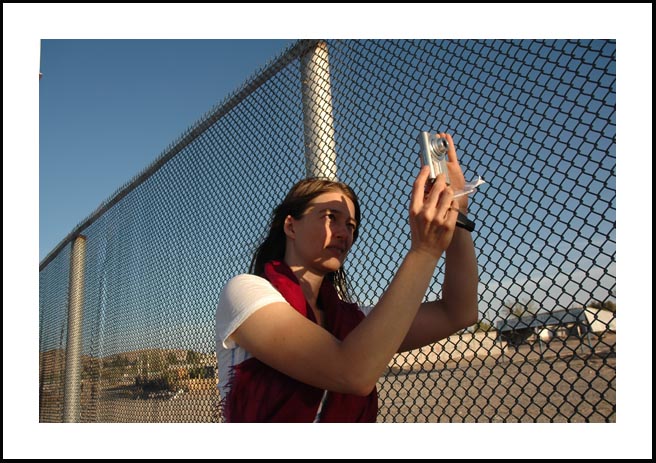
Yesterday I worked with an incredible journalist from Der Spiegel (the German equivalent of Time). She is German, from the north of Germany. Works out of the DC Bureau. Sharp and smart and witty and ironic and puro journalist. We did a story at Fort Bliss. She was bright and lively and brave and charming and funny and we’d had a successful day and did a great story together. She wanted to see “El Paso.”
So we head for the border (I’m a one trick pony. To me, the border is El Paso).
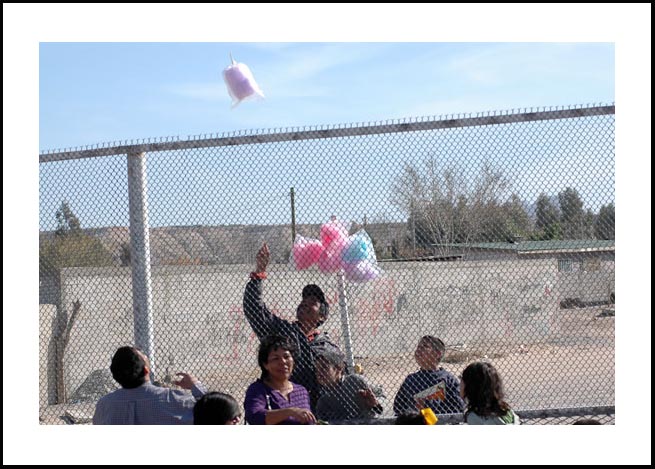
Life goes on.
Mexico is a great pueblo. So is El Paso and southern New Mexico.
One reads the newspapers and one thinks the world has gone insane. Particularly here, on the border.
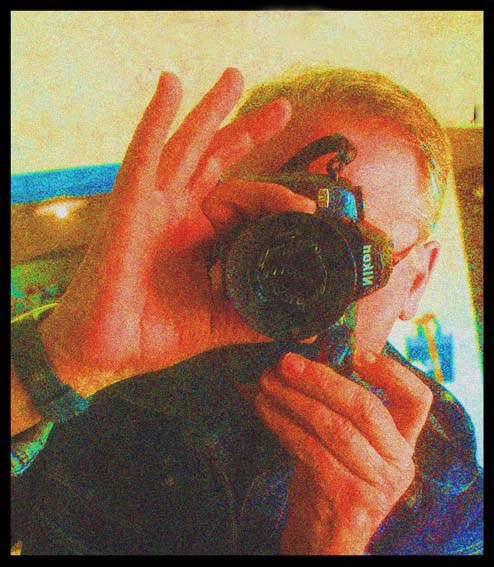
About Bruce Berman
Bruce Berman has been a professional photographer for over four decades. He works in what some have called, “The Concerned Photographer,” style of photography, but brings a poets vibe to his images. His initial documentary projects were in Chicago where he photographed Appalachian migrants to the big city, Black Panthers during the tumultuous 1960’s and the gritty street life of Chicago in its Rust Belt years.
His main work for the past forty years has concentrated on the United States/Mexico border, particularly the narrow stretch of land that encompasses El Paso, Texas and Juarez, Mexico. He also “plows” the southern New Mexico landscape, its people and the vast mysterious lands of West Texas.
After coming back from one of his earliest forays on Alameda Street on El Paso’ south side, in 1980, Berman wrote in his journal, “…I have seen a new world. It is both physical fact and mythical idea. It is a place with a line drawn through it and on each side of that line there are metaphoric mirrors that are reflecting back at each other, perhaps distorting each other, perhaps magnifying each other. It is the US/Mexican border. I will make my stand here. I will try to ‘give face,’ to this place so others can know it, perhaps, even, so those who live in it will know it more deeply.”
The aggregate result of that effort resides in two main bodies of work: The Border Project: 1985-2007, and Juárez: Cartel War Years (2007-2011) .
Additionally -concurrently- he is a chronicler of the disappearing lands beyond cities. He calls this series The Funklands, and notes, “Nothing is just laying around anymore. It’s scooped up, trucked away, rebuilt and becomes a mega buck treasure. My treasure has been the texture of the land and the stuff laying around that attests to who was on that land before… well.. before the homogenization of America.”
Berman lives and works deep in the borderlands of El Paso and Juárez, three blocks from the international bridge that connects Juarez and El Paso, surrounded by and isolated in the the vast lands of West Texas and northern Chihuahua. He refers to this as the “City-State of No Man’s Land.”
Berman continues to cover his “beat,” for major publications throughout the world and for his own book publishing enterprise. The Border Blog Press. His recent book, Walking Juárez is a compilation of photographs and stories covering the years 1975-2018.
Since 2008, Berman has added “Professor” to his name. He now teaches photojournalism at New Mexico State University (NMSU), 50 miles north of the El Paso/ Juárez ports of entry, in Las Cruces, NM. His teaching concentration is on Documentary Photojournalism and multimedia reporting. He still does occasional assignments and personal documentary work but spends equal time “Passing the torch,” he says.
Lately Berman has concentrated on doing books: Walking Juárez, 2017, Cutting the wire, 2019 and his newest, BACKLAND, 2022.
Many of his students don’t know about the border too much, but for the most part are of it. The G Generation, he says, “… are the hope of photojournalism, and maybe the world.”
He thinks working with them is his best project ever.
About the Website
The Border Blog covers the news, opinions and culture of the 2000 mile border of Mexico and the United States, concentrating on the epicenter of El Paso and Juarez. The Border Blog is not meant to be a news source as much as it is meant to be a news “feel.”
Another “border,” of interest to Berman is less obvious, the border between The Grid (his descriptor) and and those on the margins, unwilling or unable to keep up with “development,” and “progress.”
The site is a collaborative project. Besides Bruce Berman, who acts as editor and photographer and sometimes writer, the staff includes writer and painter, Juarez native and resident, Nathan Zarate, and, Beatriz Andino Zamora, a poet and writer from Zacatecas, Mexico. Zarate and Zamora post occasional articles concerning the politics and history of Mexico, in general and La Frontera, in particular. The site is always appreciative of the creative inspiration, brilliant chutzpah and deep goodwill -as well as extensive Web skills- of Manuel Rivera, a fronterizo “to the bone.”
Contributions to the site are welcome. Diverse viewpoints will be cherished. The site’s point of view and orientation will be no mystery to its readers, however, there will always be plenty of room and appreciation for other voices as long as they are informed, well articulated and sincere and fueled by passion tempered by reason.
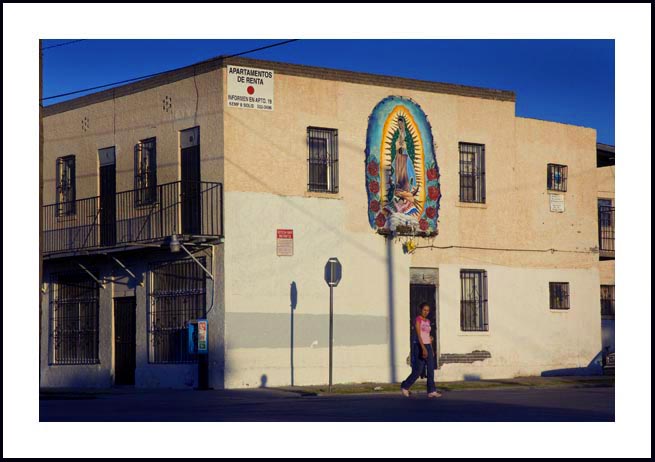
El barrio is a community. Bruised. Not what it was. Sitting on the border and prime target of speculators, er…ah…read that as “Developers,” but still standing. Go back and ask anyone in any American city, for the past 60 years if “Urban Renewal,” was about construction or destruction. If you actually need to, go ahead.
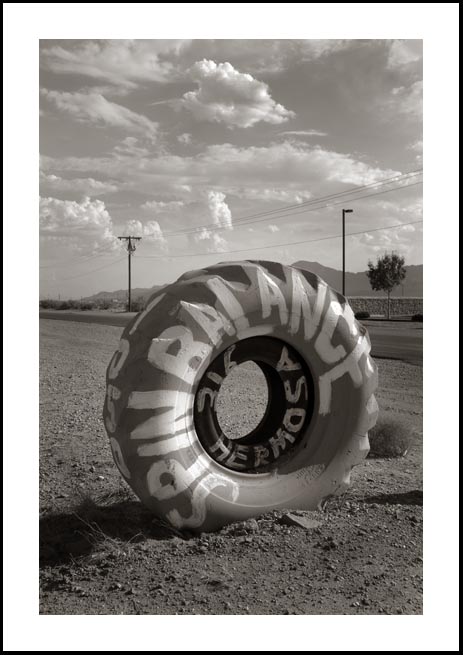
Space. Glorious space. Wonk yer brain but we all need more space. Maybe because we wonk our brains so much. This is from the funklands of southern New Mexico. It looks right across at the slim tip of West Texas that is El Paso. Juarez, Chihuahua is the horizon.
Space. This is the Tender Mercy of No Man’s Land.
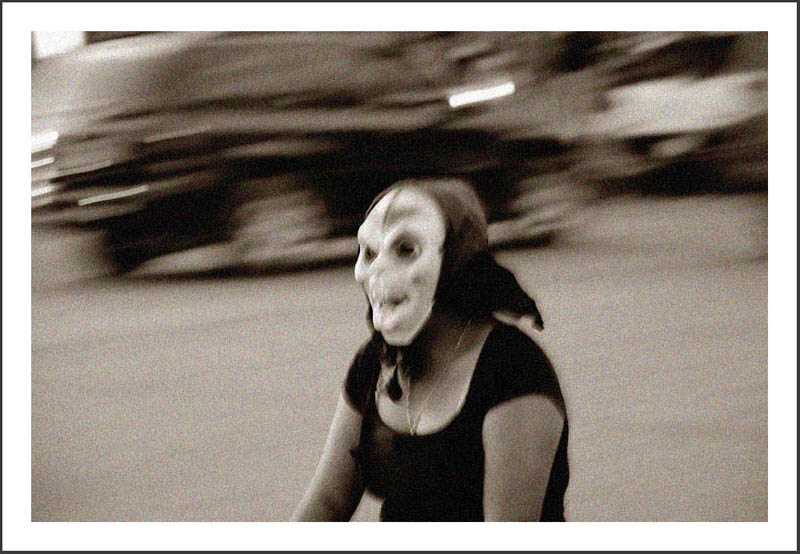
First block of America (FBA).
El Paso Street. La Frontera. I’d call it Texas but it ain’t. Everyone knows it if they’re from here. Texans hold their arms out, full length. Americans think it’s part of Mexico…or hell. New Mexicans…furgidaboutit! It’s all they have to really feel superior to.
El Paso, the nation-state of nowhere.
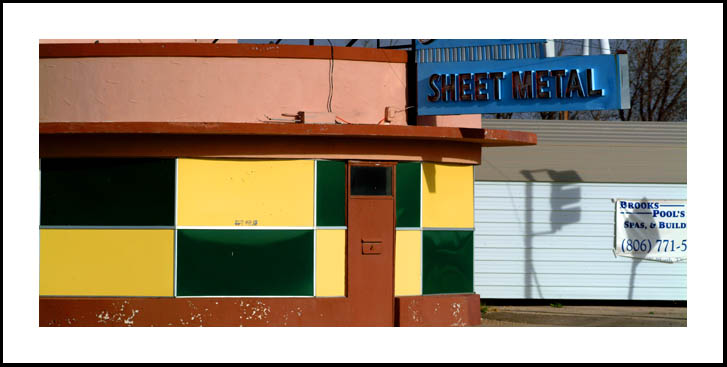
Been working on the Land Before the Interstate (LBI) series for a long time. Every chance I get to go there I grab. Time machine. No Interstate. No giant concrete suppository running right through your heart. The kinds of places Duvall would crash down in in Tender Mercies.
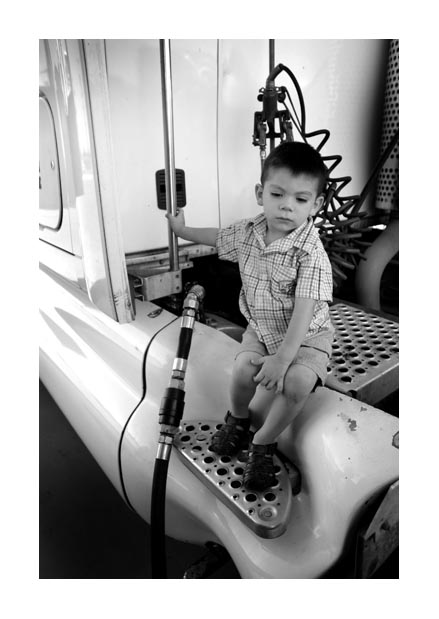
Ciudad Acuna, Mexico
A Mexican border city has begun fining U.S. drivers who cross the border to fill extra drums, tanks or barrels with government-subsidized Mexican fuel.
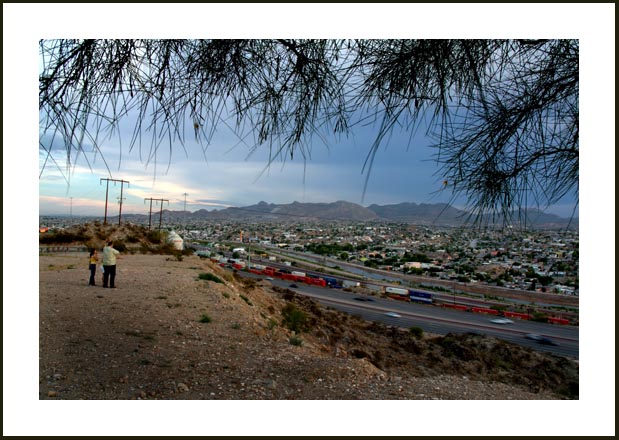
El Paso: foreground.
Juarez: Background.
Words written in blood on old documents and rattling around in people’s heads who don’t live there.
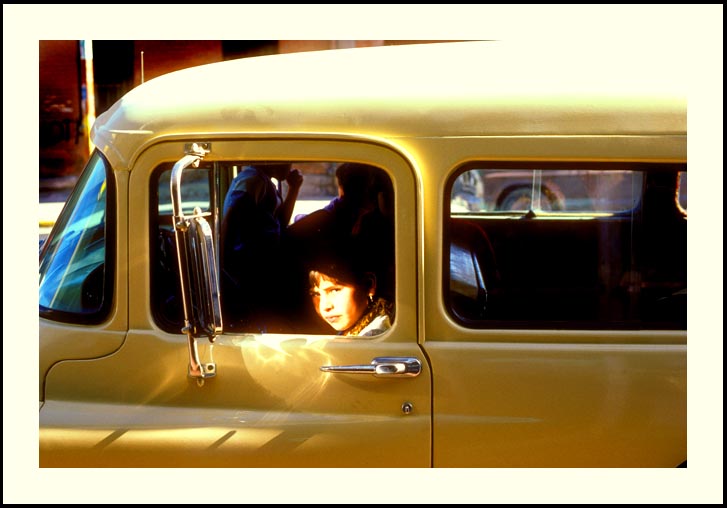
PHOTO OF THE WEEK: May 23-30, 2008
Notes from my Journal, September 1986
I am an illegal alien in a strange land.
That’s a phrase they use a lot in the newspaper here: Illegal Alien.
