Search results
153 results found.

On The Edge of the Edge – The U.S. – Mexico Border
153 results found.
PHOTO OF THE WEEK: April 11-18, 2008
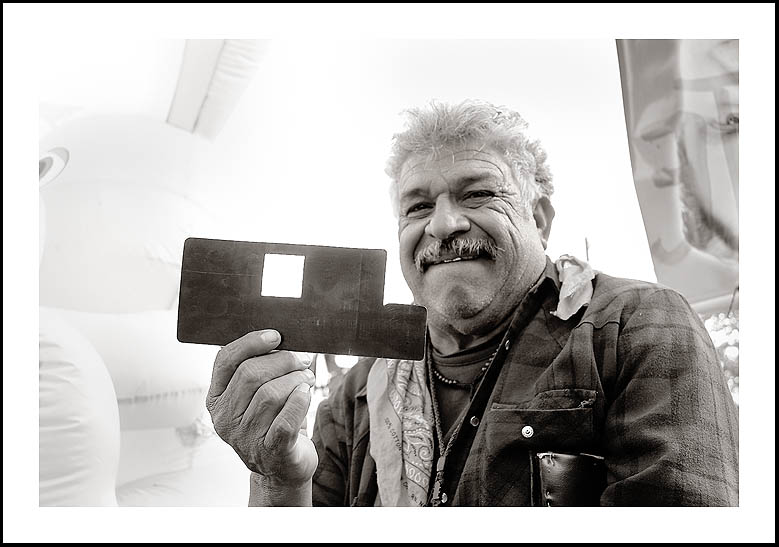
Polaroid Corporation announced in early February that they no longer will make Polaroid instant cameras or film.
This announcement, world wide was greeted, mostly, by a collective shrug of the shoulders and a “ho-hum.”
For Juarez street photographers the news was immediately alarming, living-threatening, and was a call to action for a new learning curve to transition to digital photography.
PHOTO OF THE WEEK: April 4-11, 2008
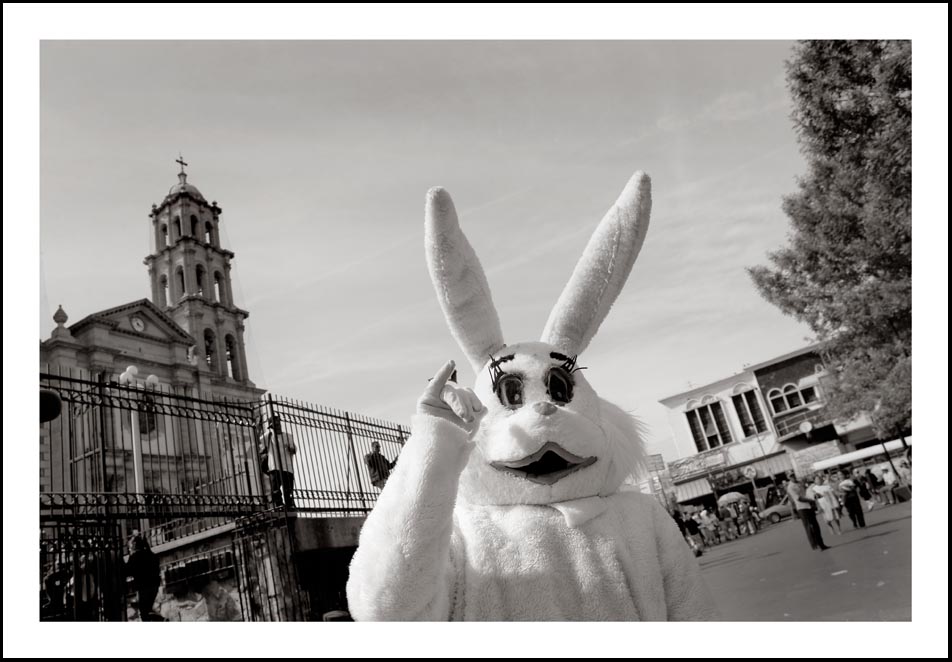
Juarez is in flames right now.
Drug war is raging. I’m calling it a drug war. It’s a lot of things war. Always is.
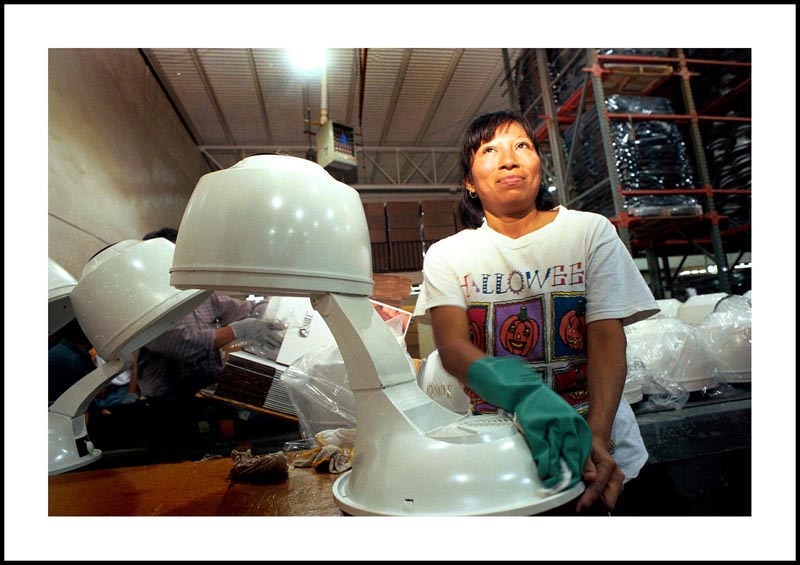
Banks lend money to Americans to buy homes they can’t afford. The homeowners live in a dream bubble, the American Dream bubble. The lenders sell their paper and ride off into their millionaire dream. Everyone’s dreaming.
In Juarez they’re dreaming too.

Leap into the river with two names
Leap Day in the Leap Year 2008. Let’s all take a leap. Come on…why not!
This boy and his friends use the river with two names as a playground, a swimming pool, a back yard.
Why not.
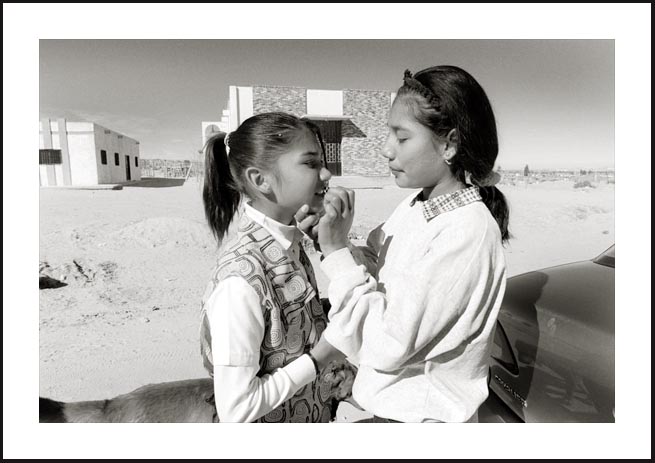
It’s the little moments that work for me.
It’s an exquisite privilege to disappear. It doesn’t always happen. It’s really great -for the photographer- when it does. Photography out in the open, in other people’s realities, nobody even noticing.
Prounouns
Working on my series, “Lives Separated.”
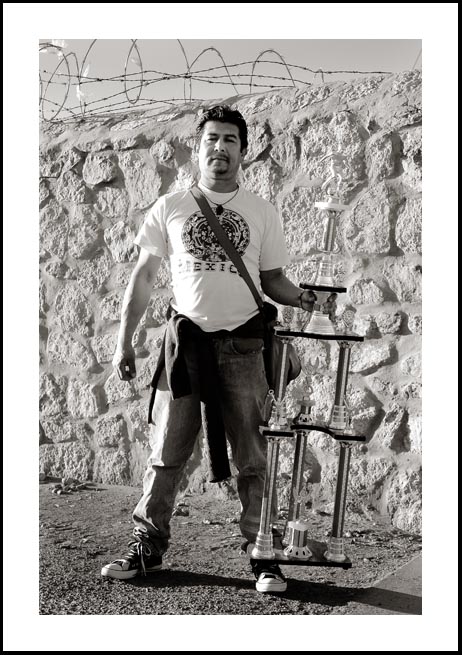
Jesus come over the bridge from Juarez with this giant trophy.
“It’s the trophy we got for playing Juarez, we played Juarez football (soccer),” he says not saying who “we,” or,”they,” are.

Maria Monteros Rodriquez had been looking for her daughter Carmen for days. She had disappeared without a trace from their central Juarez home.
Notes from my Journal
Immigration. Swim, drive, and crawl. People do what they need to do and making them do any of the aforementioned things, put lives at risk.
The river is more than a highway of migration, though.
In the summers, when it’s hot, the river is a giant pool.
People play.
The river is polluted with chemicals from upstream pesticides from the farms, loaded with garbage and debris, has really tricky currents that, every summer, takes lives.
But people live in that river. That river is life for many in Juarez.
If the Jefes could see past their own little tight plans, this would be THE development that would be right for El Paso/Juarez: Play in the river.
Too simple, though, huh?
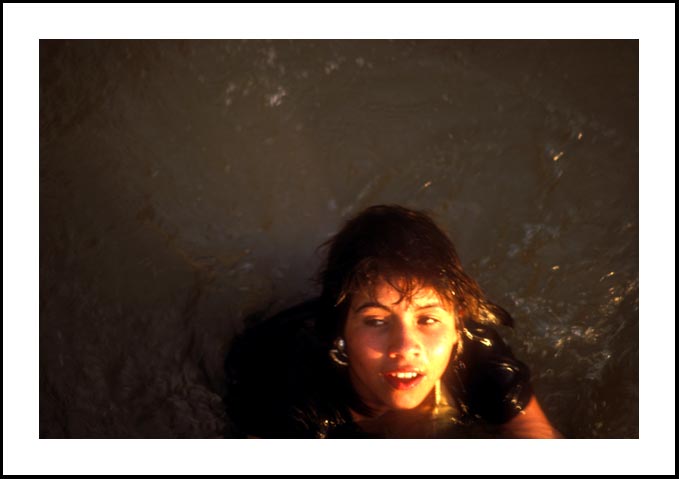
This girl is clinging to the El Paso side bank. ILLEGAL! La Migra comes and chases her away and she joyously splashes back to the Juarez side where her friends and family jeer and gesture at the Border patrolman. Everyone is having a good time. The Migra laughs, waves, knows he’s part of this great immigration farce, climbs back into his Suburban and drives off and the girl –and her friends- come back, swim to the U.S. side, pose for pictures, live the evening.
The sun sets. I go home. I played in the river, too.
One of the border Patrol’s favorite PR releases is about how their agents saved people from drowning. There’s one or two or three every year.
They never mention people caught playing. Before the fence.
PHOTO OF THE WEEK: Jan. 25-Feb. 1, 2008

You can leave the border but the border does not leave you. My head snapped when I saw Roberta Flores, up in New Mexico.
“Terrific hair,” I yelled at her. “Gelled,” I asked?
“No,” she said with a sly and proud smile, “Glued,” she shouted back, with a grin that sort of said, “gotcha!”
“Did you get that done around here? ” I asked.
“They don’t know how to do that around here,” she spat, friendly but gently ridiculing.
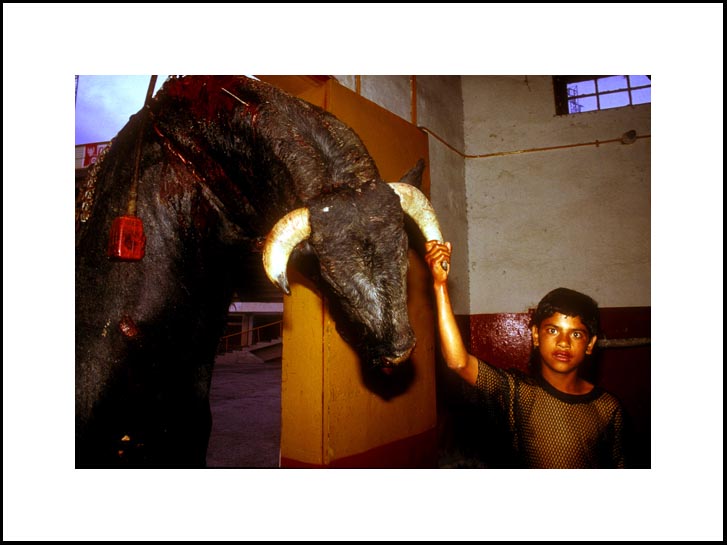
I’m a little weary of border politics, for now.
I return to the streets and hope the disorder of life gives me shape and form.
Politics and News seem to work on a linear arc.
Facts. Information. Plenty to tell. Endless detail and weight and nuance. Narrative is interesting but one of the things I’ve always liked about doing photography is the occasional punch in the gut you get from just being somewhere (often where you shouldn’t be).
Photography can work as a fact machine, but when it doesn’t and it’s just image, impression, reaction, light, when there is more than the sum of the parts, I like it the most.
PHOTO OF THE WEEK: Jan 4-11, 2008
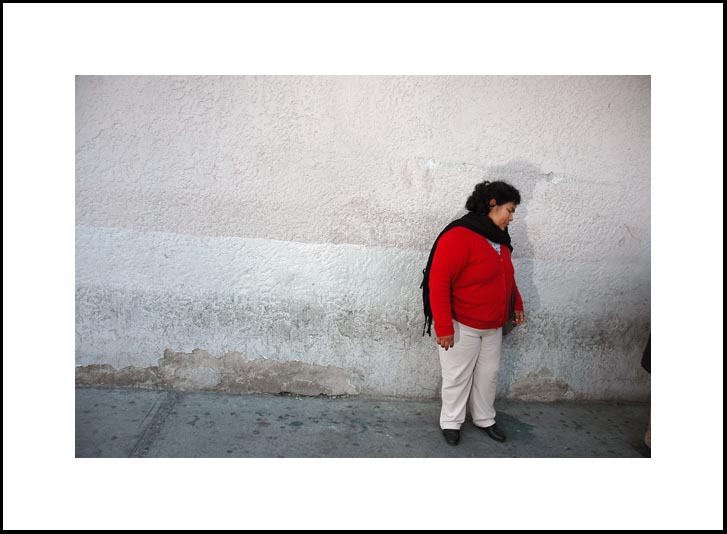
Editor’s Note: To understand this week’s photo it might be useful to read the background of the story of the struggle of the people of Lomas del Poleo. Link number one is two years old, but is, I think, a fair history of this situation. The situation has gotten worse. Link number two is a video discussing the bi-national plight of people who are in the path of “development,” and are facing forced displacement. Another option is to google Lomas del Poleo.
Beware: Knowledge is trouble.
http://www.annunciationhouse.org/news_winter2005_dispute_en.html
http://www.youtube.com/watch?v=tEqkytwHQ5s
____________________________________________________________________________
This was a sad day, one that has been coming for a long time. The confrontation at Granjas Lomas del Poleo, in Juarez is coming to the tipping point.
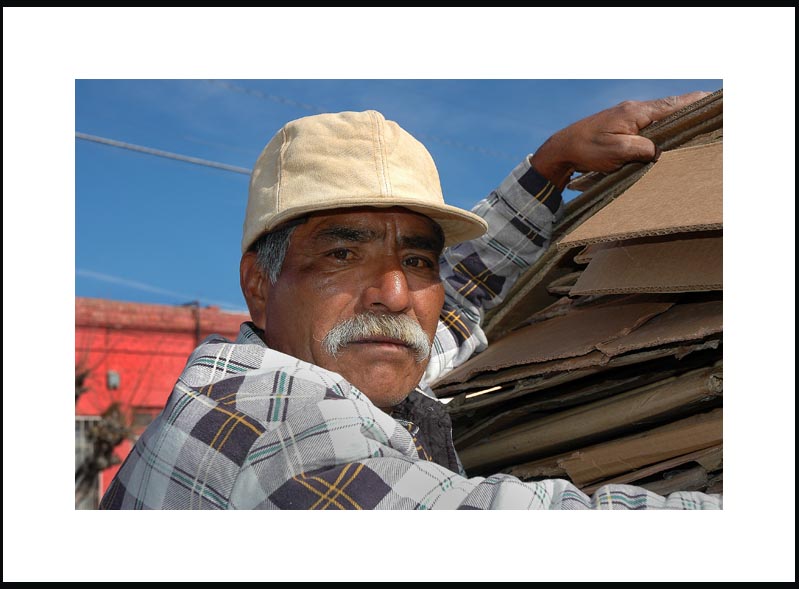
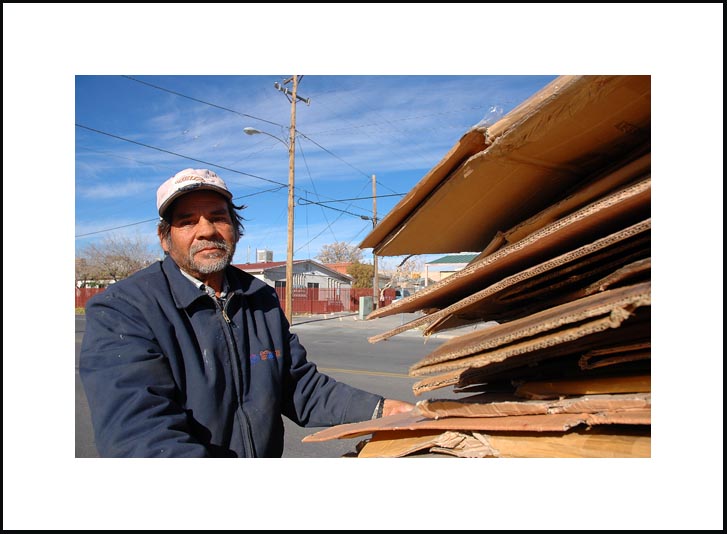
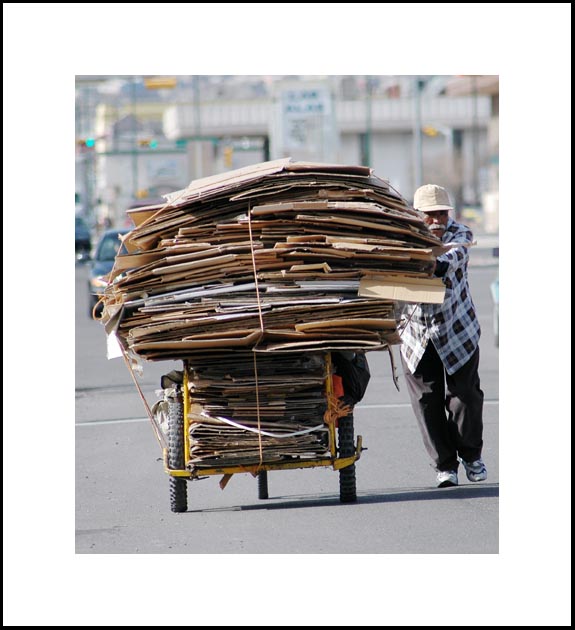
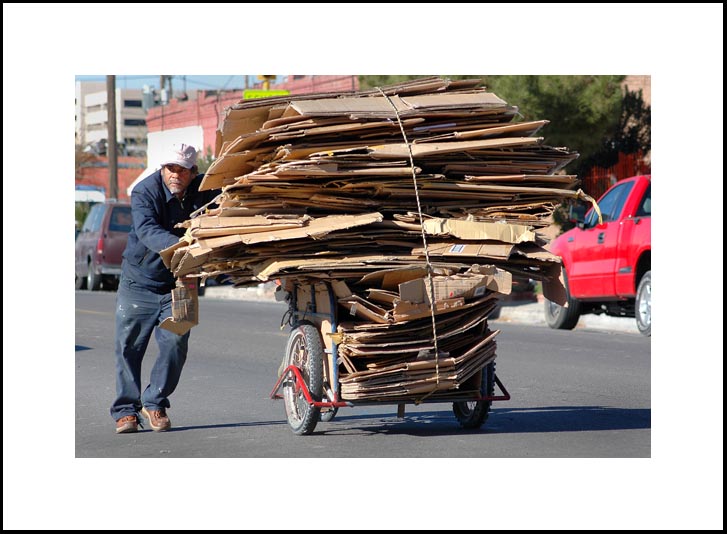
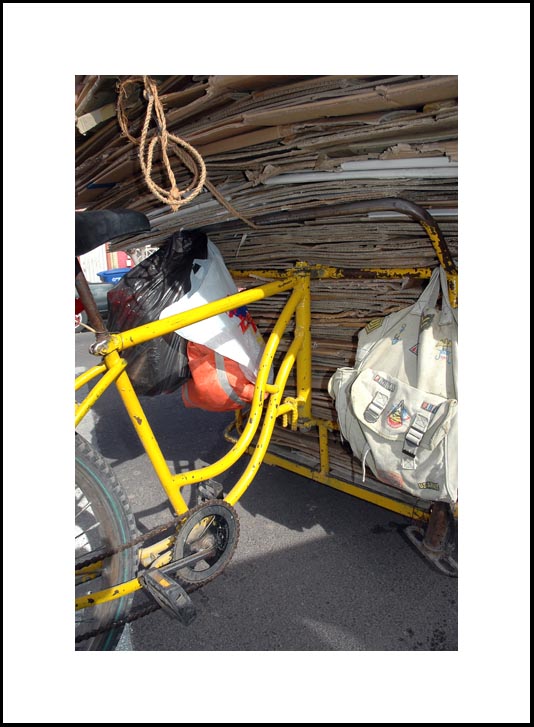
Los Cartoneros
In a desert, on the border, nothing much gets wasted.
Cartoneros, paper haulers, collect discarded and surplus paper and card board from border streets and from border merchants and haul it on their customized ” tricicletas.” They then sell it to scrap buyers, located about a mile from the border shopping district in the Segundo barrio.
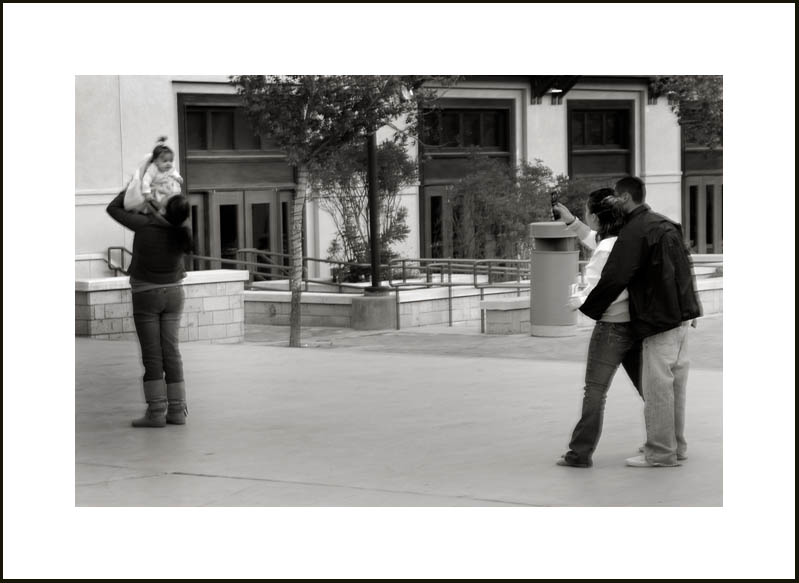
El Paso’s El Centro, the downtown, is packed with people at Christmastime. Unlike most cities of the southwest and of the rest of the United States, El Paso’s downtown is alive and bustling at all times of year, but especially during this season.
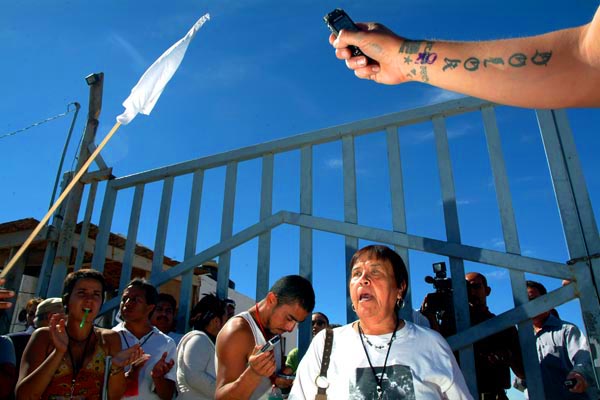
October 20, 2007
A group of 150 people from different grass roots and human rights organizations from Juarez, El Paso, Guanajuato and Mexico City, arrived in a school bus and private cars at noon, October 20, to discuss globalization, displacement, human rights violations and femecide.
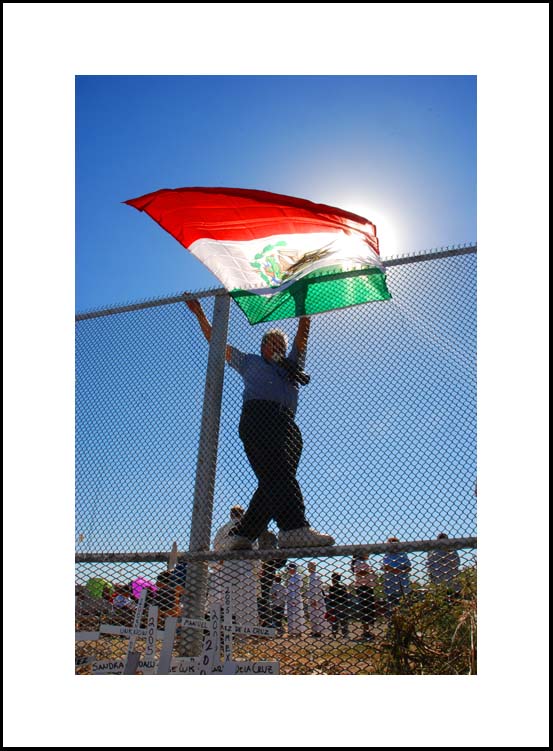
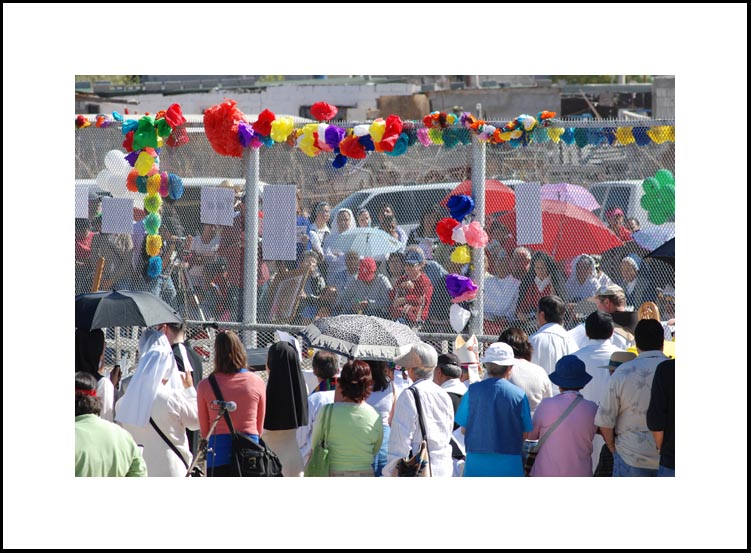
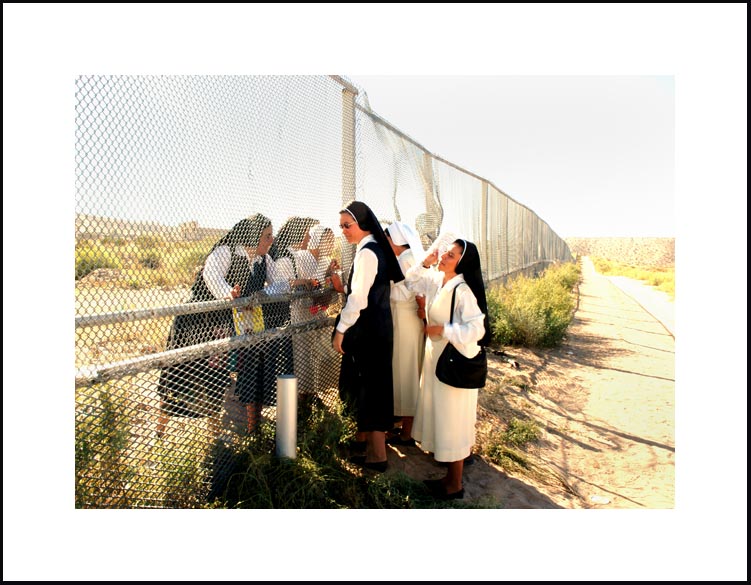
Today the Bishops of El Paso, Las Cruces, NM and Juarez, Chihuahua, Mexico met at the border fence at Sunland Park, NM and Anapra, Chihuahua to protest current immigration policies and to promote understanding for immigrants from Mexico, as well as world wide.
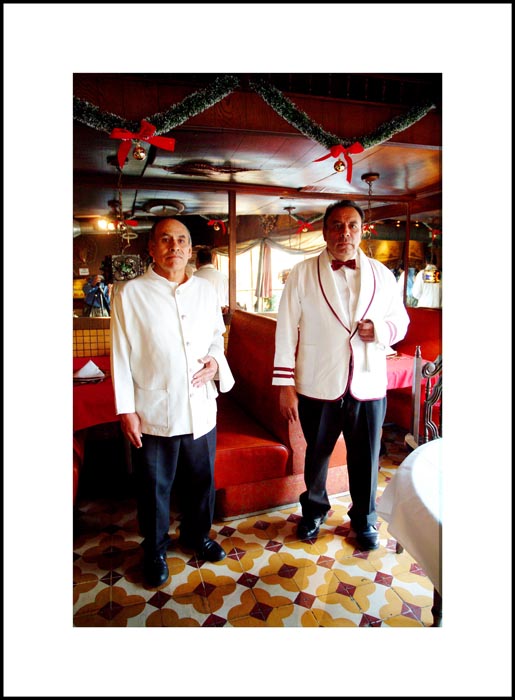
 Ramon Covarrubias Quintana(l) and Francisco Barraza(r) are waiters at the old Martino’s Restaurant on Juarez Avenue in Juarez, Chihuahua, Mexico. The restaurant is located two blocks from the Paso del Norte Bridge that connects downtown Juarez with downtown El Paso.
Martino’s – and these waiters- harken back to the “Golden Era,” of Juarez,
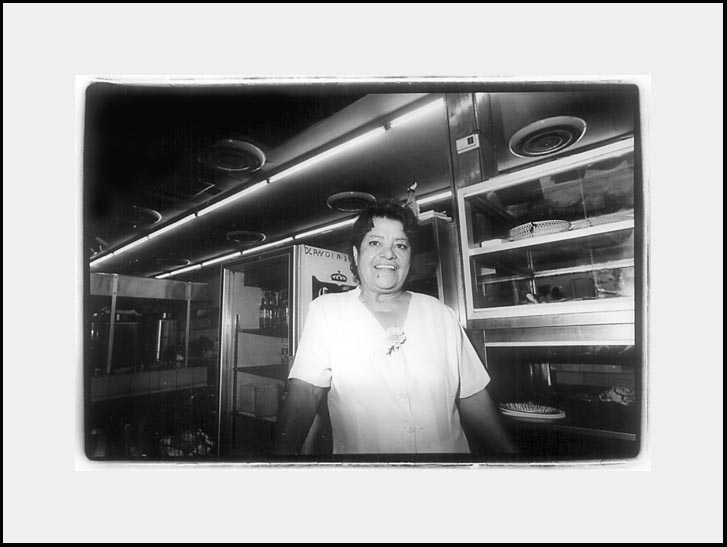
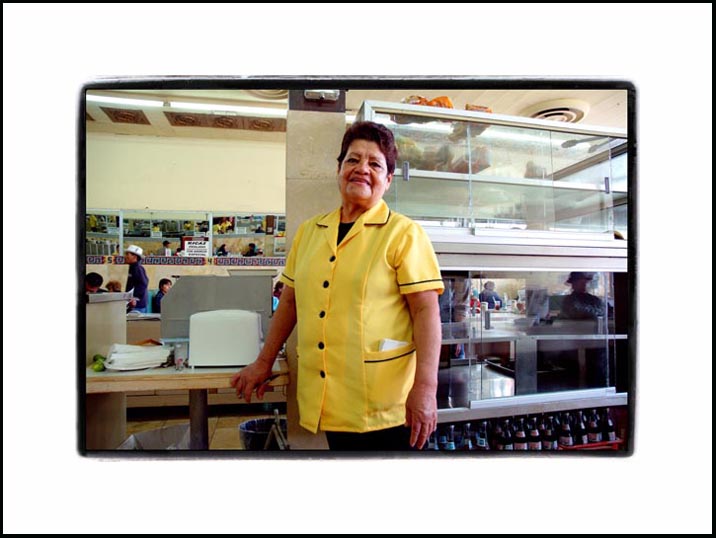
Amada has worked the counter at the Central Cafe in downtown Juarez, since the early 1980’s. The cafe is next door to the cathedral and is a major crossroads for buses -and most of all, people on foot- heading to all directions in the city. The cafe is a crossroads, the city’s heart, and a center of transition and change.
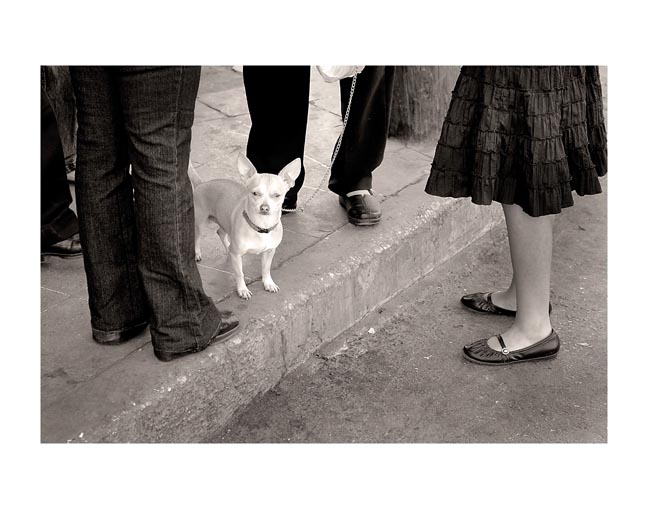
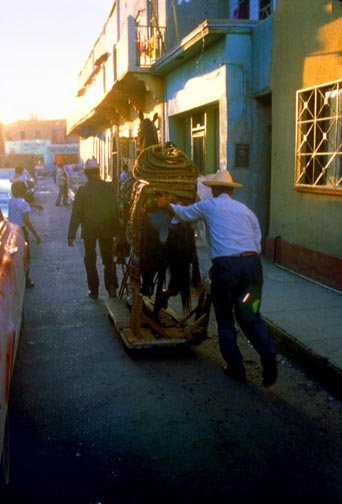

Not much to say.
Sometimes there are just sweet moments.
Juarez. El Centro. Photography (They: pointing and shooting and remembering it. Me: the same…exactly). Hot. Summer. Lots of humanity but no frenzy. Nothing false. The show is real. No goal posts, no hot dogs (well, kind of). No band (well…a little). Skin. Innocence. Joy. A little Love.
Juarez.

Hugo(last name not given) shows his high school “colors,” on Father Rahm Street on El Paso’s south side. It is twilight and he has been working on a mural at the Sagrado Corazon church’s gym.
Summer on the FBA. Hot. 100.
This is Father Rahm Street, which is, actually, Fifth Street. Around the corner is El Paso Street which is the first block of America (or the last, depending on where you’re coming from).
Around the corner, to the south is where the Paso del Norte bridge from Juarez empties out. There are stories on this street, big life-journeys begin here. This is where dreams begin. Some people have called this the “Ellis Island of South America.” Maybe that’s the draw for me (my Father was born on that other immigration island in 1907). That was another dream. These are places where dreams can start.
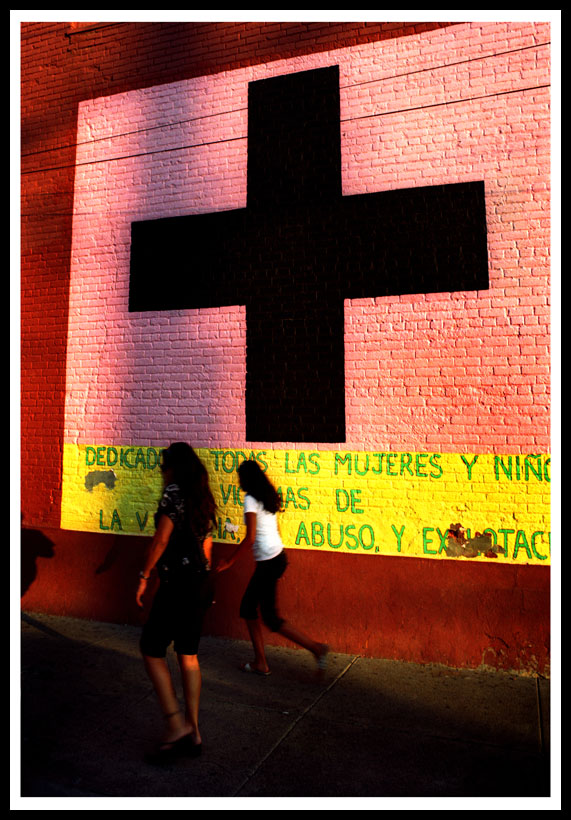
The Black Cross mural for the violence against women in Juarez appeared a couple of years ago. Then they put a bus stop in front of it (dumb). Then they took the bus stop out but painted over the text (also dumb) about the violence to the women.
Whatever. Life passes and passes strongly. This is where I have spent a lot of my life.
Nothing stops the energy on the FBA. People are looking for their place, their direction, their dream. I’m looking. I’m there almost every afternoon.
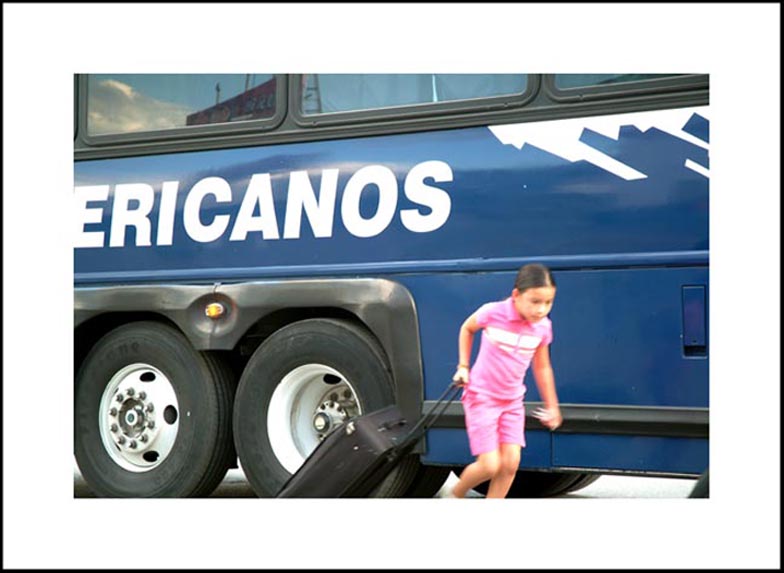
Sixth and El Paso Street is the first street in “America,” after crossing over the Paso del Norte Bridge from Juarez, Chihuahua, Mexico into El Paso, Texas. This is the crossroads.
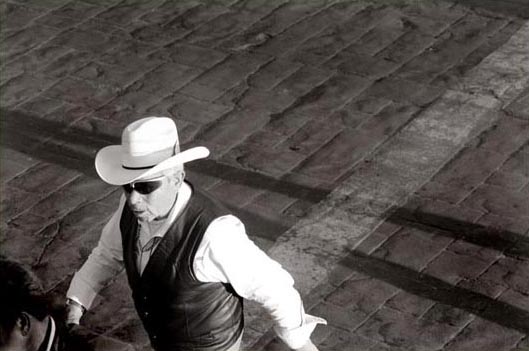
Cool Norteno, Plaza de Juarez – Juarez, Mexico / June 2007
The Plaza de Juarez in Juarez, Mexico is an ancient crossroads. The plaza stands in front of the Mision de Guadalupe, a church established in 1659 along the El Camino Real. The plaza today is still a crossroads and a transportation hub and, on Sundays, is vibrant, eclectic and fully the heart of the old Centro Juarez. Much of the area north of the Centro, the Plaza, and the Mision, the area between the old Juarez commercial district stretching north all the way to the U.S. border and El Paso, is currently, being demolished. The demolition is clearing the way for a commercial development that is projected to link up with El Paso’s south side and Downtown, also scheduled for demolition, just across the river to the north.
The transportation hub that has made the Plaza de Juarez the intense and interesting center of Juarez that it is, is scheduled to be relocated away from its current location.
The “Cool Norteno,” garbed in standard norteno clothes, and others, may or may not survive the “development.”
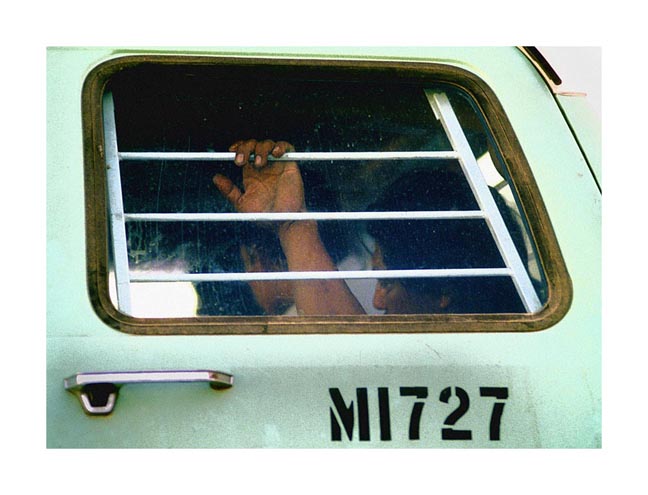
Most “illegal immigrants,†incarcerated in El Paso are laborers who’s immigration activity is, merely, a two way commute, finding them returning to Juarez, Mexico, at the end of a work day. Being incarcerated by the Border Patrol inconveniences the worker but does not deter the activity. Wages in Juarez average around $5 to 6 day. In El Paso a Day Laborer makes an average of $ 25 to 40 a day. The difference in wages makes the bureaucratic discussion of deterrence moot.
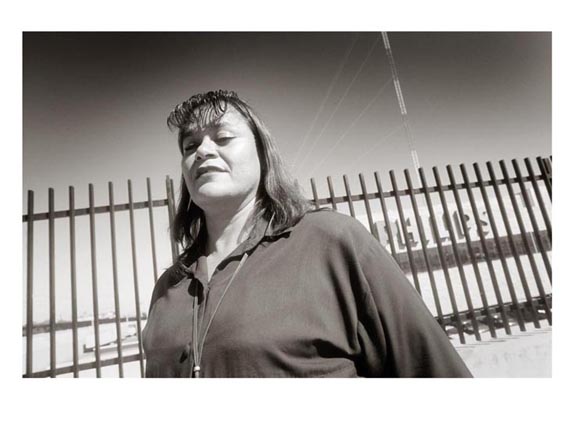
Carmen Sotelo Rodriquez is the face of the Post Global economy. She worked at a Phillips plant in Juarez,Chihuahua, Mexico. The plant had moved from three shifts to one shift and by 2002 the company had migrated most of its assembly operations to China. She is shown standing in front of the plant on the city’s south east side. This photo was shot on assignment for Bloomberg magazine.
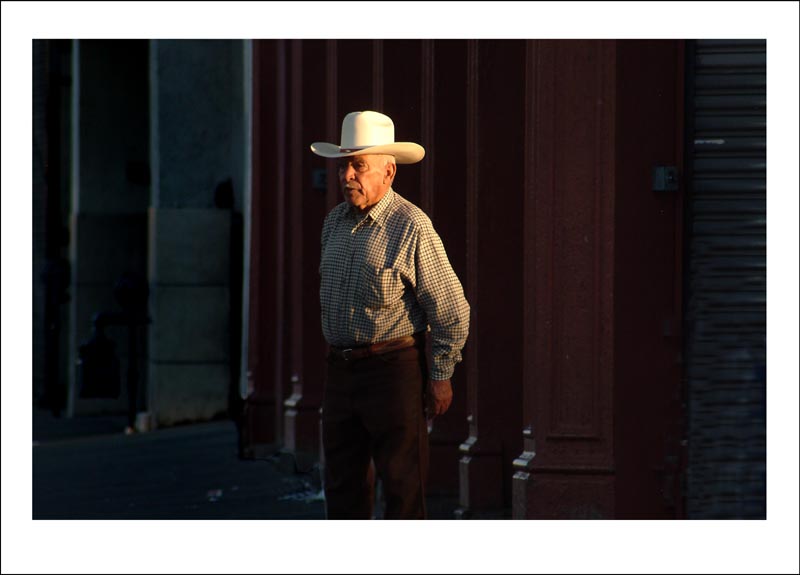
A man stands in the last light of the day at the corner of 6th and El Paso Street in El Paso, Texas. This is the first street of the United States after entering the U.S. from Mexico from the Paso Del Norte International Bridge. The bridge links Ciudad Juarez with El Paso and 6th and El Paso streets could be considered the crossroads of the northern part of the Western Hemisphere from south to north.
A lot of old folks (viejos) grew up in this barrio and are still there. They are the dignity of the barrio.
Imagine how people felt when a picture of an old viejo was used, by City planners, to show what was wrong with El Paso?
Los Viejos are what’s right with El Segundo.
Whacked