Search results
153 results found.

On The Edge of the Edge – The U.S. – Mexico Border
153 results found.
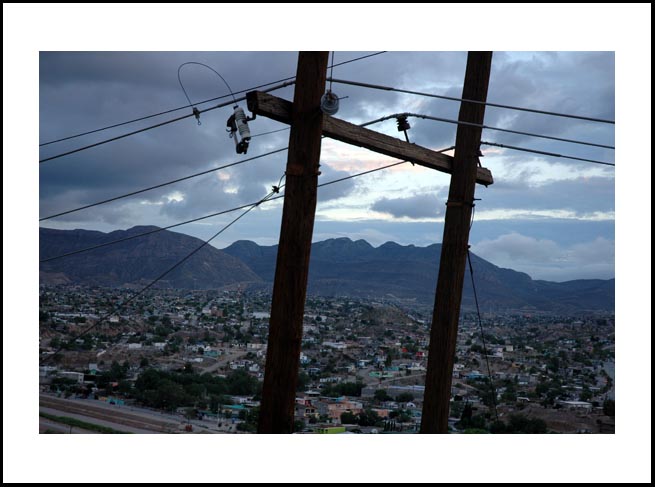
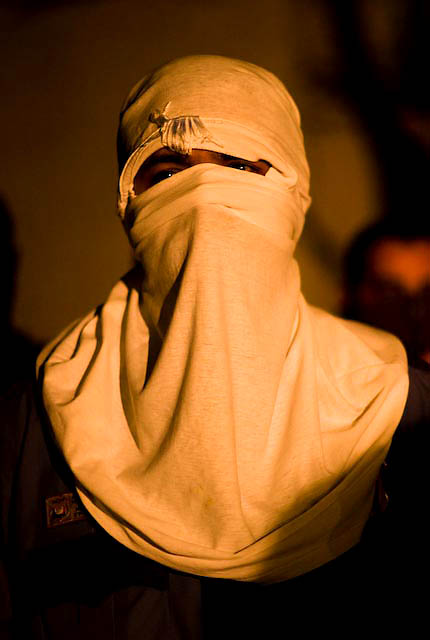
Photo and story by Julian Cardona
March 31, 2008
About 50 Juárez police officers protested what they consider the arbitrary arrests of fellow officers by the recently arrived Mexican army in ciudad Juarez. They were protesting the alleged framing of numerous officers on charges of drug possession.
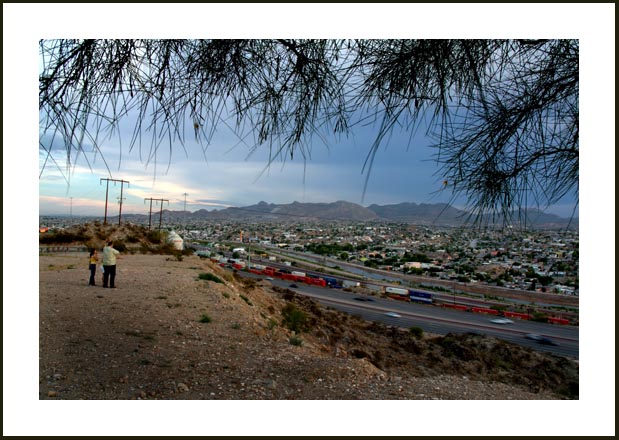
El Paso: foreground.
Juarez: Background.
Words written in blood on old documents and rattling around in people’s heads who don’t live there.
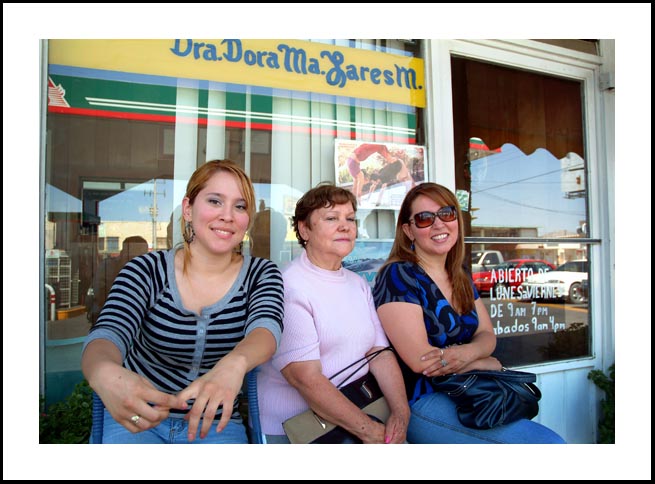
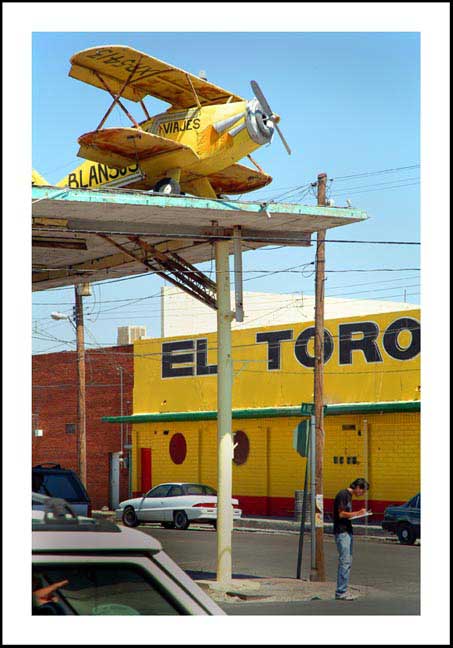
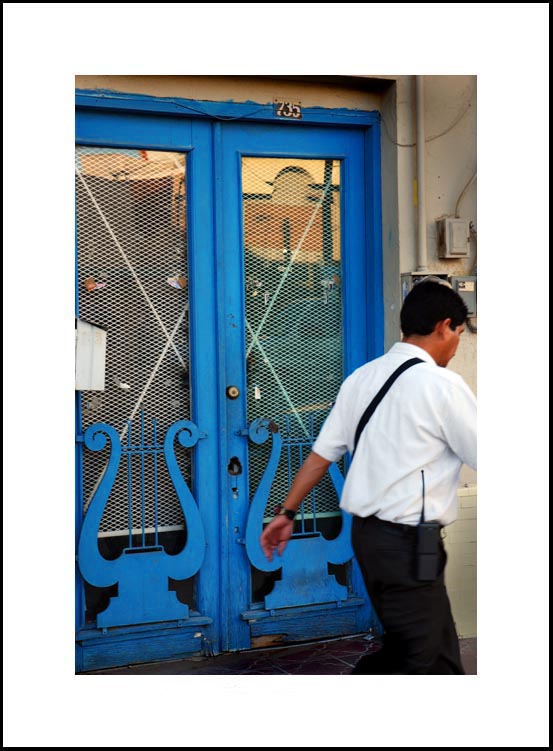
There hasn’t been so much gunfire in Juarez since 1910. Since Jan.1, there have been over 230 drug war-related murders.
There was a time in Juarez -bourgeoise and ugly Americano, for sure, but what the hell- that it was just the old fashioned sins: getting drunk, dancing, straggling around with whatever “date,” that’d allow you to put your hands on her ( or whatever) and, if you survived, you crawled home over the bridge to El Paso and woke up late the next day.
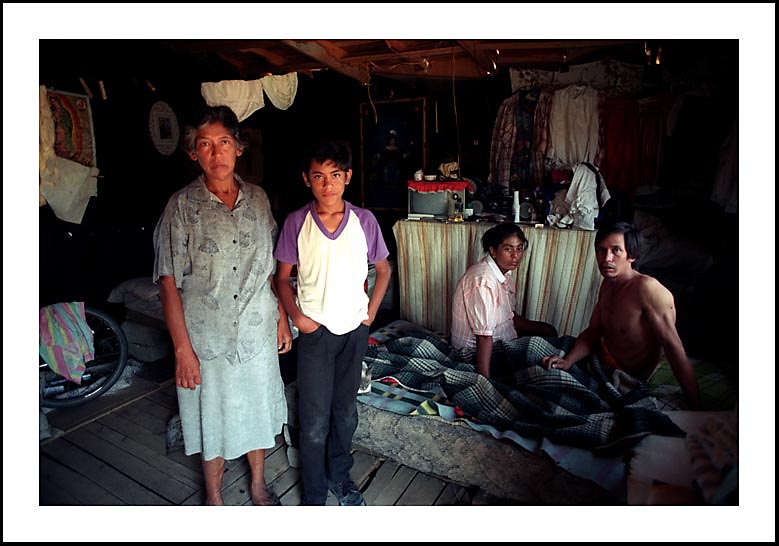
PHOTO OF THE WEEK: April 25-May2, 2008
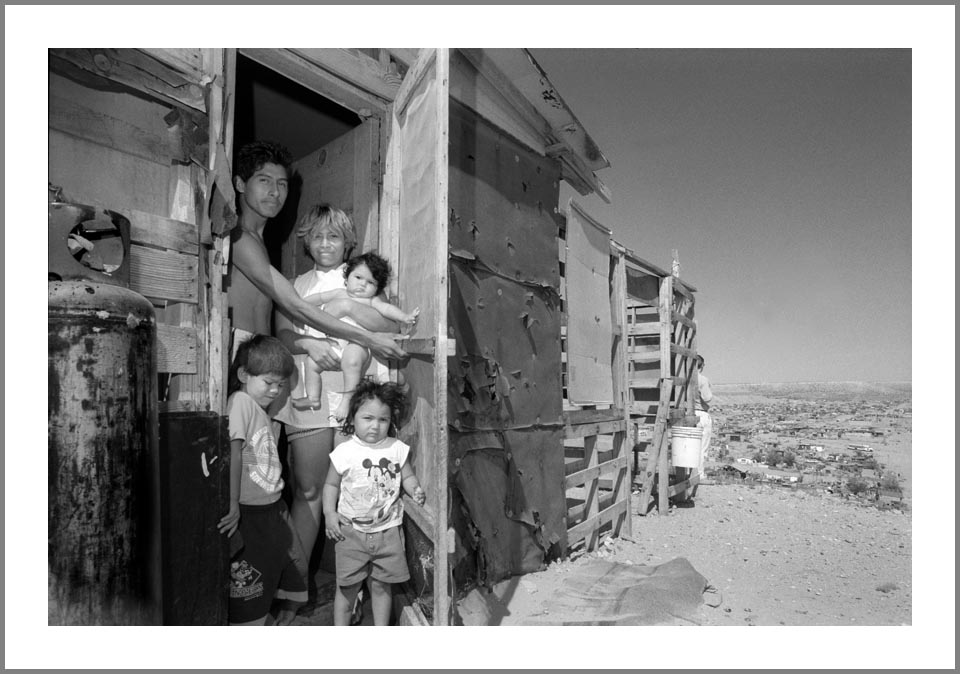
The Silva family came to Juarez with the intention of crossing the border, into the U.S. and then traveling to the Midwest, where a family member had preceded them. They intended to work in agriculture in the wheat fields of Kansas. A dream. The American dream. It wasn’t to be their dream.
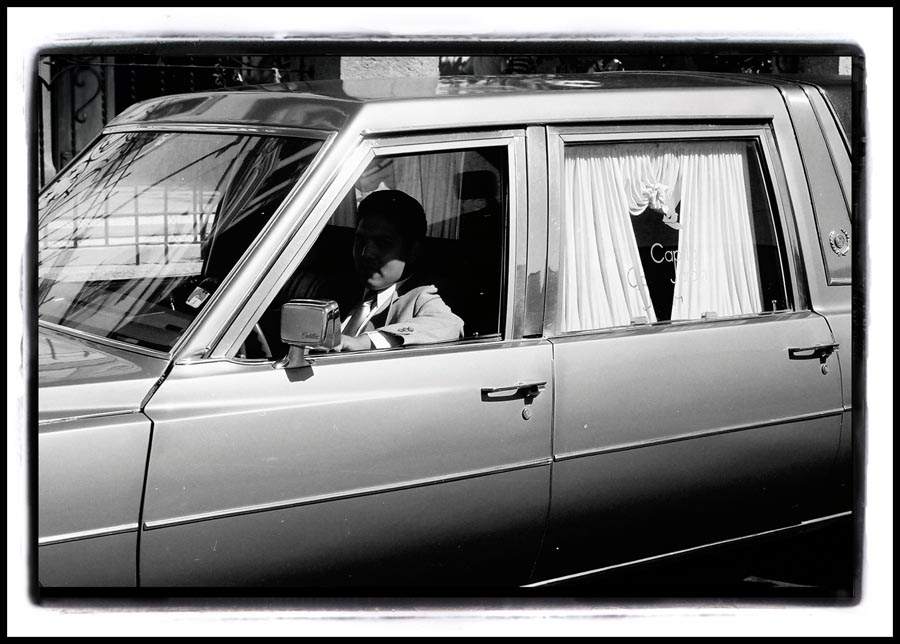
Waiting.
It’s hard to remember the last time I was waiting for something and not pressured to be thinking about the next stop, the next appointment.
Leisure?
Barely remember that…
Slow time? Time seems to be on steroids, going faster and faster.
So I came across this guy and time seemed stopped. He was waiting for the grieving and the return of the dead to his vehicle.
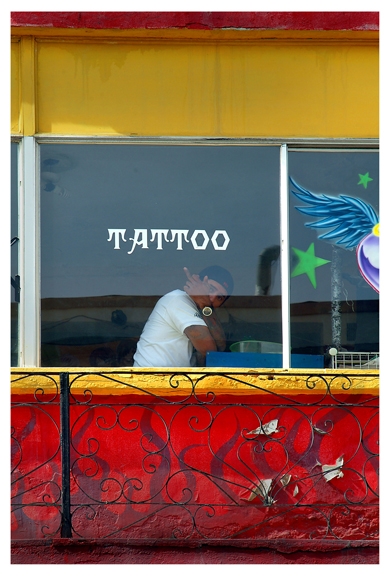
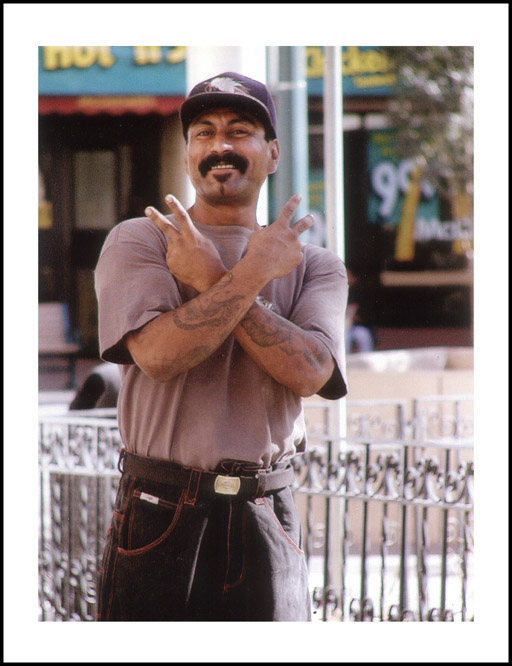
Flying tattoo on the window. That’s what I was after. Beautiful.
What I got was the Universal Salute?
Priceless.
He didn’t like me? No, I don’t get that. I do struggle with why I shoot on the streets. What right do I have, who appointed me? There’s some kind of thing I got into my head about documenting and witnessing and leaving the artifact that has driven me for a long time. So I do.
I like the fact that the tattoo-ero sends something back. He’s got a right. We all do what we’ve got do.
So, I get my tattoo in Juarez.
It’s not always peace and love out there.
So be it. ‘Ta bien.
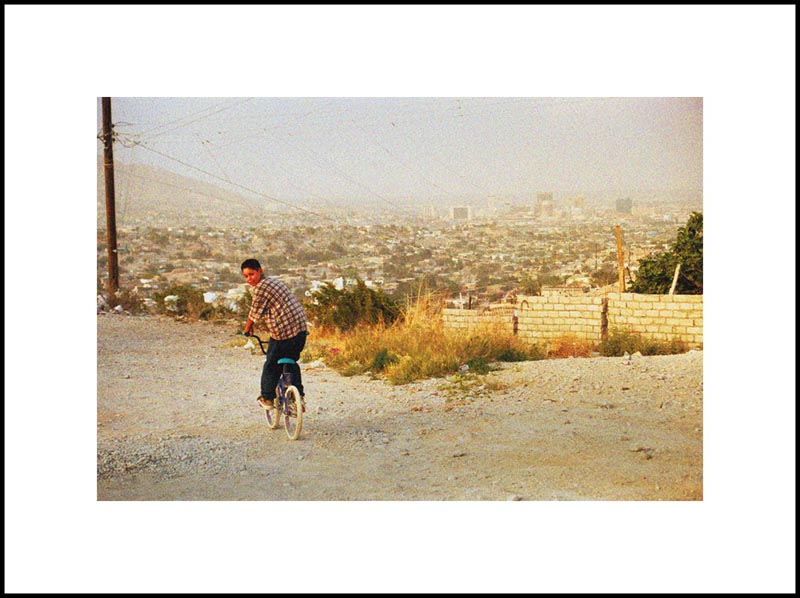
Someone observed, generally, that in so-called third world countries, poor people have to live on top of hills and mountains (where it is more difficult to get water and where roads are rough and barely existent), but in first world countries the rich like to live on top of hills and mountains, for the “views.”
And the status.
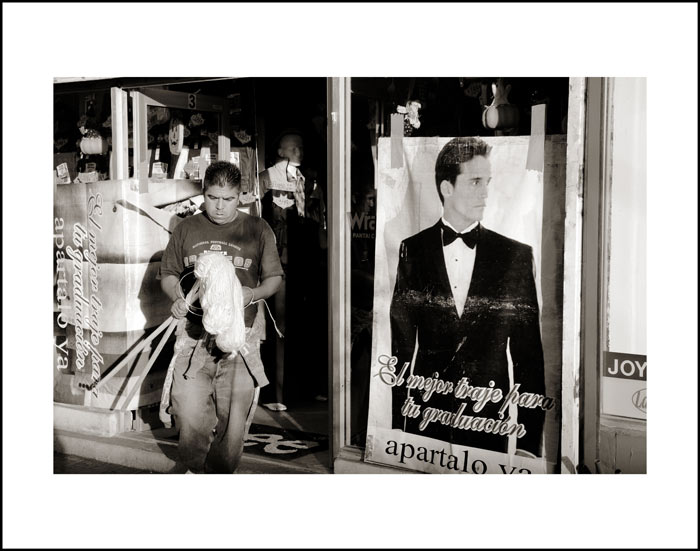
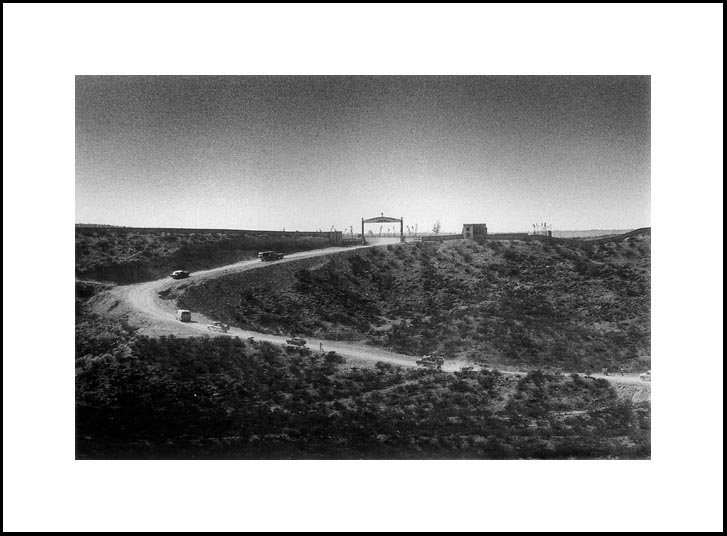
28-October 5, 2007
The cemetery came before the barrio. An ultimate act of realism.
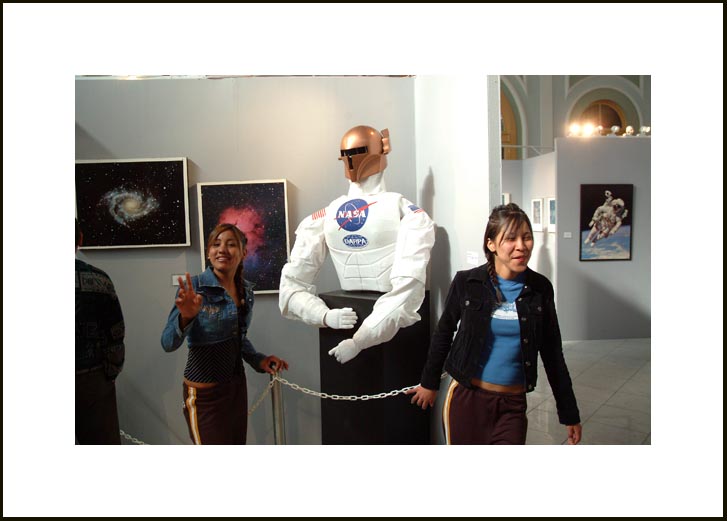
Two Juarez girls hamming it up at the NASA traveling exhibition that was shown at the Centro Municipal de las Artes in downtown Juarez, Chihuahua, Mexico in May through June.
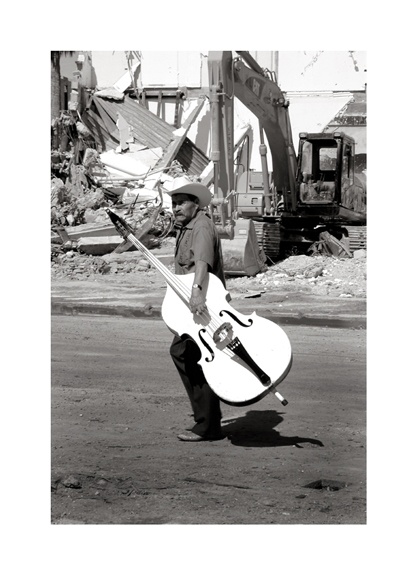
El Centro, the downtown of Juarez, is going down.
La Mariscal, the zone of shops and bars and (say this quietly) brothels north of El Centro, the commercial zone north of El Centro stretching to the border with the U.S., is being demolished and is, mostly, gone.
The “Plan,” has come. Progress is here. Now there is hope for those who need the border to be “clean.”
It shall be sanitized.
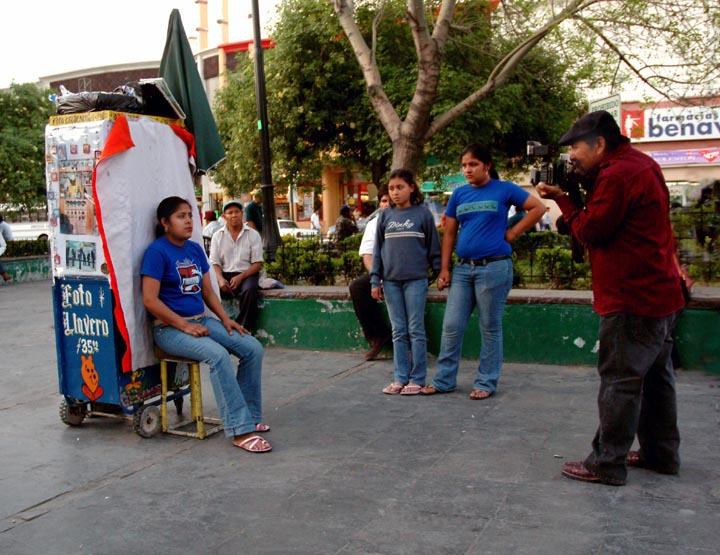
fotografo-centro Juarez-Retrato: $ 4.50(US)
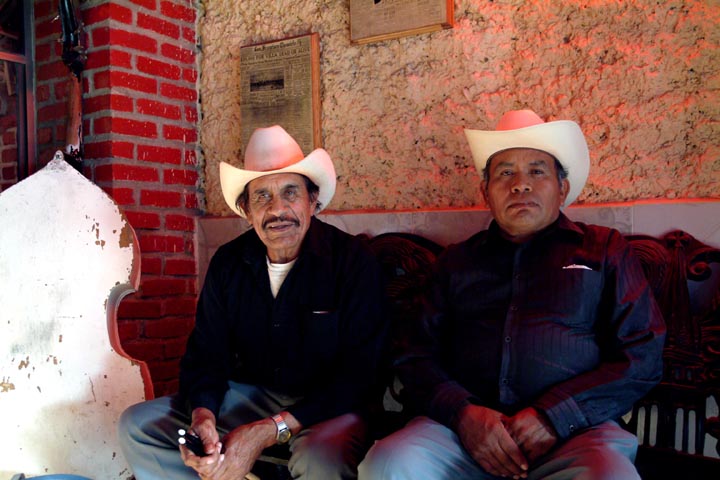
Musicos de Juarez-March 23, 2007
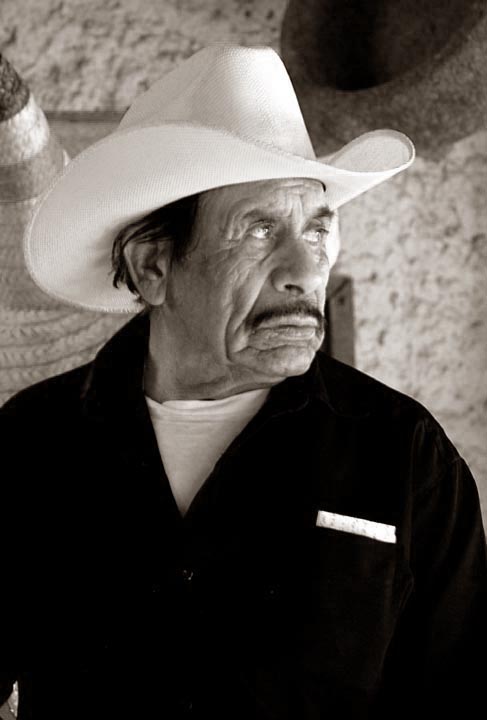
Musico de Juarez-March 23, 2007
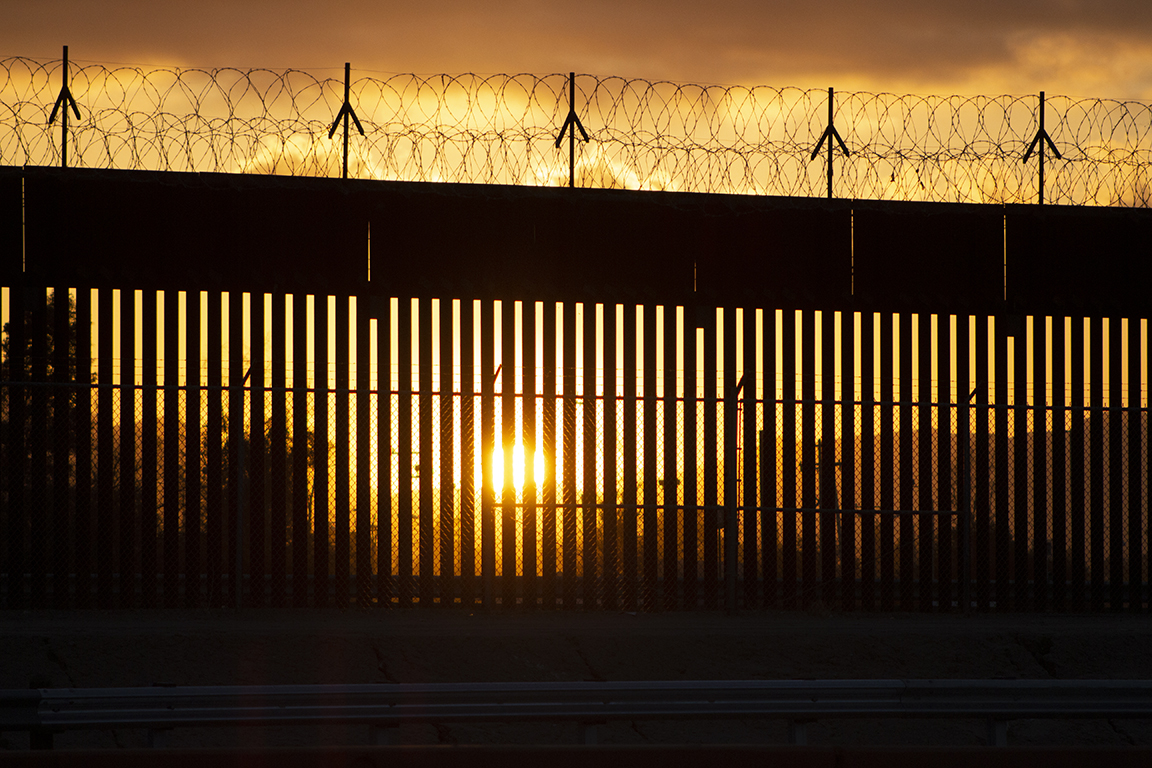
Border fence, El Paso, Texas/Juárez, Chihuahua, November 2022 by ©Bruce Berman
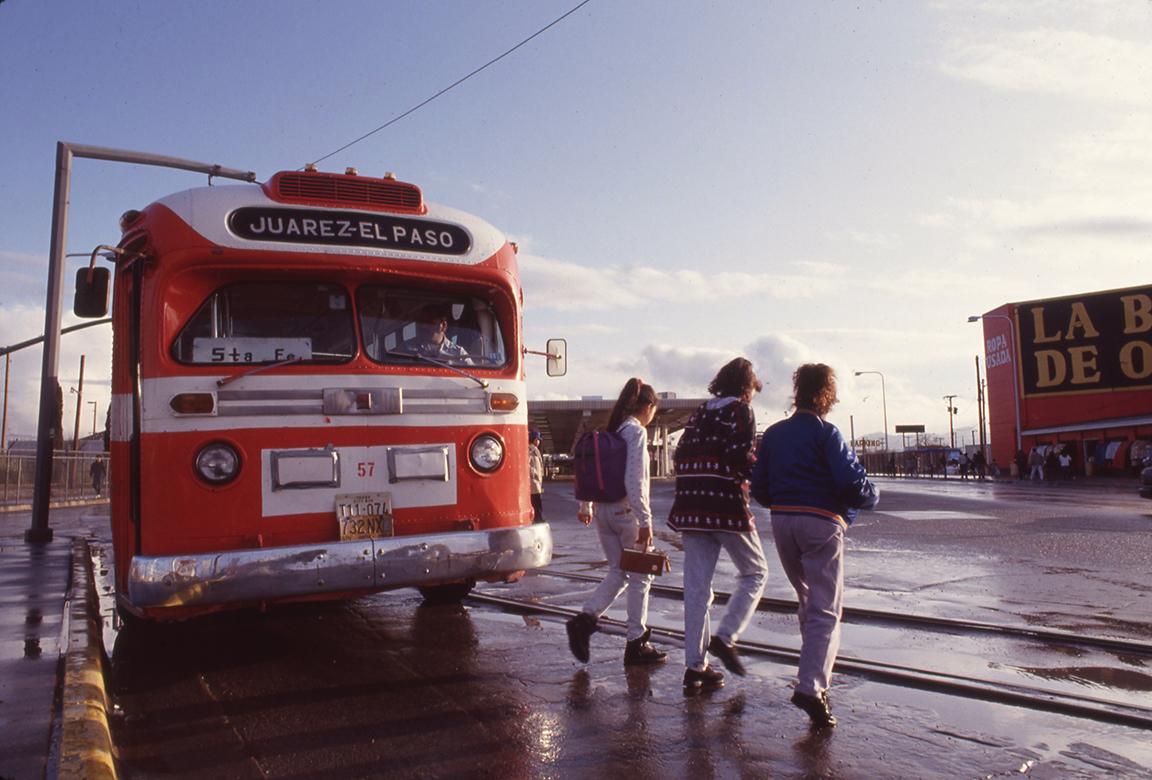
The Red Bus, Paso del Norte International Bridge, El Paso/Juárez, 1989
Photograph and Text by Bruce Berman
The Old Red Bus ran back and forth over the Juárez International bridge for decades. The bus itself was from the late 1950s, a GM. First photo I ever took when I got to El Paso and started wandering around was of the Red Bus, on El Paso Street. I noticed the women, from 18 to late 40s, lined up. I came to know that they were “maids,” low wage women from Juárez that came over every day and served the Anglos of a neighborhood north of downtown. It was called Kern Place. At the end of the day -those that worked by the day and not the week- would walk south down the hill to “EL Centro,” get on the bus and go home, to Juárez
Generations of Anglo kids were raised by these “maids.” Tons of dishes were washed. Beds were made. Laundry was done. They watched the American culture and went home. Key word: Home. Theirs. Another world.
I shot that old photo in October 1975.
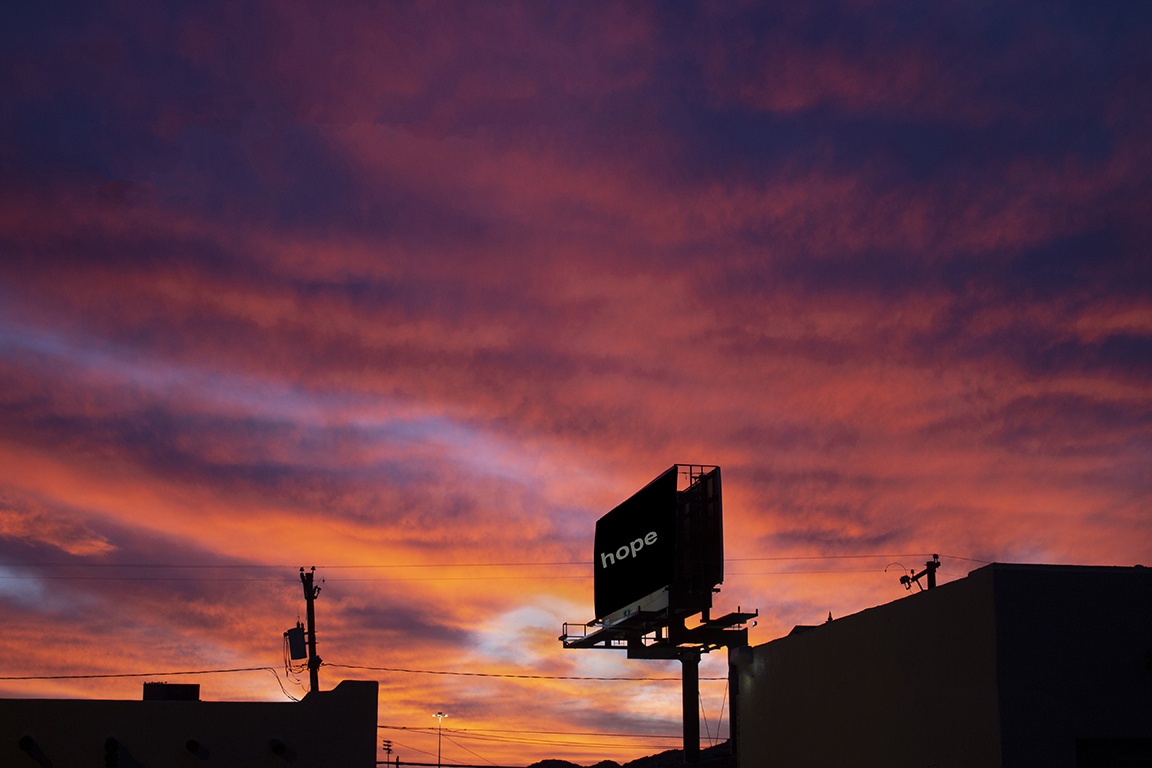
Hope on the border (Illustration), El Paso-Juárez, 2021
Text/Photography by Bruce Berman
This is not a photograph. It is an “illustration.” It’s a “montage,” a form of photography that goes all the way back to the near beginnings of photography. The distinction between “illustration,” and “photograph,” is that the former is an idea and an opinion and the latter exploits photography’s main strength: believability.
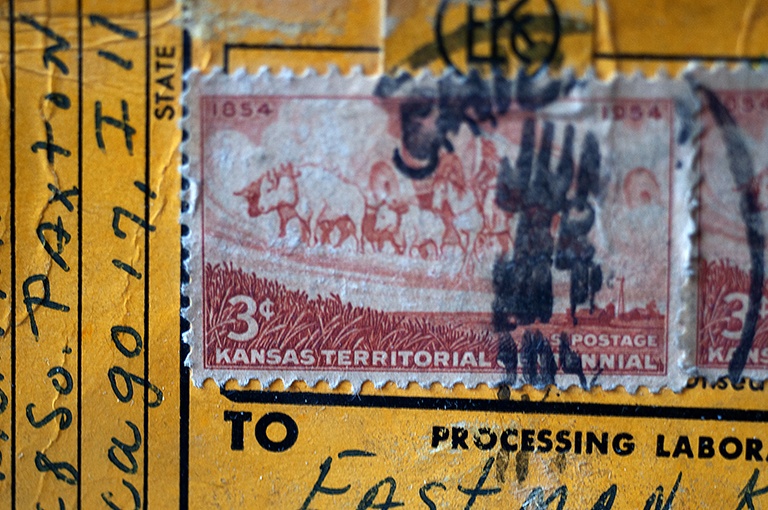
Cancellation #93, Mom’s Kodak film, Chicago, 1950s
I once did an entire series of photographs called “Cancellations.”
It started because one day I was looking at a stack of shipping boxes of my photographs that I had sent to various galleries and museums (pre Internet) that had been summarily rejected. Thanks. No thanks, return to sender. There were a lot of stamps on those heavy boxes. The post office cancellations were ruthless, slashing, colorful. It’s like the post office knew I was unworthy, as well. I half jokingly wondered if the galleries hadn’t done it themselves.
I got lucky here and there, exhibited them for awhile. Dallas. Houston. Cologne, Germany. The art world thought they had found a new star. I knew I was a fraud.
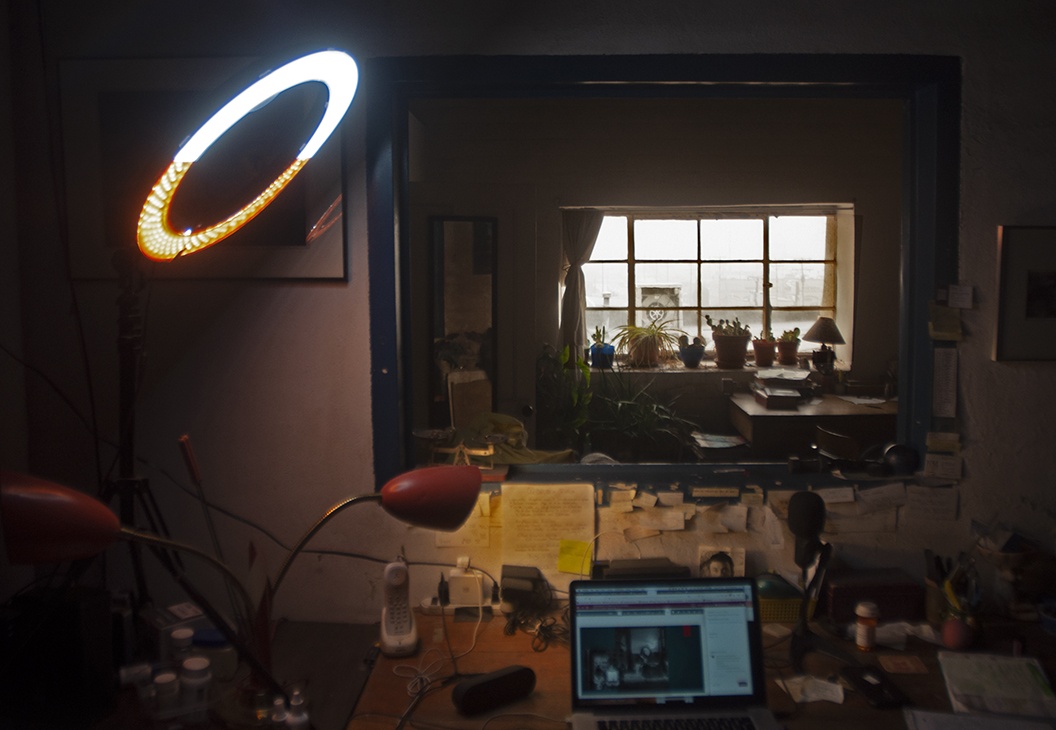
End of a semester. End of an era. My smiling mask of self confidence, of confidence-projecting, of being reassuring has wound down to a needle tip. Sat at this desk for 14 months, rising to the occasion of teaching remotely. Three semesters of little grey rectangles talking with me and me with them.
They rose to the challenge and so have I.
And I’m fried!
THIS SITE HAS BEEN DOWN FOR TWO MONTHS. WE’RE BACK. THE SITE WAS SUSPENDED AND IT TOOK THIS LONG TO RESTORE IT TO TOTAL BUG-FREE HEALTH. TO BE HONEST THERE HAS BEEN VERY LITTLE “ME.” THE BORDER BLOG WEBMASTER, MANNY RIVERA, FOUGHT THE MALWARE FORCES OF EVIL… AND AS HE ALWAYS DOES, BROUGHT US BACK TO LIFE.
SO GLAD WE’RE HERE. SO GLAD YOU’RE HERE.
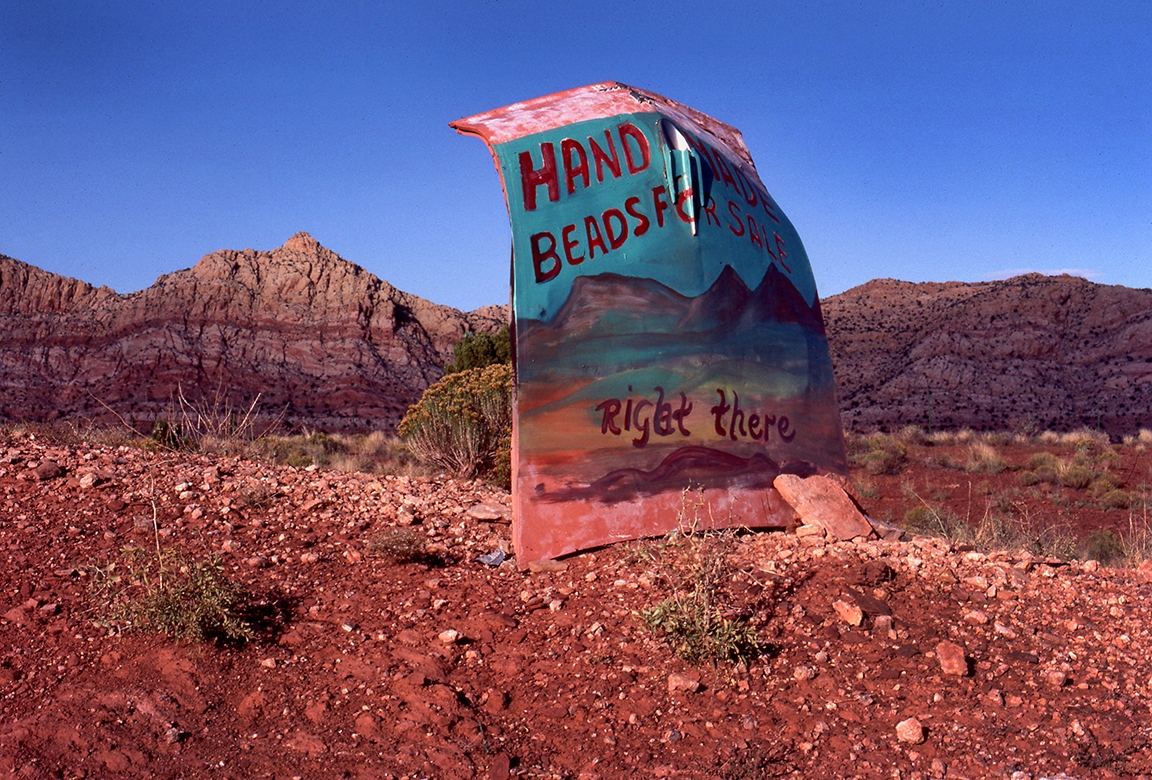
1951 Ford hood, Navajo Reservation, Utah, 1974
So here we are, searching for borders again. It’s been a long time since I began this photo journey in 1968. First there was the “border” of Appalachians in Chicago.
Then there was the Five Nations of Oklahoma and the last refuge of the Buffalo in southwest Oklahoma.
Eventually I found my way to El Paso/Juárez. That one’s took thirty-five years plus.
And now?
Not sure. Usually I have wandered into my “forward.” Been stuck lately, taking care of business, being a professor, thinking, living in the old paradigm.
I suspect it’ll be that way again. I’ll bumble into the “next.”
I just mentioned -above- all the stuff that’s in the rearview mirror.
Looking out, over the hood… well you have to get the car into first gear first.
It’s coming.
Stay tuned. The Border Blog is back.
So am I.
El Paso’s Central Plaza, is officially named San Jacinto Plaza. It is located in the middle of El Paso’s original business district and about 3/4 of a mile from the border with Ciudad Juárez, Mexico. In recent times its unofficially been called Plaza de los Lagartos which refers to the old pool in the middle of the plaza that used to be the home of alligators (lagartos in español) which no longer existed after the early 1970s. The alligators were later commemorated, in 2006, by a fiberglass sculpture of alligators by native son and internationally renowned artist, Luis Jimenez.
Text and Photo by Bruce Berman
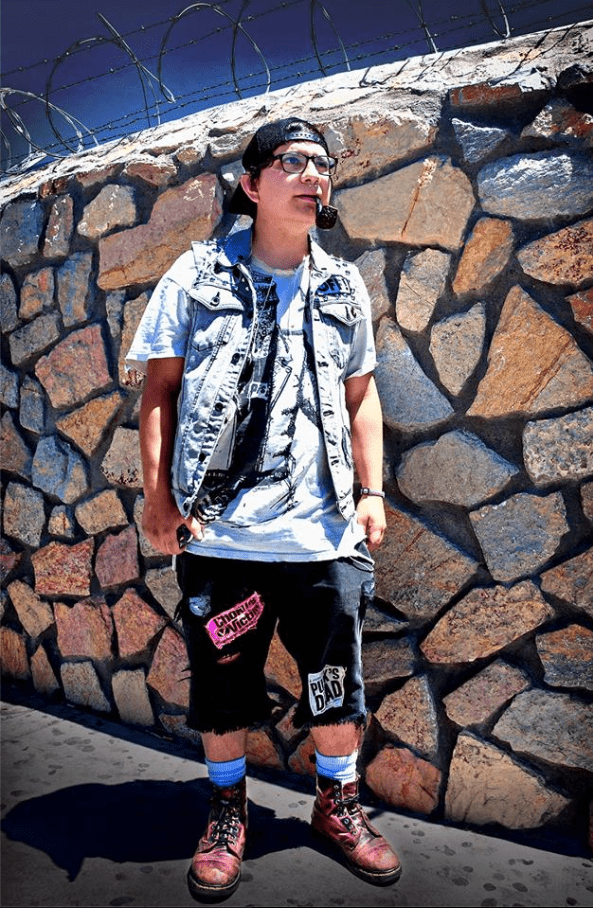
No telling what and who will come over the Cordoba bridge that links El Paso, Texas with its sister city Juárez, Chihuahua.
In this case, crossing from south to north, was Spencer.
Pipe, a hat that said “F___ Off,” aged Doc Marten’s, punk rock labels every where, he is as ecclectic as the border. In a strange way he, is the border: neither this or that, neither Mexican or American, neither barrier nor passageway.
A friend once called the border a metaphor for a person who has “an undefined personality.”
Looking at Spencer -and some others (in my mirror!)- I’m thinking it’s a place for very defined personalities.
The problem is that it’s really difficult to say exactly what they are.
Which brings us back to “undefined.”
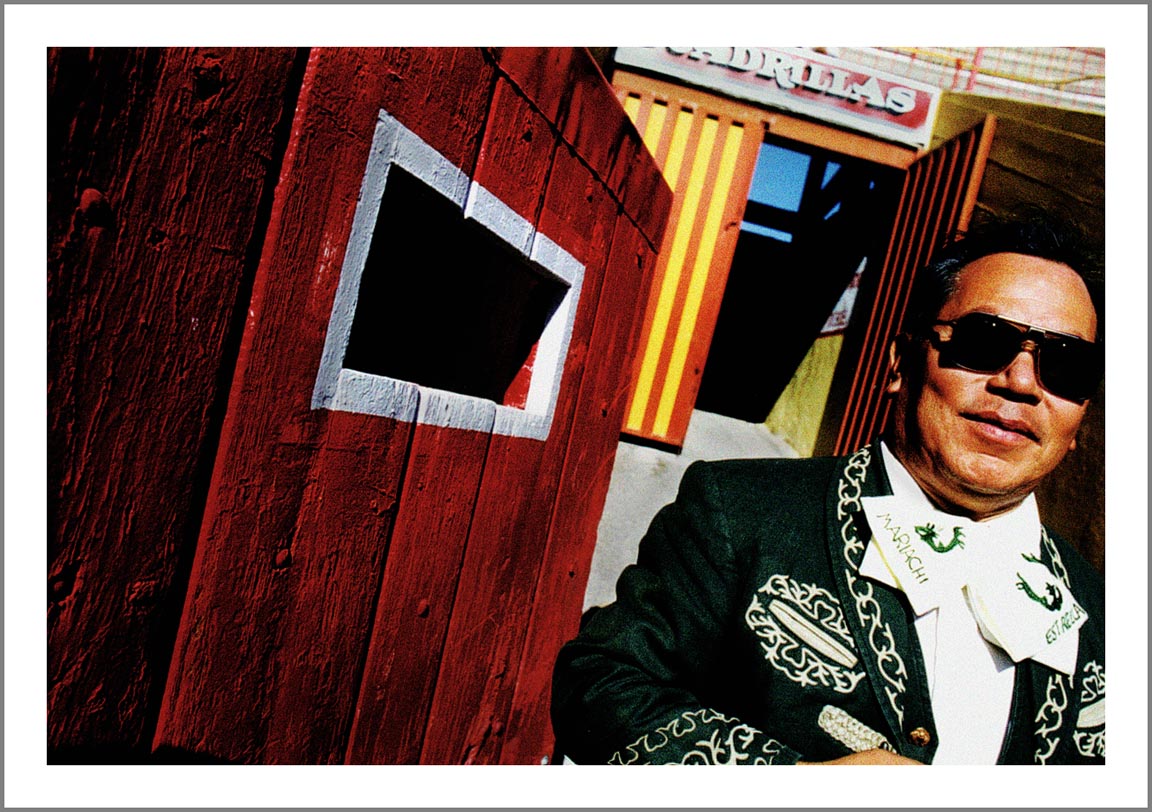
Mariachi, Juárez, 2002
There was a day when you could think of Juarez and think in color. I get whiffs of it lately, but one is so cognizant that under that shiny surface is a black and white heart that has been ripped open for all to see and it will take a long time fill with the energy and joy that was -and will be again- the hallmark of Ciudad Juarez. It will happen. It is happening now. A generation has now come that learned to live abajo, and carefully. There has been damage. No one can live under that cloud forever.
It’s nice to look back, now and again. But here, on the border, it has been years since people have allowed themselves to look forward.
There are “whiffs.”
\
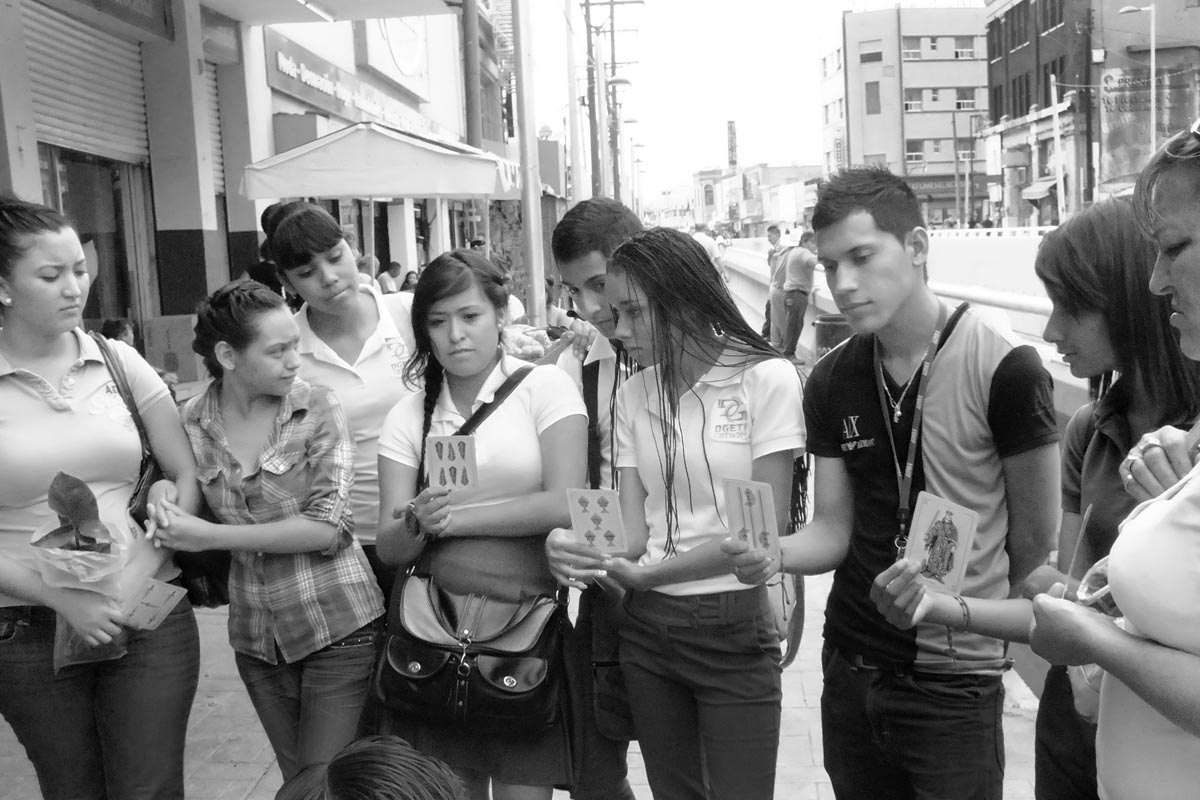
The streets of Juárez abound with life again.
The “Cartel War” is over.
The war for justice and integrity in government, the war to develop a country that doesn’t need a drug transporting business as it’s second most important economy (after petroleum), is not over and won’t be for the foreseeable future.
On the streets of Juárez, there is a strange mix: Old people who couldn’t get out, the poor that couldn’t get out, the young that didn’t know there was anywhere to go to and babies!
There are a lot of babies in their teenage parents’ arms these days. In the streets in from of the Mercado Reforma there is this strange blend of young parents weighing babies in their arms, interspersed with the very old, interspersed with prostitutes, interspersed with an economy that is not longer threatened by the incursion of “the franchises.” Franchises bailed out of Juárez years ago, when the war began, in 2011.
This isn’t the Juárez of the glamour 1950s or the boom boom 1960s and their international factories, or of the up and down 1970s and 1980s with the rise of the licenciado middle class, nor of the “we are almost first world” Juárez of the 1990s and beyond.
Commentary by the Editor
Juarez, Chih., Mex. — So how did this Cartel War begin and how does it end?
The Border Blog will not answer that today. We look for the things that make the heart tick and leave the fancy thinking to those that make these messes in the first place.
Roughly, for me, it began a long time ago, when the people who have most of the marbles understood that they didn’t have to do a thing about bringing along another class of people who had hardly any marbles at all. Impunity. No apologies. In Juarez the maquila industry began when someone figured out that Labor was a cheap product that Mexico had a lot of and that it could be exchanged for some major profit. Of course nothing so crass as that was said. Rather, this was the bright new day that would lead to a burgeoning “middle class,” and bring everyone up from the bottom. So they said. So the “development” of Juarez began. The powers that be brought willing companies looking for labor and they delivered “labor.” This labor, also known as the citizens of Mexico came from the far flung corners of Mexico. They had nothing else to do and would work at any price, went the theory. Everyone would be happy. You move here, we’ll give you subsistence (and societal dislocation), and we’ll go to the bank. Everyone will be happy.
Right?
When I first started photographing in the maquila factories of Juarez in the early 1980’s the salary in a maquila was $5 per day. Today it’s a little over $7. A full two dollar increase in 20 years. Imagine!
It wasn’t sustainable then and it isn’t now.
The promise of some kind of job, of rising above downright depraved poverty, was strong and people flocked to the border factories. First from Veracruz, then from Durango, then from Torreon and on and on.
If you were a Mexicano and wanted to improve your life without the terrible alternative of actually crossing the border and trying to make it work in El Norte, you headed to the maquilas of Juarez or Tijuana or Nuevo Laredo. If you made that journey you left your culture and customs behind. This was the brave new world.
Bienvenidos campesinos.
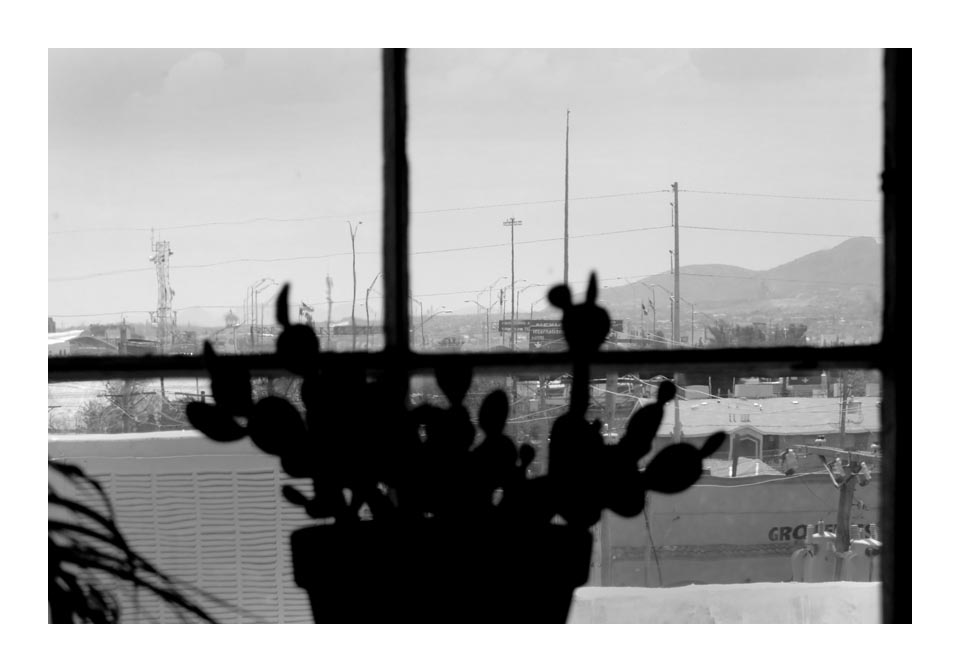
Flags are down in Parque Chamizal. Wind must be up and hopefully a little rain. Just a whisper of a season change. Not yet. But not all that far off either. ‘ta bien. The View South. Days come and go. Then years. Then decades. Then…? I turned my back on the past a long time ago. People tell me that’s good. Bible says it too. Do they really mean it?
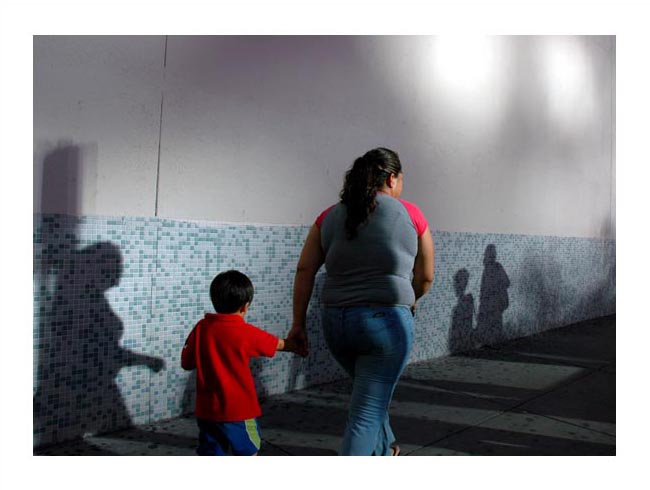
Opinion/Observation
by Co-Editor Bruce Berman
___________________
I drive my old routes. Camera on the passenger seat or my lap. As always, these days it usually stays there, untouched. There are things along the way that spark memories. Object that aren’t there anymore. Gorgeous commercial signs constructed by craftsmen in the 1950s and 60s (not the least of which from the Jimenez Sign Company) were carted off to other cities that were twenty years ahead of El Paso in their bourgeoisie ambitions.You can drink under some of El Paso’s “Motel, Vacancies,” signs in various bars from Austin to Houston to Baton Rouge. There’s a withering away now, aging and weathered, but mostly not endearing anymore, not worth stopping for (to make images). There came a year, a month, a day when the treasures of El Paso were either gone, carted off or just left to rot.
There are whole swaths of this incredible and authentic city that are gone, at least for the long gaze of a photograph: Alameda. El Centro (downtown). Segundo is shrinking fast, bordered by El Paso Street on the west (with nasty tentacles of them all over it) and Cotton on the far east, with old residents living out their days, youth getting out fast and them with their bulging eyes all over it. Off of Delta there are condominiums and some revamped industrial buildings, residents living an almost urban lifestyle (sans humanity). Even the Gay Bars have fled, a sure sign of urban renewal/removal.
It’s not my job to do anything about any of this. My job, as I saw it, at the beginning, in 1980, was to give face to a face that was not known and I have tried. As The Grid lays out its future in the city with two hearts, it’s clear to me that my mission isn’t to pick sides in land rights, power exchanges, or to watch -or judge- the inevitable blandification. But blandification has come. Oh happy day. Some loudly exhale and go, finally! The city is becoming presentable to visitors again. It’s cleaner. It’s newer. There’s baseball. Soccer is coming (watch out Chamizal! The final blow that started in the mid 1960s is finally here). There are restaurants with the preface Le with Foo Fo thing-a-ma-jig dishes with little portions of things that look like they squiggle -vegetables- on top of things it’d be hard to identify below. Fancy. Plates of Foo Foo. There are young people downtown again, well, the kind of young people that look like they’d also be comfortable up in Kern Place on Cincinnati and the upper Westside.
Finally, there’s a Starbucks downtown near the Plaza and the Westin. The kids from the ‘hood can serve the hipsters that come in from outer Zaragosa Road and beyond.
Boring? Not to everyone and I wish them the best. I am not part of this. I left this scene in three other places I lived before this very long stretch here. It’s the same message: you’re in the gentry or you’re equitied out of the gentry.