Search results
182 results found.

On The Edge of the Edge – The U.S. – Mexico Border
182 results found.
Notes from my Journal
Immigration. Swim, drive, and crawl. People do what they need to do and making them do any of the aforementioned things, put lives at risk.
The river is more than a highway of migration, though.
In the summers, when it’s hot, the river is a giant pool.
People play.
The river is polluted with chemicals from upstream pesticides from the farms, loaded with garbage and debris, has really tricky currents that, every summer, takes lives.
But people live in that river. That river is life for many in Juarez.
If the Jefes could see past their own little tight plans, this would be THE development that would be right for El Paso/Juarez: Play in the river.
Too simple, though, huh?
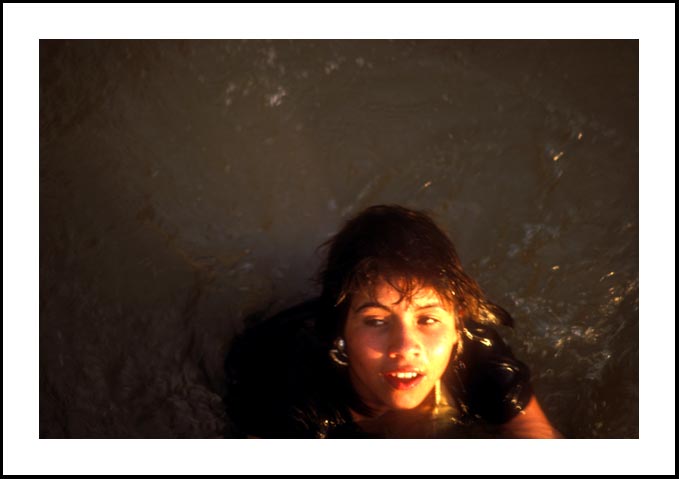
This girl is clinging to the El Paso side bank. ILLEGAL! La Migra comes and chases her away and she joyously splashes back to the Juarez side where her friends and family jeer and gesture at the Border patrolman. Everyone is having a good time. The Migra laughs, waves, knows he’s part of this great immigration farce, climbs back into his Suburban and drives off and the girl –and her friends- come back, swim to the U.S. side, pose for pictures, live the evening.
The sun sets. I go home. I played in the river, too.
One of the border Patrol’s favorite PR releases is about how their agents saved people from drowning. There’s one or two or three every year.
They never mention people caught playing. Before the fence.
PHOTO OF THE WEEK: Jan. 25-Feb. 1, 2008
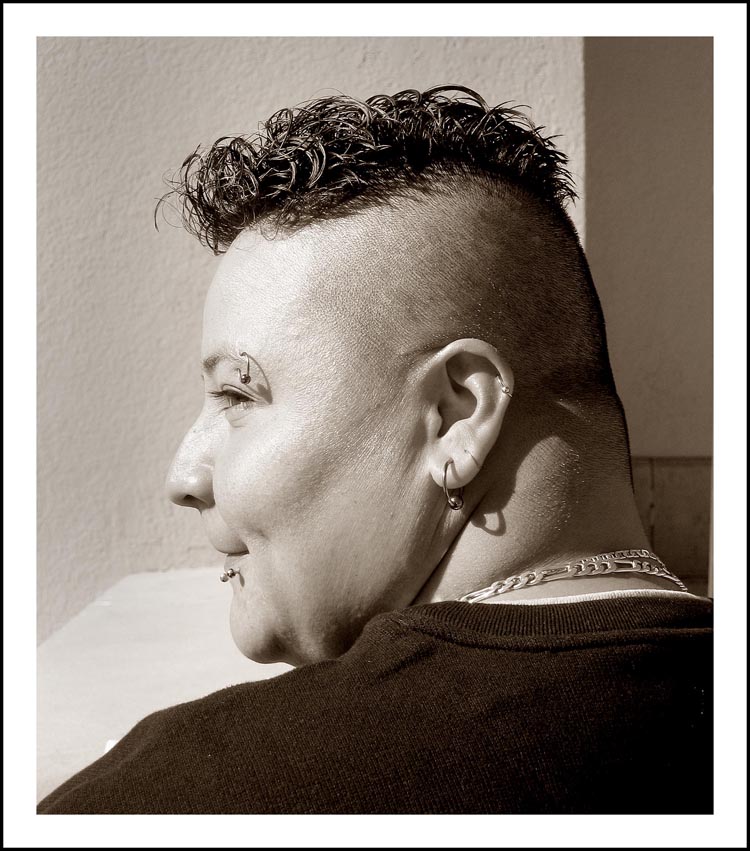
You can leave the border but the border does not leave you. My head snapped when I saw Roberta Flores, up in New Mexico.
“Terrific hair,” I yelled at her. “Gelled,” I asked?
“No,” she said with a sly and proud smile, “Glued,” she shouted back, with a grin that sort of said, “gotcha!”
“Did you get that done around here? ” I asked.
“They don’t know how to do that around here,” she spat, friendly but gently ridiculing.
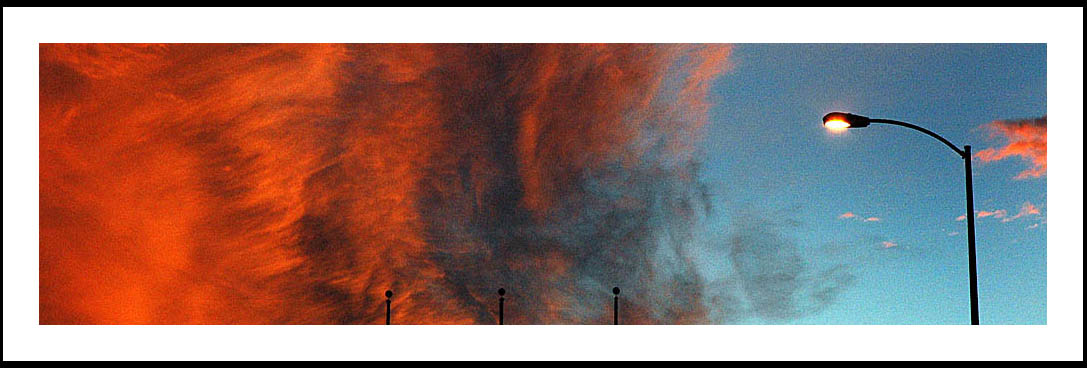
Still on mental vacation. What else do you do? Drool and look up. This is the border. Believe me the storm is coming in and not going out. As it always is. As it always was…
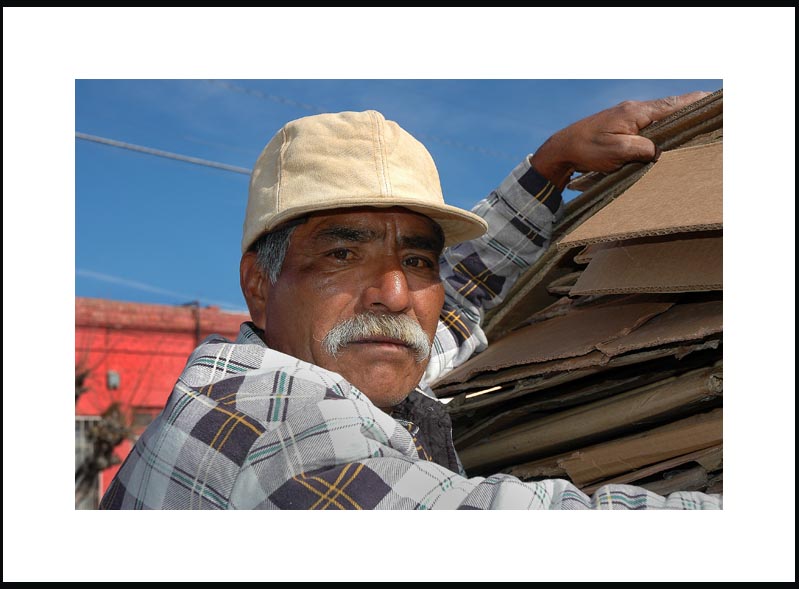
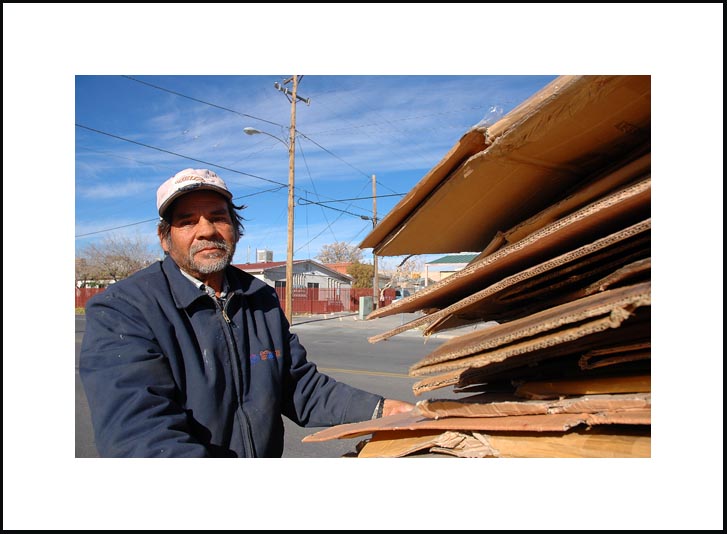
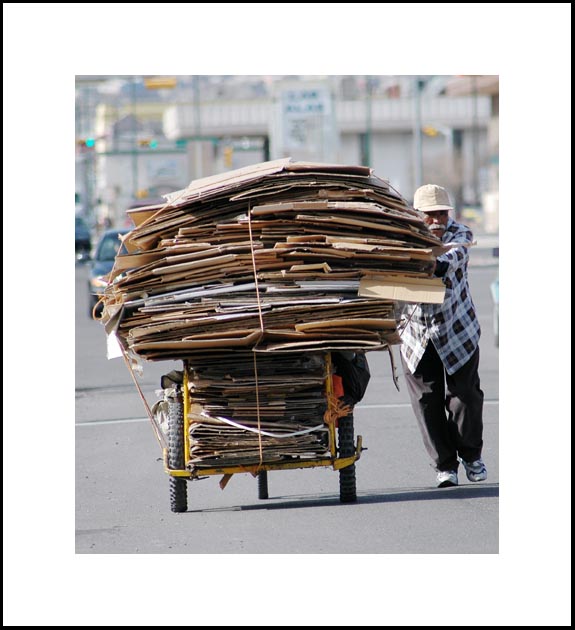
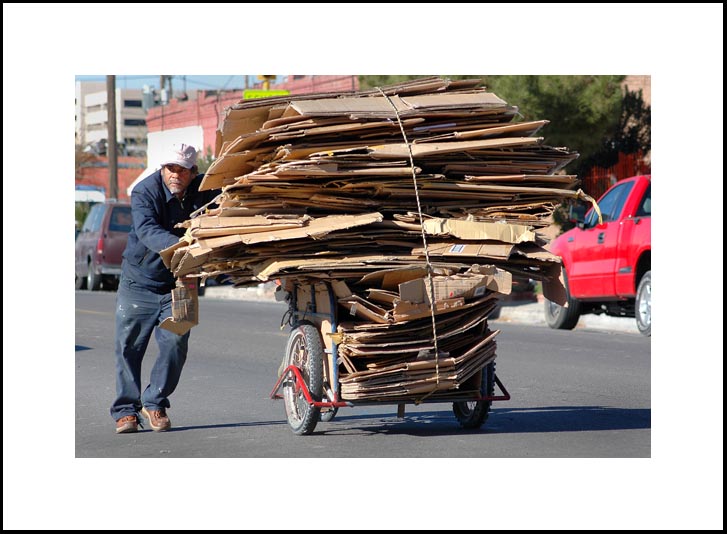
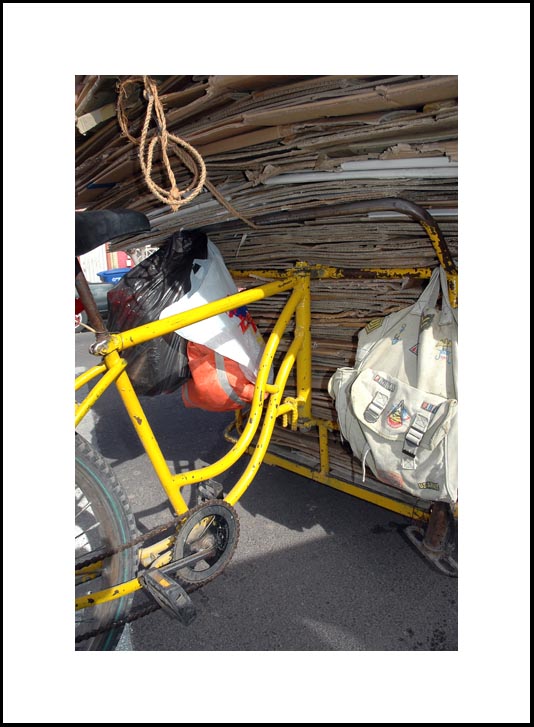
Los Cartoneros
In a desert, on the border, nothing much gets wasted.
Cartoneros, paper haulers, collect discarded and surplus paper and card board from border streets and from border merchants and haul it on their customized ” tricicletas.” They then sell it to scrap buyers, located about a mile from the border shopping district in the Segundo barrio.
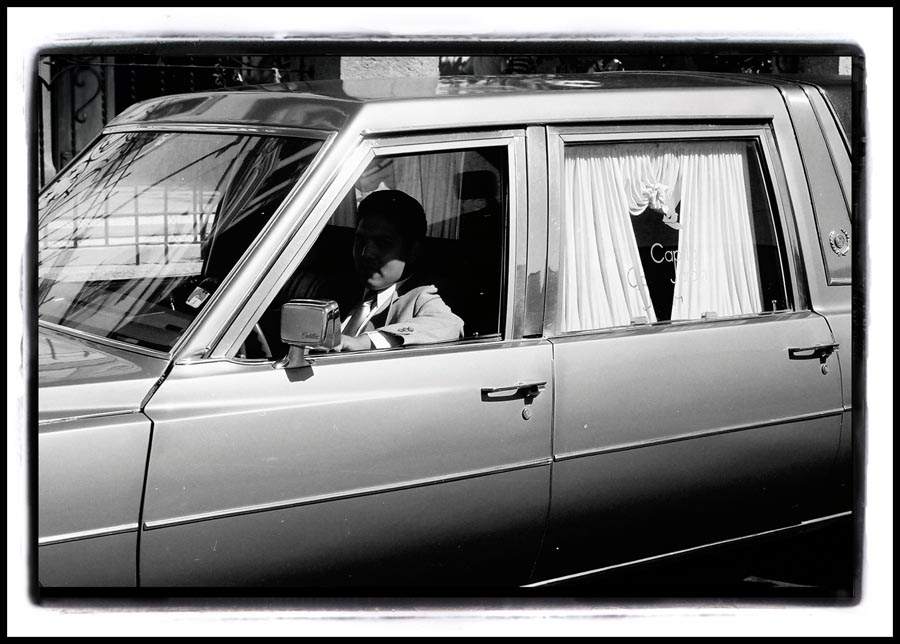
Waiting.
It’s hard to remember the last time I was waiting for something and not pressured to be thinking about the next stop, the next appointment.
Leisure?
Barely remember that…
Slow time? Time seems to be on steroids, going faster and faster.
So I came across this guy and time seemed stopped. He was waiting for the grieving and the return of the dead to his vehicle.
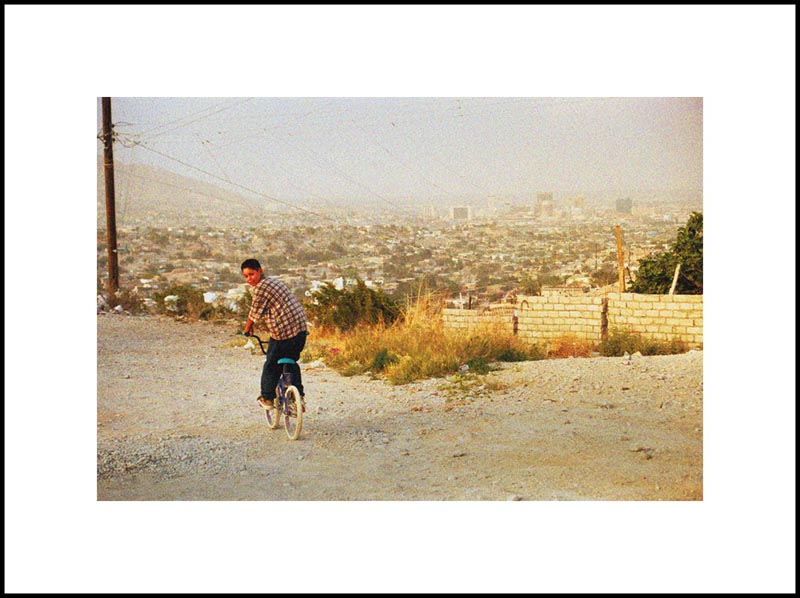
Someone observed, generally, that in so-called third world countries, poor people have to live on top of hills and mountains (where it is more difficult to get water and where roads are rough and barely existent), but in first world countries the rich like to live on top of hills and mountains, for the “views.”
And the status.
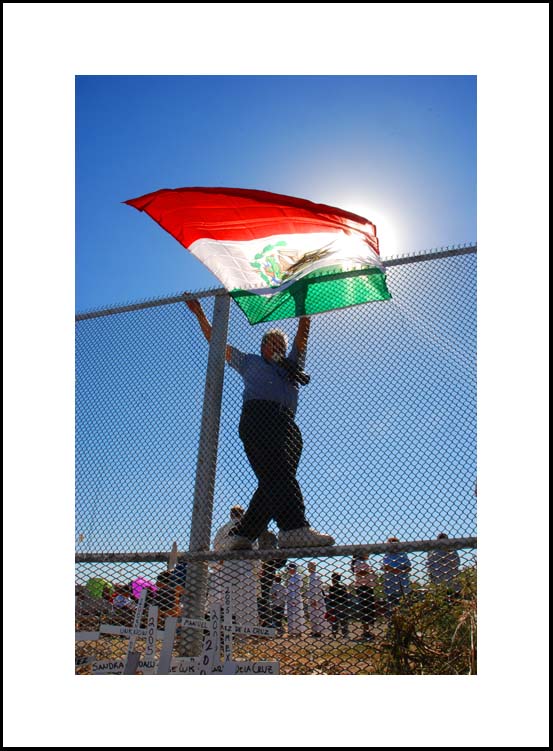
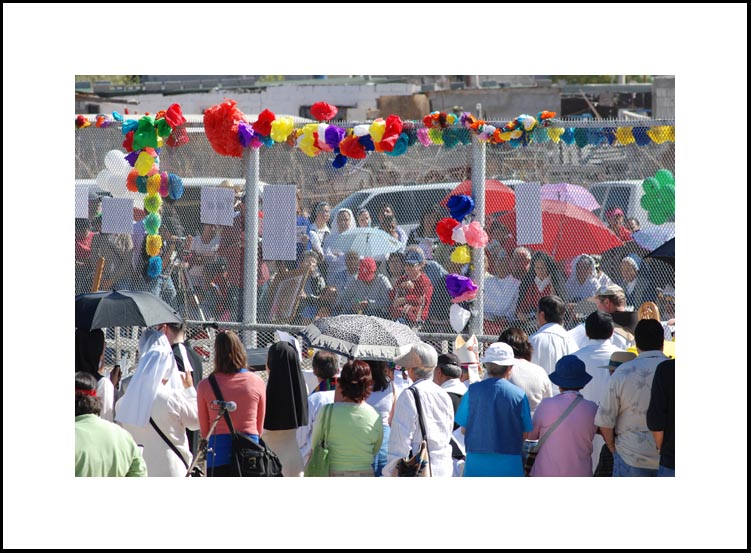
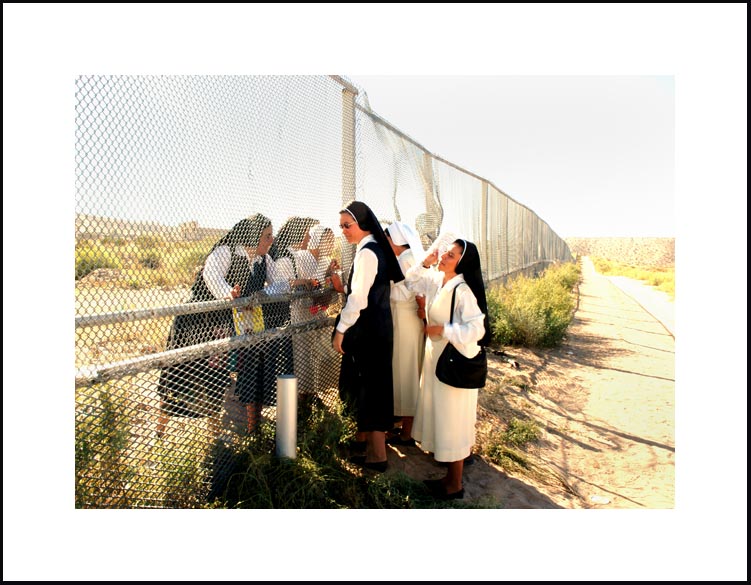
Today the Bishops of El Paso, Las Cruces, NM and Juarez, Chihuahua, Mexico met at the border fence at Sunland Park, NM and Anapra, Chihuahua to protest current immigration policies and to promote understanding for immigrants from Mexico, as well as world wide.
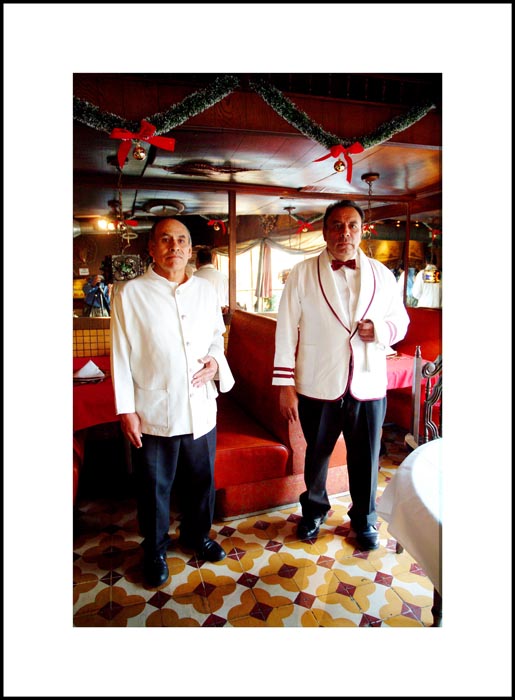
 Ramon Covarrubias Quintana(l) and Francisco Barraza(r) are waiters at the old Martino’s Restaurant on Juarez Avenue in Juarez, Chihuahua, Mexico. The restaurant is located two blocks from the Paso del Norte Bridge that connects downtown Juarez with downtown El Paso.
Martino’s – and these waiters- harken back to the “Golden Era,” of Juarez,
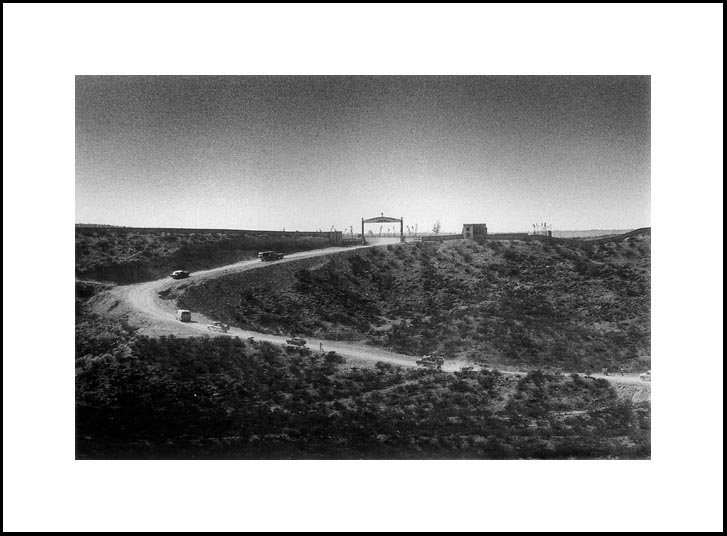
28-October 5, 2007
The cemetery came before the barrio. An ultimate act of realism.
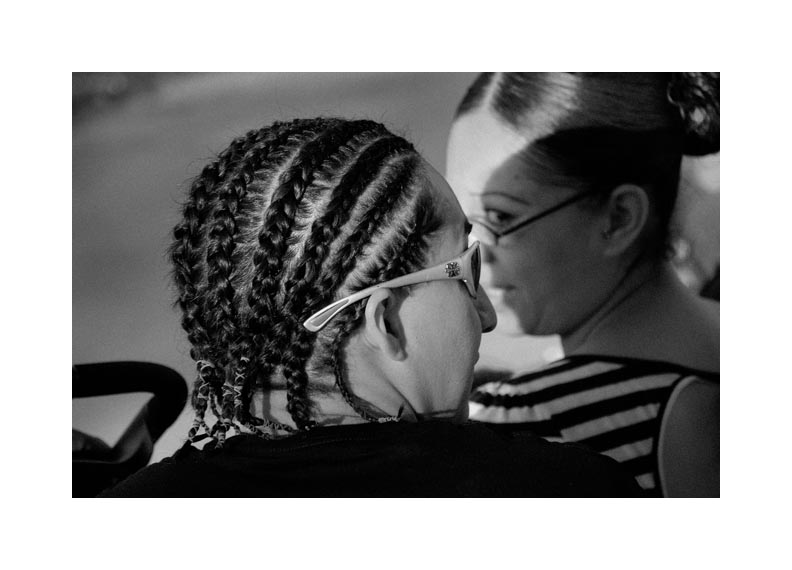
This was a 16 de Septiembre event in Armijo Park in El Paso. Armijo is in the heart of the historic Segundo Barrio. Armijo is a people’s park. This neighborhood is in, actually, the only”urban,” neighborhood in El Paso (hard to define but you know it when you see it: Life exists on the streets)
Summer on the FBA. Hot. 100.
This is Father Rahm Street, which is, actually, Fifth Street. Around the corner is El Paso Street which is the first block of America (or the last, depending on where you’re coming from).
Around the corner, to the south is where the Paso del Norte bridge from Juarez empties out. There are stories on this street, big life-journeys begin here. This is where dreams begin. Some people have called this the “Ellis Island of South America.” Maybe that’s the draw for me (my Father was born on that other immigration island in 1907). That was another dream. These are places where dreams can start.
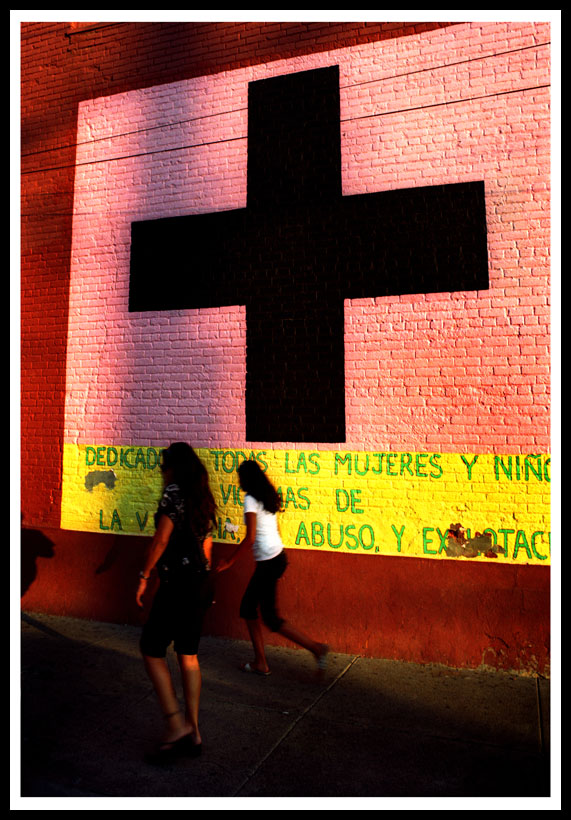
The Black Cross mural for the violence against women in Juarez appeared a couple of years ago. Then they put a bus stop in front of it (dumb). Then they took the bus stop out but painted over the text (also dumb) about the violence to the women.
Whatever. Life passes and passes strongly. This is where I have spent a lot of my life.
Nothing stops the energy on the FBA. People are looking for their place, their direction, their dream. I’m looking. I’m there almost every afternoon.
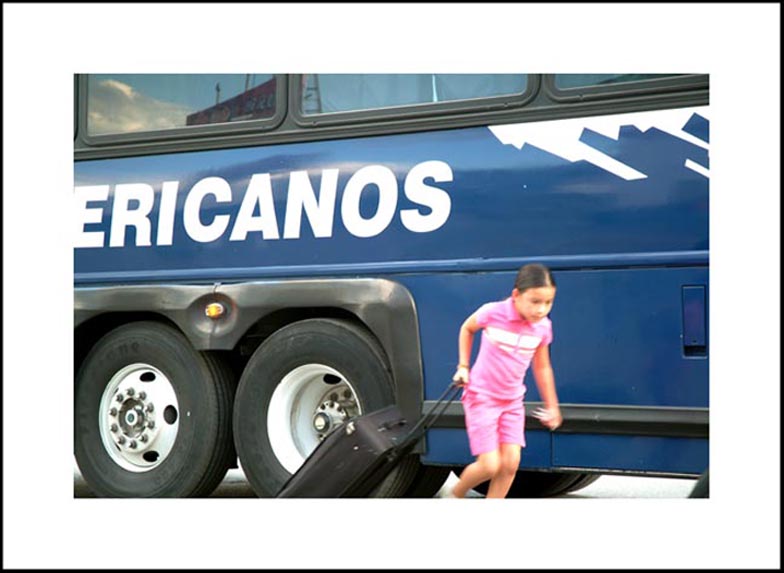
Sixth and El Paso Street is the first street in “America,” after crossing over the Paso del Norte Bridge from Juarez, Chihuahua, Mexico into El Paso, Texas. This is the crossroads.
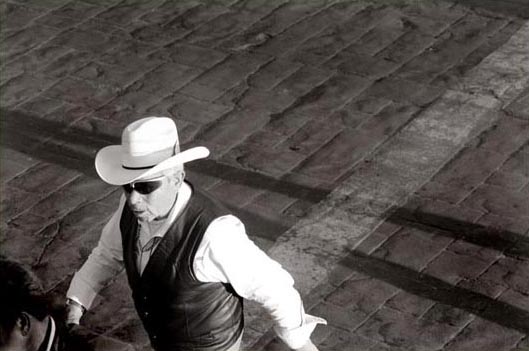
Cool Norteno, Plaza de Juarez – Juarez, Mexico / June 2007
The Plaza de Juarez in Juarez, Mexico is an ancient crossroads. The plaza stands in front of the Mision de Guadalupe, a church established in 1659 along the El Camino Real. The plaza today is still a crossroads and a transportation hub and, on Sundays, is vibrant, eclectic and fully the heart of the old Centro Juarez. Much of the area north of the Centro, the Plaza, and the Mision, the area between the old Juarez commercial district stretching north all the way to the U.S. border and El Paso, is currently, being demolished. The demolition is clearing the way for a commercial development that is projected to link up with El Paso’s south side and Downtown, also scheduled for demolition, just across the river to the north.
The transportation hub that has made the Plaza de Juarez the intense and interesting center of Juarez that it is, is scheduled to be relocated away from its current location.
The “Cool Norteno,” garbed in standard norteno clothes, and others, may or may not survive the “development.”
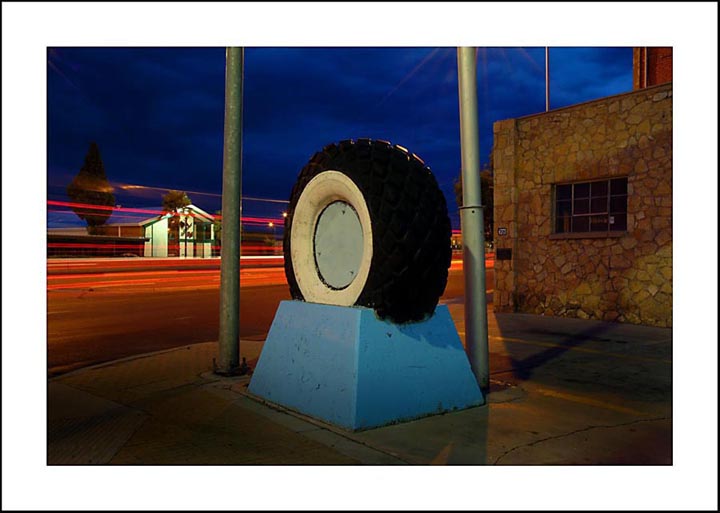
This giant tire is in front of Wicker Tire Company at 701 San Antonio St. in El Paso, Texas. It has been there since the late 1960’s and has become an El Paso landmark. The tire was originally on an earth moving vehicle that worked on the Panama Canal. It was brought to El Paso in the late 1960’s, where it has rested at the corner of Paisano Drive and San Antonio Street. Before Interstate 10 came to El Paso, Paisano Drive was U.S. Alt Route 80, the truck diversion route around El Paso, part of U.S. Route 80 that was the main southern route starting in Savannah, Georgia, and ending in San Diego, California. When Interstate 10, was completed, most cross country traffic was diverted from Paisano Drive, but, the Wicker tire has endured and enriched the landscape for several generations of El Pasoans and other passerby. Highway Art, a commercial mainstay of travel in the United States in the 1930’s through the 60’s, has become true art and and this one endures as a true El Paso landmark. Tom Wicker, son of the founder of Wicker Tire Company, maintains the Giant Tire, repainting it approximately every three years, “Or sooner if it’s graffiti-ed,” says Mr. Wicker .
Additional Notes on US Highway 80
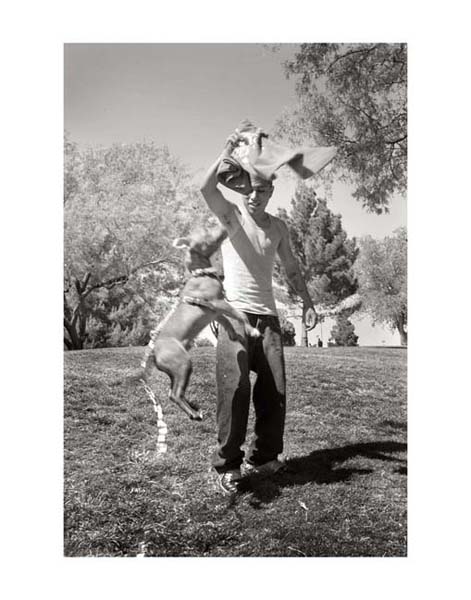
Carlos (last name not given) in Memorial Park with his Pit Bull Zues. They both had a lot of scars. They both are fighters, and it appeared they had more in common with each other than either could have with anyone of their own species.
Pit Bulls.
Asked why he liked that particular breed of dog, Carlos replied, “They don’t give an inch. Neither do I.”
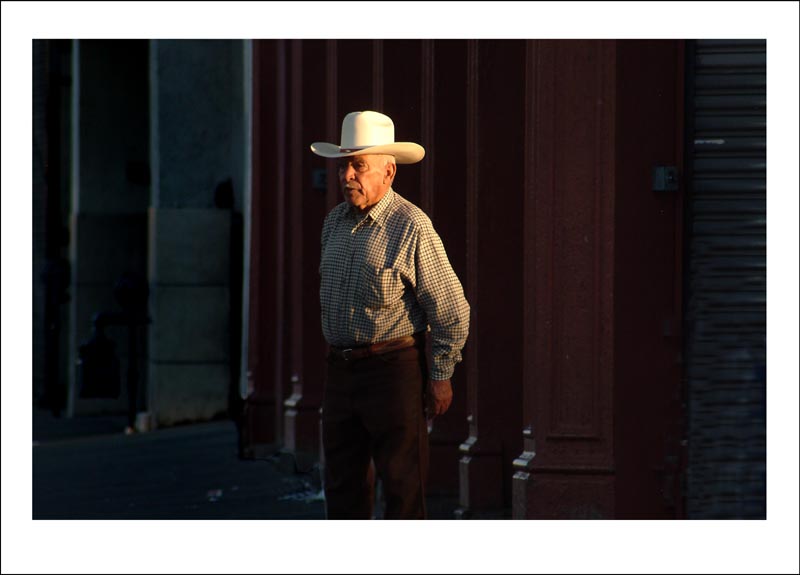
A man stands in the last light of the day at the corner of 6th and El Paso Street in El Paso, Texas. This is the first street of the United States after entering the U.S. from Mexico from the Paso Del Norte International Bridge. The bridge links Ciudad Juarez with El Paso and 6th and El Paso streets could be considered the crossroads of the northern part of the Western Hemisphere from south to north.
A lot of old folks (viejos) grew up in this barrio and are still there. They are the dignity of the barrio.
Imagine how people felt when a picture of an old viejo was used, by City planners, to show what was wrong with El Paso?
Los Viejos are what’s right with El Segundo.
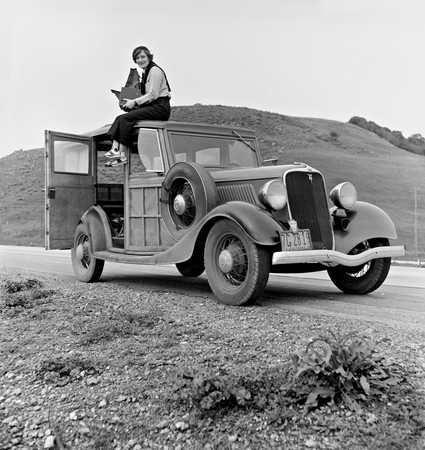
Photograph of Dorothea Lange,
Resettlement Administration photographer,
in California, c. 1936
The car is a 1933 Ford Model B (AKA “V8”).
She is -as well as Russell Lee and the other FSA photographers- the spiritual “Godmother,” of this site.
_______________________________
This is a picture of Dorothea Lange, at work. She was one of my earliest influences (the other was Weegee).
South El Paso Street
March 14, 2007
Foto: Jaime Ojo
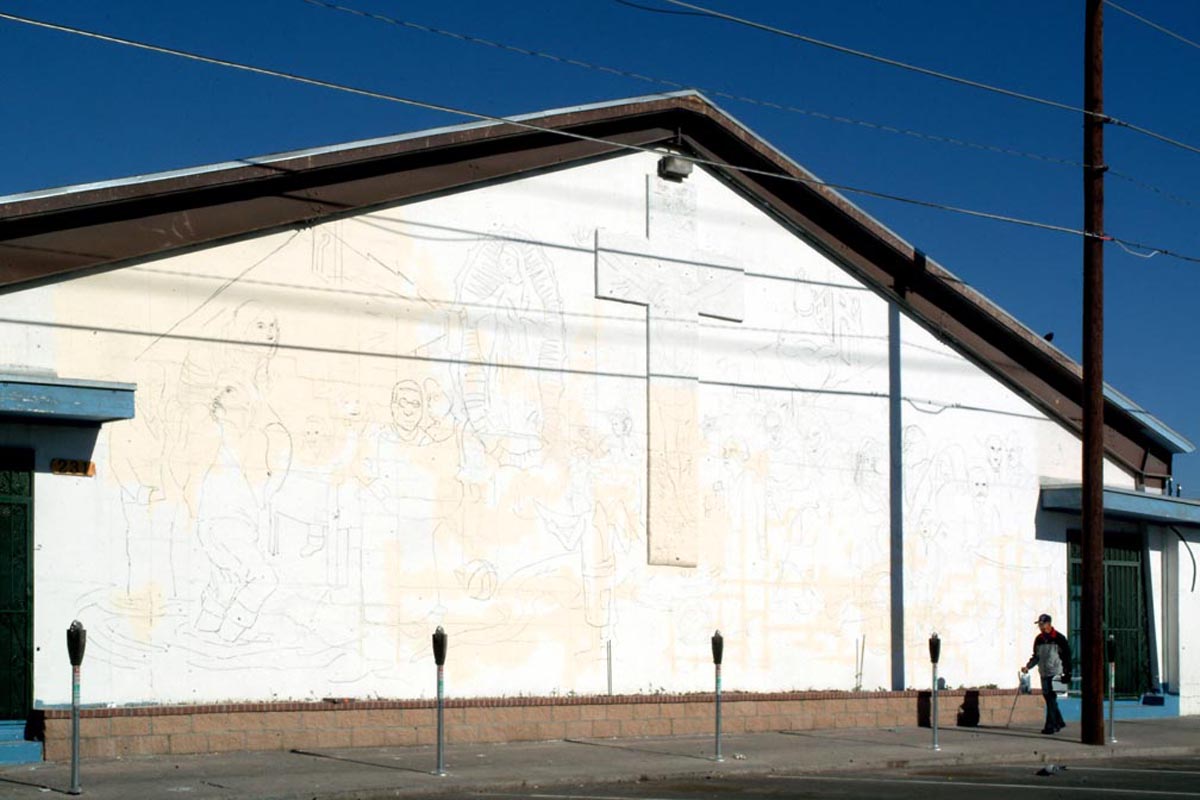
Day 2 / Christmas Eve eve
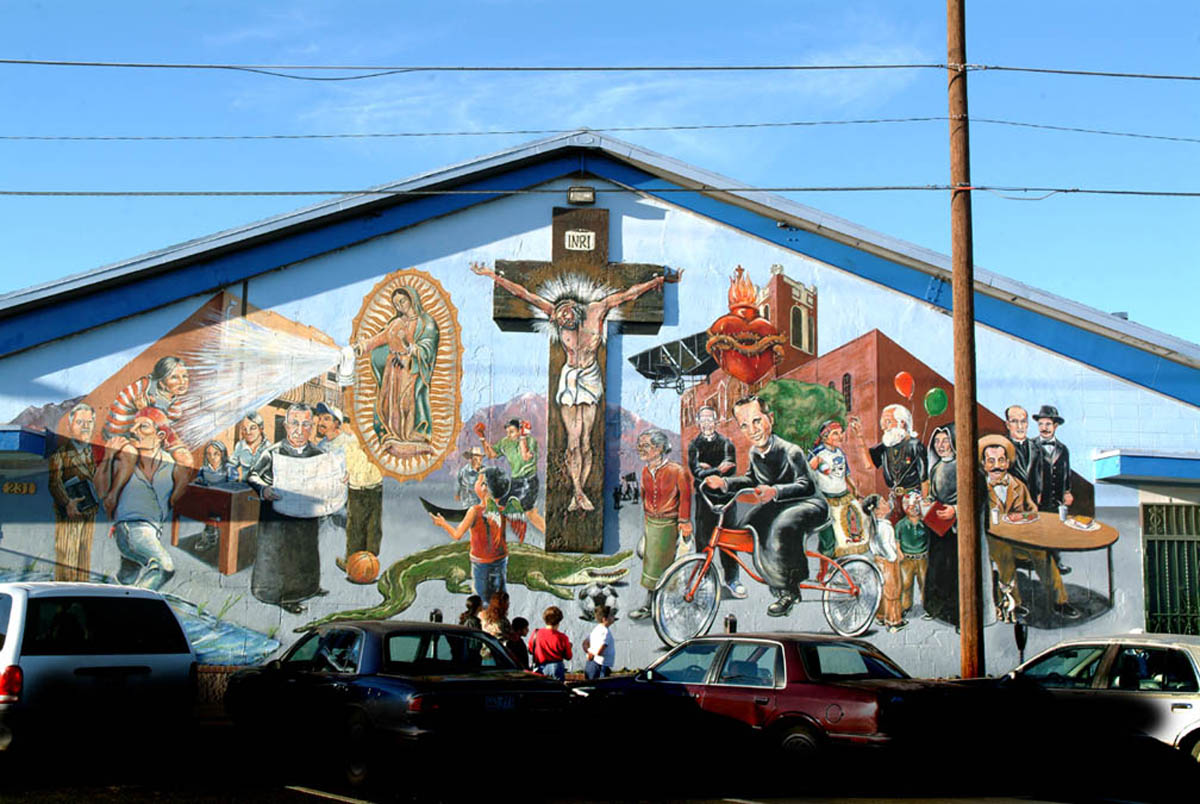
Day 44 / Finished
by Nathan Zarate
photograph by Jaime Ojo
Artist Francisco Delgado, his brother Oswaldo, his friend, artist Mauricio Olaque and a large helping hand from Bowie High School students and neighborhood residents began the Sagrado Corazon Mural on the night of Christmas Eve eve, 2006.
The mural, with support from Sagrado Corazon, local businessmen, concerned residents and ex-residents of the Segundo Barrio,
Whacked
photo by Jaime Ojo
Artist Francisco Delgado with the assistance of Artist Mauricio Olague and numerous south side student volunteers have, once again, affirmed that El Segundo Barrio is the coolest neighborhood in El Paso.
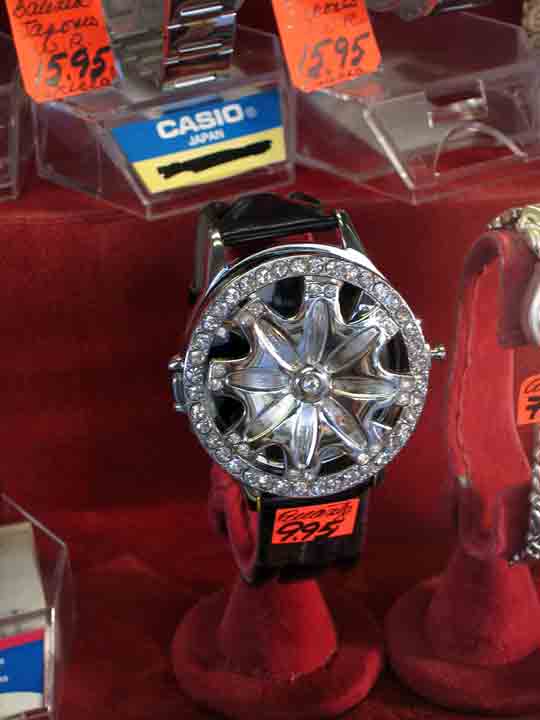
Window Watch
Downtown, El Paso, 2006
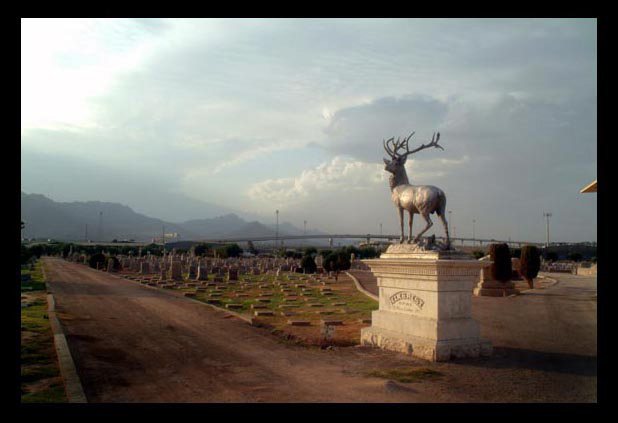
June 2006, Evergreen Cemetery, El Paso, Texas

The Border(PBS) | About the Show
Produced by Matthew Sneddon, KNME-TV, Albuquerque, New Mexico 
The economies of Juarez, Mexico and its sister city, El Paso, Texas are driven by a system of assembly plants known as maquiladoras. There are more than 600 maquiladoras in Juarez, two-thirds of them owned by U.S. companies. Since the first maquiladora was built in Juarez in 1976, the population of the city has increased nearly five-fold to more than 1.25 million, making it the largest Mexican city on the border. The Rio Grande fuels Juarez and El Paso’s water supply.
However, the more than 10 million people who live in these desert communities have begun to exhaust the Rio Grande’s capacity to support them.
This segment focuses on one Rancho Anapra family faced with the realities of living in a desert community with no running water. It examines the factors that contributed to growth of this particular border region: the Rio Grande, the maquiladoras and the promise of a better life.
The Mexican Election: More Collateral Basura
I ran into a friend at the gym of the local university. He is from Mexico’s interior ( but the north). Smart guy, a brother. The university sits smack dab on the border and looks across to Juarez from El Paso. The university has many Mexican nationals mostly from Juarez but with a significant number of citizens from the interior, a majority of Mexican Americans and a smattering of Anglos. Like many things on the Border, it is physically the United States and pragmatically in Mexico (language, culture, food).
I ask him if he voted in the recent election.
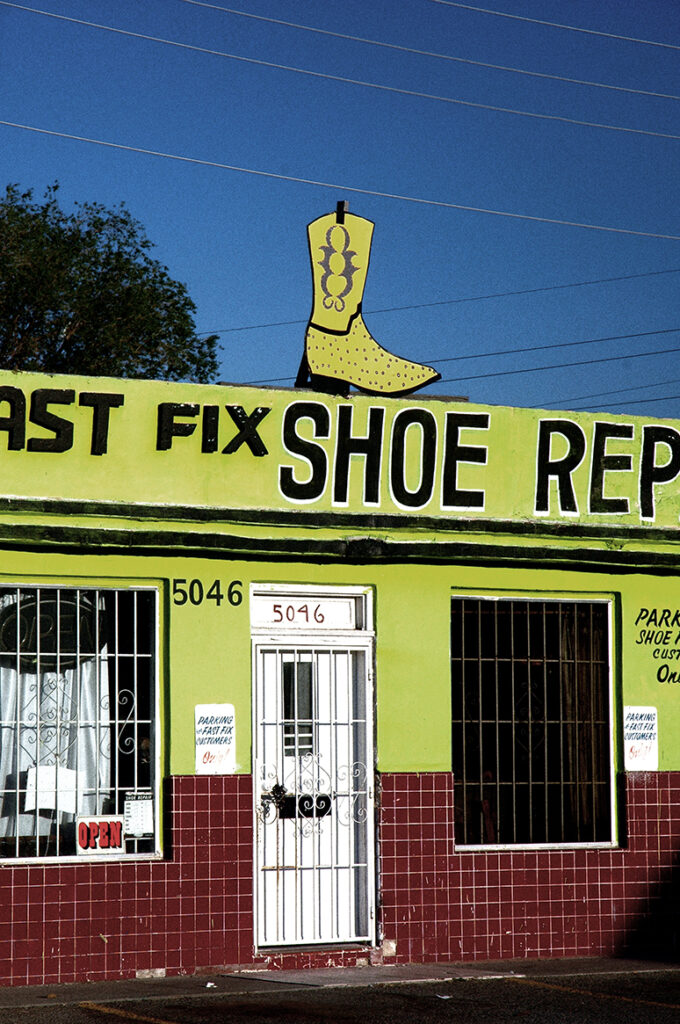
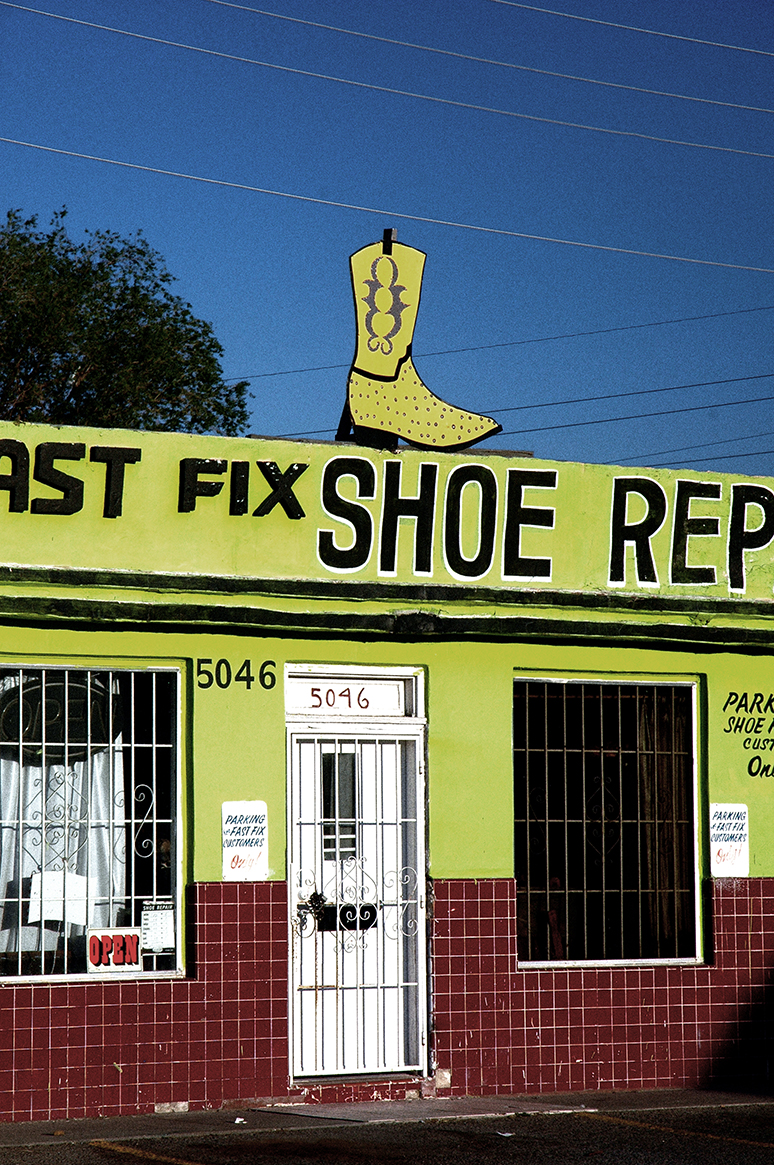
Boot/Shoe, El Paso, Texas, Highway 60/182 (Alameda Street), 2006
Text and Photography by Bruce Berman
Mexican presidential candidate Andres Manuel Lopez Obrador has called for a ballot-by-ballot review of Sunday’s presidential vote. He says the stability of the country is at stake. Mexico’s Federal Electoral Institute Wednesday began reviewing the totals from polling stations to determine whether Obrador’s rival, Felipe Calderon, really won the election Sunday. A preliminary count showed him ahead by only one percentage point. Both candidates declared victory Sunday night.
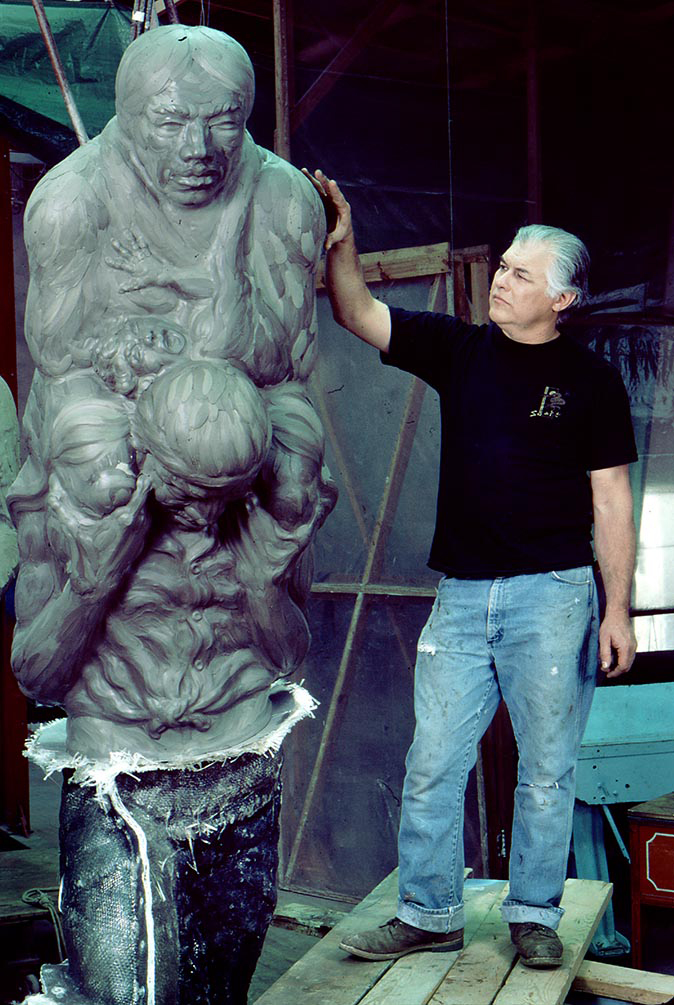
Sculptor; Born July 30, 1940; Died June 13, 2006
Luis Jimenez, a successful but often controversial sculptor, has died after being struck by a falling part of one of his works.
Authorities described the incident as an industrial accident. A segment of a sculpture came loose while it was being moved with a hoist at Jimenez’s New Mexico studio on Tuesday.
It struck the artist, pinning him against a steel support. The 65-year-old sculptor was taken to a hospital, where he was later pronounced dead.
“Luis Jimenez’s loss to the United States, to New Mexico, to the Chicano community, is great,” his friend David Hall told Albuquerque TV station KRQE.
“He was an icon, he was a very famous and well-respected artist. We will dearly miss him.”
Jimenez, a native of El Paso, Texas, was known for his large and colourful fibreglass sculptures that depicted fiesta dancers, a mourning Aztec warrior, steelworkers and illegal immigrants. His work often started arguments and spurred emotions. “It is not my job to censor myself,” Jimenez once said. “An artist’s job is to constantly test the boundaries.” Jimenez’s Vaquero and Plaza de Los Lagartos sculptures became civic landmarks in El
Paso, where he grew up learning to paint and fashion large works out of metal in his father’s sign shop.
“I think Luis shared this border region with the world. Those images will continue to live on,” El Paso art gallery owner Adair Margo said. “You look at the images he left us, and you realise he was a voice that mattered, that
gave form to this region and communicated it with people.”
Jimenez studied fine arts at the University of Texas in Austin and spent time working in New York. In 1969, he created Man on Fire, a sculpture of a man in flames that drew its inspiration both from Buddhist monks in South
Vietnam who burned themselves and the Mexican story of Cuauhtemoc, set on fire by Spanish conquerors. The sculpture was displayed at the Smithsonian Museum.
Jimenez won numerous awards for his work. More recently, he completed a mud casting of firefighters and three fibreglass flames as part of a memorial for Cleveland. He was also working on a piece that was destined for Denver International Airport.
Sculptor; Born July 30, 1940; Died June 13, 2006