Search results
250 results found.

On The Edge of the Edge – The U.S. – Mexico Border
250 results found.
Lomas del Poleo/Juarez, Chihuahua/Mexico
June 20, 2009
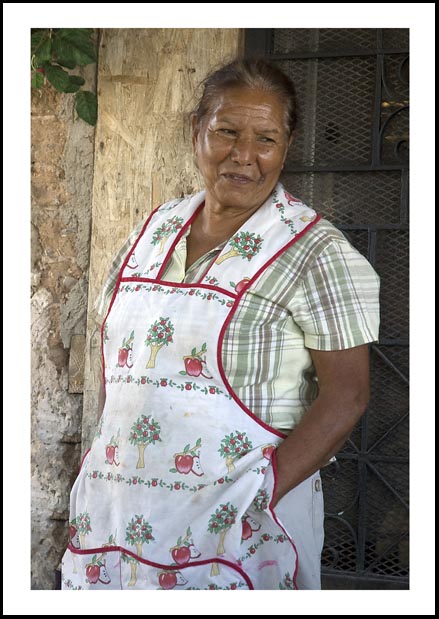
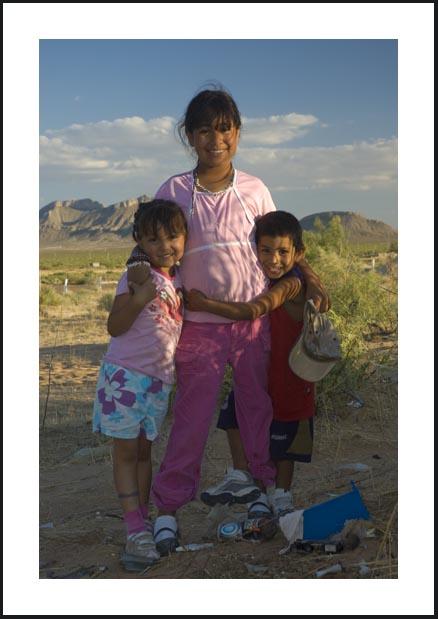
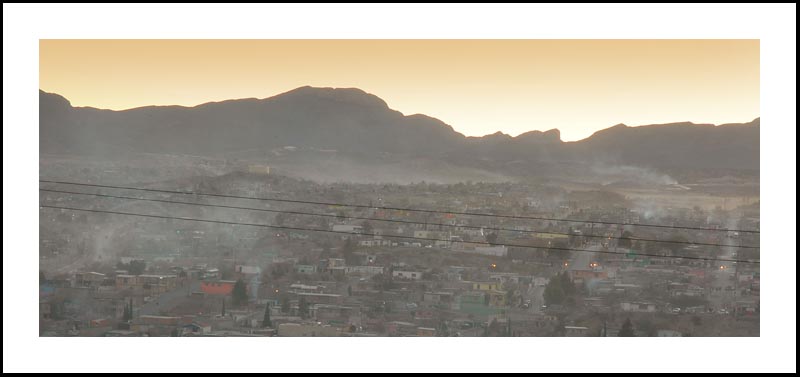
Lomas del Poleo. The battle goes on. More people leave. People fight to stay. A mean strip of ten lane highway has snaked its way through Lomas del Poleo (see previous posts or Google it). The Developers got what they needed and left what they didn’t, more or less. They don’t even blink as they plow ahead. This highway is going to happen, no matter what. The development will follow, is gonna happen, no matter what. Nothing stops the grinder. The Grid viene: Diamond Shamrock, The Chicken Colonel, Pemex, trucks full of electronic crap, three bedrooms, two baths, probably a Wal Mart (whoa..let’s not get too crazy!), the same vexing and stinking Grid that we hate and that people fight to have (Iran, Cuba, Libya, you, too, can have it!). There goes the texture, and, in the case of Lomas del Poleo, the isolation and faux rural vibe, the farm at the edge of the city, the special dream that has been Lomas: get out of the city, raise some chickens, leave us alone. A quiet hope on the edge of always possible chaos that is Juarez.
Remember?
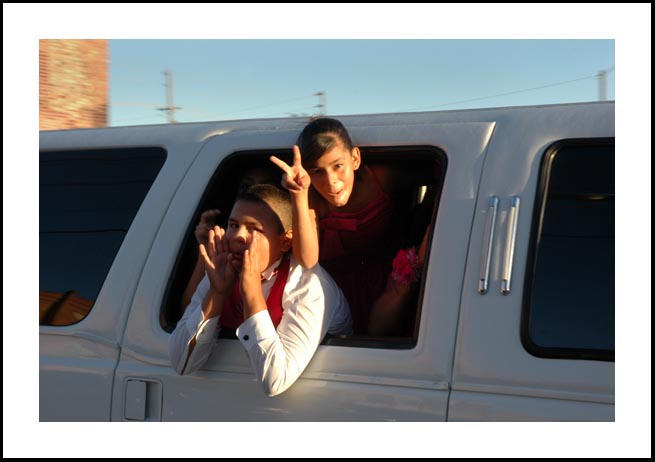
Joy?
Fifteen and delirious, defiant and non-idealogical, optimistic and uncertain, determined and hesitant, at times wildly free and untamed.
Quinceañera.
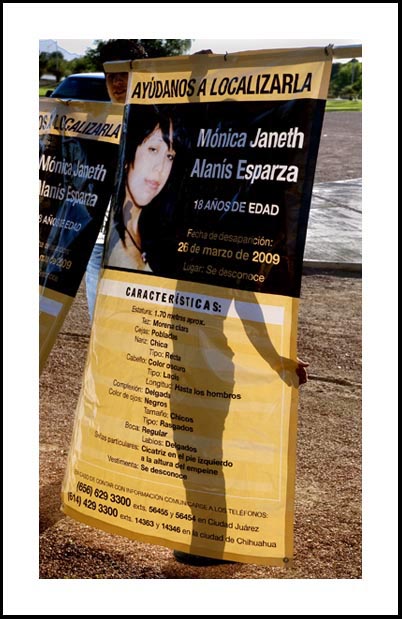
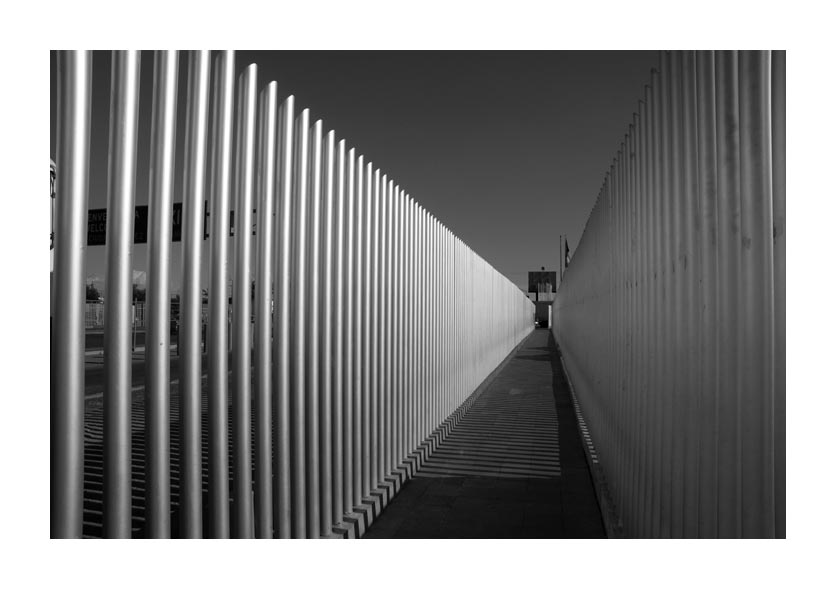
Militarization works two ways.
The bridges between Juarez and El Paso used to be friendly -although tedious if in a car- gateways to good times or better times, depending on which way you were traveling. Or is that just nostalgia?
Well, if not “friendly,” than at least not hostile.
Now they are reinforced pathways to go do what you gotta do. No joking. Get back by dark. All business. No fun or pleasure. Nothing lives. One endures the crossing. Rigid. Steel. Chrome molly tubes. Crash proof.
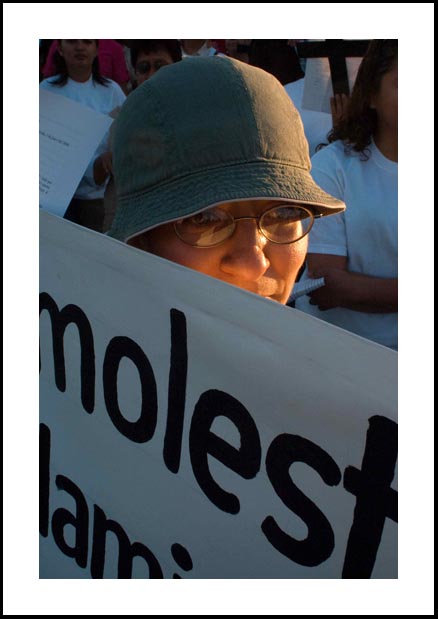
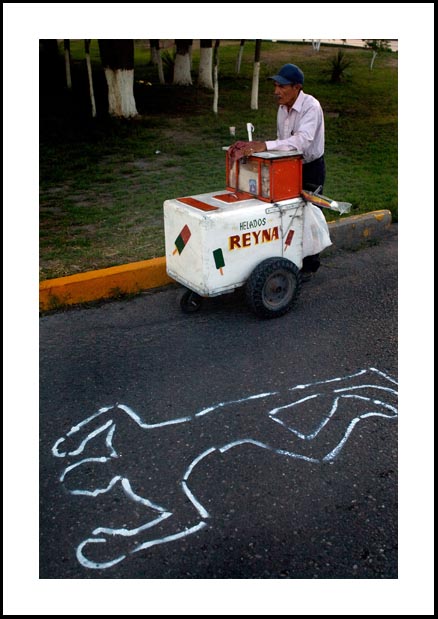
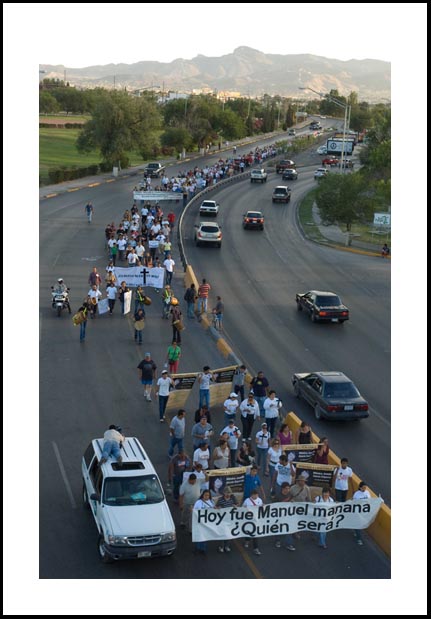
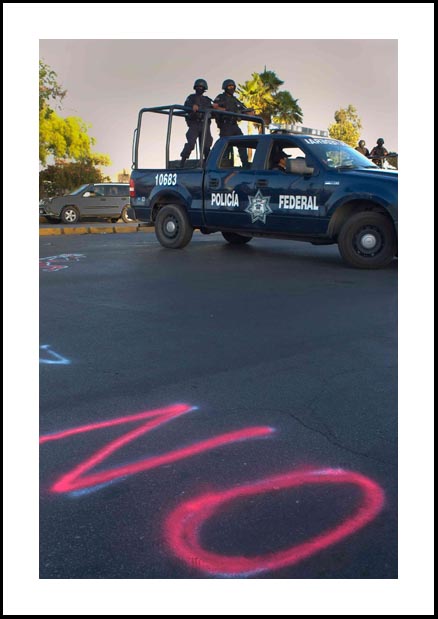
The Megabandera (giant flag) in the Chamizal Park in Juarez is usually the place for joy and pleasure, a meeting place for families, lovers and tourists.
That was before la catástrofe.
The catastrophe.
Before the Cartel War.
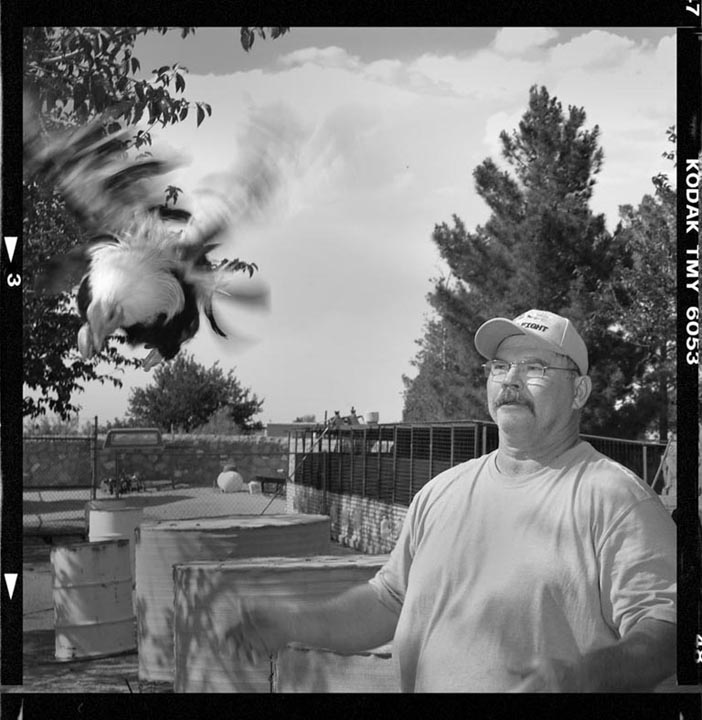
He has been raising these birds since he was a teenager. Fighters are they, he and his birds.
Now, cockfighting is illegal in New Mexico. Outlawed. “Civility,” has come to the funklands. God help us. Now come the thiefs with pens. They been fighting this since Billy the kid.
The rooster man keeps raising his birds. Doesn’t know what else to do.
He speaks of the “Old Man,” and “Ralph,” “Juan Pedro,”and the others. Each has a name. There are hundreds.
When he speaks, he says their names softly, a Lover’s murmur whispering his loves’ names.

Violence? What violence?
Wha-a-a-a…we need distractions?
Si. Si se hace (I am scolding myself right now!).
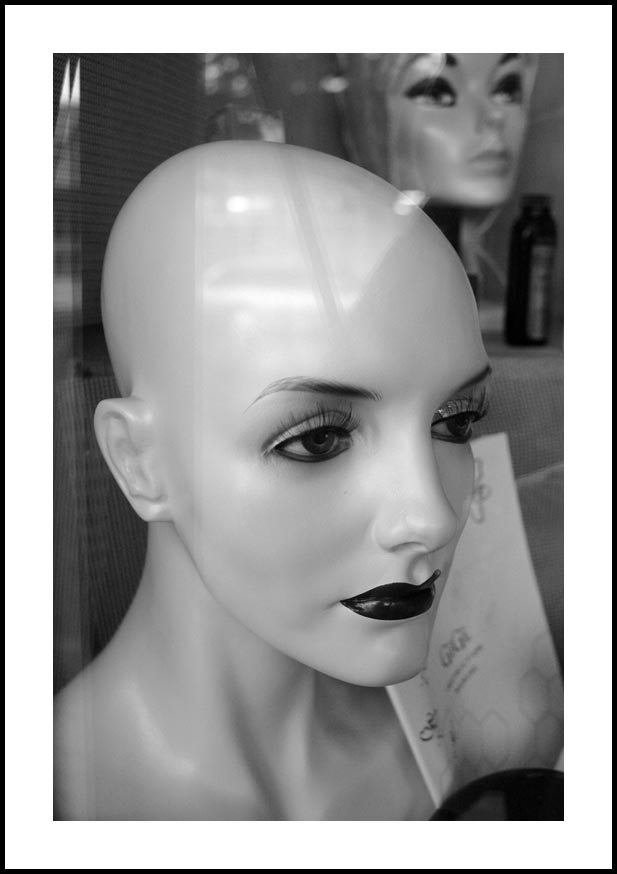
Sometimes it’s more fun to interact with dummies than it is people.
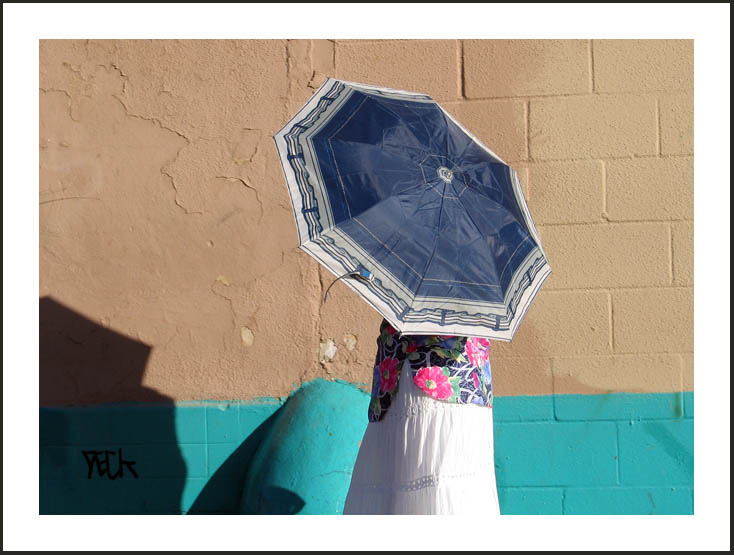
Summer is here on the border. Hot. You know it’s summer when the umbrellas are out. Of course what’s in this image is not very “sopisticated.” Who walks in the Brave New World, anyway?
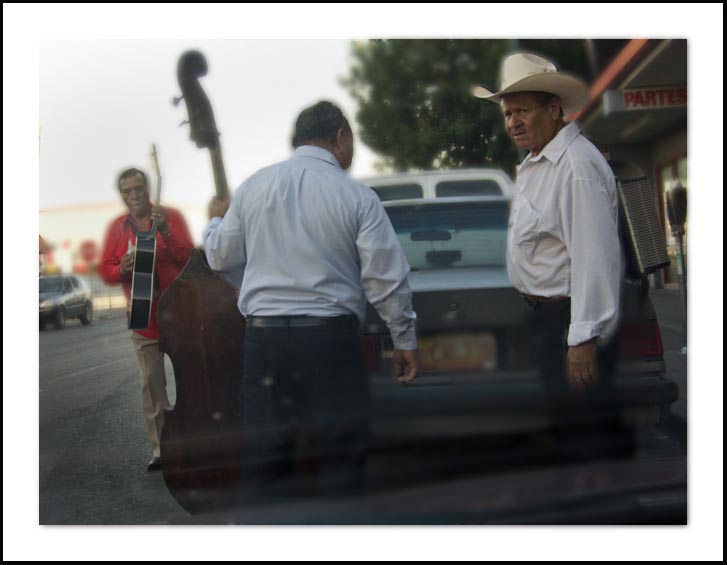
Wary eyes.
Everyone’s wary, in El Paso/Juarez, these days. The border is at war, with itself, with it’s two yin/yang sides, with the Interiors of each of the two sides.
Everyone’s wondering where it’ll end, where they will fall on the have and have not scale, what’ll be left of this little rough Shangri La (not a Shangri La of paradise but a refuge for those who have fallen from paradise. Sort of a suburb of Shangri La).
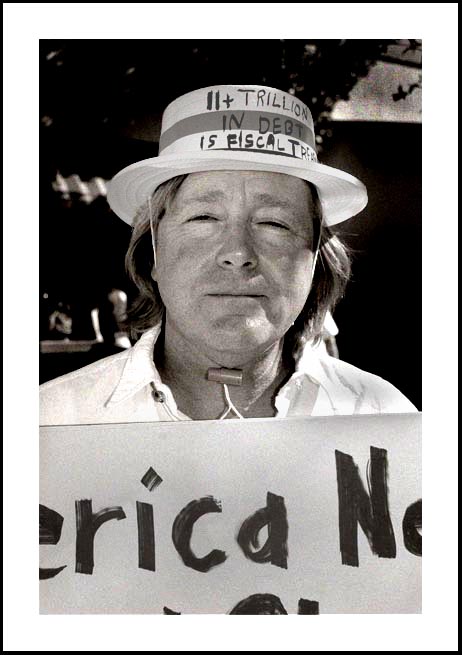
This man was photographed in El Paso, Texas at a “TEA party.” At the TEA party are, mostly, the aged and, seemingly, the innocent, with much esoteric political discussion, predictions of the end of the Republic, impassioned anger and, to be fair, much sincerity. To my “”eye,” it seems a little sad. Sadness for what, I am still trying to process and determine.
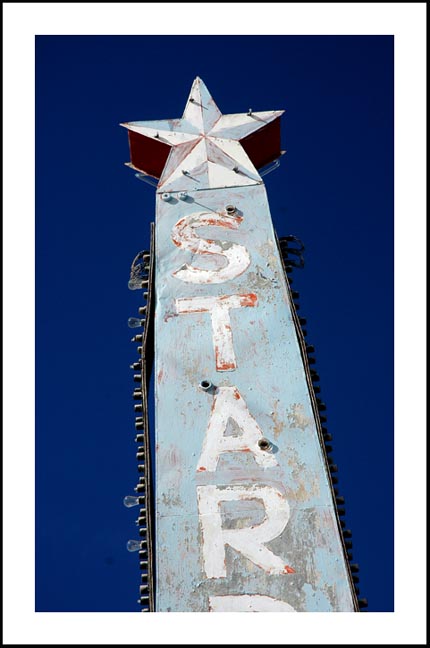
The West, the American Highway (and the American fascination with it), Funk, ain’t what it used to be.
Fine with me!
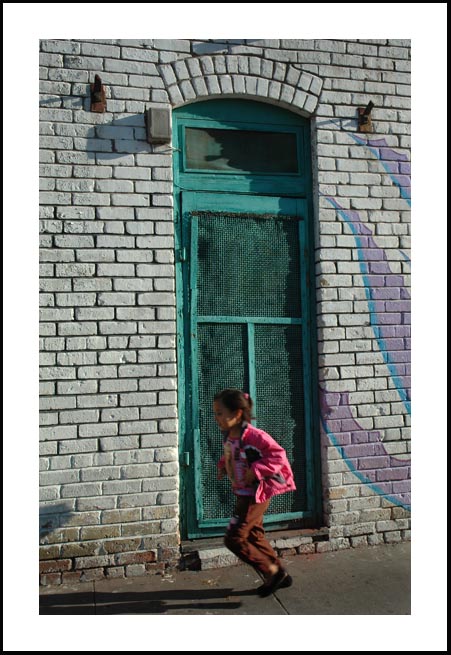
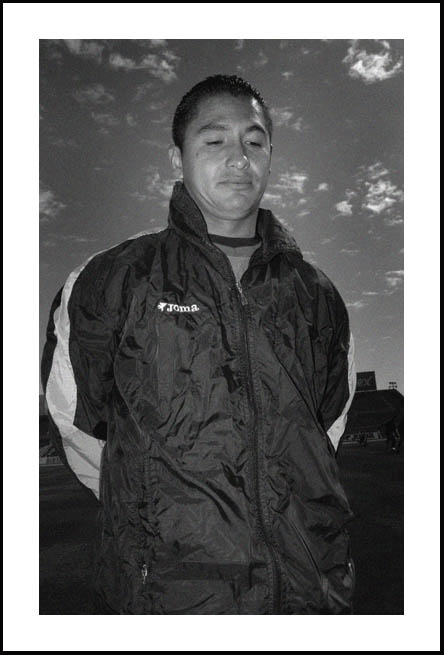
The Juarez Indios are a professional futbol team(soccer). They are in the middle of the Cartel Drug War. Much of the city of Juarez has rallied around the Indios, finding some “normalacy,” in the middle of the troubled Juarez violencia. Julio Daniel “Maleno” Frias is a star of the team, a “striker,” a troubled city’s hero. The city loves him, he’s a hero in the middle of bad news caused by rats. When “Maleno,” was younger he joined a gang. He got shot. He decided to change his life and he did. Maybe this is why the city fell in love with him, he’s a living metaphor for a city’s hopes. Maybe they just like the way he plays: smooth, quiet and intense.
Some players have left the team and others have sent their families back to the cities they came from (some in Mexico, one in Argentina), trying to avoid the touch of violence that has afflicted Juarez, Mexico’s third largest city.
The team is struggling to stay in the top tier of Mexico’s professional soccer league.
Attendance is sold out.
Futbol is trumping the war.
So far.
Life goes on.
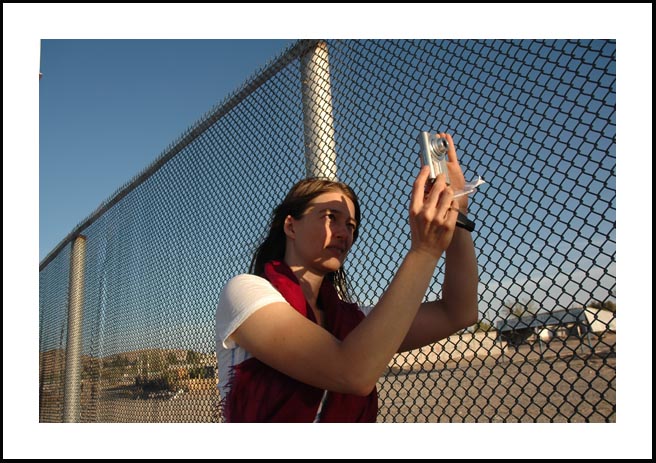
Yesterday I worked with an incredible journalist from Der Spiegel (the German equivalent of Time). She is German, from the north of Germany. Works out of the DC Bureau. Sharp and smart and witty and ironic and puro journalist. We did a story at Fort Bliss. She was bright and lively and brave and charming and funny and we’d had a successful day and did a great story together. She wanted to see “El Paso.”
So we head for the border (I’m a one trick pony. To me, the border is El Paso).
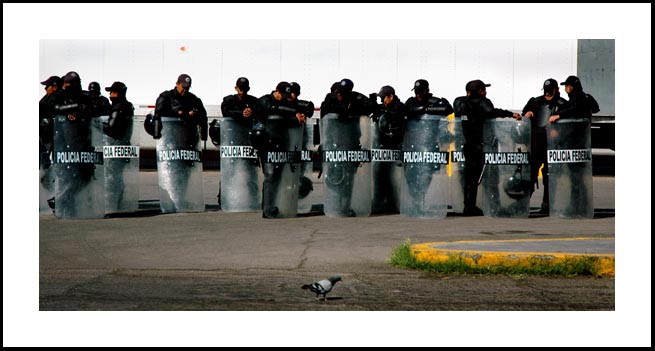
You start to wonder if it’ll ever end but it will end.
La violencia. The violence.
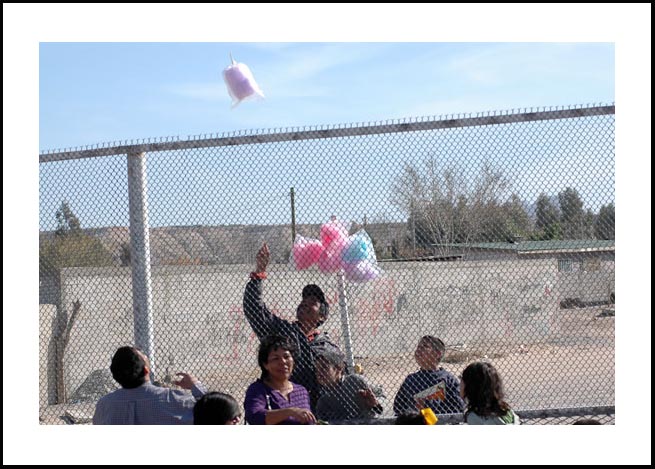
Life goes on.
Mexico is a great pueblo. So is El Paso and southern New Mexico.
One reads the newspapers and one thinks the world has gone insane. Particularly here, on the border.
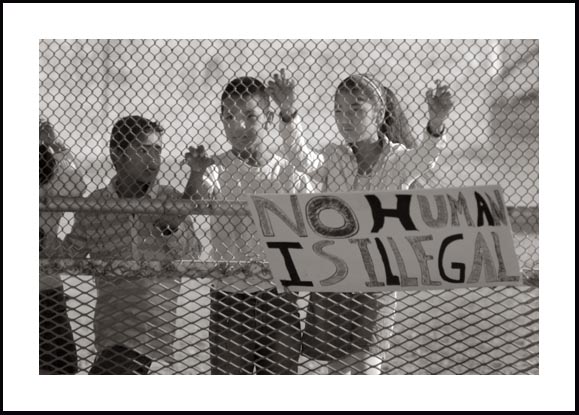
The border fence is a stinkin’ dirty bad joke.
Do these kids look like terrorists or narcotraficantes or, even, the dreaded low wage worker that every American company has winked at, invited, used and exploited for decades?
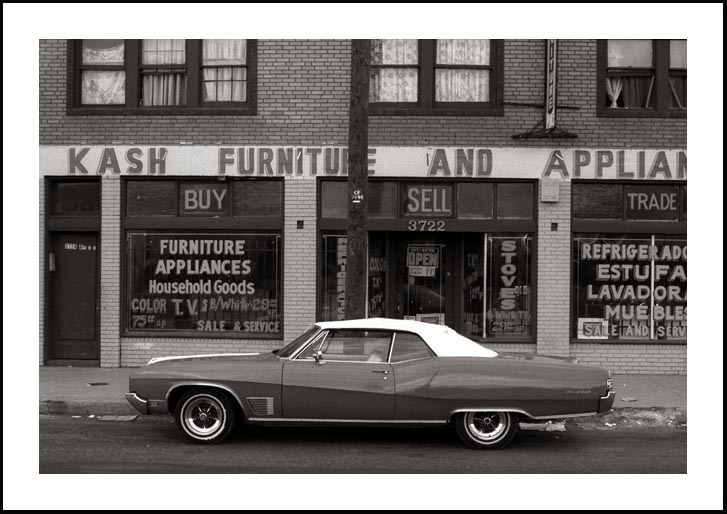
Alameda Street is about (what’s this “about,” stuff?) to get stomped. Progress. New Hospital and Medical School down the Street. Progress.
‘ta bien, really. Time to move on. One thing about Urban Renewal and Plans: we have had the best of it and now you can have the rest. The next “blight,” that I move to -older and wiser now- there will be no Forwarding Address.
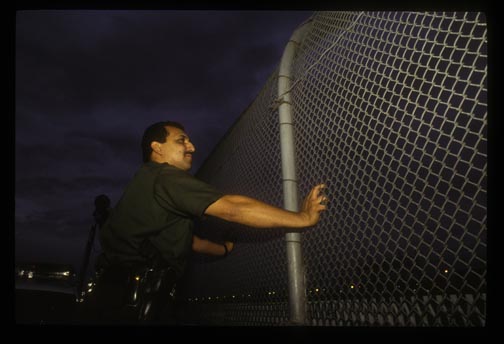
The great Brazilian photographer Sabastio Salgado talks about his work. He is one of the premier “Socially Concerned,”photographers in the world:

Jesus is greeting me. Or showing off his gang signage. Or just jivin’. Behind him, three blocks to the south, is Juarez. Armijo Park, deep in the Segundo barrio of El Paso is Jesus’ refuge.
Mine too.
About Bruce Berman
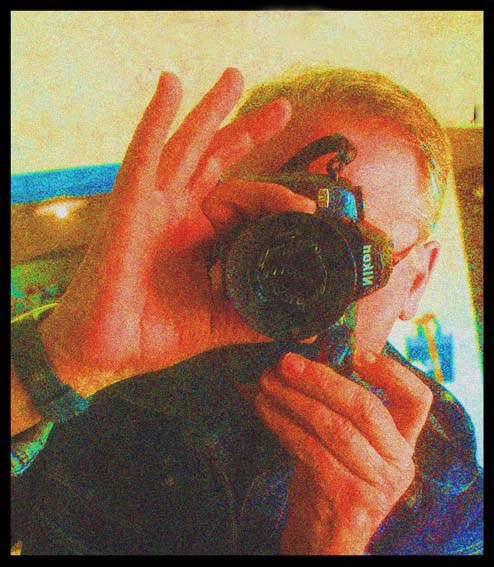
Bruce Berman has been a professional photographer for over four decades. He works in what some have called, “The Concerned Photographer,” style of photography, but brings a poets vibe to his images. His initial documentary projects were in Chicago where he photographed Appalachian migrants to the big city, Black Panthers during the tumultuous 1960’s and the gritty street life of Chicago in its Rust Belt years.
His main work for the past forty years has concentrated on the United States/Mexico border, particularly the narrow stretch of land that encompasses El Paso, Texas and Juarez, Mexico. He also “plows” the southern New Mexico landscape, its people and the vast mysterious lands of West Texas.
After coming back from one of his earliest forays on Alameda Street on El Paso’ south side, in 1980, Berman wrote in his journal, “…I have seen a new world. It is both physical fact and mythical idea. It is a place with a line drawn through it and on each side of that line there are metaphoric mirrors that are reflecting back at each other, perhaps distorting each other, perhaps magnifying each other. It is the US/Mexican border. I will make my stand here. I will try to ‘give face,’ to this place so others can know it, perhaps, even, so those who live in it will know it more deeply.”
The aggregate result of that effort resides in two main bodies of work: The Border Project: 1985-2007, and Juárez: Cartel War Years (2007-2011) .
Additionally -concurrently- he is a chronicler of the disappearing lands beyond cities. He calls this series The Funklands, and notes, “Nothing is just laying around anymore. It’s scooped up, trucked away, rebuilt and becomes a mega buck treasure. My treasure has been the texture of the land and the stuff laying around that attests to who was on that land before… well.. before the homogenization of America.”
Berman lives and works deep in the borderlands of El Paso and Juárez, three blocks from the international bridge that connects Juarez and El Paso, surrounded by and isolated in the the vast lands of West Texas and northern Chihuahua. He refers to this as the “City-State of No Man’s Land.”
Berman continues to cover his “beat,” for major publications throughout the world and for his own book publishing enterprise. The Border Blog Press. His recent book, Walking Juárez is a compilation of photographs and stories covering the years 1975-2018.
Since 2008, Berman has added “Professor” to his name. He now teaches photojournalism at New Mexico State University (NMSU), 50 miles north of the El Paso/ Juárez ports of entry, in Las Cruces, NM. His teaching concentration is on Documentary Photojournalism and multimedia reporting. He still does occasional assignments and personal documentary work but spends equal time “Passing the torch,” he says.
Lately Berman has concentrated on doing books: Walking Juárez, 2017, Cutting the wire, 2019 and his newest, BACKLAND, 2022.
Many of his students don’t know about the border too much, but for the most part are of it. The G Generation, he says, “… are the hope of photojournalism, and maybe the world.”
He thinks working with them is his best project ever.
About the Website
The Border Blog covers the news, opinions and culture of the 2000 mile border of Mexico and the United States, concentrating on the epicenter of El Paso and Juarez. The Border Blog is not meant to be a news source as much as it is meant to be a news “feel.”
Another “border,” of interest to Berman is less obvious, the border between The Grid (his descriptor) and and those on the margins, unwilling or unable to keep up with “development,” and “progress.”
The site is a collaborative project. Besides Bruce Berman, who acts as editor and photographer and sometimes writer, the staff includes writer and painter, Juarez native and resident, Nathan Zarate, and, Beatriz Andino Zamora, a poet and writer from Zacatecas, Mexico. Zarate and Zamora post occasional articles concerning the politics and history of Mexico, in general and La Frontera, in particular. The site is always appreciative of the creative inspiration, brilliant chutzpah and deep goodwill -as well as extensive Web skills- of Manuel Rivera, a fronterizo “to the bone.”
Contributions to the site are welcome. Diverse viewpoints will be cherished. The site’s point of view and orientation will be no mystery to its readers, however, there will always be plenty of room and appreciation for other voices as long as they are informed, well articulated and sincere and fueled by passion tempered by reason.
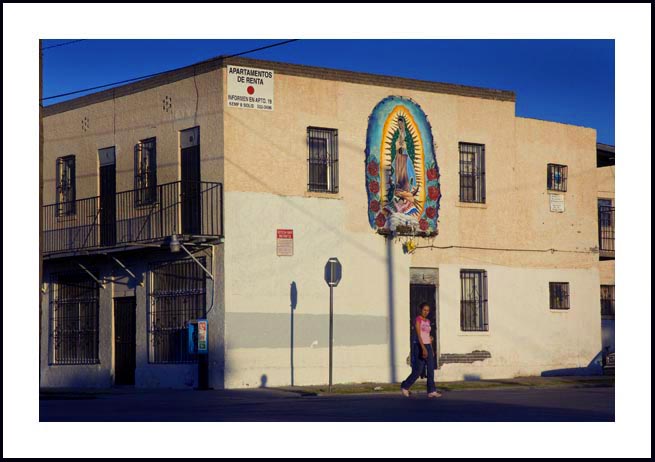
El barrio is a community. Bruised. Not what it was. Sitting on the border and prime target of speculators, er…ah…read that as “Developers,” but still standing. Go back and ask anyone in any American city, for the past 60 years if “Urban Renewal,” was about construction or destruction. If you actually need to, go ahead.
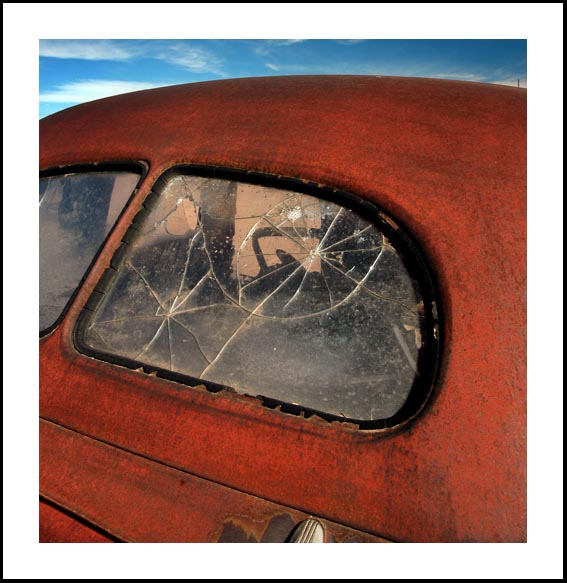
There I am, tooling through the vast landscape of West Texas, working for an English language newspaper working out of Abu Dubai, Arab Emirates. Don’t ask. I’m not sure I understand the assignment. Something about Bush returning to Texas and illustrating what two brothers, who were doing a road trip, saw (except, according to my editor, they were really bad photographers). What that has to do with West Texas, I can’t figure.
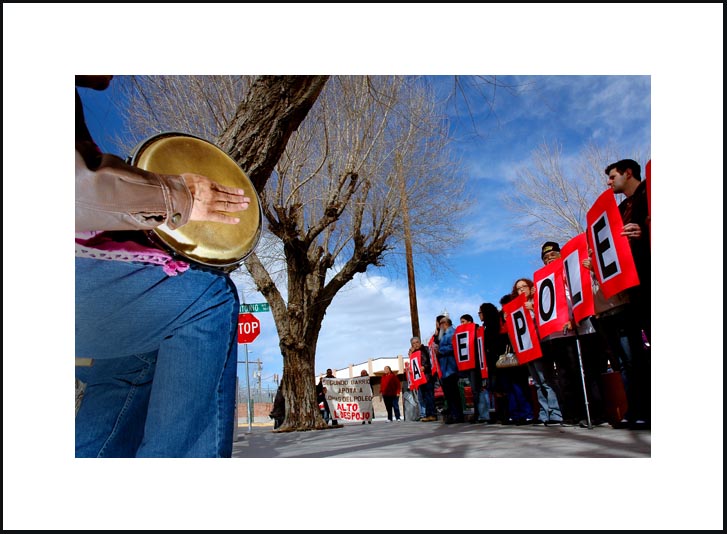
It was only a year ago that the plight of the people of Lomas del Poleo was the highest priority of cross border activist politics. The people were systematically being robbed of their land, their court actions were, basically, being stonewalled, the injustice of the top to the bottom was blatant and a coalition of forces stepped up and, on this day did, a bi-national protest at the Mexican Counsulate in El Paso and the Mexican Counsulate in Jaurez.
That seems like long ago.
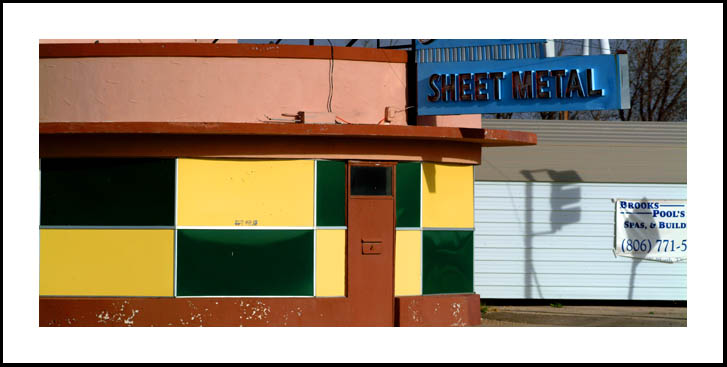
Been working on the Land Before the Interstate (LBI) series for a long time. Every chance I get to go there I grab. Time machine. No Interstate. No giant concrete suppository running right through your heart. The kinds of places Duvall would crash down in in Tender Mercies.