Search results
23 results found.

On The Edge of the Edge – The U.S. – Mexico Border
23 results found.
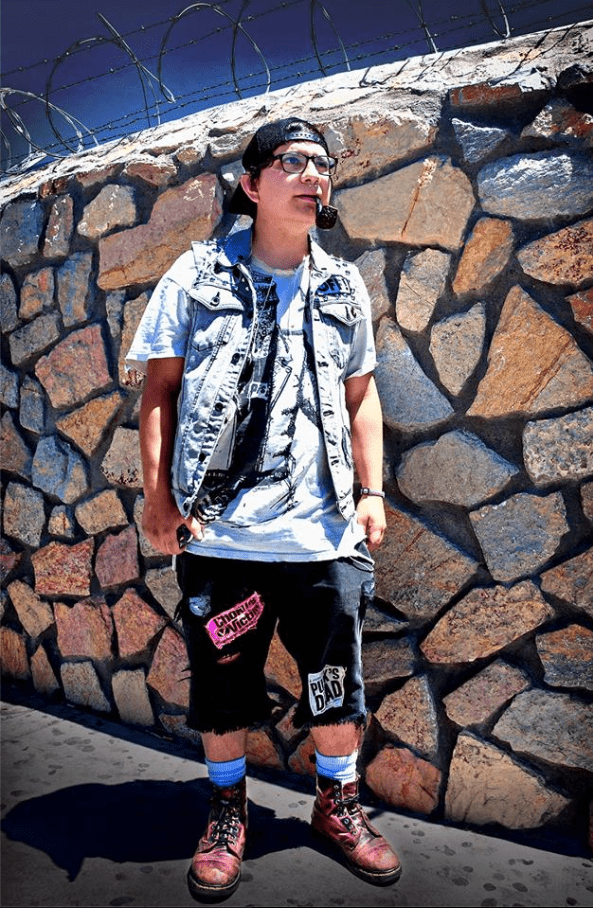
Text and Photo by Bruce Berman
No telling what and who will come over the Cordoba bridge that links El Paso, Texas with its sister city Juárez, Chihuahua.
In this case, crossing from south to north, was Spencer.
Pipe, a hat that said “F___ Off,” aged Doc Marten’s, punk rock labels every where, he is as ecclectic as the border. In a strange way he, is the border: neither this or that, neither Mexican or American, neither barrier nor passageway.
A friend once called the border a metaphor for a person who has “an undefined personality.”
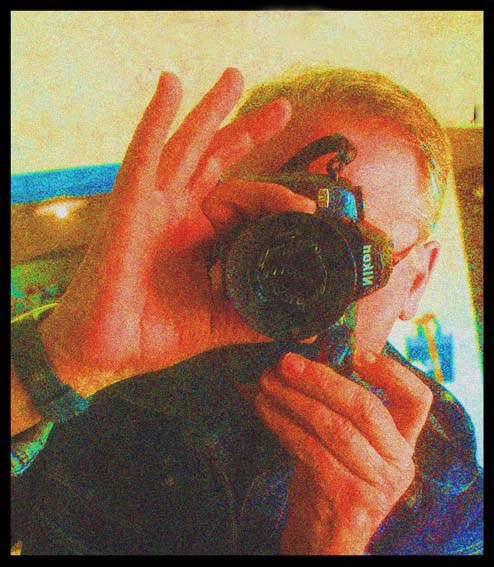
Looking at Spencer -and some others (in my mirror!)- I’m thinking it’s a place for very defined personalities.
The problem is that it’s really difficult to say exactly what they are.
Which brings us back to “undefined.”
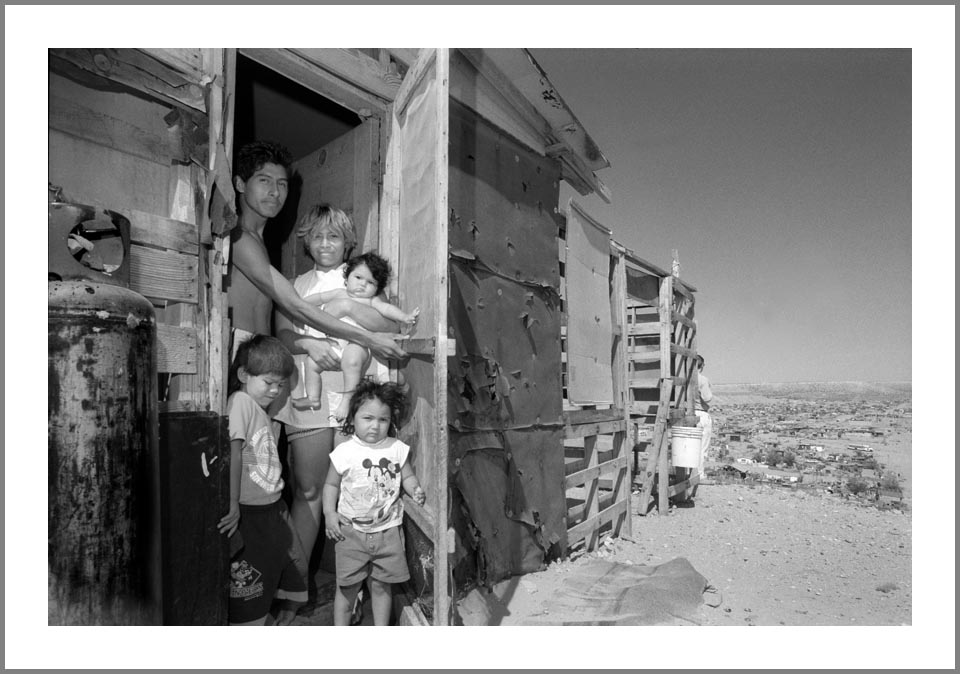
Commentary by the Editor
Juarez, Chih., Mex. — So how did this Cartel War begin and how does it end?
The Border Blog will not answer that today. We look for the things that make the heart tick and leave the fancy thinking to those that make these messes in the first place.
Roughly, for me, it began a long time ago, when the people who have most of the marbles understood that they didn’t have to do a thing about bringing along another class of people who had hardly any marbles at all. Impunity. No apologies. In Juarez the maquila industry began when someone figured out that Labor was a cheap product that Mexico had a lot of and that it could be exchanged for some major profit. Of course nothing so crass as that was said. Rather, this was the bright new day that would lead to a burgeoning “middle class,” and bring everyone up from the bottom. So they said. So the “development” of Juarez began. The powers that be brought willing companies looking for labor and they delivered “labor.” This labor, also known as the citizens of Mexico came from the far flung corners of Mexico. They had nothing else to do and would work at any price, went the theory. Everyone would be happy. You move here, we’ll give you subsistence (and societal dislocation), and we’ll go to the bank. Everyone will be happy.
Right?
When I first started photographing in the maquila factories of Juarez in the early 1980’s the salary in a maquila was $5 per day. Today it’s a little over $7. A full two dollar increase in 20 years. Imagine!
It wasn’t sustainable then and it isn’t now.
The promise of some kind of job, of rising above downright depraved poverty, was strong and people flocked to the border factories. First from Veracruz, then from Durango, then from Torreon and on and on.
If you were a Mexicano and wanted to improve your life without the terrible alternative of actually crossing the border and trying to make it work in El Norte, you headed to the maquilas of Juarez or Tijuana or Nuevo Laredo. If you made that journey you left your culture and customs behind. This was the brave new world.
Bienvenidos campesinos.
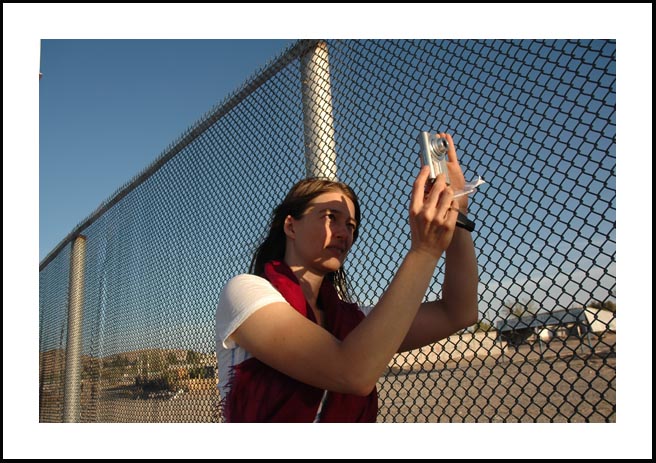
Yesterday I worked with an incredible journalist from Der Spiegel (the German equivalent of Time). She is German, from the north of Germany. Works out of the DC Bureau. Sharp and smart and witty and ironic and puro journalist. We did a story at Fort Bliss. She was bright and lively and brave and charming and funny and we’d had a successful day and did a great story together. She wanted to see “El Paso.”
So we head for the border (I’m a one trick pony. To me, the border is El Paso).
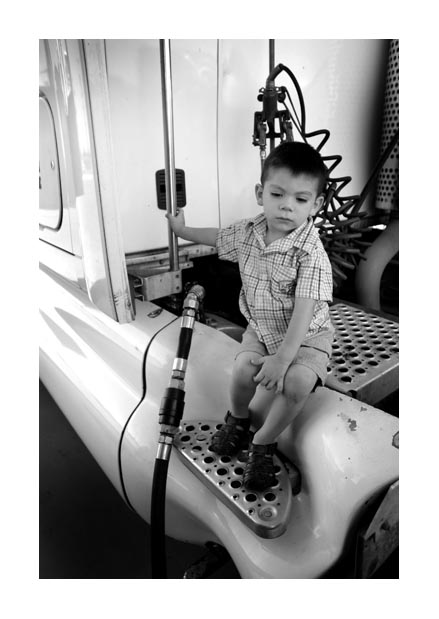
Ciudad Acuna, Mexico
A Mexican border city has begun fining U.S. drivers who cross the border to fill extra drums, tanks or barrels with government-subsidized Mexican fuel.
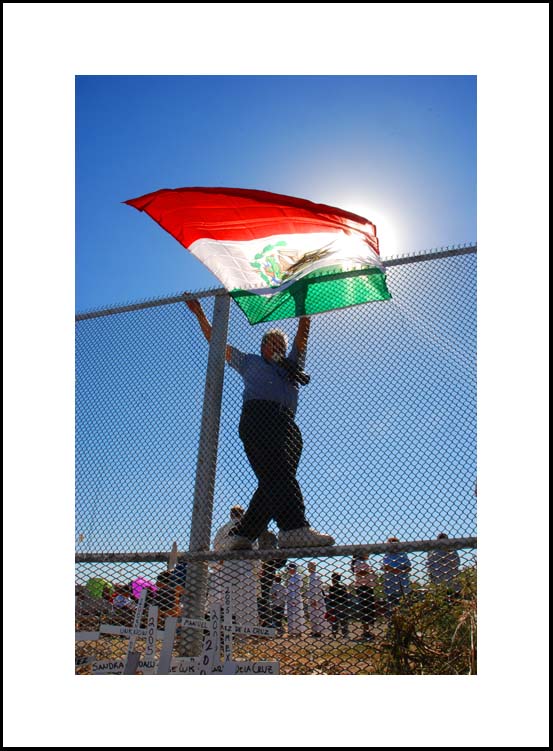
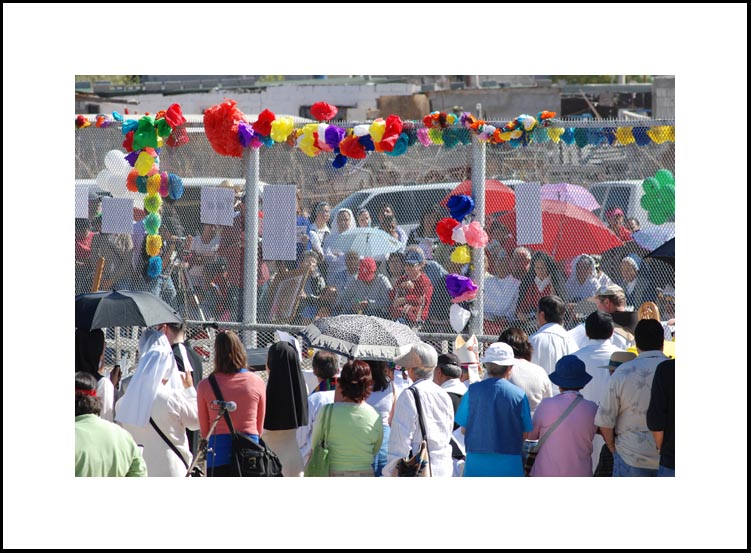
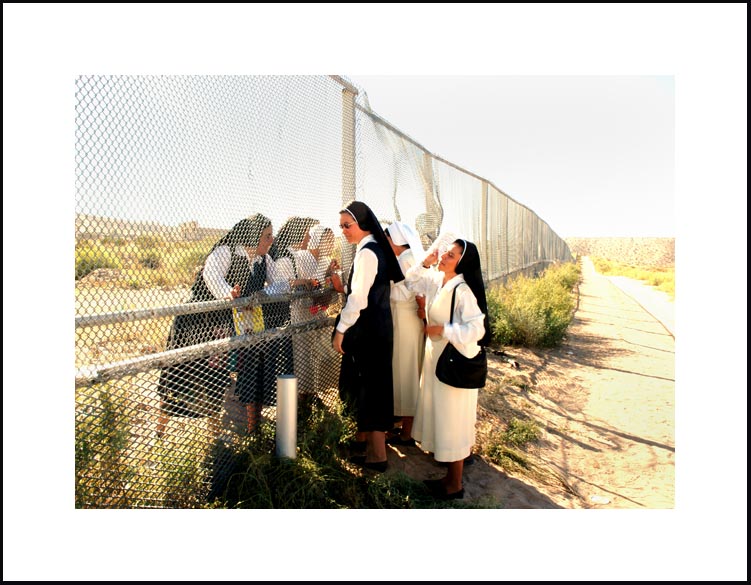
Today the Bishops of El Paso, Las Cruces, NM and Juarez, Chihuahua, Mexico met at the border fence at Sunland Park, NM and Anapra, Chihuahua to protest current immigration policies and to promote understanding for immigrants from Mexico, as well as world wide.

Blogmeister’s Note: This is a piece written by a friend of The Border Blog. He is a Mexican National, a university student who attends the university in El Paso and a good guy. Especially, if one is looking for an insight, note the second to last paragraph and multiple it by the millions.
The BB welcomes all viewpoints, especially this one . Thank you, Javier :
Why I Voted For Felipe Calderon
I was listening to my aunt Lupe while we were driving down Periferico
Sur highway about a month ago in Mexico City. She told me about Andres Manuel Lopez Obrador (editor:AMLO), the presidential candidate (at the time), and how he managed to obtain the votes of lots of people in Mexico City by offering social assistance to senior (over 65) people and single moms while he was the city’s mayor.
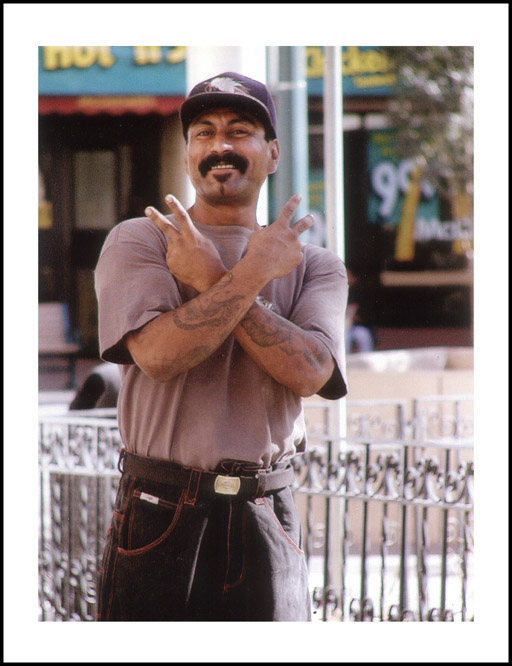
El Paso’s Central Plaza, is officially named San Jacinto Plaza. It is located in the middle of El Paso’s original business district and about 3/4 of a mile from the border with Ciudad Juárez, Mexico. In recent times its unofficially been called Plaza de los Lagartos which refers to the old pool in the middle of the plaza that used to be the home of alligators (lagartos in español) which no longer existed after the early 1970s. The alligators were later commemorated, in 2006, by a fiberglass sculpture of alligators by native son and internationally renowned artist, Luis Jimenez.
Commentary by Border Blog Editor
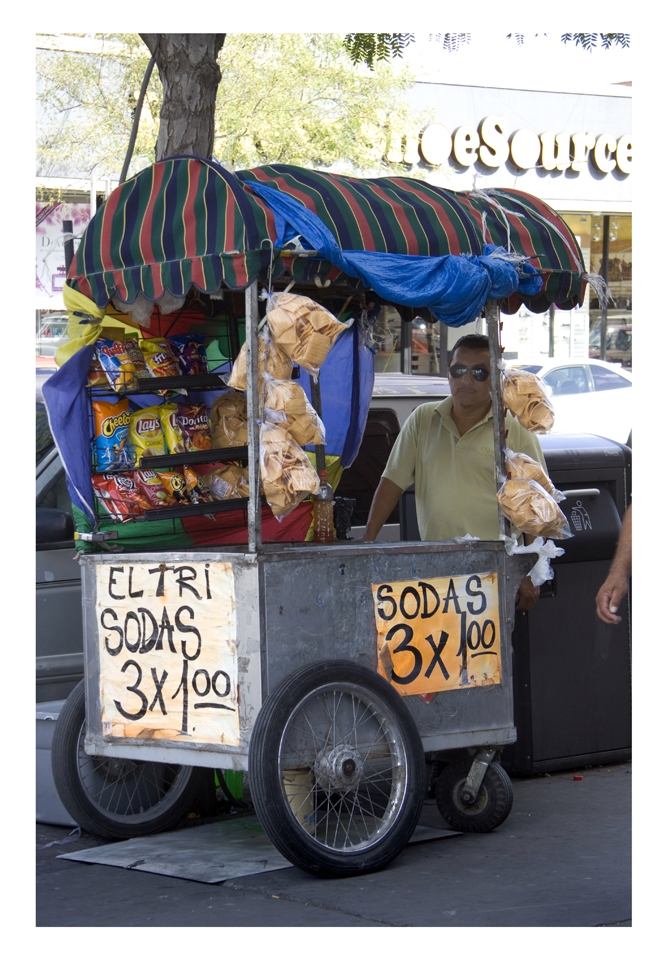
El Paso Street in El Paso. It’s the first block of America. Or the last block of America. It depends on which direction you’re headed.
Going north it’s the first. Going south, it’s the last, the next block is Mexico.
This is a street of life, bulging with people, an array of goods from school and household supplies to clothes to audio stuff to high heels to T-shirts with everything from Revolutionaries to cartoons on them. It’s juicy, alive and has texture and odor.
It’s 3D street.
A Dear John Letter to ASARCO
by Bruce Berman
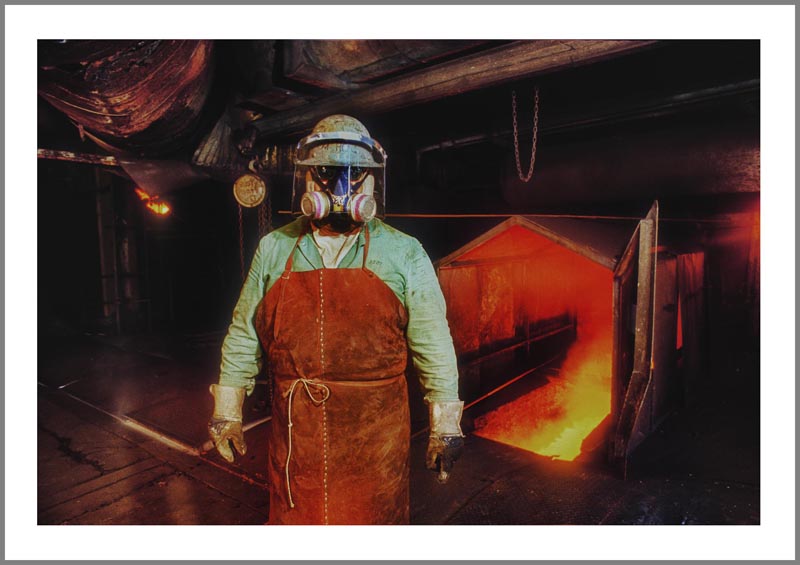
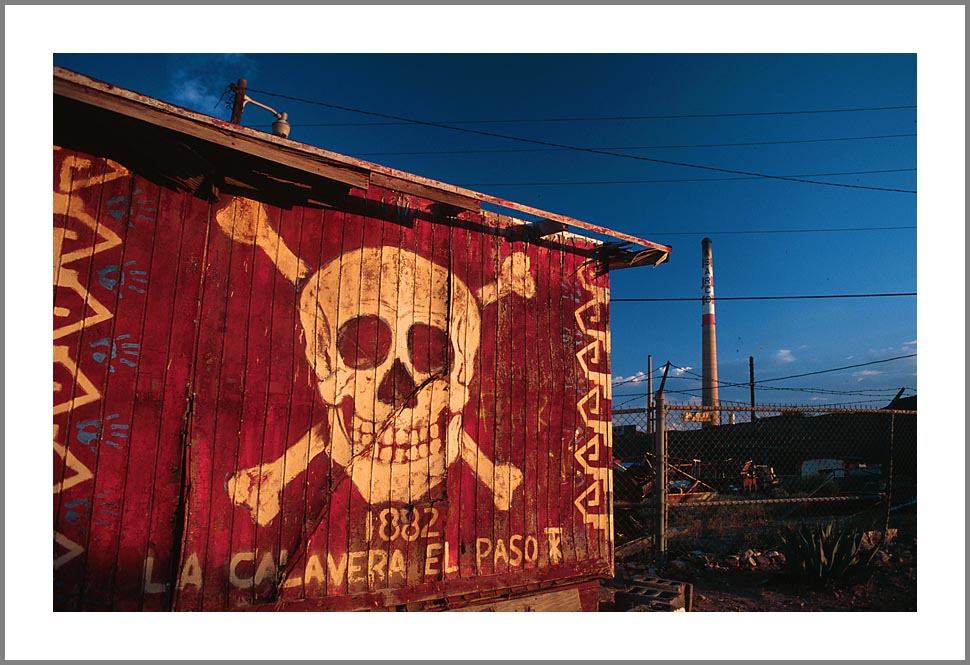
Au revoir ASARCO. You were the spine of the border, a big giant dong sticking up out of the river, pouring flames and sulfur, lead and smoke. The town grew up around you, fed off of you, then outlived you. You looked down on battles and traffic, always with the bifocals of looking at two countries at once. Looking east to El Paso, you looked down on the dusty foothills of the Franklins that became Kern Place and Mesa Hills, the sheik and elite (in its own mind). On the other, looking west, down into the dust and turbulence of Juarez, you looked down onto Colonia Felipe Angeles, which, too was foothills, that became a shanty town which became a barrio which became (shhhh..not quite yet) a path to a port of entry into New Mexico. What a vantage point you have had. When I first saw you I stood up straight, saluted and said, Wow, yes sir!
I dug you from the gitgo, had the pleasure of working inside you, being constantly re-awakened by you, of working inside you near those flames with the weather outside 105 degrees, feeling the comradie of your workers, the satisfaction of being inside something that wild and crazy and productive, a caldron of energy and raw power.
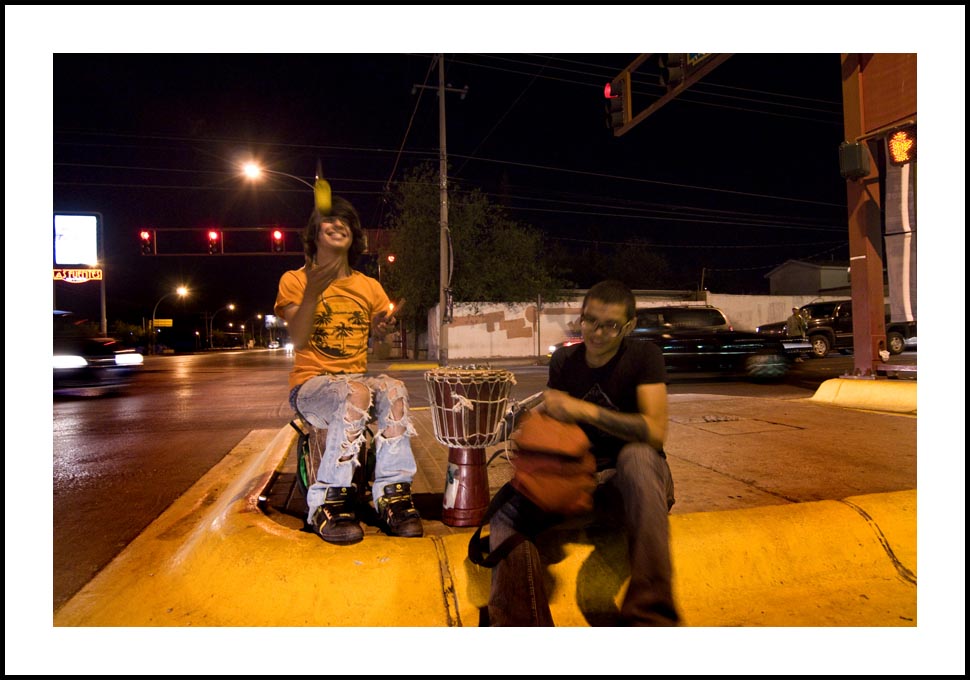
Pictures?
More pictures of dead bodies in the streets of Juárez?
Hard to want to do. I’m not visiting. I live here. It’s better when you have to get the images for your boss/editor and then high-tail it to the airport.
But, I’m not working for a daily paper anymore.
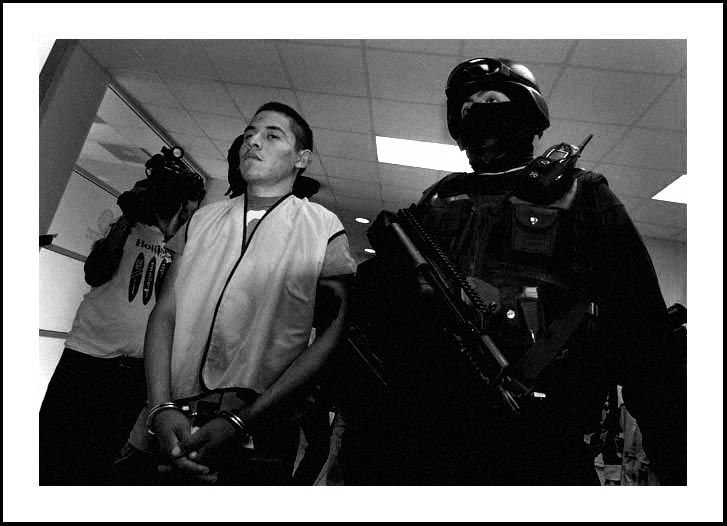
Iasi Emanuel Rodriquez Gamez , aka “El Enano (the dwarf),” 22, is led down a hallway, by a member of the Federal Police at the Ministry of Justice (Procuraduria de Justicia del Estado) in Cd. Juarez, Chihuahua, Mexico.
He is accused of being the leader of a kidnapping gang that kidnapped at least 19 people. Authorities alleged Rodriguez, 22, took orders from suspected kidnappers Ernesto “El Neto” Piñon de la Cruz and Jesus Eduardo “El
Lalo” Soto Rodriguez. This group is accused of committing 39 kidnappings since December 2008. The “El Lalo y de Neto,” gang has operated in Juarez over the past three years.
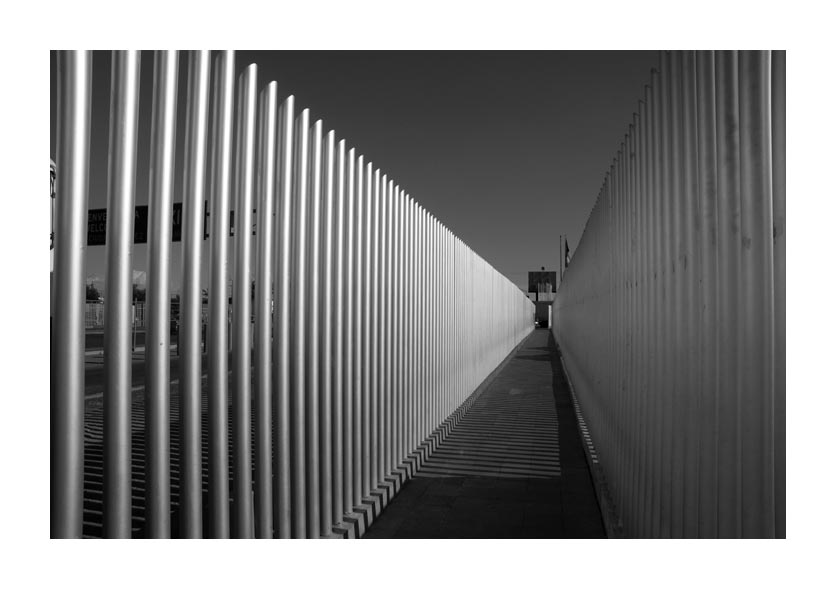
Militarization works two ways.
The bridges between Juarez and El Paso used to be friendly -although tedious if in a car- gateways to good times or better times, depending on which way you were traveling. Or is that just nostalgia?
Well, if not “friendly,” than at least not hostile.
Now they are reinforced pathways to go do what you gotta do. No joking. Get back by dark. All business. No fun or pleasure. Nothing lives. One endures the crossing. Rigid. Steel. Chrome molly tubes. Crash proof.
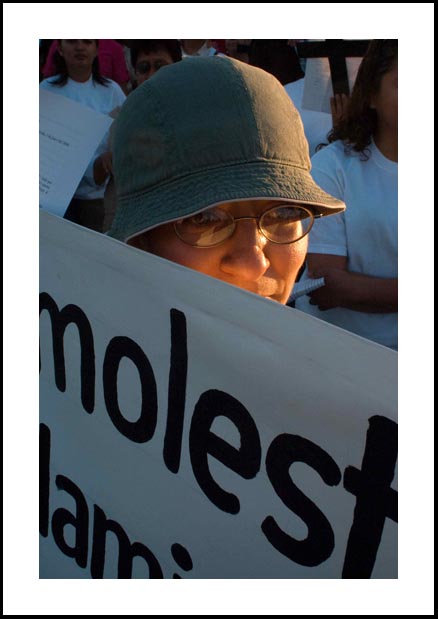
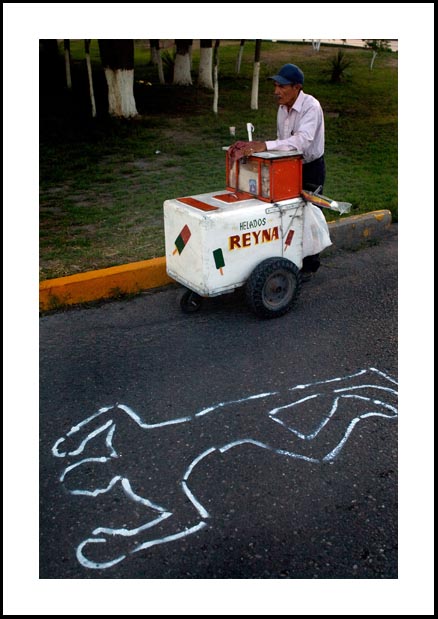
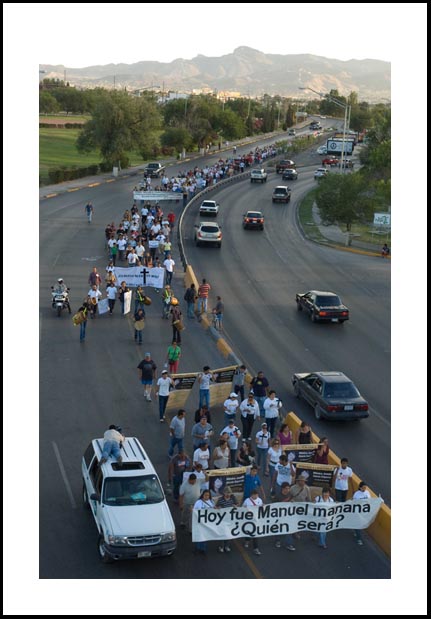
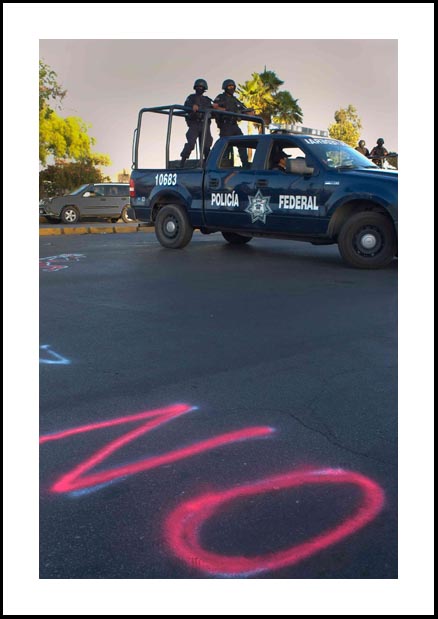
The Megabandera (giant flag) in the Chamizal Park in Juarez is usually the place for joy and pleasure, a meeting place for families, lovers and tourists.
That was before la catástrofe.
The catastrophe.
Before the Cartel War.
About Bruce Berman
Bruce Berman has been a professional photographer for over four decades. He works in what some have called, “The Concerned Photographer,” style of photography, but brings a poets vibe to his images. His initial documentary projects were in Chicago where he photographed Appalachian migrants to the big city, Black Panthers during the tumultuous 1960’s and the gritty street life of Chicago in its Rust Belt years.
His main work for the past forty years has concentrated on the United States/Mexico border, particularly the narrow stretch of land that encompasses El Paso, Texas and Juarez, Mexico. He also “plows” the southern New Mexico landscape, its people and the vast mysterious lands of West Texas.
After coming back from one of his earliest forays on Alameda Street on El Paso’ south side, in 1980, Berman wrote in his journal, “…I have seen a new world. It is both physical fact and mythical idea. It is a place with a line drawn through it and on each side of that line there are metaphoric mirrors that are reflecting back at each other, perhaps distorting each other, perhaps magnifying each other. It is the US/Mexican border. I will make my stand here. I will try to ‘give face,’ to this place so others can know it, perhaps, even, so those who live in it will know it more deeply.”
The aggregate result of that effort resides in two main bodies of work: The Border Project: 1985-2007, and Juárez: Cartel War Years (2007-2011) .
Additionally -concurrently- he is a chronicler of the disappearing lands beyond cities. He calls this series The Funklands, and notes, “Nothing is just laying around anymore. It’s scooped up, trucked away, rebuilt and becomes a mega buck treasure. My treasure has been the texture of the land and the stuff laying around that attests to who was on that land before… well.. before the homogenization of America.”
Berman lives and works deep in the borderlands of El Paso and Juárez, three blocks from the international bridge that connects Juarez and El Paso, surrounded by and isolated in the the vast lands of West Texas and northern Chihuahua. He refers to this as the “City-State of No Man’s Land.”
Berman continues to cover his “beat,” for major publications throughout the world and for his own book publishing enterprise. The Border Blog Press. His recent book, Walking Juárez is a compilation of photographs and stories covering the years 1975-2018.
Since 2008, Berman has added “Professor” to his name. He now teaches photojournalism at New Mexico State University (NMSU), 50 miles north of the El Paso/ Juárez ports of entry, in Las Cruces, NM. His teaching concentration is on Documentary Photojournalism and multimedia reporting. He still does occasional assignments and personal documentary work but spends equal time “Passing the torch,” he says.
Lately Berman has concentrated on doing books: Walking Juárez, 2017, Cutting the wire, 2019 and his newest, BACKLAND, 2022.
Many of his students don’t know about the border too much, but for the most part are of it. The G Generation, he says, “… are the hope of photojournalism, and maybe the world.”
He thinks working with them is his best project ever.
About the Website
The Border Blog covers the news, opinions and culture of the 2000 mile border of Mexico and the United States, concentrating on the epicenter of El Paso and Juarez. The Border Blog is not meant to be a news source as much as it is meant to be a news “feel.”
Another “border,” of interest to Berman is less obvious, the border between The Grid (his descriptor) and and those on the margins, unwilling or unable to keep up with “development,” and “progress.”
The site is a collaborative project. Besides Bruce Berman, who acts as editor and photographer and sometimes writer, the staff includes writer and painter, Juarez native and resident, Nathan Zarate, and, Beatriz Andino Zamora, a poet and writer from Zacatecas, Mexico. Zarate and Zamora post occasional articles concerning the politics and history of Mexico, in general and La Frontera, in particular. The site is always appreciative of the creative inspiration, brilliant chutzpah and deep goodwill -as well as extensive Web skills- of Manuel Rivera, a fronterizo “to the bone.”
Contributions to the site are welcome. Diverse viewpoints will be cherished. The site’s point of view and orientation will be no mystery to its readers, however, there will always be plenty of room and appreciation for other voices as long as they are informed, well articulated and sincere and fueled by passion tempered by reason.
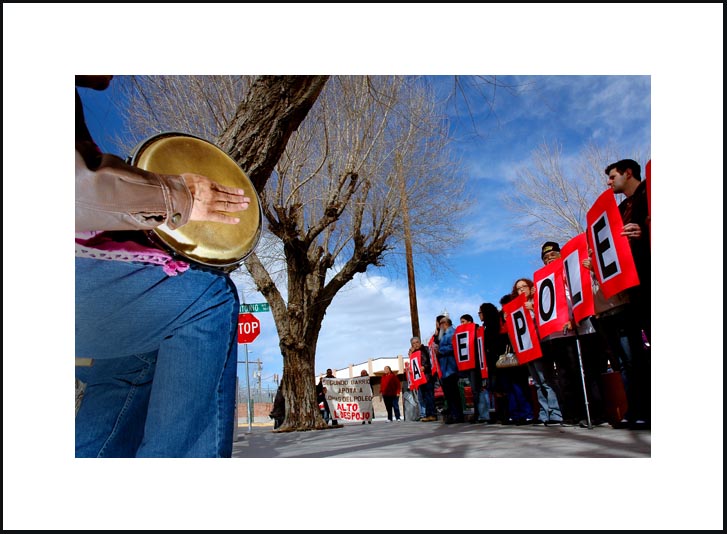
It was only a year ago that the plight of the people of Lomas del Poleo was the highest priority of cross border activist politics. The people were systematically being robbed of their land, their court actions were, basically, being stonewalled, the injustice of the top to the bottom was blatant and a coalition of forces stepped up and, on this day did, a bi-national protest at the Mexican Counsulate in El Paso and the Mexican Counsulate in Jaurez.
That seems like long ago.
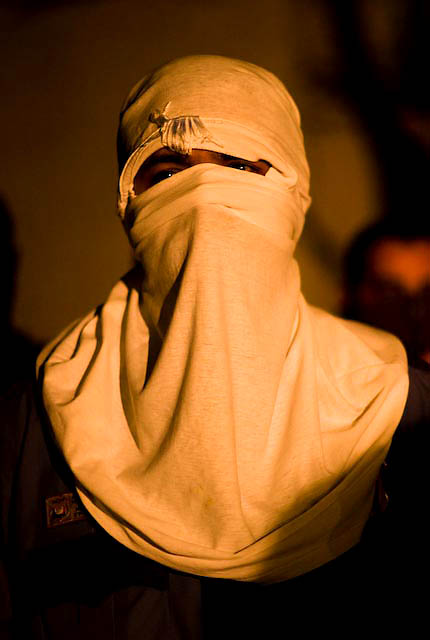
Photo and story by Julian Cardona
March 31, 2008
About 50 Juárez police officers protested what they consider the arbitrary arrests of fellow officers by the recently arrived Mexican army in ciudad Juarez. They were protesting the alleged framing of numerous officers on charges of drug possession.
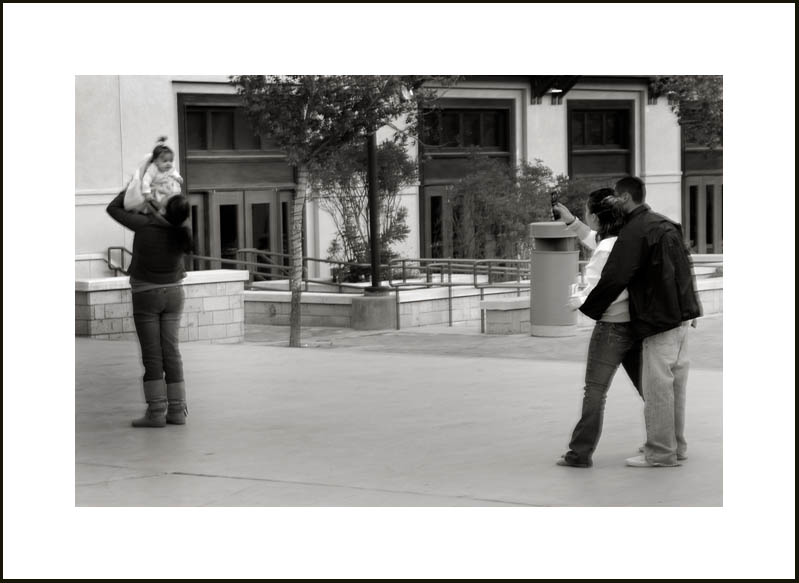
El Paso’s El Centro, the downtown, is packed with people at Christmastime. Unlike most cities of the southwest and of the rest of the United States, El Paso’s downtown is alive and bustling at all times of year, but especially during this season.
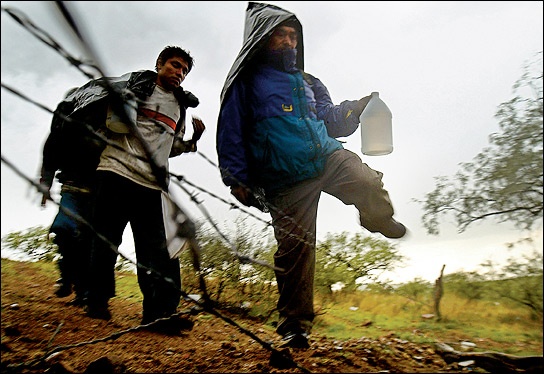
Drug cartels want migrants’ routes
Fight to control corridors on Arizona border turns violent
ALTAR, Mexico ˆ This village on the edge of the Sonoran Desert has been a supermarket for smugglers and the smuggled for nearly a decade. Migrants choose from an array of packages offered by coyotes and pick up day packs and anti-dehydration potions for the trek north.
Now drug smugglers want their route.

The Border(PBS) | About the Show
Produced by Matthew Sneddon, KNME-TV, Albuquerque, New Mexico 
The economies of Juarez, Mexico and its sister city, El Paso, Texas are driven by a system of assembly plants known as maquiladoras. There are more than 600 maquiladoras in Juarez, two-thirds of them owned by U.S. companies. Since the first maquiladora was built in Juarez in 1976, the population of the city has increased nearly five-fold to more than 1.25 million, making it the largest Mexican city on the border. The Rio Grande fuels Juarez and El Paso’s water supply.
However, the more than 10 million people who live in these desert communities have begun to exhaust the Rio Grande’s capacity to support them.
This segment focuses on one Rancho Anapra family faced with the realities of living in a desert community with no running water. It examines the factors that contributed to growth of this particular border region: the Rio Grande, the maquiladoras and the promise of a better life.
The Mexican Election: More Collateral Basura
I ran into a friend at the gym of the local university. He is from Mexico’s interior ( but the north). Smart guy, a brother. The university sits smack dab on the border and looks across to Juarez from El Paso. The university has many Mexican nationals mostly from Juarez but with a significant number of citizens from the interior, a majority of Mexican Americans and a smattering of Anglos. Like many things on the Border, it is physically the United States and pragmatically in Mexico (language, culture, food).
I ask him if he voted in the recent election.
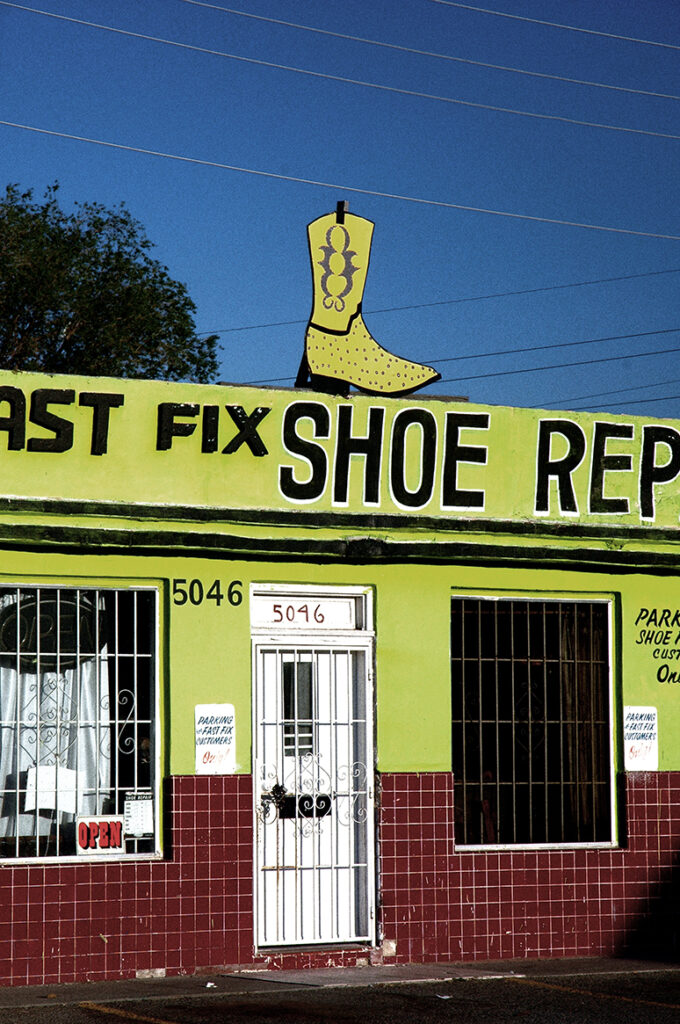
Boot/Shoe, El Paso, Texas, Highway 60/182 (Alameda Street), 2006
Text and Photography by Bruce Berman
Mexican presidential candidate Andres Manuel Lopez Obrador has called for a ballot-by-ballot review of Sunday’s presidential vote. He says the stability of the country is at stake. Mexico’s Federal Electoral Institute Wednesday began reviewing the totals from polling stations to determine whether Obrador’s rival, Felipe Calderon, really won the election Sunday. A preliminary count showed him ahead by only one percentage point. Both candidates declared victory Sunday night.
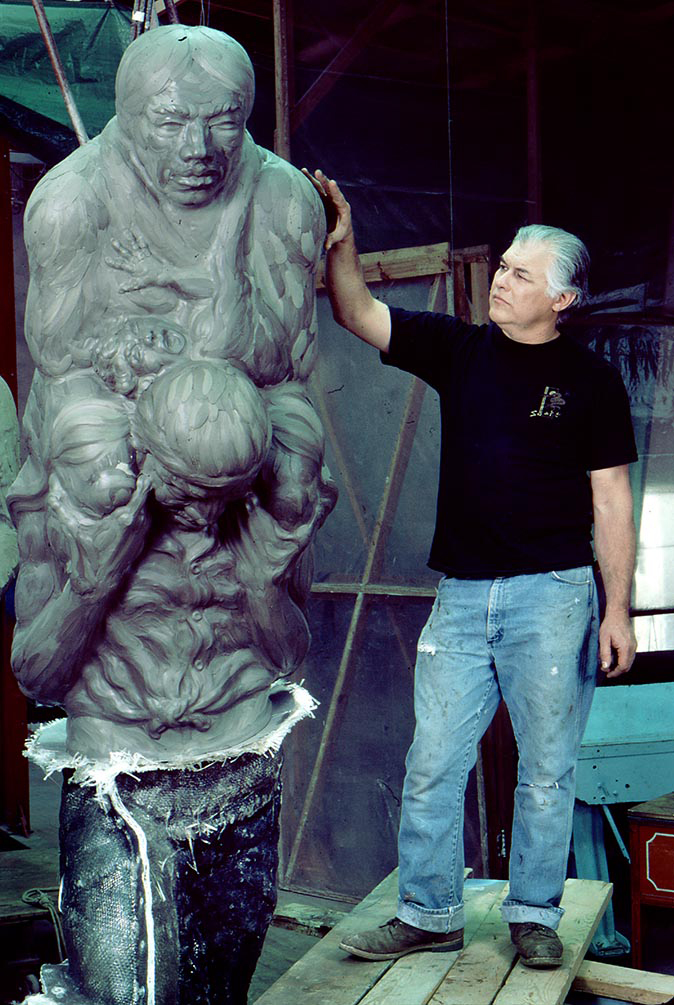
Sculptor; Born July 30, 1940; Died June 13, 2006
Luis Jimenez, a successful but often controversial sculptor, has died after being struck by a falling part of one of his works.
Authorities described the incident as an industrial accident. A segment of a sculpture came loose while it was being moved with a hoist at Jimenez’s New Mexico studio on Tuesday.
It struck the artist, pinning him against a steel support. The 65-year-old sculptor was taken to a hospital, where he was later pronounced dead.
“Luis Jimenez’s loss to the United States, to New Mexico, to the Chicano community, is great,” his friend David Hall told Albuquerque TV station KRQE.
“He was an icon, he was a very famous and well-respected artist. We will dearly miss him.”
Jimenez, a native of El Paso, Texas, was known for his large and colourful fibreglass sculptures that depicted fiesta dancers, a mourning Aztec warrior, steelworkers and illegal immigrants. His work often started arguments and spurred emotions. “It is not my job to censor myself,” Jimenez once said. “An artist’s job is to constantly test the boundaries.” Jimenez’s Vaquero and Plaza de Los Lagartos sculptures became civic landmarks in El
Paso, where he grew up learning to paint and fashion large works out of metal in his father’s sign shop.
“I think Luis shared this border region with the world. Those images will continue to live on,” El Paso art gallery owner Adair Margo said. “You look at the images he left us, and you realise he was a voice that mattered, that
gave form to this region and communicated it with people.”
Jimenez studied fine arts at the University of Texas in Austin and spent time working in New York. In 1969, he created Man on Fire, a sculpture of a man in flames that drew its inspiration both from Buddhist monks in South
Vietnam who burned themselves and the Mexican story of Cuauhtemoc, set on fire by Spanish conquerors. The sculpture was displayed at the Smithsonian Museum.
Jimenez won numerous awards for his work. More recently, he completed a mud casting of firefighters and three fibreglass flames as part of a memorial for Cleveland. He was also working on a piece that was destined for Denver International Airport.
Sculptor; Born July 30, 1940; Died June 13, 2006
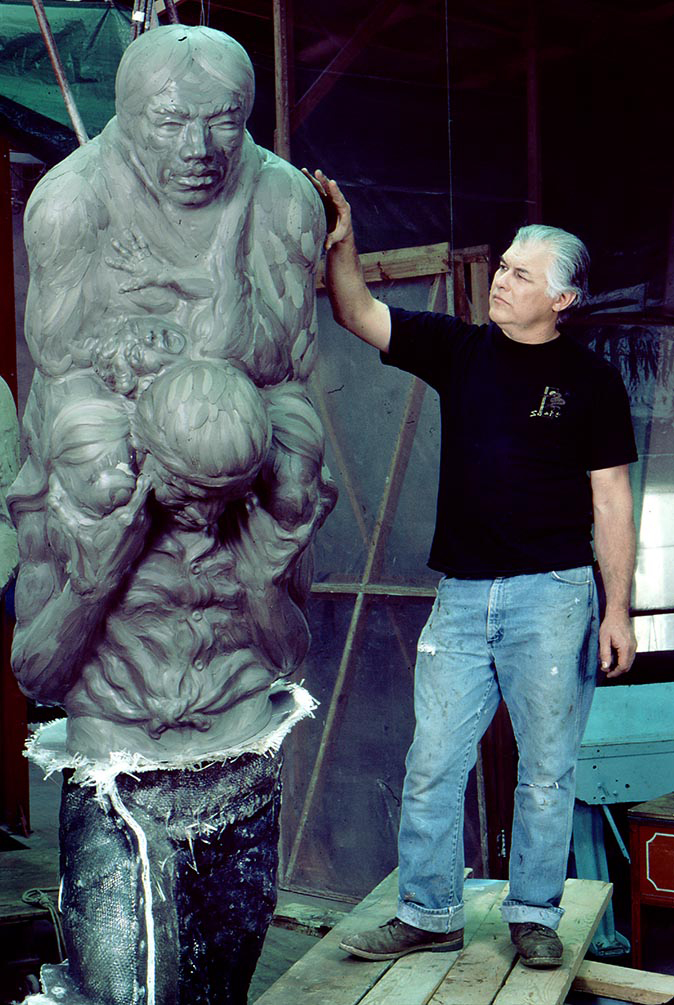
Luis Jimenez, Hondo, New Mexico, 2001
Born: July 30, 1940, El Paso, TX / Died: June 13, 2006, Hondo, NM
The first time I met Luis, back in the seventies, he came into my apartment and seemed to fill the room. It was like no room was big enough for him.
He was that big of a g
Not physically, although he was that powerful.
Not spiritually, although he did have that aura of somebody who really sees the bigger picture.
He was just big. All of it. Life. Love. Art. Humor. Seriousness. Ambition. Regular guyness.
When I first met him, and I suspect this is what most people felt upon first encounter, I felt like my life was just a lot more complete than it had been a moment before.
If you wanted to be good at something, in my case it was to be a photographer- you knew he’d be encouraging for your dream.
He was a brother. A big brother. And like a lot of big brothers, he was larger than anyone could possibly be.
And, man, was he smart.
He said what mattered. He lived He cut the crap.
He made impossibly complex Art and made it look like you could buy it from a south side El Paso Body Shop. And the Art mattered. It was about something. It was about him and our culture and his culture and the idiocy of our system and about the flora and the fauna and intuition and magic and love and joy.