Search results
255 results found.

On The Edge of the Edge – The U.S. – Mexico Border
255 results found.
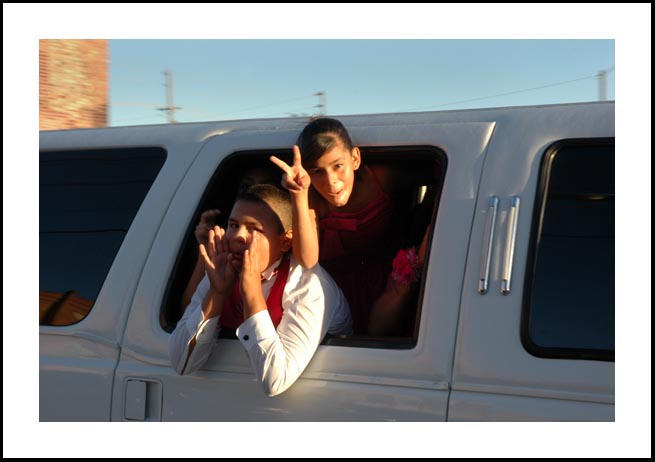
Remember?
Joy?
Fifteen and delirious, defiant and non-idealogical, optimistic and uncertain, determined and hesitant, at times wildly free and untamed.
Quinceañera.
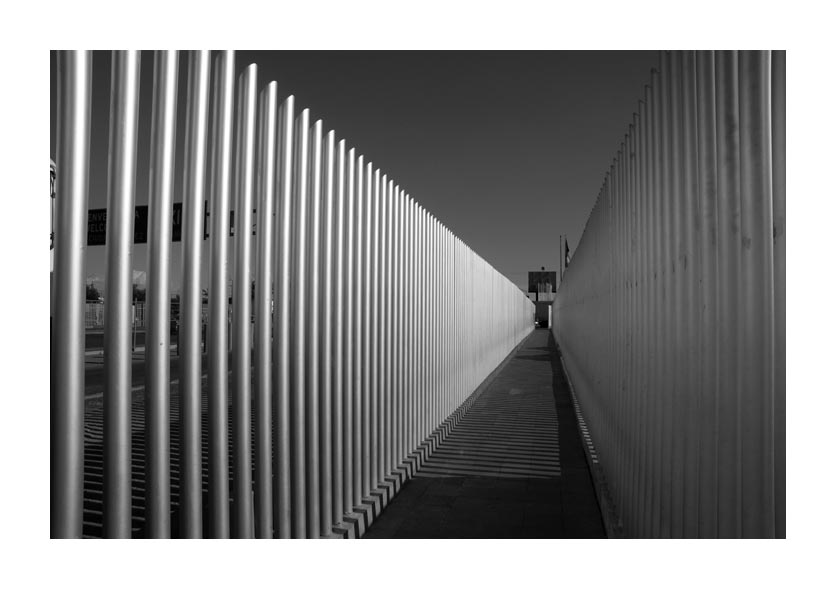
Militarization works two ways.
The bridges between Juarez and El Paso used to be friendly -although tedious if in a car- gateways to good times or better times, depending on which way you were traveling. Or is that just nostalgia?
Well, if not “friendly,” than at least not hostile.
Now they are reinforced pathways to go do what you gotta do. No joking. Get back by dark. All business. No fun or pleasure. Nothing lives. One endures the crossing. Rigid. Steel. Chrome molly tubes. Crash proof.
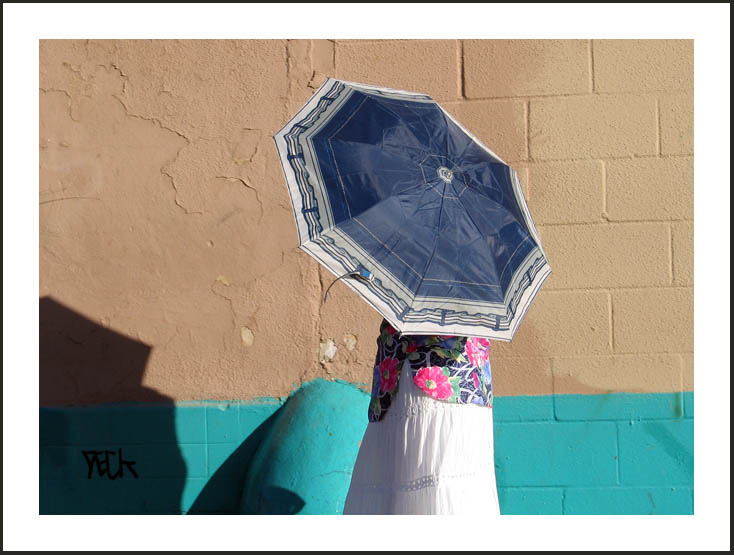
Summer is here on the border. Hot. You know it’s summer when the umbrellas are out. Of course what’s in this image is not very “sopisticated.” Who walks in the Brave New World, anyway?
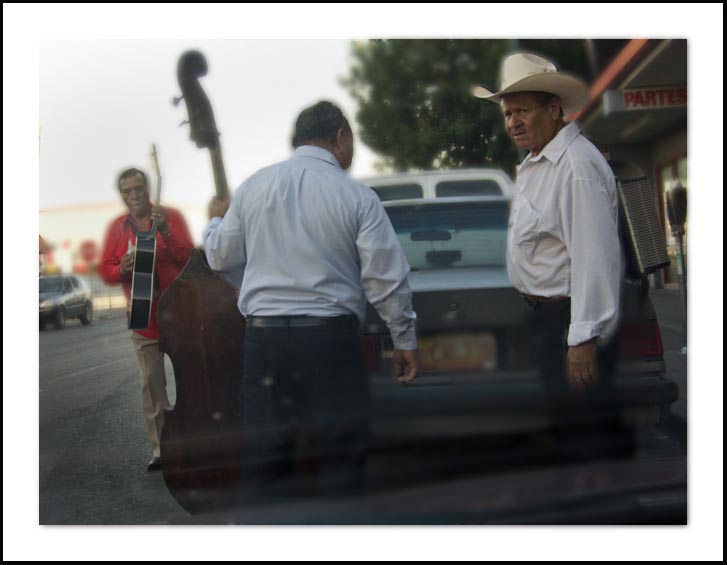
Wary eyes.
Everyone’s wary, in El Paso/Juarez, these days. The border is at war, with itself, with it’s two yin/yang sides, with the Interiors of each of the two sides.
Everyone’s wondering where it’ll end, where they will fall on the have and have not scale, what’ll be left of this little rough Shangri La (not a Shangri La of paradise but a refuge for those who have fallen from paradise. Sort of a suburb of Shangri La).
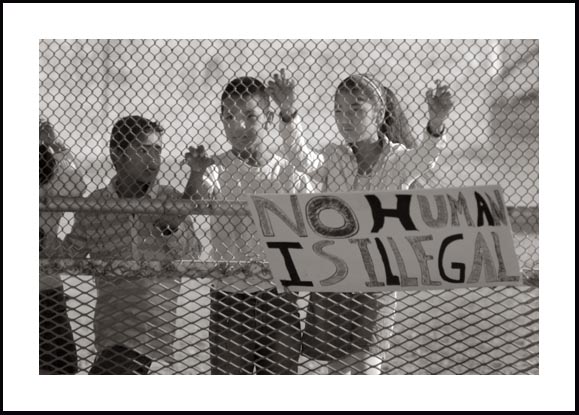
The border fence is a stinkin’ dirty bad joke.
Do these kids look like terrorists or narcotraficantes or, even, the dreaded low wage worker that every American company has winked at, invited, used and exploited for decades?
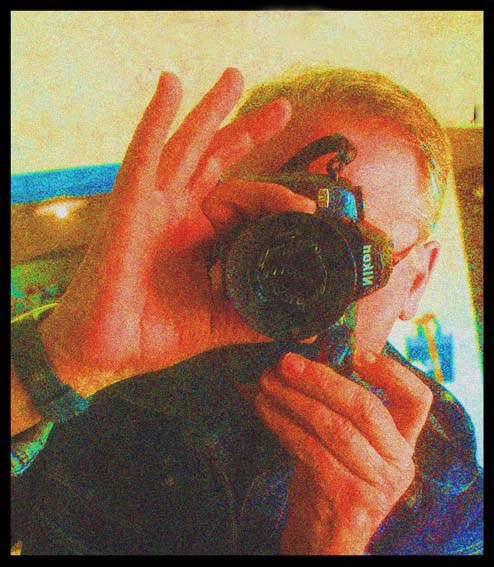
About Bruce Berman
Bruce Berman has been a professional photographer for over four decades. He works in what some have called, “The Concerned Photographer,” style of photography, but brings a poets vibe to his images. His initial documentary projects were in Chicago where he photographed Appalachian migrants to the big city, Black Panthers during the tumultuous 1960’s and the gritty street life of Chicago in its Rust Belt years.
His main work for the past forty years has concentrated on the United States/Mexico border, particularly the narrow stretch of land that encompasses El Paso, Texas and Juarez, Mexico. He also “plows” the southern New Mexico landscape, its people and the vast mysterious lands of West Texas.
After coming back from one of his earliest forays on Alameda Street on El Paso’ south side, in 1980, Berman wrote in his journal, “…I have seen a new world. It is both physical fact and mythical idea. It is a place with a line drawn through it and on each side of that line there are metaphoric mirrors that are reflecting back at each other, perhaps distorting each other, perhaps magnifying each other. It is the US/Mexican border. I will make my stand here. I will try to ‘give face,’ to this place so others can know it, perhaps, even, so those who live in it will know it more deeply.”
The aggregate result of that effort resides in two main bodies of work: The Border Project: 1985-2007, and Juárez: Cartel War Years (2007-2011) .
Additionally -concurrently- he is a chronicler of the disappearing lands beyond cities. He calls this series The Funklands, and notes, “Nothing is just laying around anymore. It’s scooped up, trucked away, rebuilt and becomes a mega buck treasure. My treasure has been the texture of the land and the stuff laying around that attests to who was on that land before… well.. before the homogenization of America.”
Berman lives and works deep in the borderlands of El Paso and Juárez, three blocks from the international bridge that connects Juarez and El Paso, surrounded by and isolated in the the vast lands of West Texas and northern Chihuahua. He refers to this as the “City-State of No Man’s Land.”
Berman continues to cover his “beat,” for major publications throughout the world and for his own book publishing enterprise. The Border Blog Press. His recent book, Walking Juárez is a compilation of photographs and stories covering the years 1975-2018.
Since 2008, Berman has added “Professor” to his name. He now teaches photojournalism at New Mexico State University (NMSU), 50 miles north of the El Paso/ Juárez ports of entry, in Las Cruces, NM. His teaching concentration is on Documentary Photojournalism and multimedia reporting. He still does occasional assignments and personal documentary work but spends equal time “Passing the torch,” he says.
Lately Berman has concentrated on doing books: Walking Juárez, 2017, Cutting the wire, 2019 and his newest, BACKLAND, 2022.
Many of his students don’t know about the border too much, but for the most part are of it. The G Generation, he says, “… are the hope of photojournalism, and maybe the world.”
He thinks working with them is his best project ever.
About the Website
The Border Blog covers the news, opinions and culture of the 2000 mile border of Mexico and the United States, concentrating on the epicenter of El Paso and Juarez. The Border Blog is not meant to be a news source as much as it is meant to be a news “feel.”
Another “border,” of interest to Berman is less obvious, the border between The Grid (his descriptor) and and those on the margins, unwilling or unable to keep up with “development,” and “progress.”
The site is a collaborative project. Besides Bruce Berman, who acts as editor and photographer and sometimes writer, the staff includes writer and painter, Juarez native and resident, Nathan Zarate, and, Beatriz Andino Zamora, a poet and writer from Zacatecas, Mexico. Zarate and Zamora post occasional articles concerning the politics and history of Mexico, in general and La Frontera, in particular. The site is always appreciative of the creative inspiration, brilliant chutzpah and deep goodwill -as well as extensive Web skills- of Manuel Rivera, a fronterizo “to the bone.”
Contributions to the site are welcome. Diverse viewpoints will be cherished. The site’s point of view and orientation will be no mystery to its readers, however, there will always be plenty of room and appreciation for other voices as long as they are informed, well articulated and sincere and fueled by passion tempered by reason.
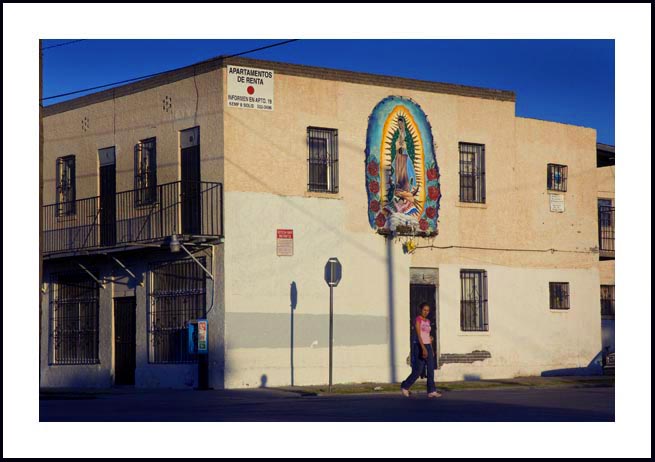
El barrio is a community. Bruised. Not what it was. Sitting on the border and prime target of speculators, er…ah…read that as “Developers,” but still standing. Go back and ask anyone in any American city, for the past 60 years if “Urban Renewal,” was about construction or destruction. If you actually need to, go ahead.
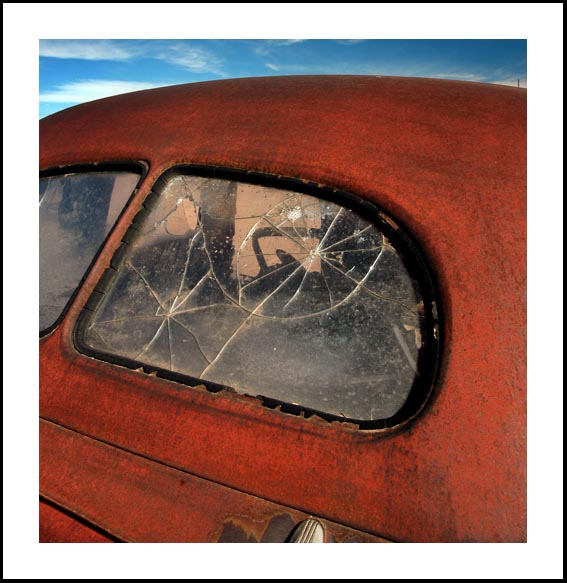
There I am, tooling through the vast landscape of West Texas, working for an English language newspaper working out of Abu Dubai, Arab Emirates. Don’t ask. I’m not sure I understand the assignment. Something about Bush returning to Texas and illustrating what two brothers, who were doing a road trip, saw (except, according to my editor, they were really bad photographers). What that has to do with West Texas, I can’t figure.
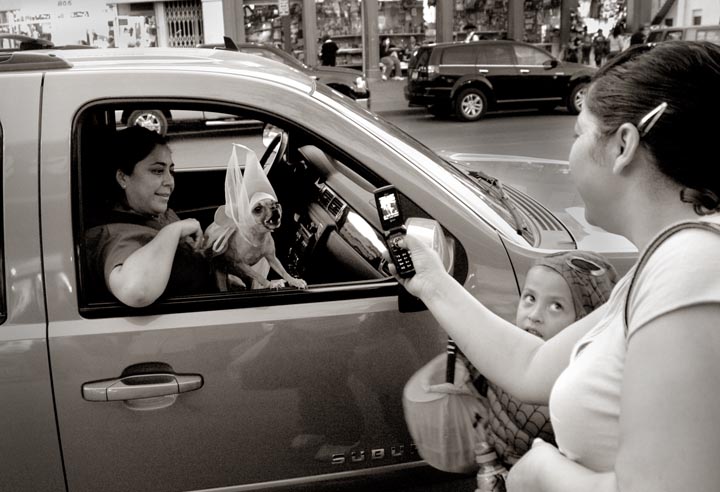
El Paso, Oct. 31 (Halloween), 2008
Halloween on El Paso Street, the first (or last) block of America. Everyone is dressed and laying a festival veneer over the street. 5:30pm, people still rushing to the bridge to Juarez to get home (especially these days, trying to get home before dark, before the murders begin).
Cookie is one angry Chihuahua.
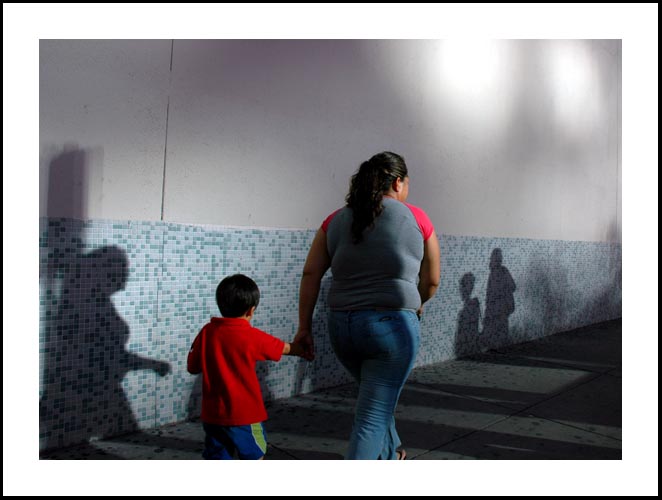
I am supposed to be packing right now. I have a job in another city. It starts in three weeks. I won’t be leaving. This corner, this light, these people, their shadows, have inveighed my life for an adulthood…a long time.
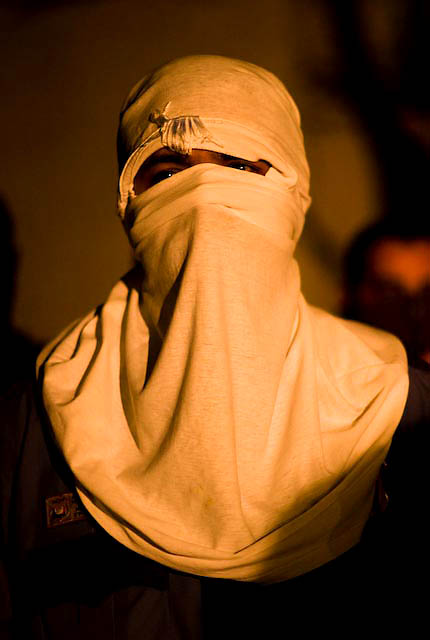
Photo and story by Julian Cardona
March 31, 2008
About 50 Juárez police officers protested what they consider the arbitrary arrests of fellow officers by the recently arrived Mexican army in ciudad Juarez. They were protesting the alleged framing of numerous officers on charges of drug possession.
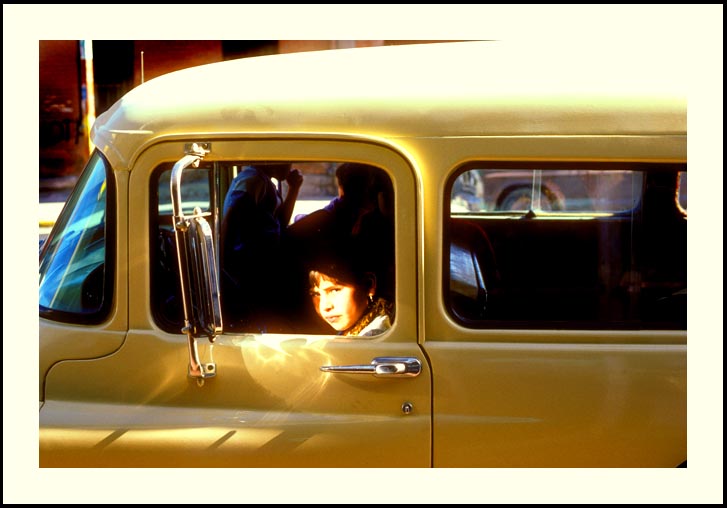
PHOTO OF THE WEEK: May 23-30, 2008
Notes from my Journal, September 1986
I am an illegal alien in a strange land.
That’s a phrase they use a lot in the newspaper here: Illegal Alien.
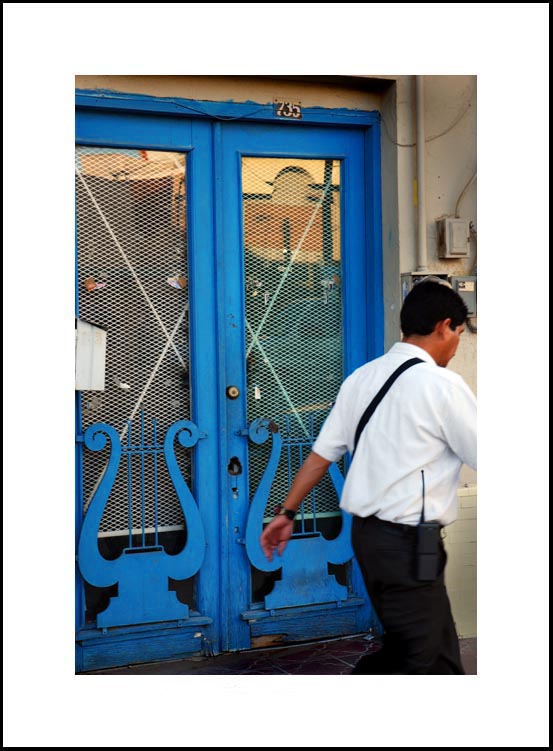
There hasn’t been so much gunfire in Juarez since 1910. Since Jan.1, there have been over 230 drug war-related murders.
There was a time in Juarez -bourgeoise and ugly Americano, for sure, but what the hell- that it was just the old fashioned sins: getting drunk, dancing, straggling around with whatever “date,” that’d allow you to put your hands on her ( or whatever) and, if you survived, you crawled home over the bridge to El Paso and woke up late the next day.
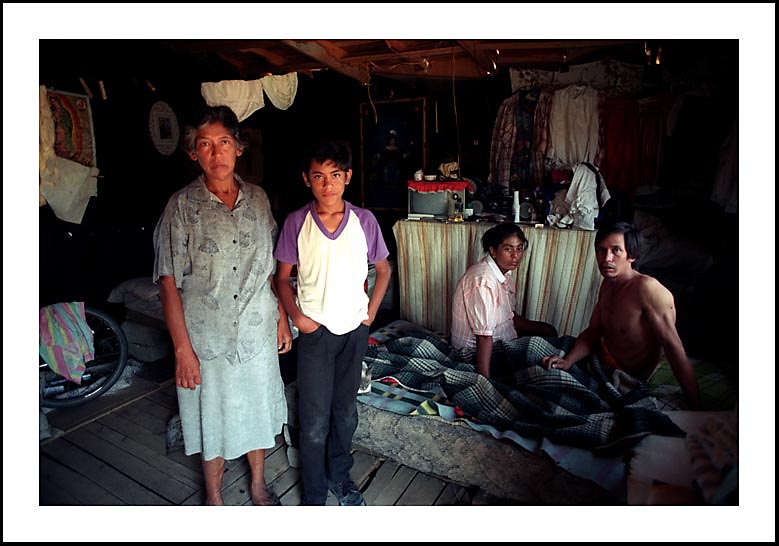
PHOTO OF THE WEEK: April 25-May2, 2008
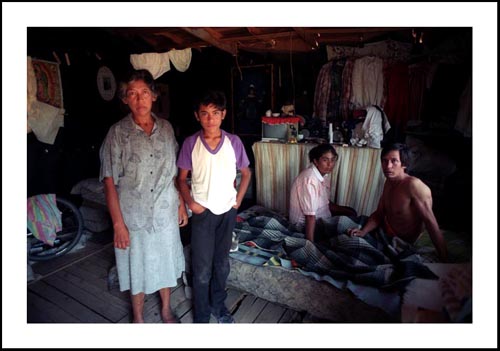
The Silva family came to Juarez with the intention of crossing the border, into the U.S. and then traveling to the Midwest, where a family member had preceded them. They intended to work in agriculture in the wheat fields of Kansas. A dream. The American dream. It wasn’t to be their dream.
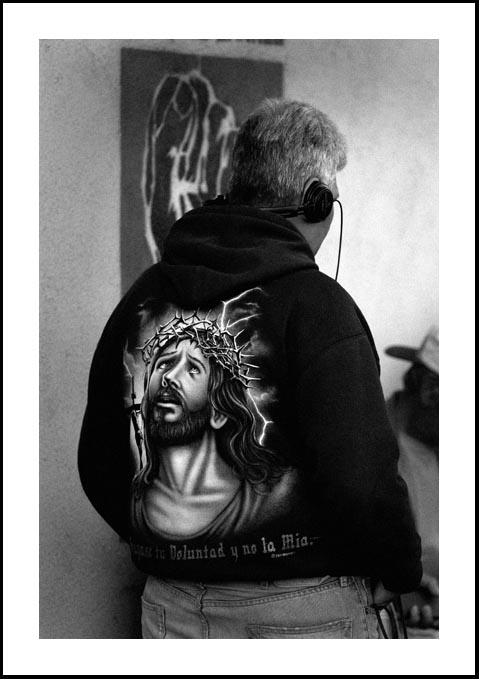
PHOTO OF THE WEEK: April 18-25, 2008
Headphones Ninth Street and Oregon. The first street north of the border in El Paso, Texas. Jan. 31, 2008.
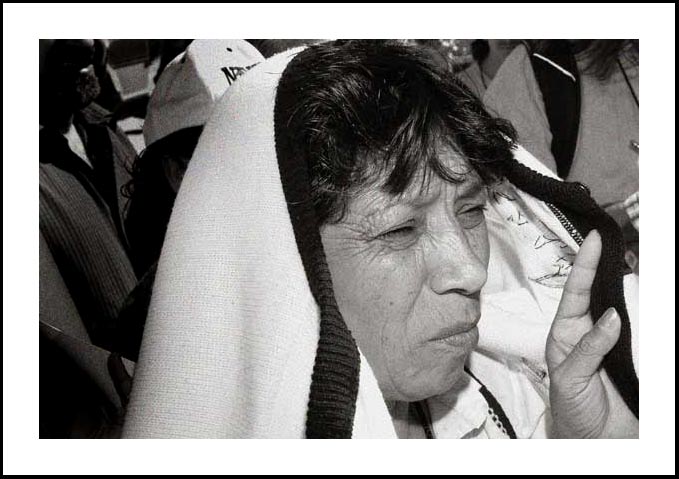
PHOTO OF THE WEEK: April 4-11, 2008
Juarez is in flames right now.
Drug war is raging. I’m calling it a drug war. It’s a lot of things war. Always is.
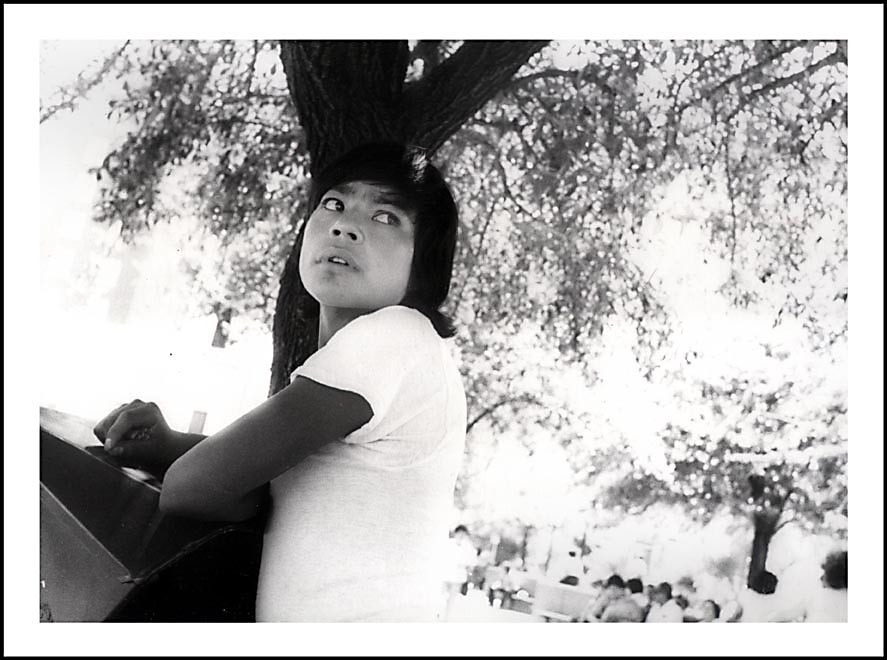
La Plaza/A Memoir
I went to the plaza today.
It was deserted.
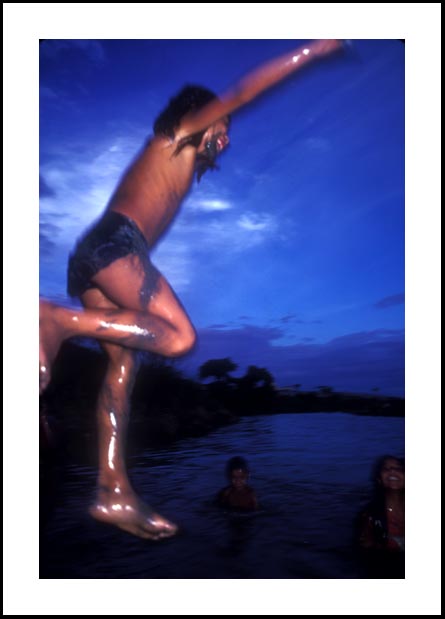
Leap into the river with two names
Leap Day in the Leap Year 2008. Let’s all take a leap. Come on…why not!
This boy and his friends use the river with two names as a playground, a swimming pool, a back yard.
Why not.
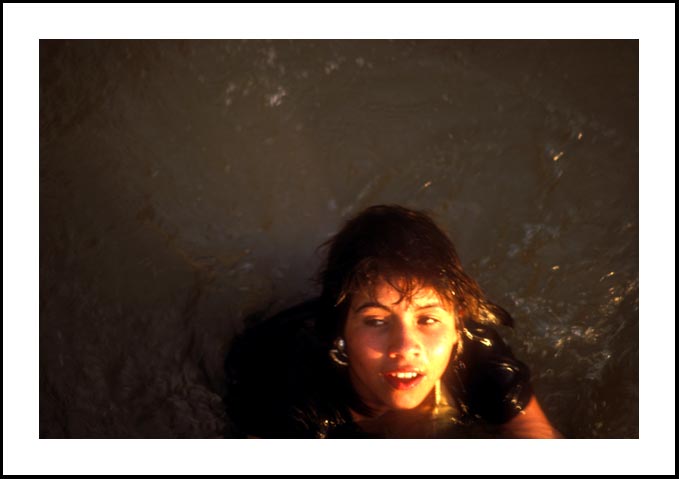
Notes from my Journal
Immigration. Swim, drive, and crawl. People do what they need to do and making them do any of the aforementioned things, put lives at risk.
The river is more than a highway of migration, though.
In the summers, when it’s hot, the river is a giant pool.
People play.
The river is polluted with chemicals from upstream pesticides from the farms, loaded with garbage and debris, has really tricky currents that, every summer, takes lives.
But people live in that river. That river is life for many in Juarez.
If the Jefes could see past their own little tight plans, this would be THE development that would be right for El Paso/Juarez: Play in the river.
Too simple, though, huh?
This girl is clinging to the El Paso side bank. ILLEGAL! La Migra comes and chases her away and she joyously splashes back to the Juarez side where her friends and family jeer and gesture at the Border patrolman. Everyone is having a good time. The Migra laughs, waves, knows he’s part of this great immigration farce, climbs back into his Suburban and drives off and the girl –and her friends- come back, swim to the U.S. side, pose for pictures, live the evening.
The sun sets. I go home. I played in the river, too.
One of the border Patrol’s favorite PR releases is about how their agents saved people from drowning. There’s one or two or three every year.
They never mention people caught playing. Before the fence.
PHOTO OF THE WEEK: Jan. 25-Feb. 1, 2008
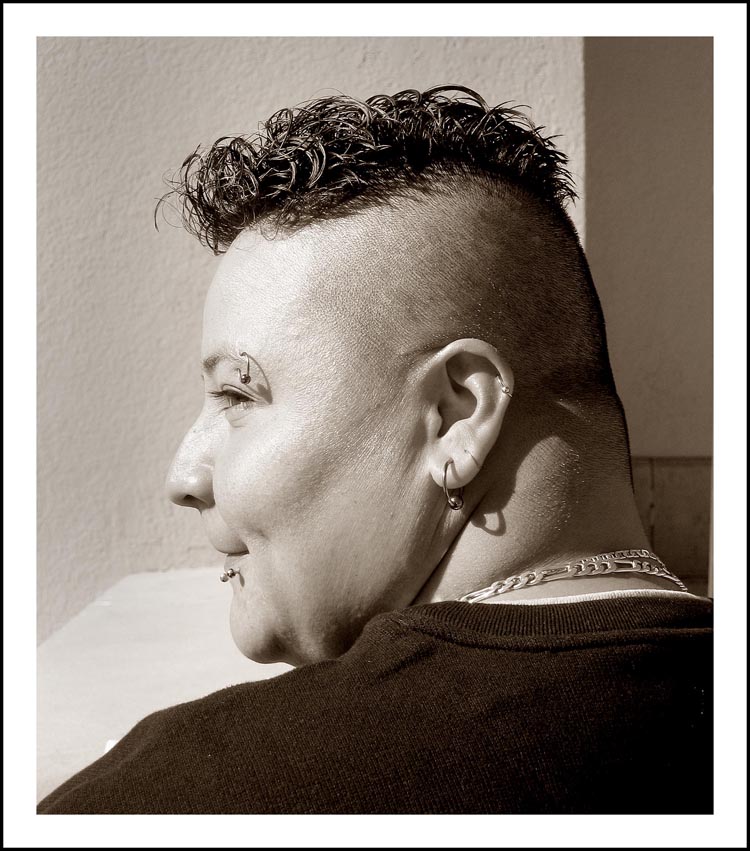
You can leave the border but the border does not leave you. My head snapped when I saw Roberta Flores, up in New Mexico.
“Terrific hair,” I yelled at her. “Gelled,” I asked?
“No,” she said with a sly and proud smile, “Glued,” she shouted back, with a grin that sort of said, “gotcha!”
“Did you get that done around here? ” I asked.
“They don’t know how to do that around here,” she spat, friendly but gently ridiculing.
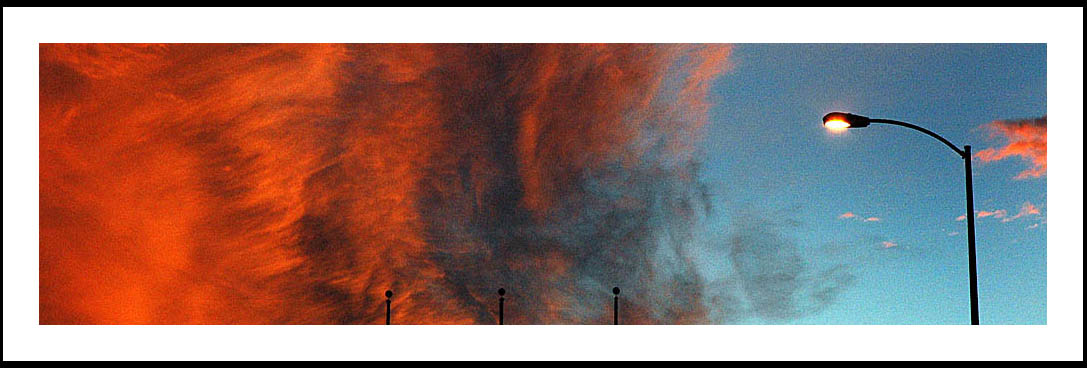
Still on mental vacation. What else do you do? Drool and look up. This is the border. Believe me the storm is coming in and not going out. As it always is. As it always was…
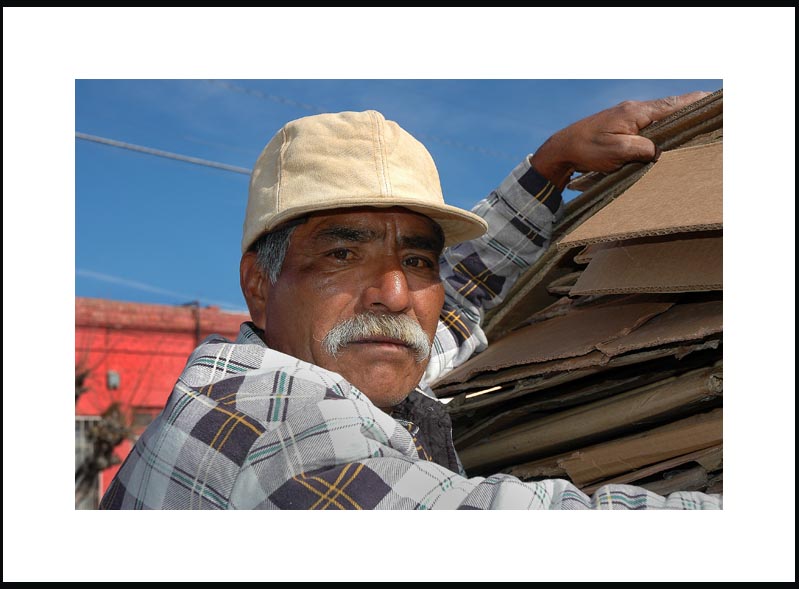
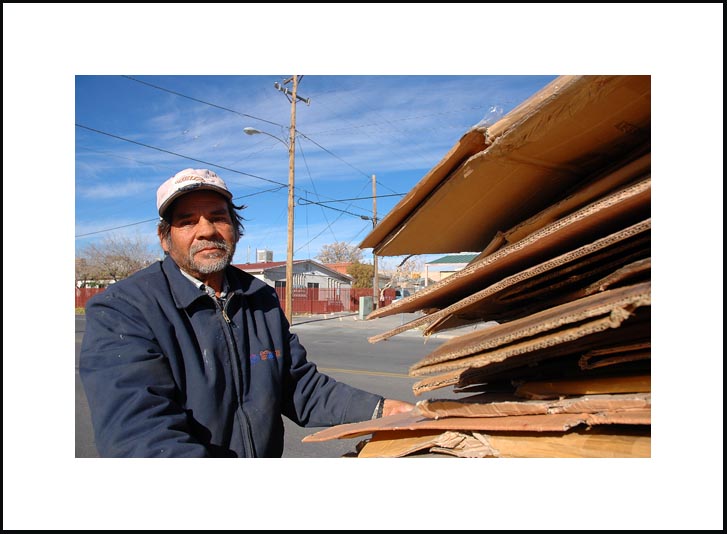
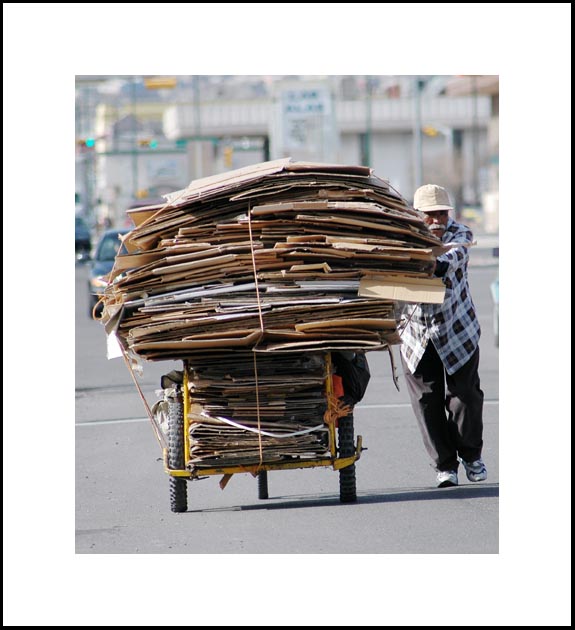
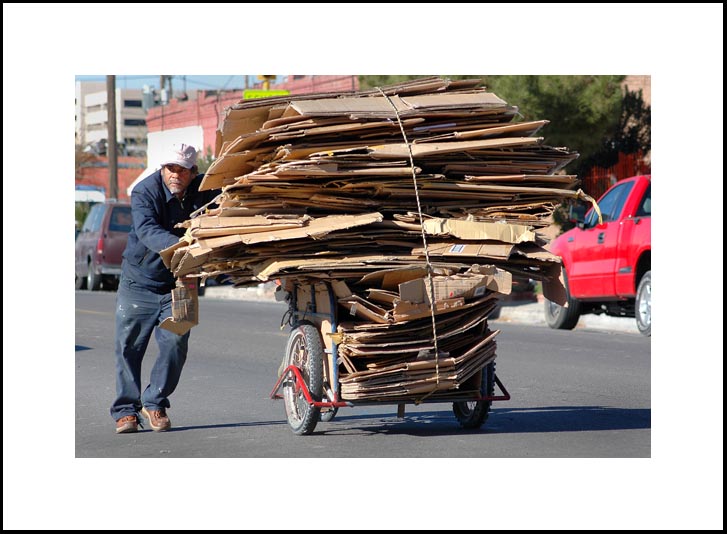
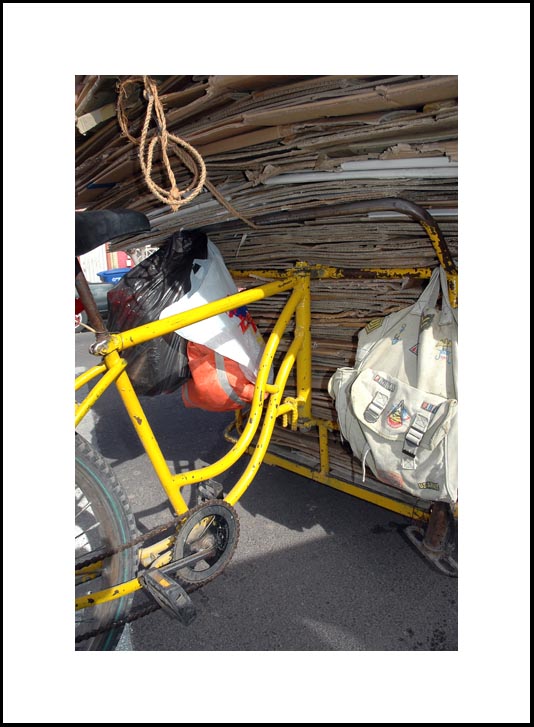
Los Cartoneros
In a desert, on the border, nothing much gets wasted.
Cartoneros, paper haulers, collect discarded and surplus paper and card board from border streets and from border merchants and haul it on their customized ” tricicletas.” They then sell it to scrap buyers, located about a mile from the border shopping district in the Segundo barrio.
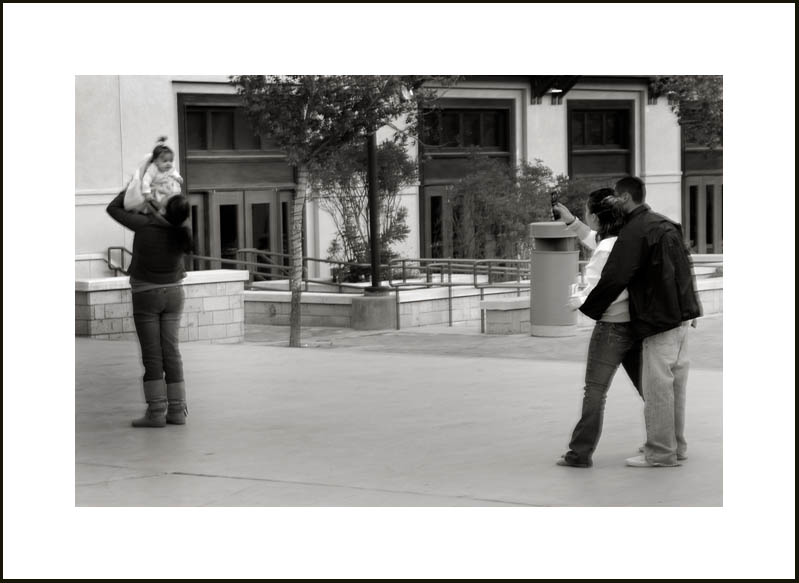
El Paso’s El Centro, the downtown, is packed with people at Christmastime. Unlike most cities of the southwest and of the rest of the United States, El Paso’s downtown is alive and bustling at all times of year, but especially during this season.
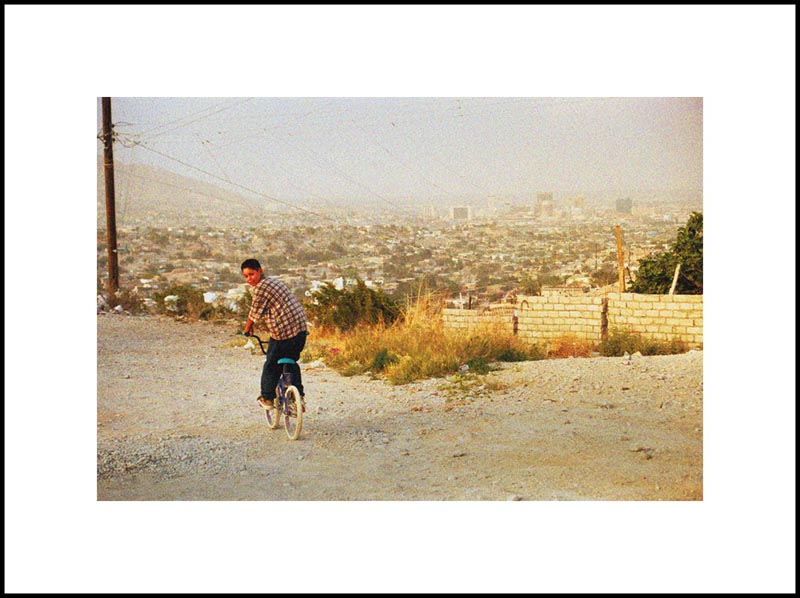
Someone observed, generally, that in so-called third world countries, poor people have to live on top of hills and mountains (where it is more difficult to get water and where roads are rough and barely existent), but in first world countries the rich like to live on top of hills and mountains, for the “views.”
And the status.
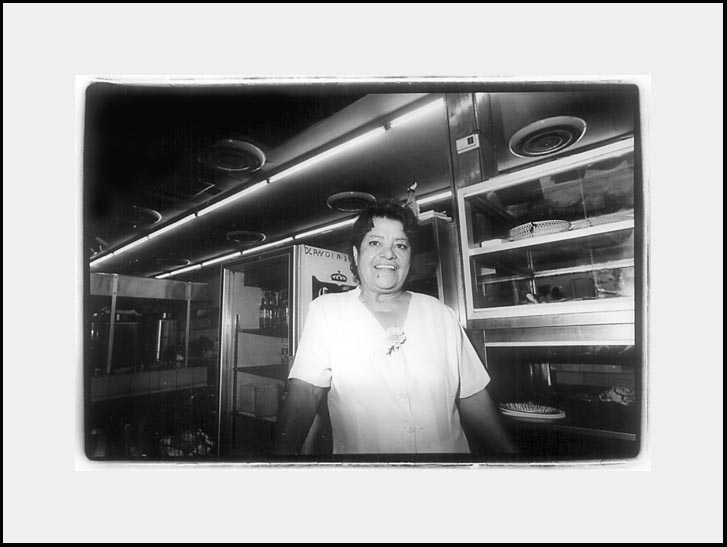
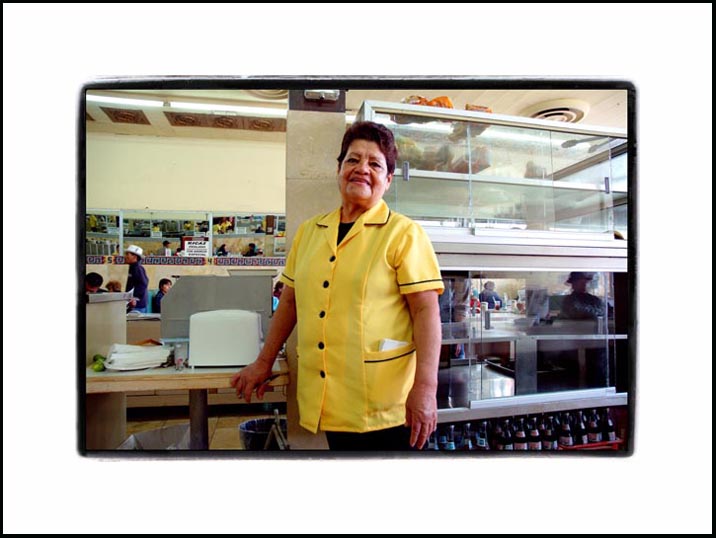
Amada has worked the counter at the Central Cafe in downtown Juarez, since the early 1980’s. The cafe is next door to the cathedral and is a major crossroads for buses -and most of all, people on foot- heading to all directions in the city. The cafe is a crossroads, the city’s heart, and a center of transition and change.
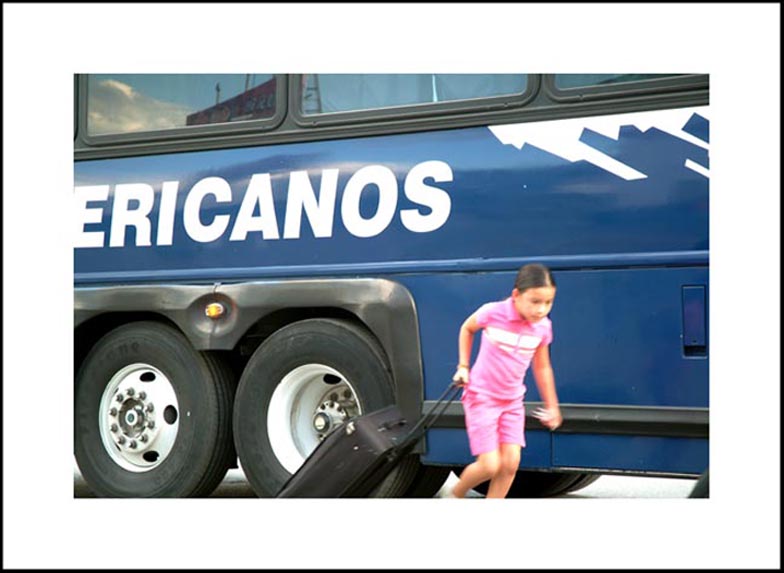
Sixth and El Paso Street is the first street in “America,” after crossing over the Paso del Norte Bridge from Juarez, Chihuahua, Mexico into El Paso, Texas. This is the crossroads.
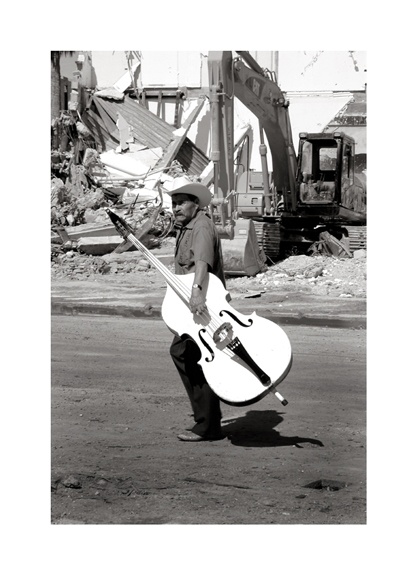
El Centro, the downtown of Juarez, is going down.
La Mariscal, the zone of shops and bars and (say this quietly) brothels north of El Centro, the commercial zone north of El Centro stretching to the border with the U.S., is being demolished and is, mostly, gone.
The “Plan,” has come. Progress is here. Now there is hope for those who need the border to be “clean.”
It shall be sanitized.
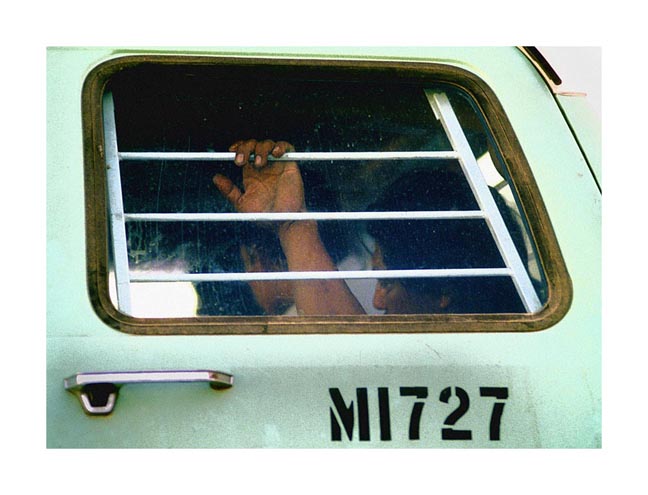
Most “illegal immigrants,†incarcerated in El Paso are laborers who’s immigration activity is, merely, a two way commute, finding them returning to Juarez, Mexico, at the end of a work day. Being incarcerated by the Border Patrol inconveniences the worker but does not deter the activity. Wages in Juarez average around $5 to 6 day. In El Paso a Day Laborer makes an average of $ 25 to 40 a day. The difference in wages makes the bureaucratic discussion of deterrence moot.
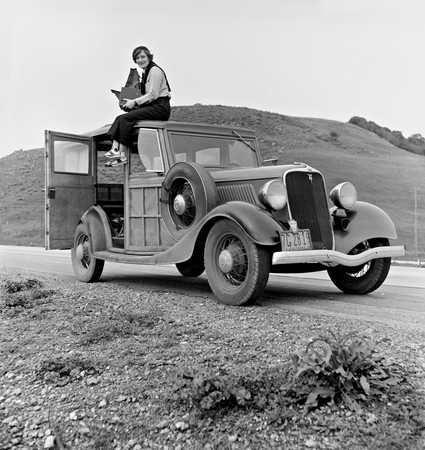
Photograph of Dorothea Lange,
Resettlement Administration photographer,
in California, c. 1936
The car is a 1933 Ford Model B (AKA “V8”).
She is -as well as Russell Lee and the other FSA photographers- the spiritual “Godmother,” of this site.
_______________________________
This is a picture of Dorothea Lange, at work. She was one of my earliest influences (the other was Weegee).
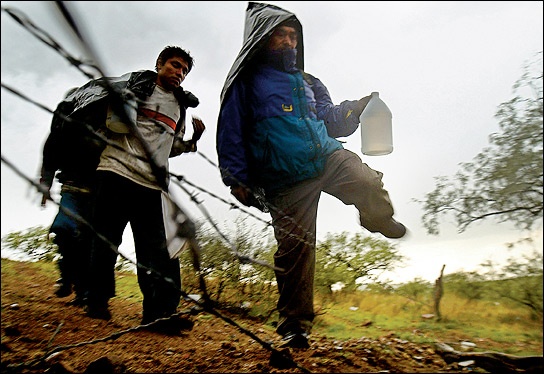
Drug cartels want migrants’ routes
Fight to control corridors on Arizona border turns violent
ALTAR, Mexico ˆ This village on the edge of the Sonoran Desert has been a supermarket for smugglers and the smuggled for nearly a decade. Migrants choose from an array of packages offered by coyotes and pick up day packs and anti-dehydration potions for the trek north.
Now drug smugglers want their route.