Search results
40 results found.

On The Edge of the Edge – The U.S. – Mexico Border
40 results found.
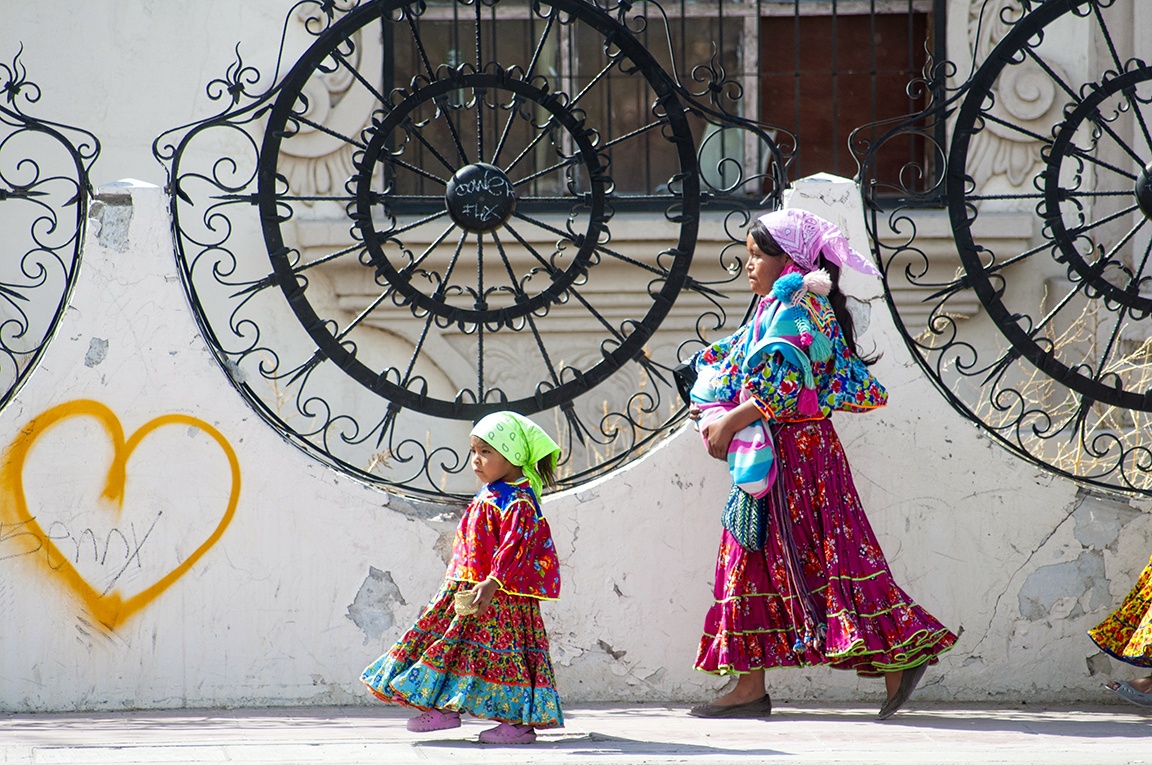
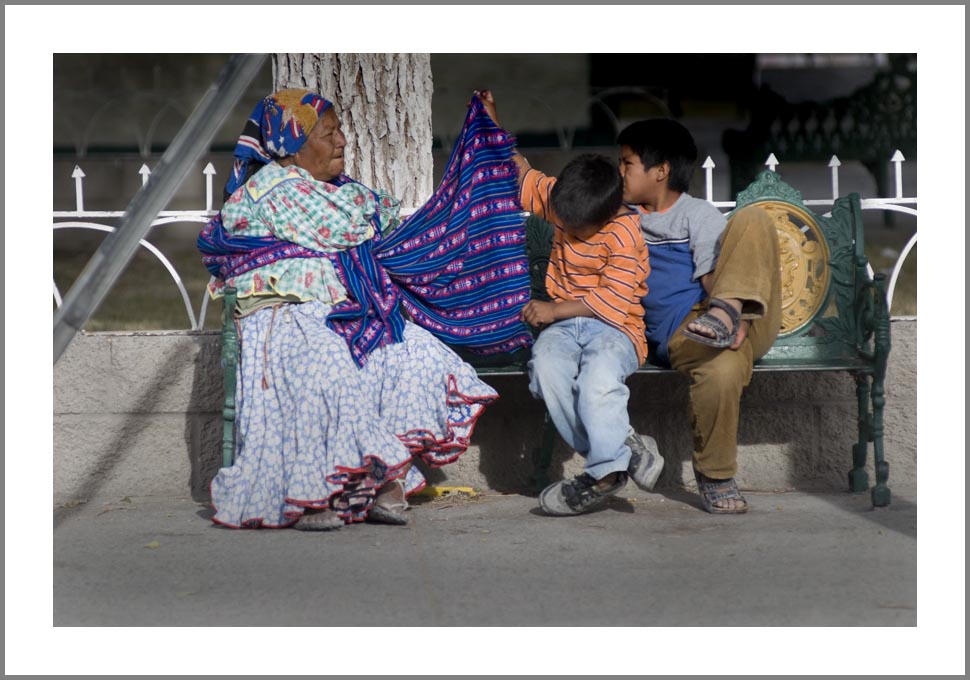
Juárez, Tarahumara mama and kids, 2012
In the middle of the Cartel War, the Tarahumaras from the Sierra Mountains of northwest Chihuahua, México, still work the streets of Juárez, selling goods, doing services, and attempting to not blend into the fabric of the 3rd largest city in México, Ciudad Juárez, Chihuahua.
The Tarahumara Indians (self-named Rarámuri), are a tribe that inhabit the northwest of the State of Chihuahua in México.
Economic conditions through the late 20th century and early 21st, have forced a large part of the tribe to seek economic stability in the nearest major city, Juárez, México.
The Rarámuri try to retain their cultural identity in dress and custom, an uphill task in the sprawling northern city of Juárez.
For more on the Rarámuri see https://www.britannica.com/topic/Tarahumara
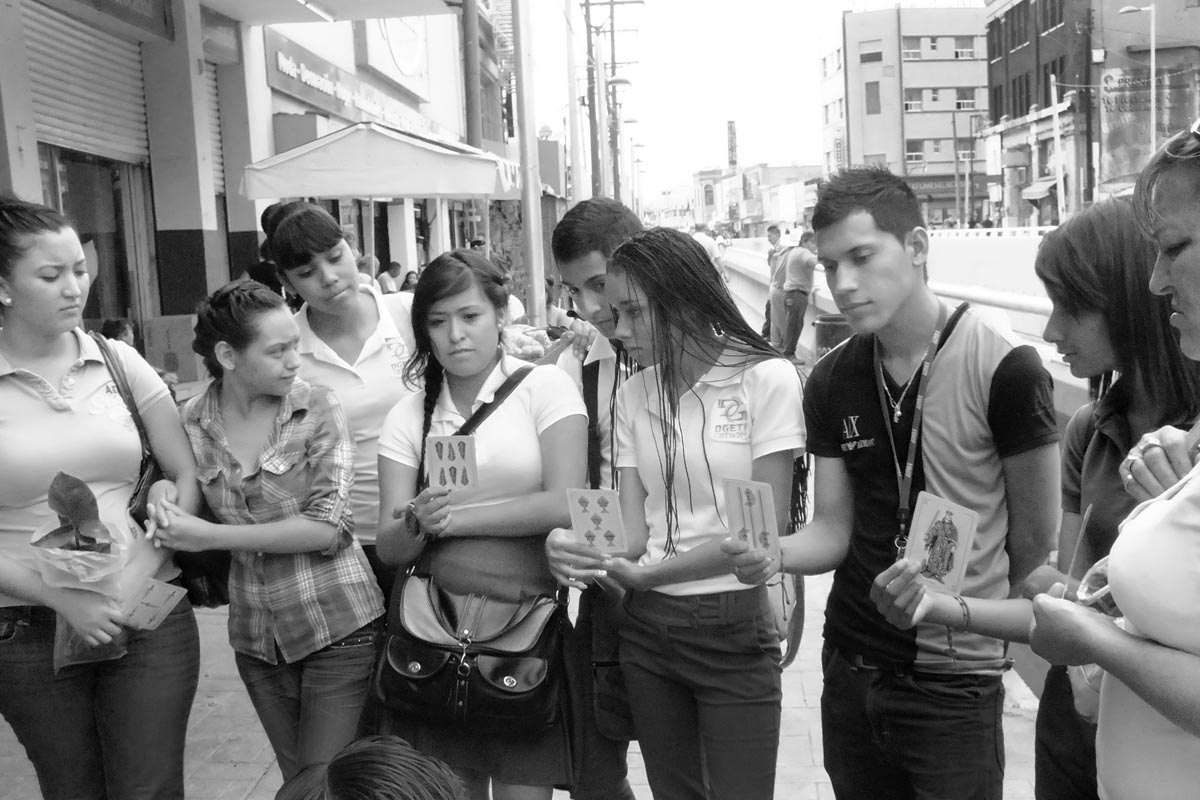
The streets of Juárez abound with life again.
The “Cartel War” is over.
The war for justice and integrity in government, the war to develop a country that doesn’t need a drug transporting business as it’s second most important economy (after petroleum), is not over and won’t be for the foreseeable future.
On the streets of Juárez, there is a strange mix: Old people who couldn’t get out, the poor that couldn’t get out, the young that didn’t know there was anywhere to go to and babies!
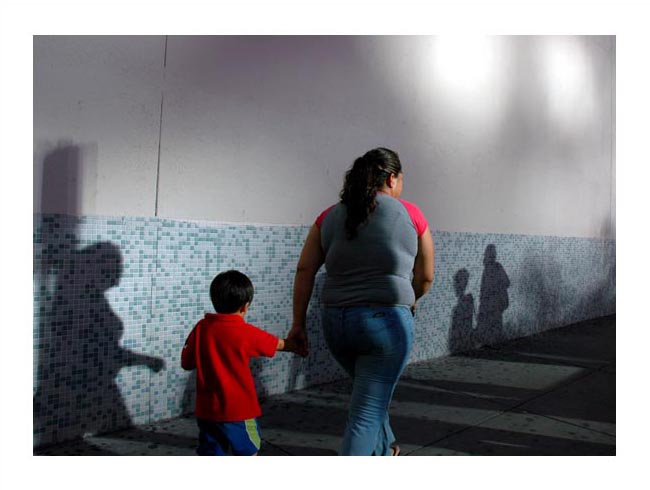
There are a lot of babies in their teenage parents’ arms these days. In the streets in from of the Mercado Reforma there is this strange blend of young parents weighing babies in their arms, interspersed with the very old, interspersed with prostitutes, interspersed with an economy that is not longer threatened by the incursion of “the franchises.” Franchises bailed out of Juárez years ago, when the war began, in 2011.
This isn’t the Juárez of the glamour 1950s or the boom boom 1960s and their international factories, or of the up and down 1970s and 1980s with the rise of the licenciado middle class, nor of the “we are almost first world” Juárez of the 1990s and beyond.
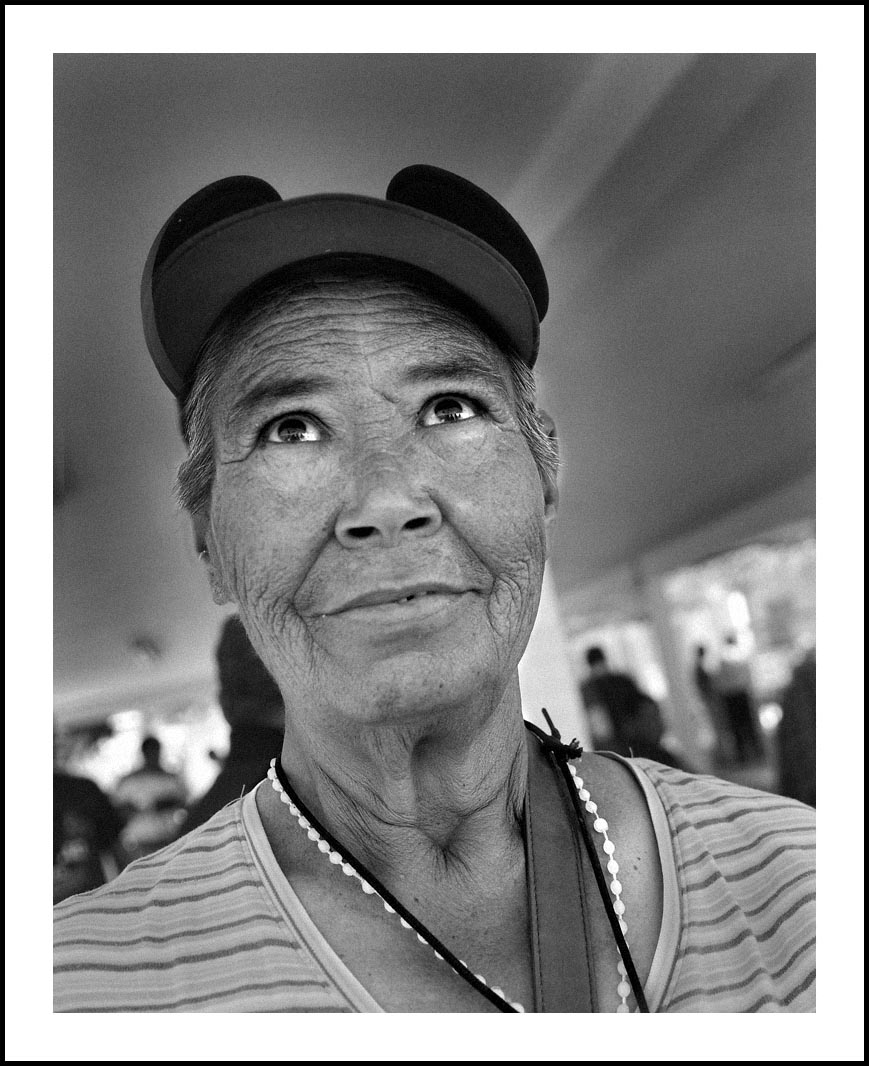
Photo and Text by Bruce Berman
Juárez —
Maria. Full of grace. And other emotions.
A permanent resident of CREAMAC, in the hills of Juárez, way up there, near the Guadalupe, the last place on one of the last streets, near the top. Some people call it an “insane asylum.” It started as a place the mayor of Juárez sent “street people.”
He took an old police station and created a shelter and ordered the tourist police to “get those people off the streets.” That was 34 years ago. There are still people there…from then!
I go there, driving through the anxiety streets of the troubled city, eyes are out, sharp, both ways. These days, if you keep up with the ever terrible news coming from the Cartel War, there’s a game you play, while driving in Juárez. You match up news with the locations where it happened, that you’ve heard about: “Oh, there, that’s where the drug rehab place is: 16 murdered in three minutes. Oh…there is where the mother and son got shot. Up that street, that’s where the family got wiped out but one kid hid under the bed and survived, yeah, and over there, that’s where they put the bomb inside the guy and dressed him as a cop and called in the Cruz Roja and Policia Federal and then blew him up, right there, over by the old market.”
And so it goes.
It could go on forever on a long ride, but we race through the streets, purposely. There is no leisure in Juárez, only meaningless purposefulness.
On this day, we’re heading to the “Insane Asylum,” which seems like a more positive mission than chasing down murder scenes.
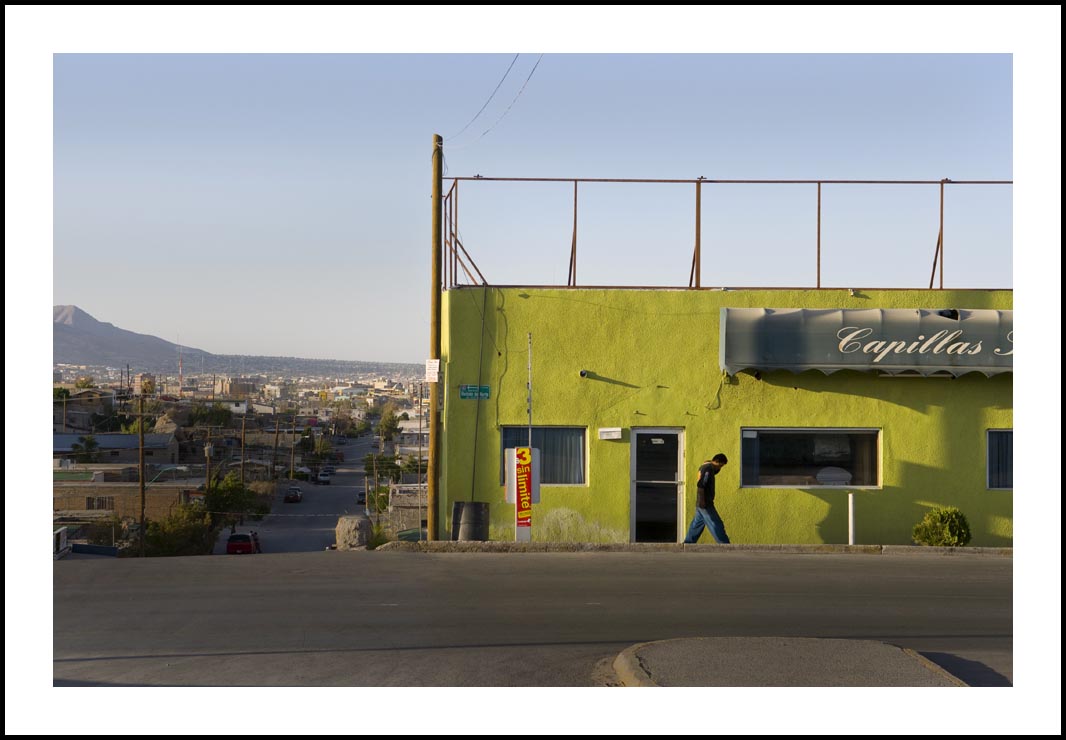
Juarez –You keep hearing that “Juarez is dead.” Juarez is not dead. It’s stripped, diminished, bruised and humbled but is it is not dead.
Most small business commercial strips are shuttered or just smashed and abandoned.
The streets are amazingly empty, the bustle and sheer madness of the traffic that was Juarez is gone. That Petromex smell of burning diesel that always hung in the air, along with the smell of fresh tortillas and dust, lessened.
But it is not dead.
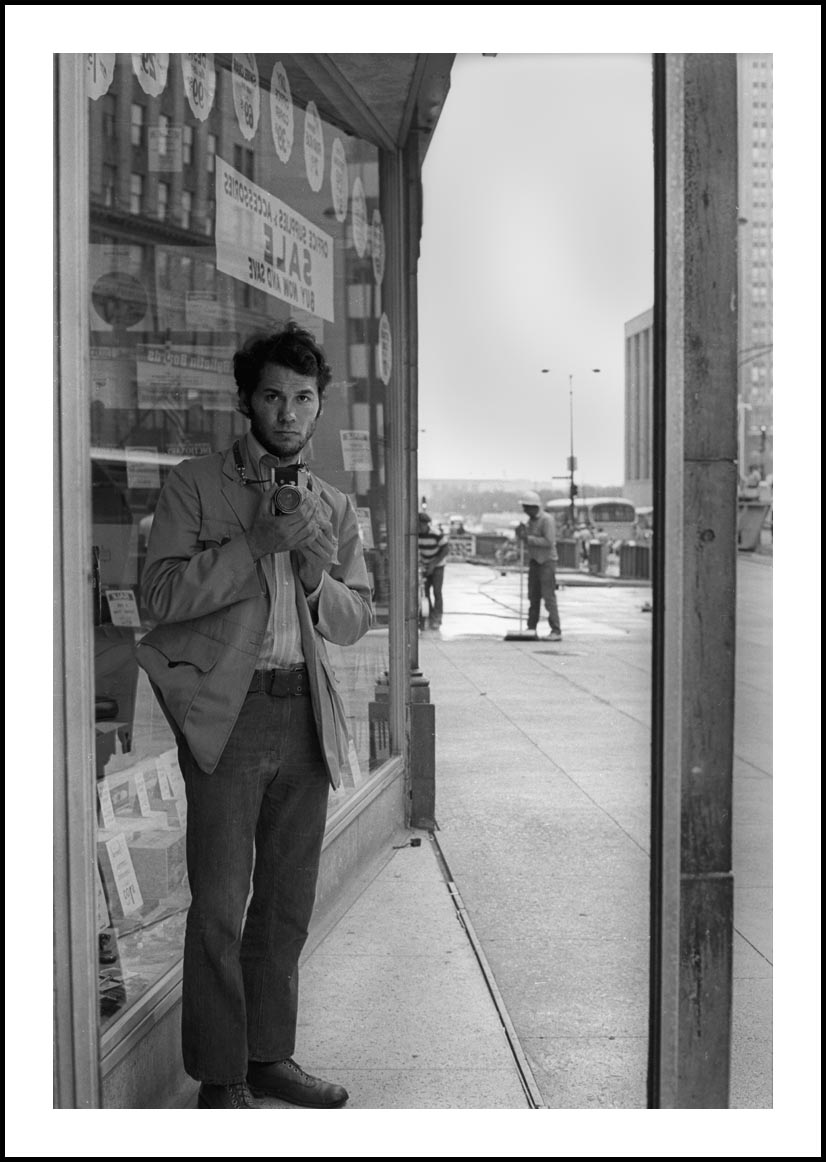
Garry Winogrand. Off kilter. Off beat. And right on in capturing the milliseconds of the oblique.
Watch this video and think about Garry lassoing the non-monumental. He was a wild puppy and full of life. Just enjoy the fun.
A memoir: Meeting Garry Winogrand
by Bruce Berman
Garry was a photographer and a winner of prizes: three Guggenheim Fellowship Awards (1964, 1969, and 1979) and a National Endowment of the Arts Award in 1979. He was a street guy and he was, most of all, a New Yorker. His photos reek “NYC.” He was hugely famous and revered in the 1970s and 80s.
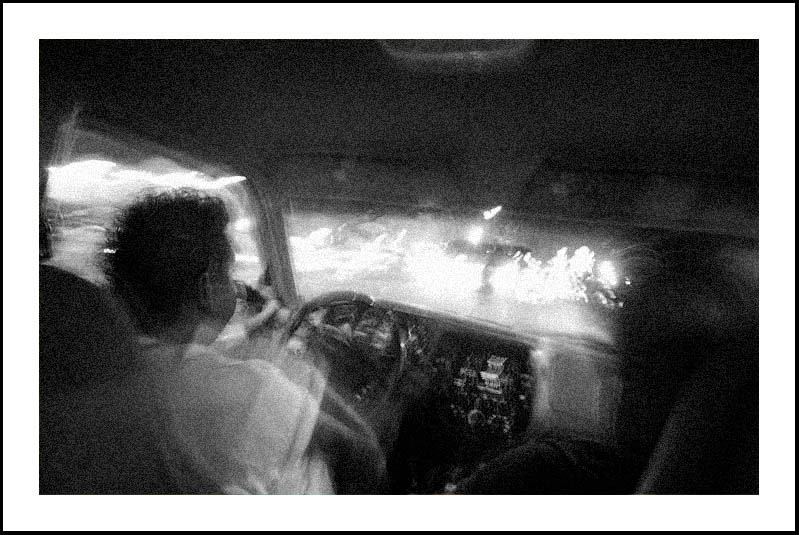
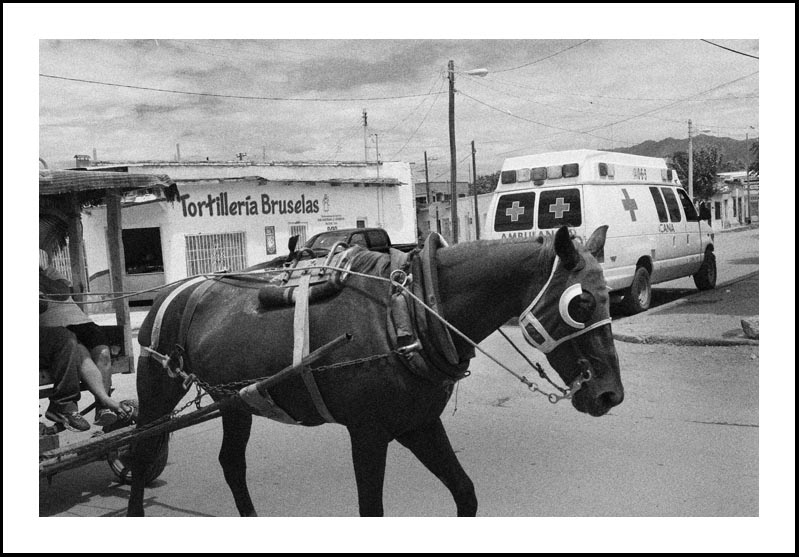
JUAREZ, Mexico – Juarez still stands. It is still Juarez. It is a city of my heart. I am not alone. It is insane what has happened in Juarez. There is no reference or metaphor: it just stinks. I walk the streets and there are “tastes,” of the old city. The “new city,” the one of Malls and chrome and green eco-glass, the nightclubs and shiny new cars has disappeared more than the old city has.
This might say something about what the condition of the city was before “The Troubles.”
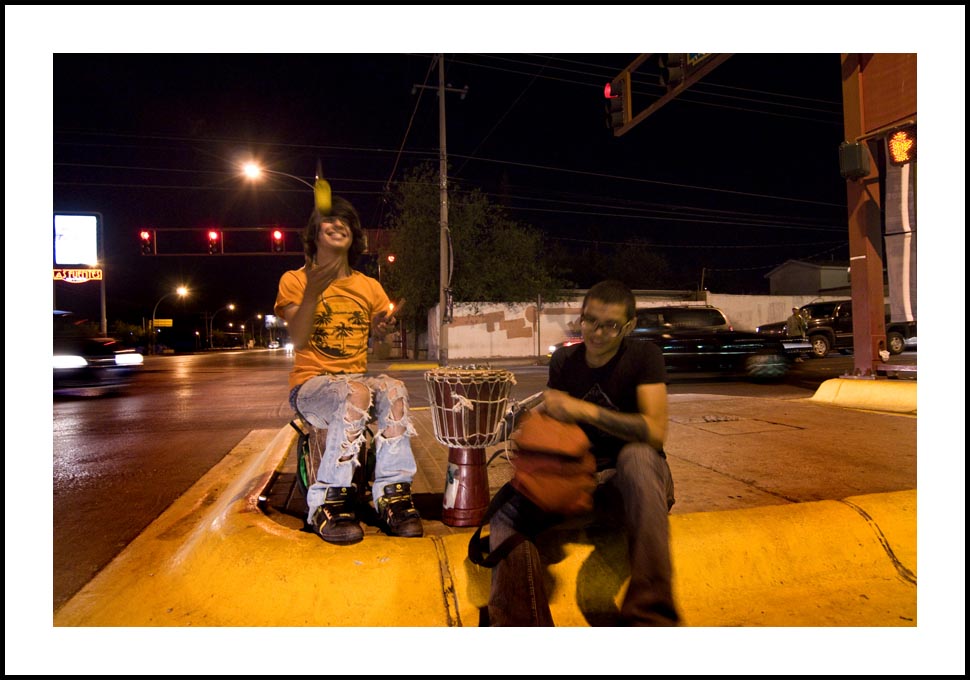
Pictures?
More pictures of dead bodies in the streets of Juárez?
Hard to want to do. I’m not visiting. I live here. It’s better when you have to get the images for your boss/editor and then high-tail it to the airport.
But, I’m not working for a daily paper anymore.
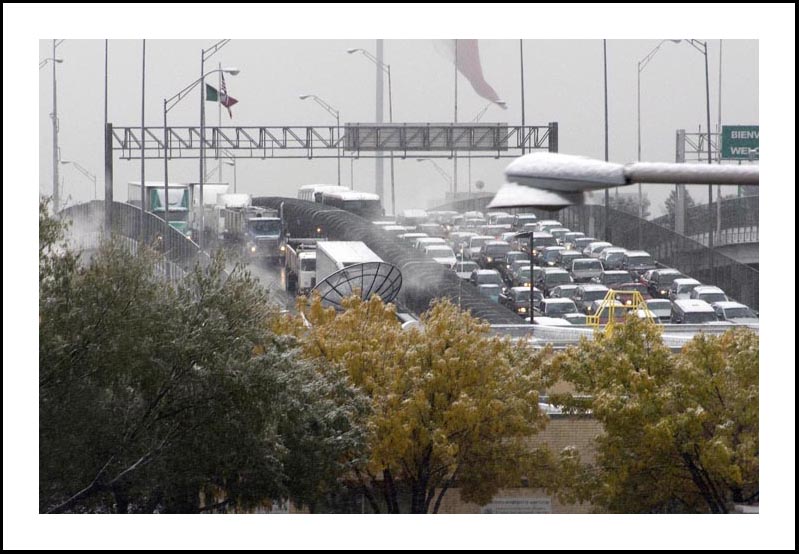
Snow!
A rarity in this no-mans-land.
Hardship. No one is ready for it. Not man nor beast nor domicile. The aftermath will be unnavigable mud on some of the streets in Juarez: there’s always a fire from people using heaters they’re not used to using; tons of $14.95 coats will be sold on El Paso Street and Stanton Street and the various Fallas Paredes tiendas all over town; car crashes aplenty; you can bet on it. The homeless freeze. Rich people buy juniper logs for five bucks apiece to have their moment of apres ski. Everyone will adapt eventually, but by then we’ll be back in T-shirts and shorts; my loft turns to a freezer; life is anew. This is a place of the sun, not really set up for anything else.
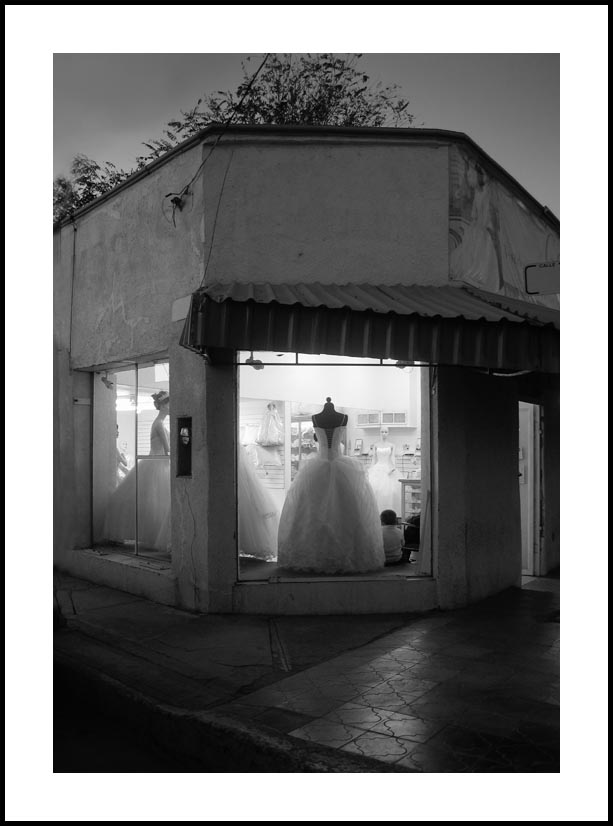
Juarez / October 2009
Murders continue.
Record year.
Day of the Dead is coming. Like every day hasn’t been that.
The streets have an eerie decay to them. Litter. Boarded up windows. Still a lot of hustle but the nights are empty and in the shadows are things no one wants to see.
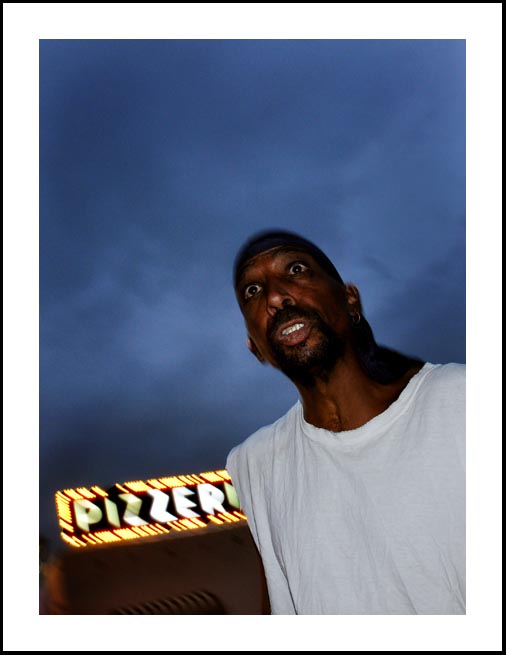
Been thinking about this guy and borders and the idea of the Big Picture versus the small picture ever since I made it (the photo) this summer, on an almost rainy night, in the northeast section of town, out by the military base.
John Hughes.
Angry. Joyous. Funny. Dangerous. Sweet. Full of love, hate and ambivalence. Boozed up, half mad, half brilliant.
“I am free,” he shouts at the night. “I am free and I am in hell.”
I ask him if he ever goes across the border?
“I am borderless,”he replies, “aren’t you?” He shakes his hand and does a twirl, almost stepping into busy Saturday night traffic.
He does a little dance and steps so close to the edge of the curb that I go to grab him but he spins back onto the sidewalk and does a very theatrical bow. He is a tight rope walker and it looks like he has done this toe dance forever.
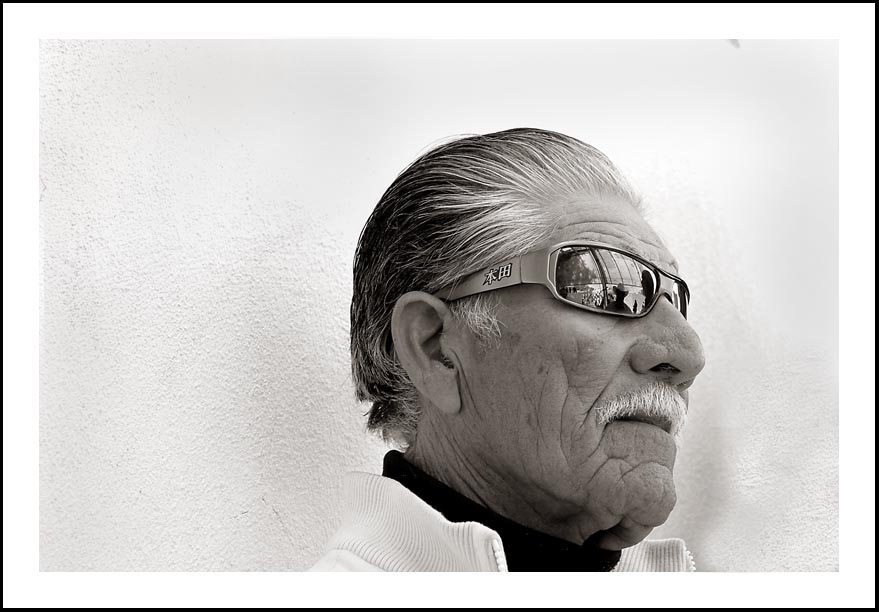
Juarez/13 June 2009
So what else is there in Juarez besides murder and catastrophe?
Right now, it doesn’t seem like anything.
But, then, there are those moments.
Tender Mercies.
I walk the streets. I walk the beaten down downtown. I bus through the factory landscape with For Lease signs more plentiful every time. I walk through the night clubs on Avenida Lincoln, defying myself, defying my fear.
But it’s there. The noise comes out of the clubs, loud, but not the joyous sound, more like the power-driven sound of defiance and booze.
People wait for the situation to end. It will. Someday.
Daily, the murder rate climbs, like an upward missile, slicing through the inherent good nature of this state and city, through this sunny northern Mexico metropolis that was turned into, first, a factory for first world consumption and, then, a monument to the future of world global wage reality. It was that, just a few years ago.
Seems like an entire epoch ago.
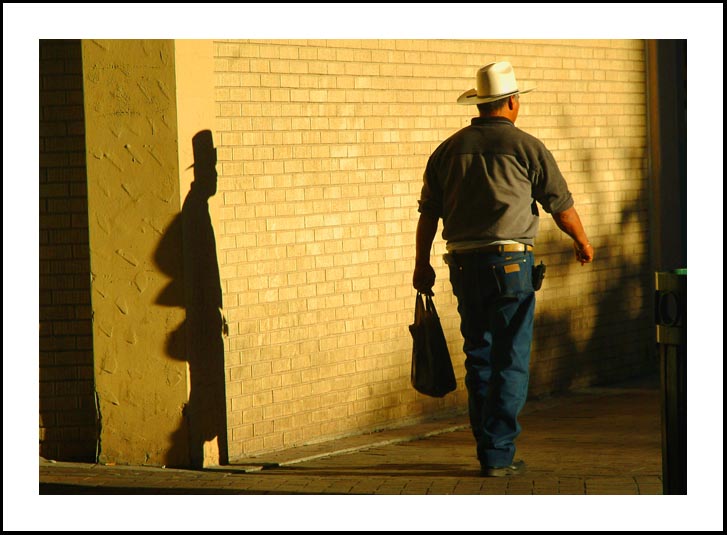
It’s cookin’ in El Paso.
104!
Hard to breath.
But people do.
You keep moving.
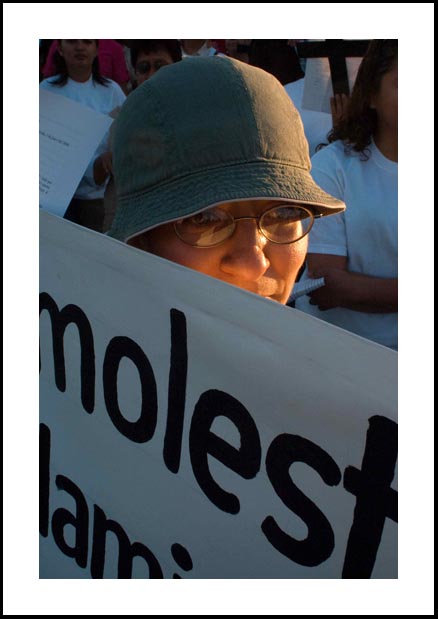
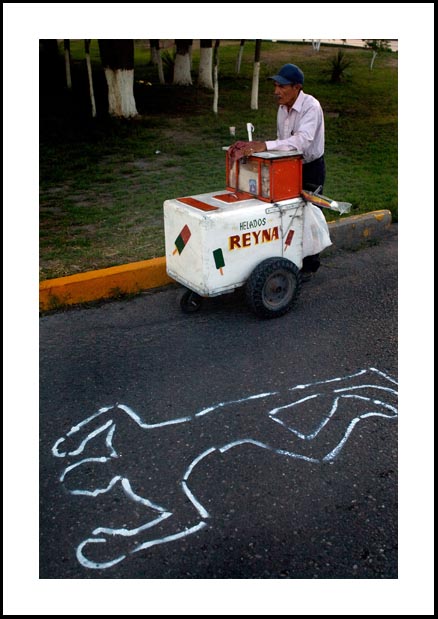
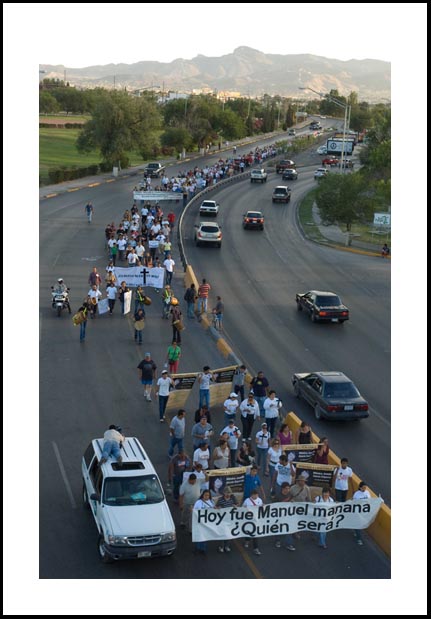
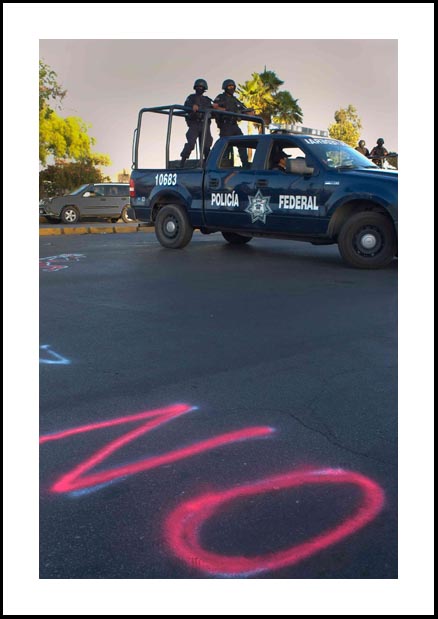
The Megabandera (giant flag) in the Chamizal Park in Juarez is usually the place for joy and pleasure, a meeting place for families, lovers and tourists.
That was before la catástrofe.
The catastrophe.
Before the Cartel War.
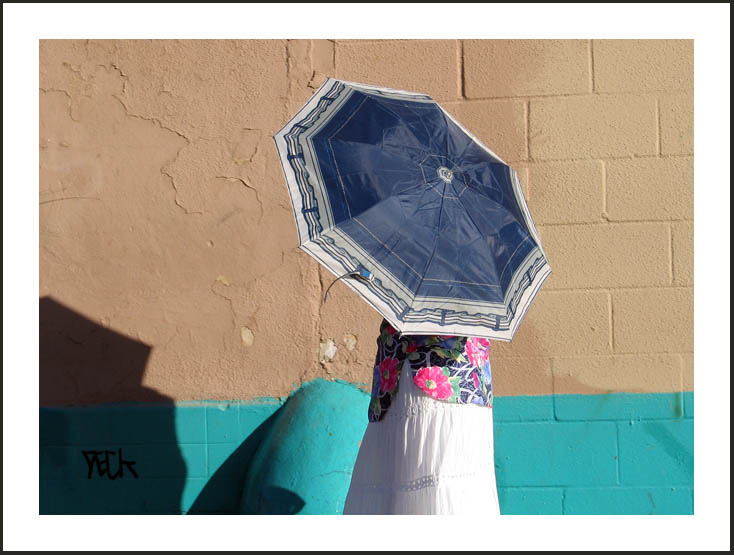
Summer is here on the border. Hot. You know it’s summer when the umbrellas are out. Of course what’s in this image is not very “sopisticated.” Who walks in the Brave New World, anyway?
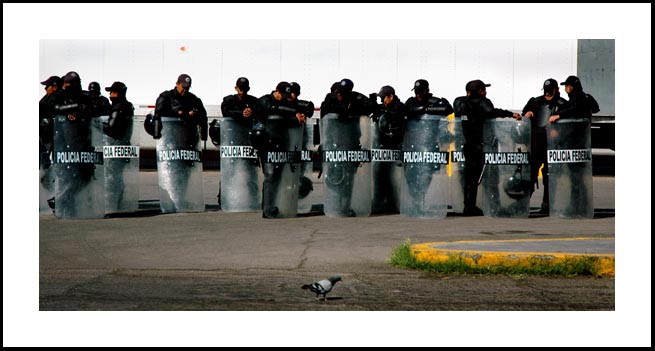
You start to wonder if it’ll ever end but it will end.
La violencia. The violence.
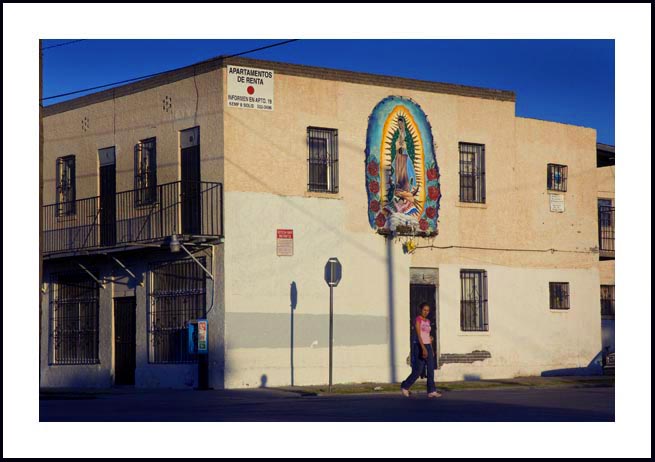
El barrio is a community. Bruised. Not what it was. Sitting on the border and prime target of speculators, er…ah…read that as “Developers,” but still standing. Go back and ask anyone in any American city, for the past 60 years if “Urban Renewal,” was about construction or destruction. If you actually need to, go ahead.
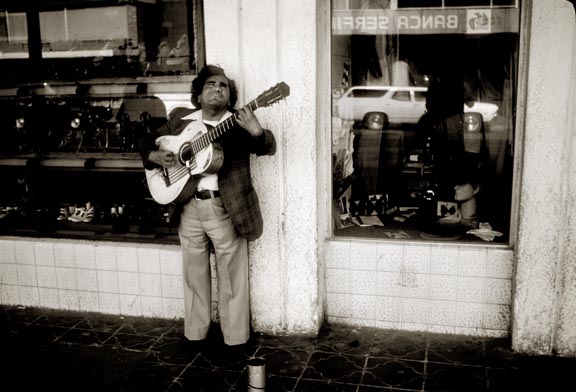
Juarez
This man played in the streets of Juarez for all my first years in La Frontera. He was blind. He was small. He made music like a special desert bird, joyful to bathe in just a drop of water, joyful to sing, even to the passing and witless American tourists.
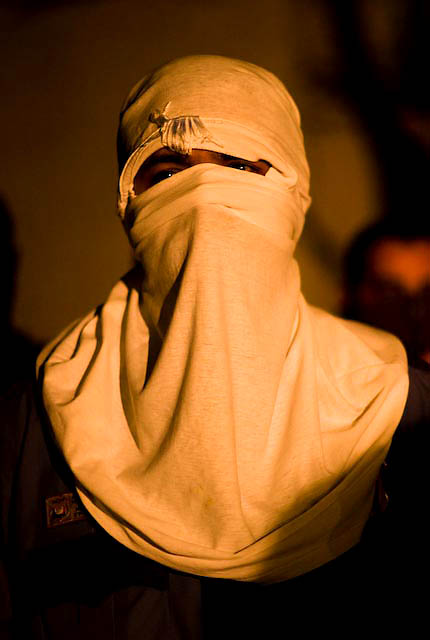
Photo and story by Julian Cardona
March 31, 2008
About 50 Juárez police officers protested what they consider the arbitrary arrests of fellow officers by the recently arrived Mexican army in ciudad Juarez. They were protesting the alleged framing of numerous officers on charges of drug possession.
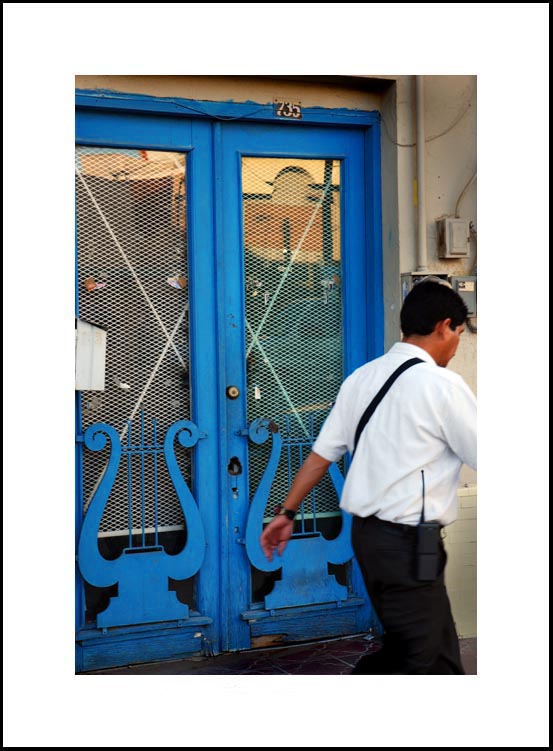
There hasn’t been so much gunfire in Juarez since 1910. Since Jan.1, there have been over 230 drug war-related murders.
There was a time in Juarez -bourgeoise and ugly Americano, for sure, but what the hell- that it was just the old fashioned sins: getting drunk, dancing, straggling around with whatever “date,” that’d allow you to put your hands on her ( or whatever) and, if you survived, you crawled home over the bridge to El Paso and woke up late the next day.
PHOTO OF THE WEEK: April 11-18, 2008
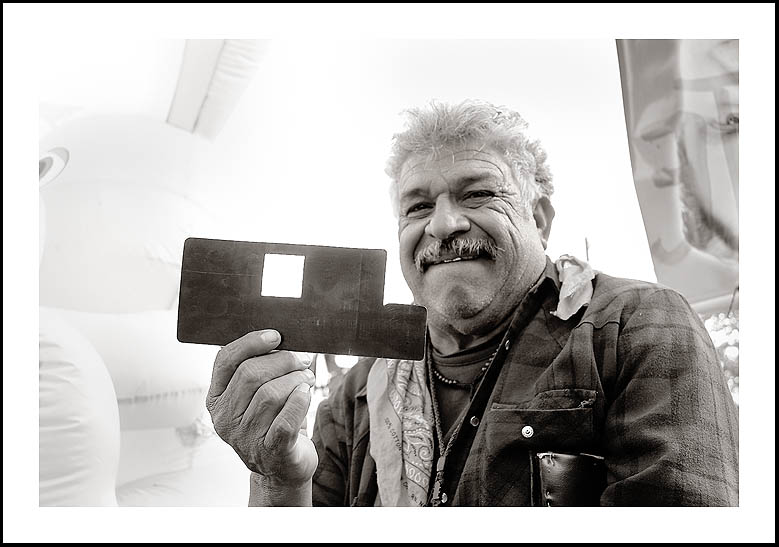
Polaroid Corporation announced in early February that they no longer will make Polaroid instant cameras or film.
This announcement, world wide was greeted, mostly, by a collective shrug of the shoulders and a “ho-hum.”
For Juarez street photographers the news was immediately alarming, living-threatening, and was a call to action for a new learning curve to transition to digital photography.
PHOTO OF THE WEEK: Jan. 25-Feb. 1, 2008
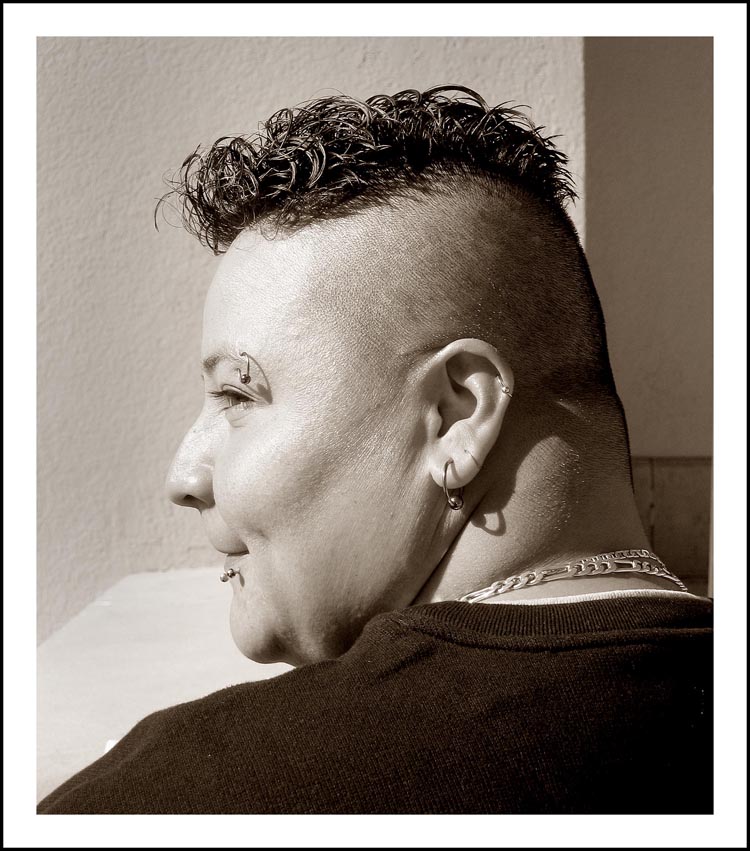
You can leave the border but the border does not leave you. My head snapped when I saw Roberta Flores, up in New Mexico.
“Terrific hair,” I yelled at her. “Gelled,” I asked?
“No,” she said with a sly and proud smile, “Glued,” she shouted back, with a grin that sort of said, “gotcha!”
“Did you get that done around here? ” I asked.
“They don’t know how to do that around here,” she spat, friendly but gently ridiculing.
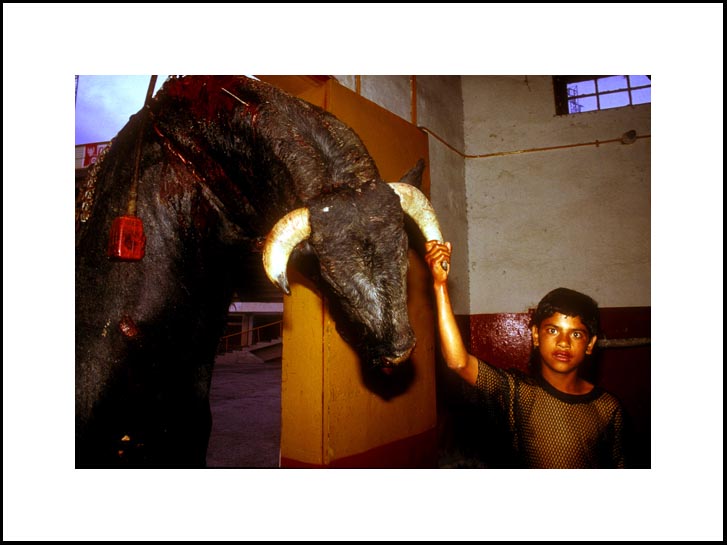
I’m a little weary of border politics, for now.
I return to the streets and hope the disorder of life gives me shape and form.
Politics and News seem to work on a linear arc.
Facts. Information. Plenty to tell. Endless detail and weight and nuance. Narrative is interesting but one of the things I’ve always liked about doing photography is the occasional punch in the gut you get from just being somewhere (often where you shouldn’t be).
Photography can work as a fact machine, but when it doesn’t and it’s just image, impression, reaction, light, when there is more than the sum of the parts, I like it the most.
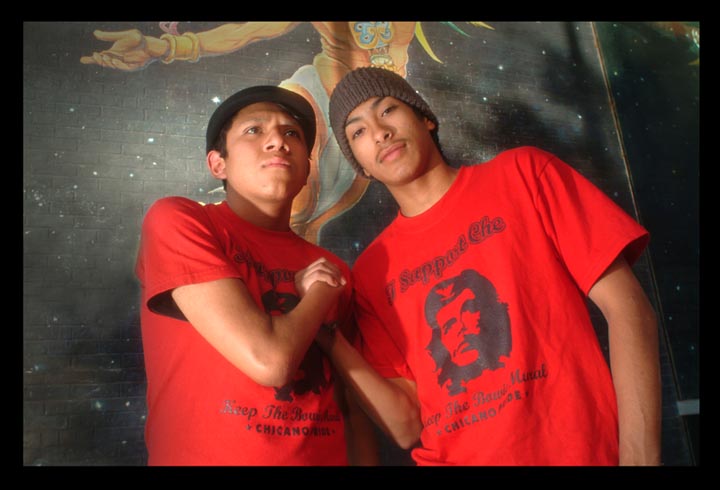
Spring and summer of 2006.
“Revolution,” in the streets. Faux Revolution? Revolt. Spurt of protest? Quien sabe?
Remember? The immigration demonstrations and walk outs?
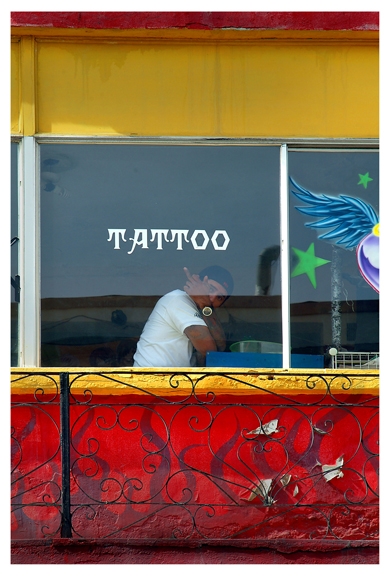
Flying tattoo on the window. That’s what I was after. Beautiful.
What I got was the Universal Salute?
Priceless.
He didn’t like me? No, I don’t get that. I do struggle with why I shoot on the streets. What right do I have, who appointed me? There’s some kind of thing I got into my head about documenting and witnessing and leaving the artifact that has driven me for a long time. So I do.
I like the fact that the tattoo-ero sends something back. He’s got a right. We all do what we’ve got do.
So, I get my tattoo in Juarez.
It’s not always peace and love out there.
So be it. ‘Ta bien.
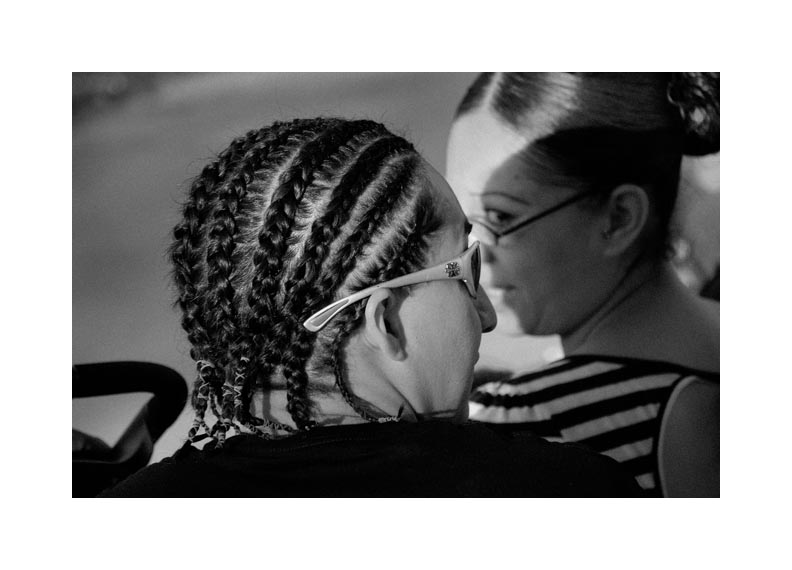
This was a 16 de Septiembre event in Armijo Park in El Paso. Armijo is in the heart of the historic Segundo Barrio. Armijo is a people’s park. This neighborhood is in, actually, the only”urban,” neighborhood in El Paso (hard to define but you know it when you see it: Life exists on the streets)
July 11, 2023 No Comments
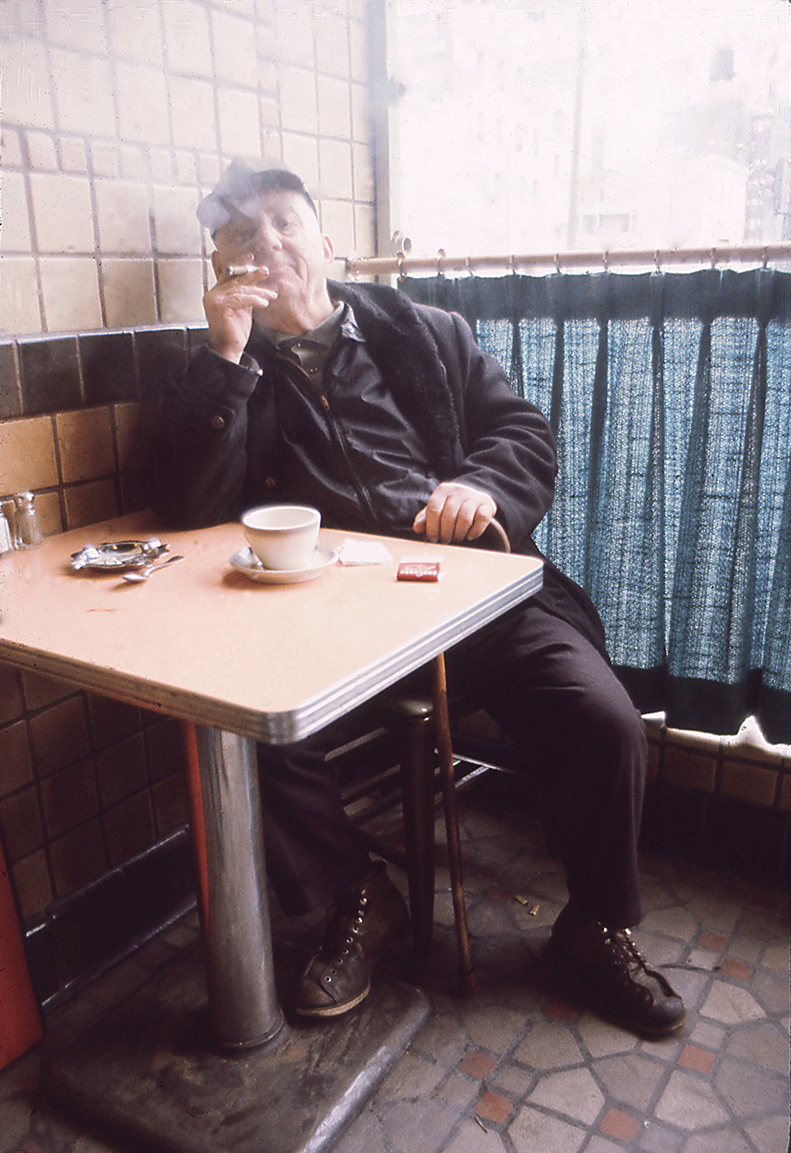
Smoking Man, diner at State and Ohio Streets, Chicago, 1971
Photograph and Text by Bruce Berman
This was the very beginning of my career, when I first realized what I wanted to be … a photographer. Not much has changed since then. This is exactly the kind of photograph I like to make, the kind of experience I like to have. Me on the prowl, encountering a person on the fringe, direct eye contact. The only thing I do now that I did not do then is to get more info about a person, really get to know them. At that time, and for many many years afterwards, I was just satisfied with getting the photograph. As time has gone on I now realize that that is incomplete. It’s the photograph and the text that matter, so that the person photographed is honored, not just used. Maybe that reflects aging, learning the world is not all about me but about me being in the world, about respect for others, maybe just about being a real documentary photographer.
So, here I am, 42 years later and I don’t know who he is, where he was from, what the name of the diner was, what he did for a living, exactly when the date was, etc., i.e., the 5Ws that any journalist knows are essential.
A detail I never noticed before, is his shoes. Believe it or not they are meaningful to me. In my old south side neighborhood, these are the kind of shoes we’d buy every few years. They were our main shoes (except for dress shoes). These were the “better ones,” because they have finished leather. Ours were the exact same 10 lace model but a cheaper brand, and the leather on those was called “rough out.”
Why am I talking about shoes?
Opinion/Observation
by Co-Editor Bruce Berman
___________________
I drive my old routes. Camera on the passenger seat or my lap. As always, these days it usually stays there, untouched. There are things along the way that spark memories. Object that aren’t there anymore. Gorgeous commercial signs constructed by craftsmen in the 1950s and 60s (not the least of which from the Jimenez Sign Company) were carted off to other cities that were twenty years ahead of El Paso in their bourgeoisie ambitions.You can drink under some of El Paso’s “Motel, Vacancies,” signs in various bars from Austin to Houston to Baton Rouge. There’s a withering away now, aging and weathered, but mostly not endearing anymore, not worth stopping for (to make images). There came a year, a month, a day when the treasures of El Paso were either gone, carted off or just left to rot.
There are whole swaths of this incredible and authentic city that are gone, at least for the long gaze of a photograph: Alameda. El Centro (downtown). Segundo is shrinking fast, bordered by El Paso Street on the west (with nasty tentacles of them all over it) and Cotton on the far east, with old residents living out their days, youth getting out fast and them with their bulging eyes all over it. Off of Delta there are condominiums and some revamped industrial buildings, residents living an almost urban lifestyle (sans humanity). Even the Gay Bars have fled, a sure sign of urban renewal/removal.
It’s not my job to do anything about any of this. My job, as I saw it, at the beginning, in 1980, was to give face to a face that was not known and I have tried. As The Grid lays out its future in the city with two hearts, it’s clear to me that my mission isn’t to pick sides in land rights, power exchanges, or to watch -or judge- the inevitable blandification. But blandification has come. Oh happy day. Some loudly exhale and go, finally! The city is becoming presentable to visitors again. It’s cleaner. It’s newer. There’s baseball. Soccer is coming (watch out Chamizal! The final blow that started in the mid 1960s is finally here). There are restaurants with the preface Le with Foo Fo thing-a-ma-jig dishes with little portions of things that look like they squiggle -vegetables- on top of things it’d be hard to identify below. Fancy. Plates of Foo Foo. There are young people downtown again, well, the kind of young people that look like they’d also be comfortable up in Kern Place on Cincinnati and the upper Westside.
Finally, there’s a Starbucks downtown near the Plaza and the Westin. The kids from the ‘hood can serve the hipsters that come in from outer Zaragosa Road and beyond.
Boring? Not to everyone and I wish them the best. I am not part of this. I left this scene in three other places I lived before this very long stretch here. It’s the same message: you’re in the gentry or you’re equitied out of the gentry.
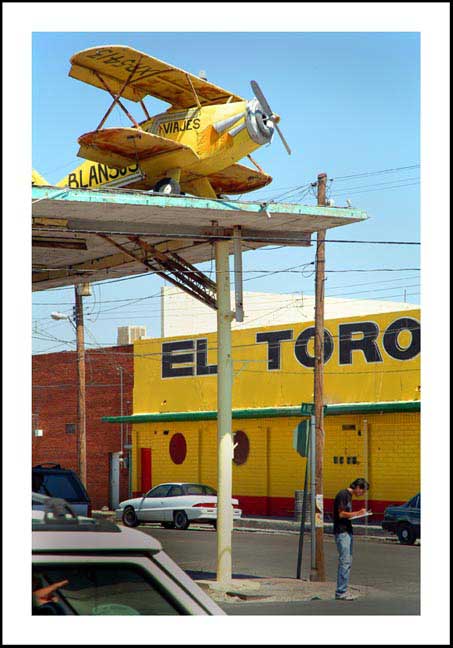
Streets of Juárez are changing.
The murderous last few years are being replaced with growth. Planned growth.
The entire border is under development and there have been plans for decades that are now starting to happen.
It’s as if the violencia was a cleansing. Or was it a scrubbing?
In the “new” Juárez there won’t be any Bi planes. The era is gone. Anything from the 20th Century will become increasingly a rarity.
So be it. C’est la vie. Es la vida. What can one say?
Or was it a
