Search results
58 results found.

On The Edge of the Edge – The U.S. – Mexico Border
58 results found.
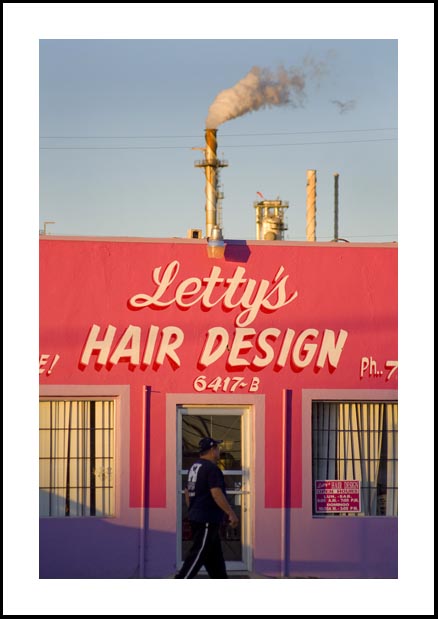
This street is changing. New Medical School and renewed Medical Center just down the block. Oh yeah they have the Grand Plan.
But the south side has its own Plan and the hot paint keeps coming!
Yeah man, this street is the Grand Plan dealing with the No Plan, the natural plan, the reality plan of the people who hang here, hanging onto the funk, south side people.
Like me.
Like Letty.
Been on this street for a long time.
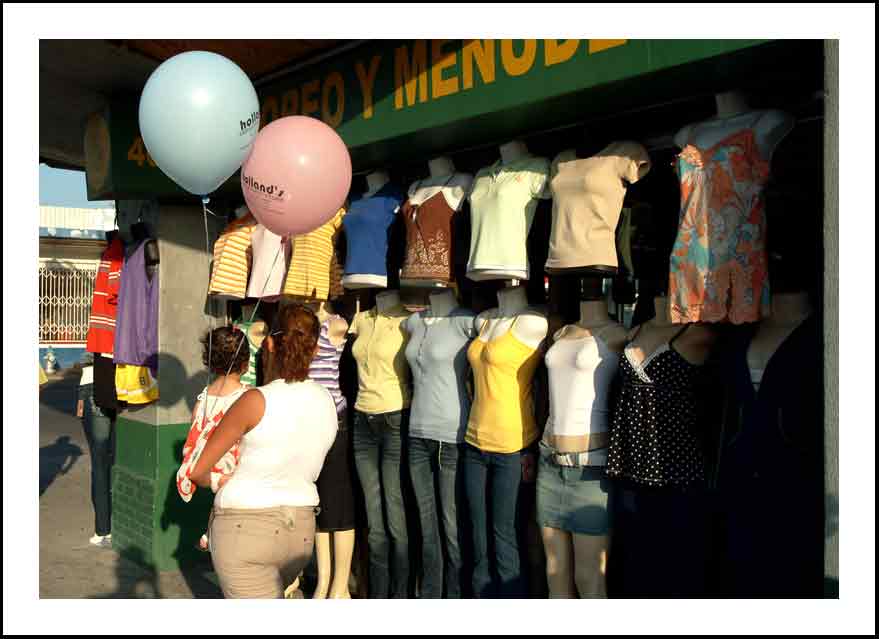
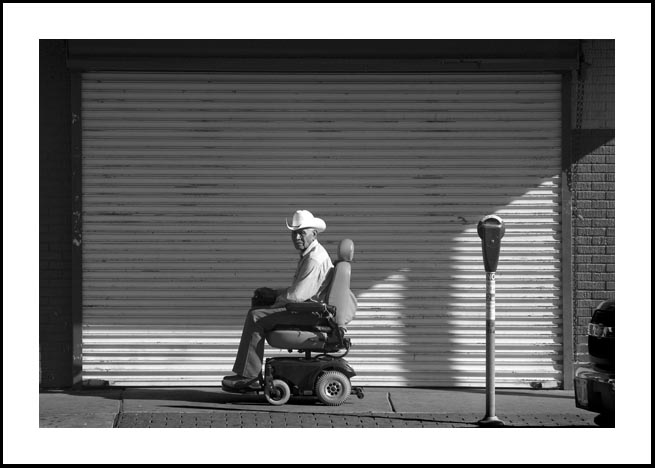
There are a lot of viejos in the Sagundo barrio. They get around.
There are a lot of kids too.
Like it always was but just fewer. It’s the heart of this isolated town.
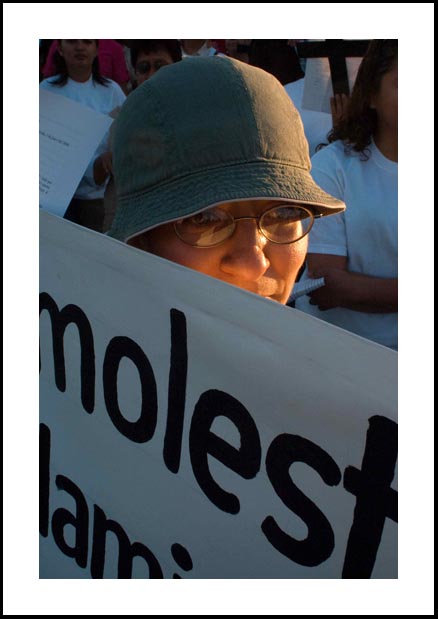
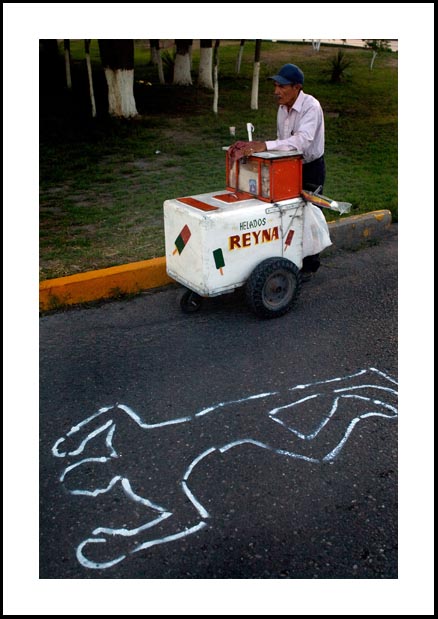
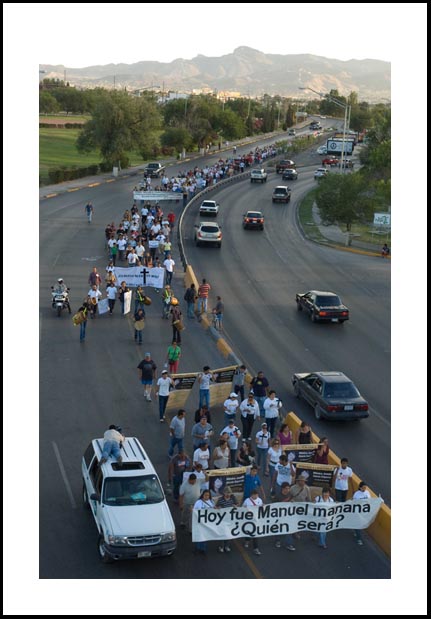
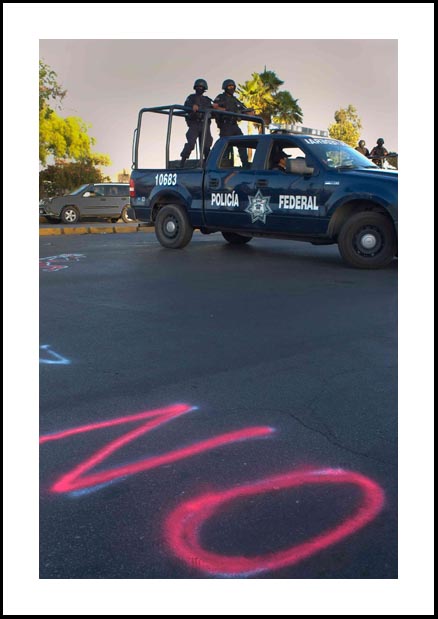
The Megabandera (giant flag) in the Chamizal Park in Juarez is usually the place for joy and pleasure, a meeting place for families, lovers and tourists.
That was before la catástrofe.
The catastrophe.
Before the Cartel War.
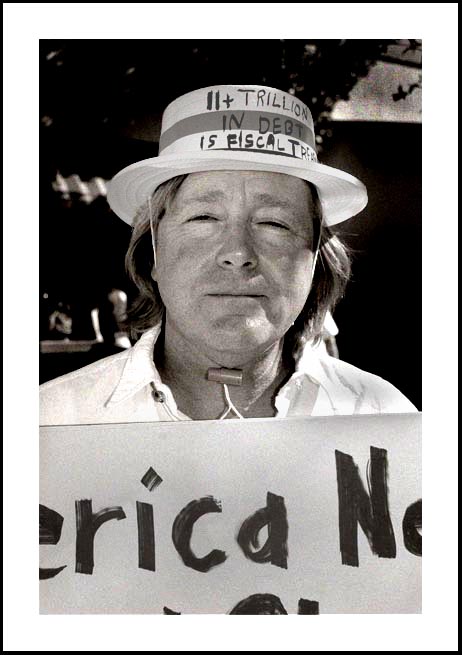
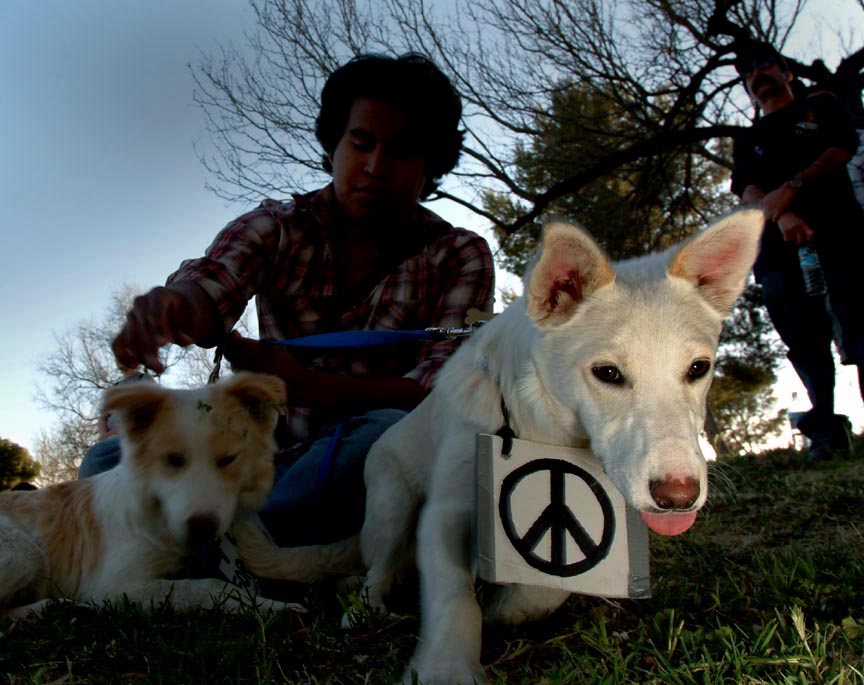
This man was photographed in El Paso, Texas at a “TEA party.” At the TEA party are, mostly, the aged and, seemingly, the innocent, with much esoteric political discussion, predictions of the end of the Republic, impassioned anger and, to be fair, much sincerity. To my “”eye,” it seems a little sad. Sadness for what, I am still trying to process and determine.
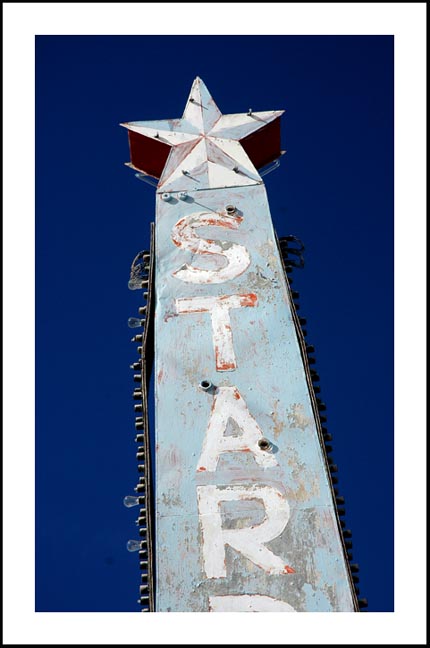
The West, the American Highway (and the American fascination with it), Funk, ain’t what it used to be.
Fine with me!
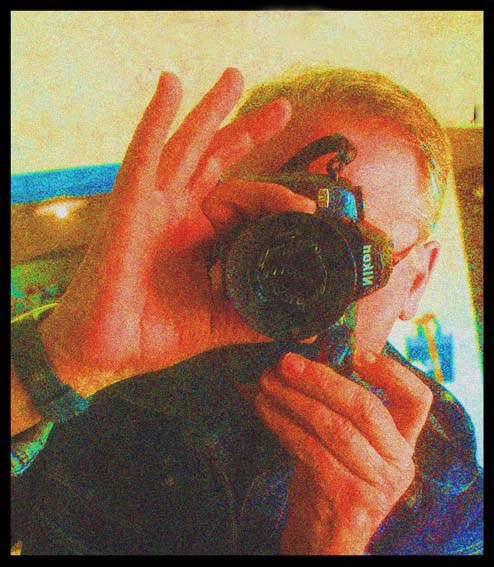
About Bruce Berman
Bruce Berman has been a professional photographer for over four decades. He works in what some have called, “The Concerned Photographer,” style of photography, but brings a poets vibe to his images. His initial documentary projects were in Chicago where he photographed Appalachian migrants to the big city, Black Panthers during the tumultuous 1960’s and the gritty street life of Chicago in its Rust Belt years.
His main work for the past forty years has concentrated on the United States/Mexico border, particularly the narrow stretch of land that encompasses El Paso, Texas and Juarez, Mexico. He also “plows” the southern New Mexico landscape, its people and the vast mysterious lands of West Texas.
After coming back from one of his earliest forays on Alameda Street on El Paso’ south side, in 1980, Berman wrote in his journal, “…I have seen a new world. It is both physical fact and mythical idea. It is a place with a line drawn through it and on each side of that line there are metaphoric mirrors that are reflecting back at each other, perhaps distorting each other, perhaps magnifying each other. It is the US/Mexican border. I will make my stand here. I will try to ‘give face,’ to this place so others can know it, perhaps, even, so those who live in it will know it more deeply.”
The aggregate result of that effort resides in two main bodies of work: The Border Project: 1985-2007, and Juárez: Cartel War Years (2007-2011) .
Additionally -concurrently- he is a chronicler of the disappearing lands beyond cities. He calls this series The Funklands, and notes, “Nothing is just laying around anymore. It’s scooped up, trucked away, rebuilt and becomes a mega buck treasure. My treasure has been the texture of the land and the stuff laying around that attests to who was on that land before… well.. before the homogenization of America.”
Berman lives and works deep in the borderlands of El Paso and Juárez, three blocks from the international bridge that connects Juarez and El Paso, surrounded by and isolated in the the vast lands of West Texas and northern Chihuahua. He refers to this as the “City-State of No Man’s Land.”
Berman continues to cover his “beat,” for major publications throughout the world and for his own book publishing enterprise. The Border Blog Press. His recent book, Walking Juárez is a compilation of photographs and stories covering the years 1975-2018.
Since 2008, Berman has added “Professor” to his name. He now teaches photojournalism at New Mexico State University (NMSU), 50 miles north of the El Paso/ Juárez ports of entry, in Las Cruces, NM. His teaching concentration is on Documentary Photojournalism and multimedia reporting. He still does occasional assignments and personal documentary work but spends equal time “Passing the torch,” he says.
Lately Berman has concentrated on doing books: Walking Juárez, 2017, Cutting the wire, 2019 and his newest, BACKLAND, 2022.
Many of his students don’t know about the border too much, but for the most part are of it. The G Generation, he says, “… are the hope of photojournalism, and maybe the world.”
He thinks working with them is his best project ever.
About the Website
The Border Blog covers the news, opinions and culture of the 2000 mile border of Mexico and the United States, concentrating on the epicenter of El Paso and Juarez. The Border Blog is not meant to be a news source as much as it is meant to be a news “feel.”
Another “border,” of interest to Berman is less obvious, the border between The Grid (his descriptor) and and those on the margins, unwilling or unable to keep up with “development,” and “progress.”
The site is a collaborative project. Besides Bruce Berman, who acts as editor and photographer and sometimes writer, the staff includes writer and painter, Juarez native and resident, Nathan Zarate, and, Beatriz Andino Zamora, a poet and writer from Zacatecas, Mexico. Zarate and Zamora post occasional articles concerning the politics and history of Mexico, in general and La Frontera, in particular. The site is always appreciative of the creative inspiration, brilliant chutzpah and deep goodwill -as well as extensive Web skills- of Manuel Rivera, a fronterizo “to the bone.”
Contributions to the site are welcome. Diverse viewpoints will be cherished. The site’s point of view and orientation will be no mystery to its readers, however, there will always be plenty of room and appreciation for other voices as long as they are informed, well articulated and sincere and fueled by passion tempered by reason.
Space. Glorious space. Wonk yer brain but we all need more space. Maybe because we wonk our brains so much. This is from the funklands of southern New Mexico. It looks right across at the slim tip of West Texas that is El Paso. Juarez, Chihuahua is the horizon.
Space. This is the Tender Mercy of No Man’s Land.
First block of America (FBA).
El Paso Street. La Frontera. I’d call it Texas but it ain’t. Everyone knows it if they’re from here. Texans hold their arms out, full length. Americans think it’s part of Mexico…or hell. New Mexicans…furgidaboutit! It’s all they have to really feel superior to.
El Paso, the nation-state of nowhere.
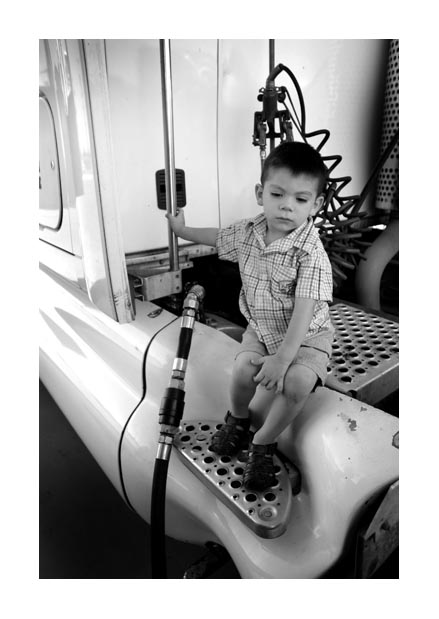
Ciudad Acuna, Mexico
A Mexican border city has begun fining U.S. drivers who cross the border to fill extra drums, tanks or barrels with government-subsidized Mexican fuel.
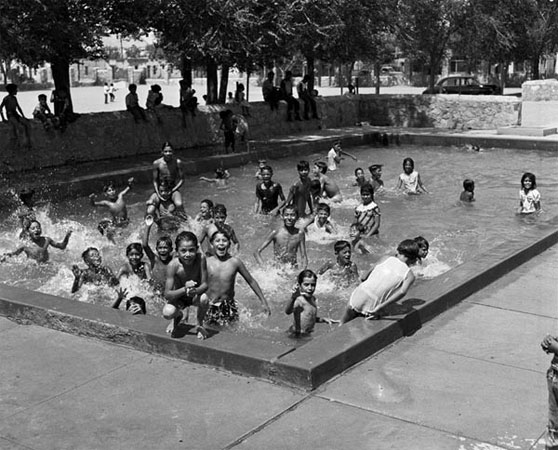
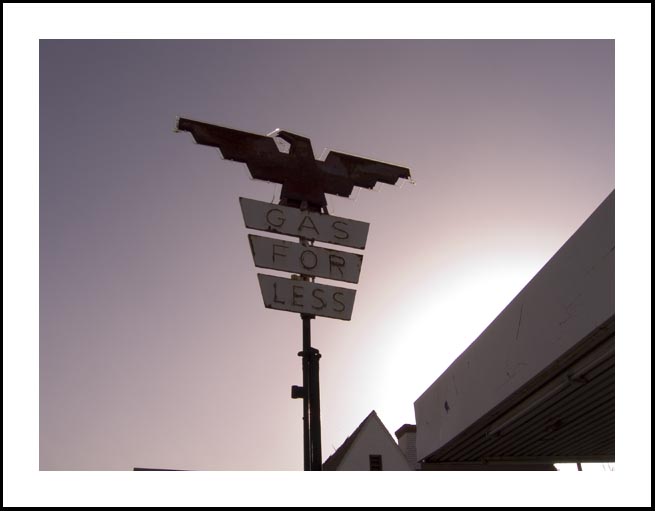
“Gas for less.”
Less gas.
This is not a glitch, it is the changing of a culture.
Usually when a culture changes -sorry Barack- it is the result of a calamity: Depression, war, pandemic, natural disaster. Were it not so, but “change,” is not engineered. Eventually, it is managed.
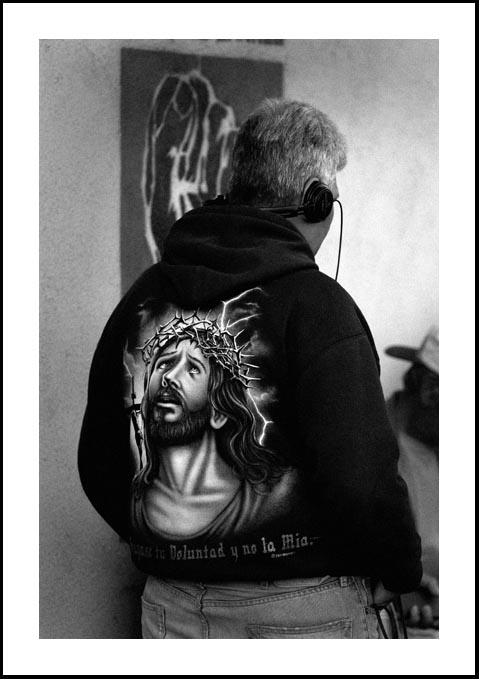
PHOTO OF THE WEEK: April 18-25, 2008
Headphones Ninth Street and Oregon. The first street north of the border in El Paso, Texas. Jan. 31, 2008.
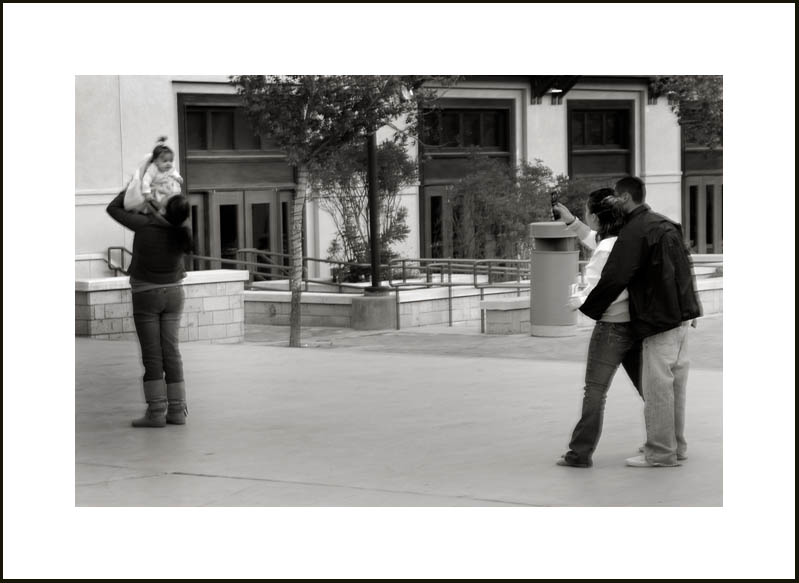
El Paso’s El Centro, the downtown, is packed with people at Christmastime. Unlike most cities of the southwest and of the rest of the United States, El Paso’s downtown is alive and bustling at all times of year, but especially during this season.
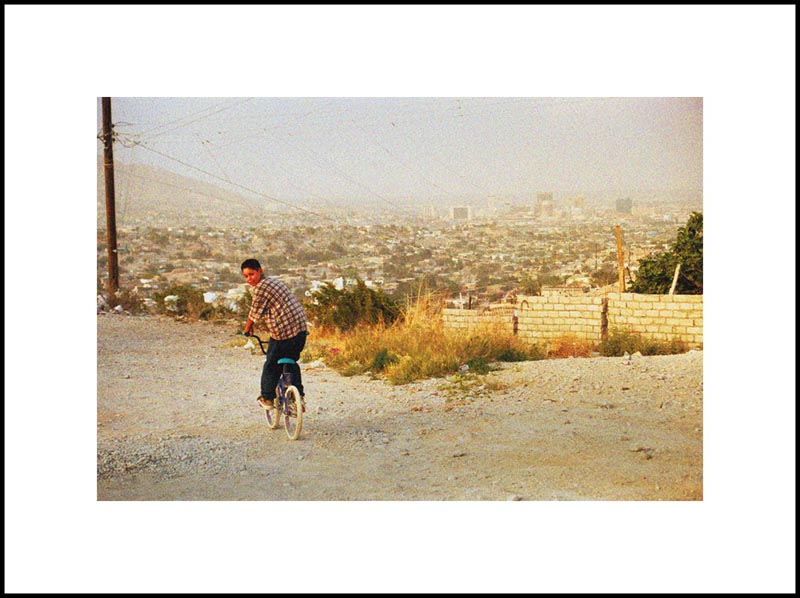
Someone observed, generally, that in so-called third world countries, poor people have to live on top of hills and mountains (where it is more difficult to get water and where roads are rough and barely existent), but in first world countries the rich like to live on top of hills and mountains, for the “views.”
And the status.
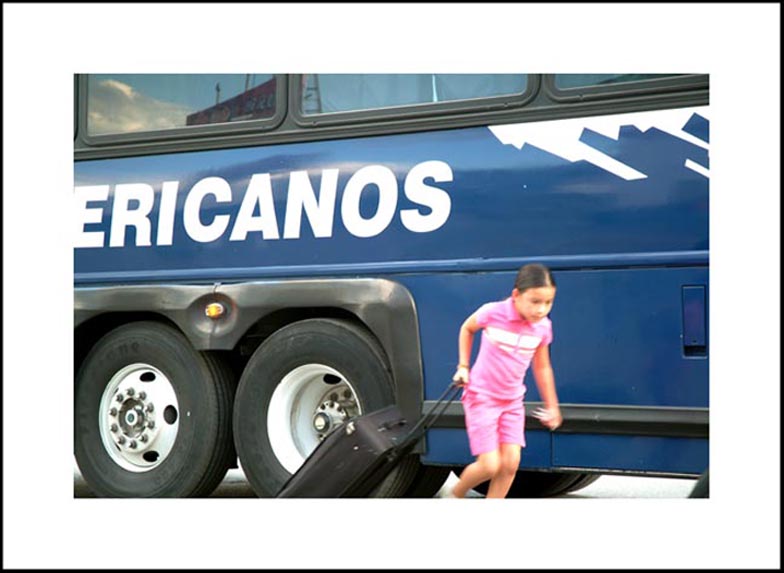
Sixth and El Paso Street is the first street in “America,” after crossing over the Paso del Norte Bridge from Juarez, Chihuahua, Mexico into El Paso, Texas. This is the crossroads.
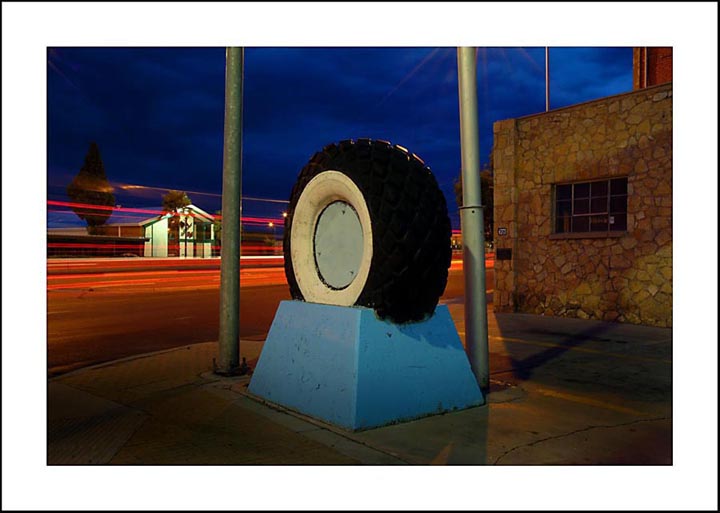
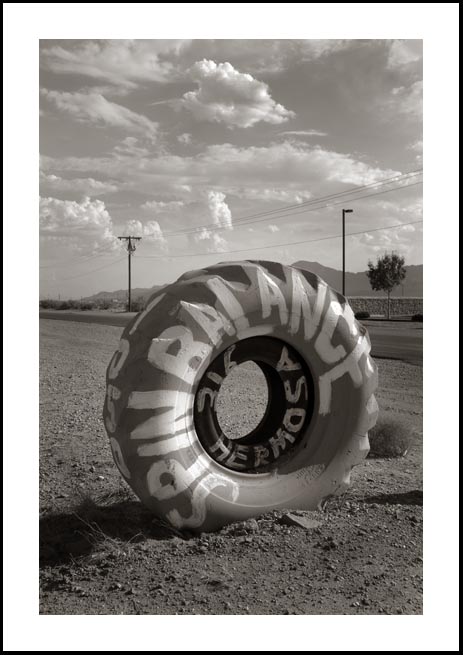
This giant tire is in front of Wicker Tire Company at 701 San Antonio St. in El Paso, Texas. It has been there since the late 1960’s and has become an El Paso landmark. The tire was originally on an earth moving vehicle that worked on the Panama Canal. It was brought to El Paso in the late 1960’s, where it has rested at the corner of Paisano Drive and San Antonio Street. Before Interstate 10 came to El Paso, Paisano Drive was U.S. Alt Route 80, the truck diversion route around El Paso, part of U.S. Route 80 that was the main southern route starting in Savannah, Georgia, and ending in San Diego, California. When Interstate 10, was completed, most cross country traffic was diverted from Paisano Drive, but, the Wicker tire has endured and enriched the landscape for several generations of El Pasoans and other passerby. Highway Art, a commercial mainstay of travel in the United States in the 1930’s through the 60’s, has become true art and and this one endures as a true El Paso landmark. Tom Wicker, son of the founder of Wicker Tire Company, maintains the Giant Tire, repainting it approximately every three years, “Or sooner if it’s graffiti-ed,” says Mr. Wicker .
Additional Notes on US Highway 80
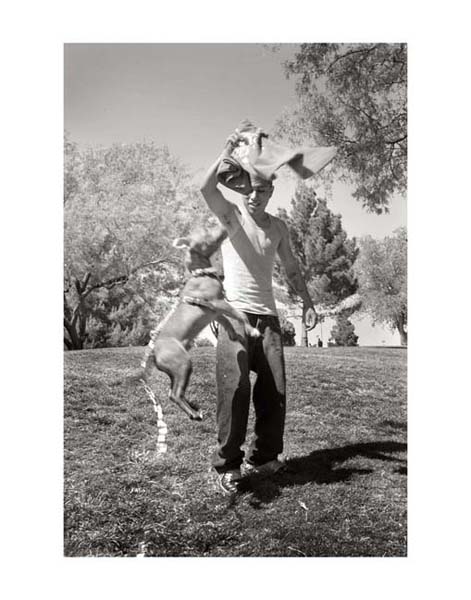
Carlos (last name not given) in Memorial Park with his Pit Bull Zues. They both had a lot of scars. They both are fighters, and it appeared they had more in common with each other than either could have with anyone of their own species.
Pit Bulls.
Asked why he liked that particular breed of dog, Carlos replied, “They don’t give an inch. Neither do I.”
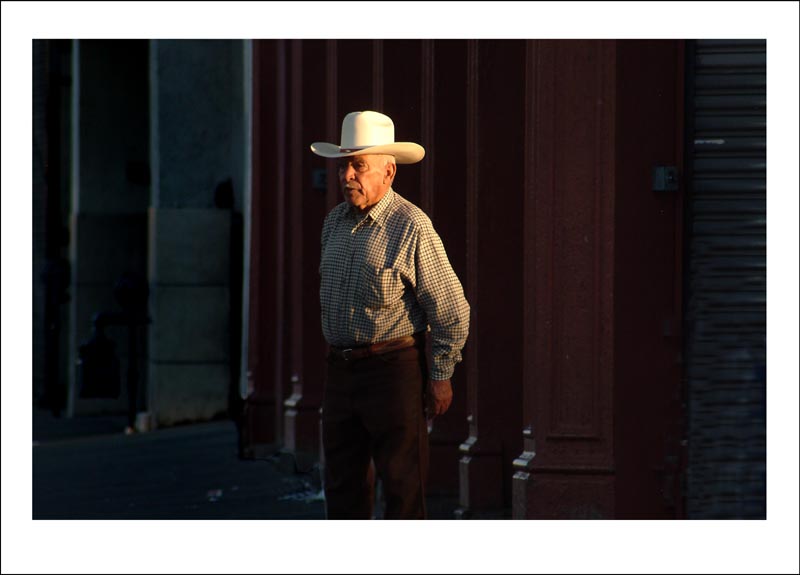
A man stands in the last light of the day at the corner of 6th and El Paso Street in El Paso, Texas. This is the first street of the United States after entering the U.S. from Mexico from the Paso Del Norte International Bridge. The bridge links Ciudad Juarez with El Paso and 6th and El Paso streets could be considered the crossroads of the northern part of the Western Hemisphere from south to north.
A lot of old folks (viejos) grew up in this barrio and are still there. They are the dignity of the barrio.
Imagine how people felt when a picture of an old viejo was used, by City planners, to show what was wrong with El Paso?
Los Viejos are what’s right with El Segundo.
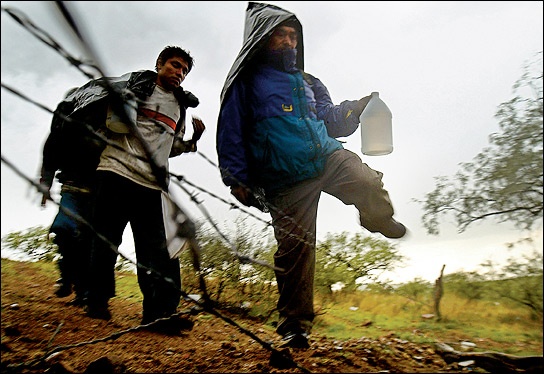
Drug cartels want migrants’ routes
Fight to control corridors on Arizona border turns violent
ALTAR, Mexico ˆ This village on the edge of the Sonoran Desert has been a supermarket for smugglers and the smuggled for nearly a decade. Migrants choose from an array of packages offered by coyotes and pick up day packs and anti-dehydration potions for the trek north.
Now drug smugglers want their route.
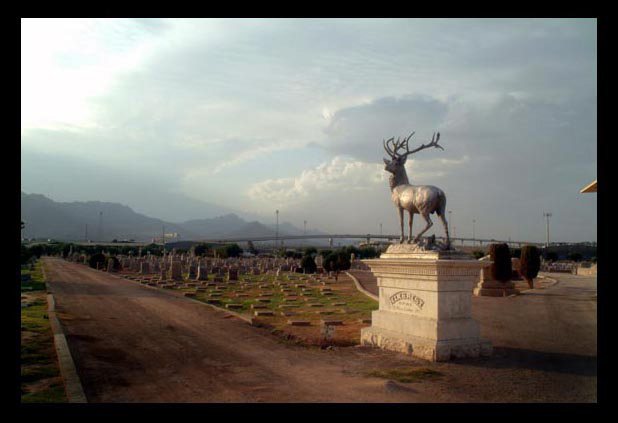
June 2006, Evergreen Cemetery, El Paso, Texas
The Border(PBS) | About the Show
Produced by Matthew Sneddon, KNME-TV, Albuquerque, New Mexico 
The economies of Juarez, Mexico and its sister city, El Paso, Texas are driven by a system of assembly plants known as maquiladoras. There are more than 600 maquiladoras in Juarez, two-thirds of them owned by U.S. companies. Since the first maquiladora was built in Juarez in 1976, the population of the city has increased nearly five-fold to more than 1.25 million, making it the largest Mexican city on the border. The Rio Grande fuels Juarez and El Paso’s water supply.
However, the more than 10 million people who live in these desert communities have begun to exhaust the Rio Grande’s capacity to support them.
This segment focuses on one Rancho Anapra family faced with the realities of living in a desert community with no running water. It examines the factors that contributed to growth of this particular border region: the Rio Grande, the maquiladoras and the promise of a better life.
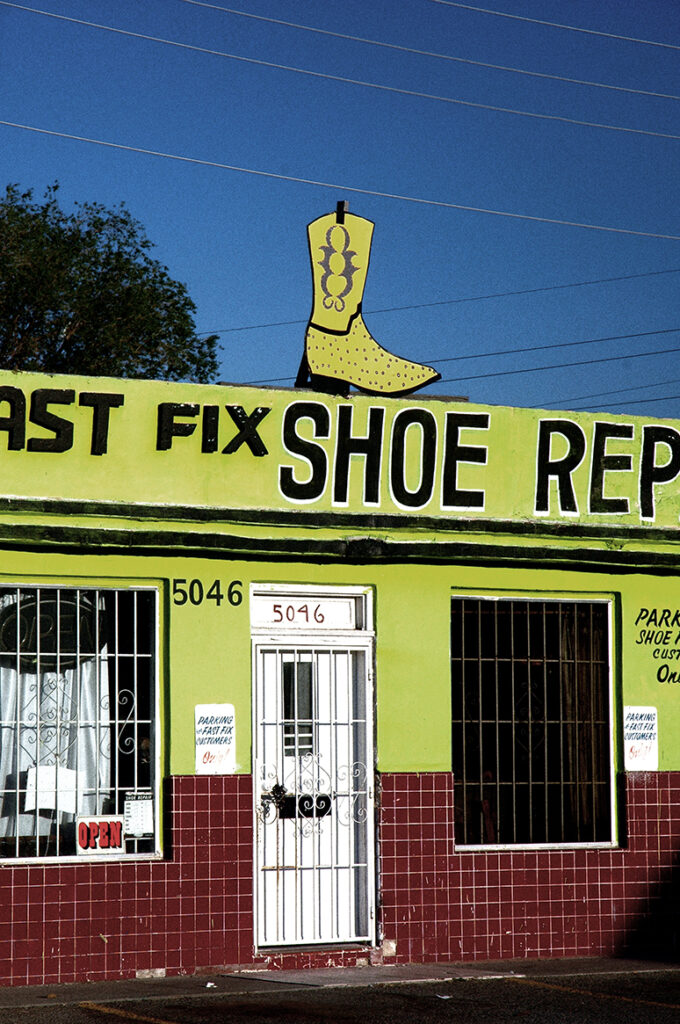
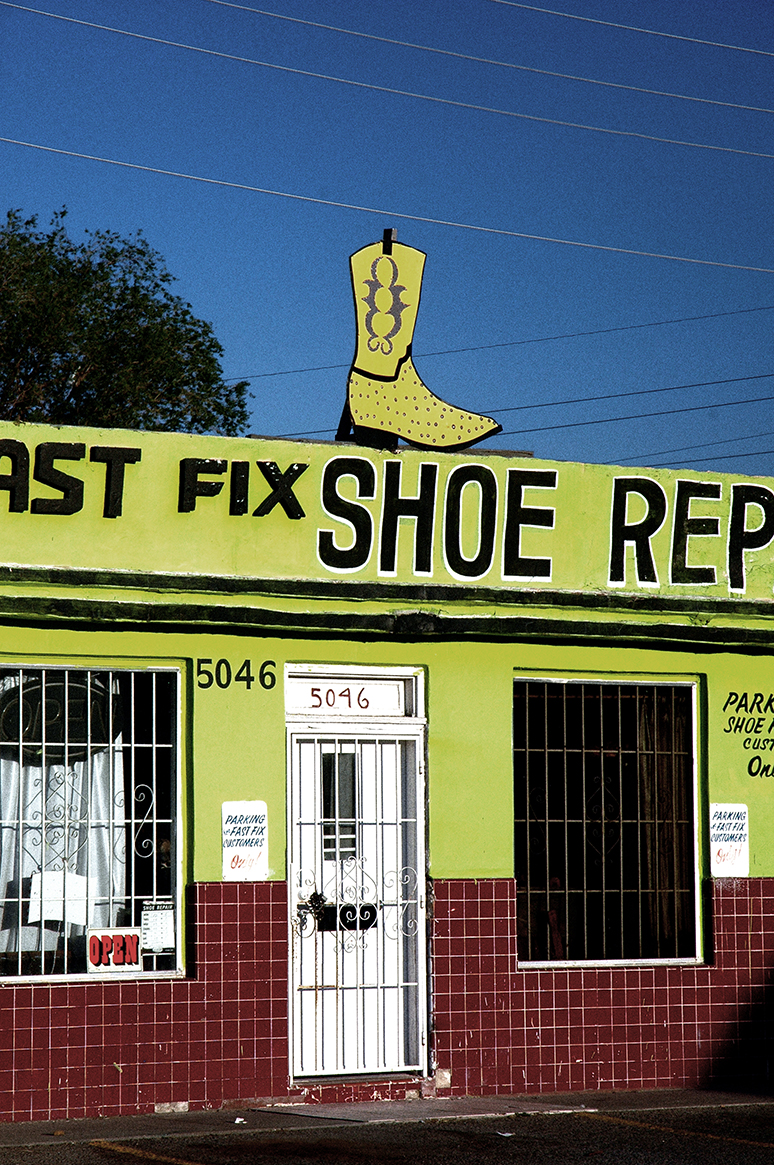
Boot/Shoe, El Paso, Texas, Highway 60/182 (Alameda Street), 2006
Text and Photography by Bruce Berman
Mexican presidential candidate Andres Manuel Lopez Obrador has called for a ballot-by-ballot review of Sunday’s presidential vote. He says the stability of the country is at stake. Mexico’s Federal Electoral Institute Wednesday began reviewing the totals from polling stations to determine whether Obrador’s rival, Felipe Calderon, really won the election Sunday. A preliminary count showed him ahead by only one percentage point. Both candidates declared victory Sunday night.
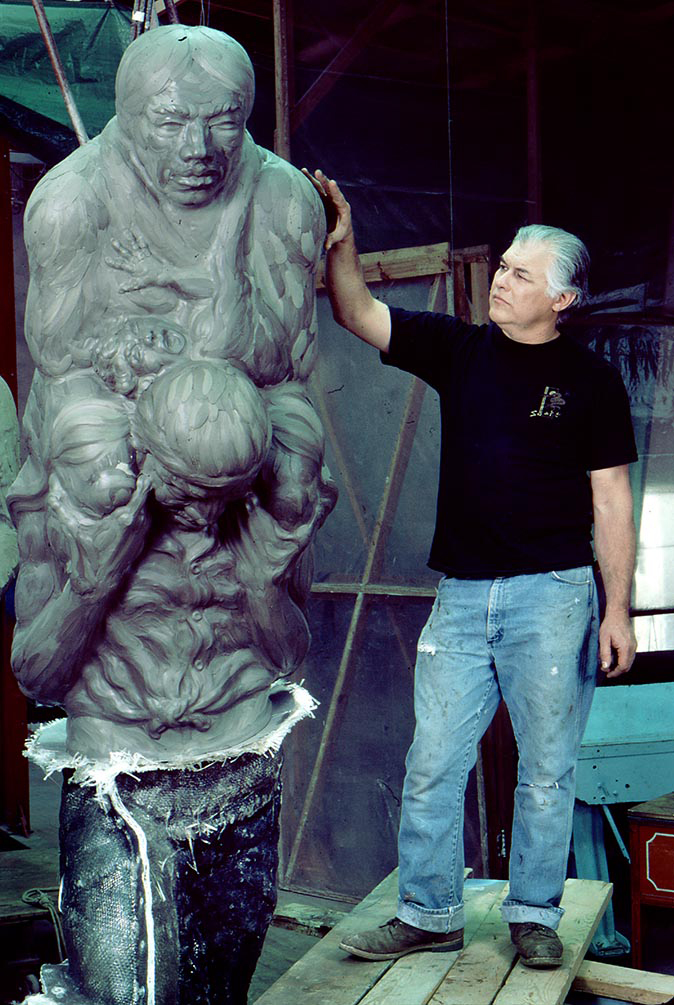
Sculptor; Born July 30, 1940; Died June 13, 2006
Luis Jimenez, a successful but often controversial sculptor, has died after being struck by a falling part of one of his works.
Authorities described the incident as an industrial accident. A segment of a sculpture came loose while it was being moved with a hoist at Jimenez’s New Mexico studio on Tuesday.
It struck the artist, pinning him against a steel support. The 65-year-old sculptor was taken to a hospital, where he was later pronounced dead.
“Luis Jimenez’s loss to the United States, to New Mexico, to the Chicano community, is great,” his friend David Hall told Albuquerque TV station KRQE.
“He was an icon, he was a very famous and well-respected artist. We will dearly miss him.”
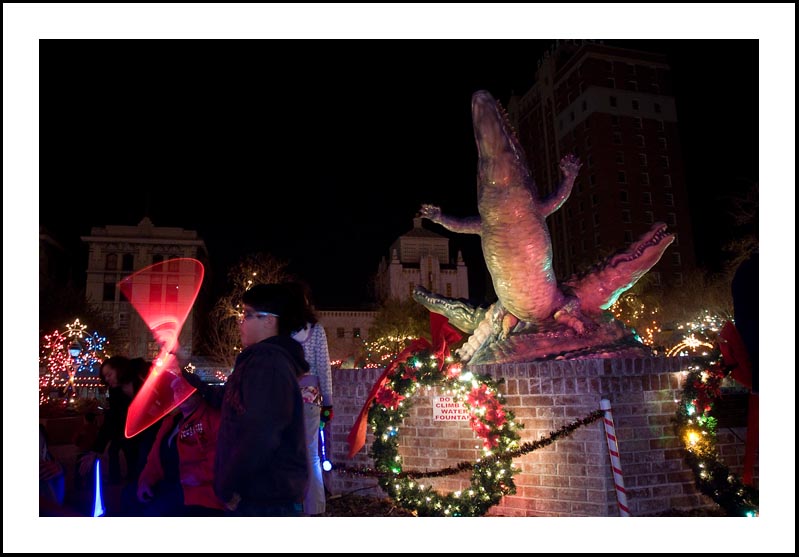
Jimenez, a native of El Paso, Texas, was known for his large and colourful fibreglass sculptures that depicted fiesta dancers, a mourning Aztec warrior, steelworkers and illegal immigrants. His work often started arguments and spurred emotions. “It is not my job to censor myself,” Jimenez once said. “An artist’s job is to constantly test the boundaries.” Jimenez’s Vaquero and Plaza de Los Lagartos sculptures became civic landmarks in El
Paso, where he grew up learning to paint and fashion large works out of metal in his father’s sign shop.
“I think Luis shared this border region with the world. Those images will continue to live on,” El Paso art gallery owner Adair Margo said. “You look at the images he left us, and you realise he was a voice that mattered, that
gave form to this region and communicated it with people.”
Jimenez studied fine arts at the University of Texas in Austin and spent time working in New York. In 1969, he created Man on Fire, a sculpture of a man in flames that drew its inspiration both from Buddhist monks in South
Vietnam who burned themselves and the Mexican story of Cuauhtemoc, set on fire by Spanish conquerors. The sculpture was displayed at the Smithsonian Museum.
Jimenez won numerous awards for his work. More recently, he completed a mud casting of firefighters and three fibreglass flames as part of a memorial for Cleveland. He was also working on a piece that was destined for Denver International Airport.
Sculptor; Born July 30, 1940; Died June 13, 2006
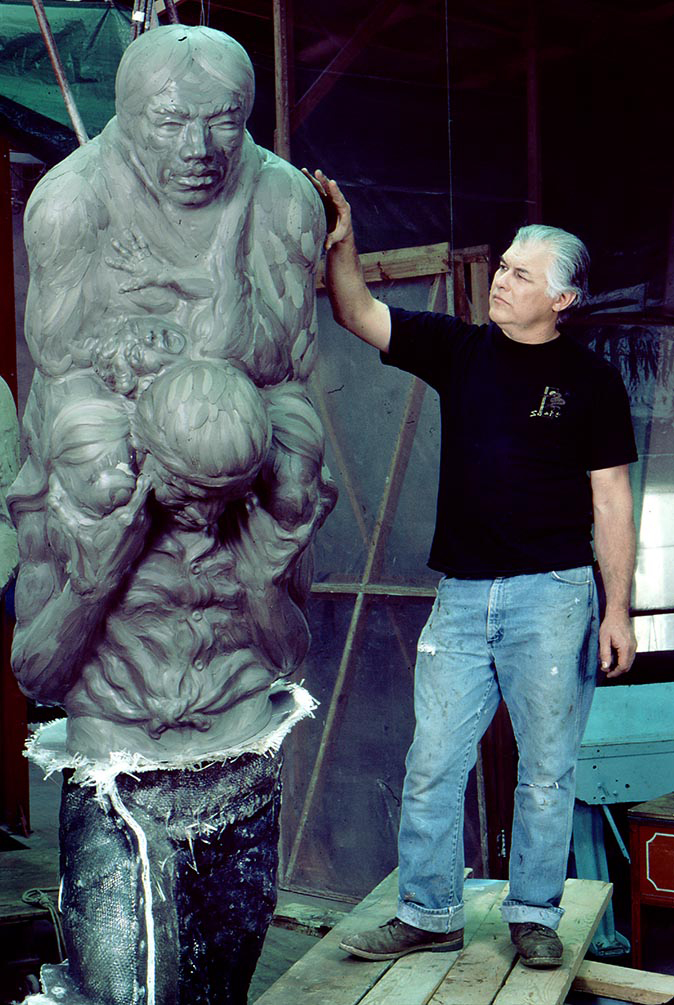
Luis Jimenez, Hondo, New Mexico, 2001
Born: July 30, 1940, El Paso, TX / Died: June 13, 2006, Hondo, NM
The first time I met Luis, back in the seventies, he came into my apartment and seemed to fill the room. It was like no room was big enough for him.
He was that big of a g
Not physically, although he was that powerful.
Not spiritually, although he did have that aura of somebody who really sees the bigger picture.
He was just big. All of it. Life. Love. Art. Humor. Seriousness. Ambition. Regular guyness.
When I first met him, and I suspect this is what most people felt upon first encounter, I felt like my life was just a lot more complete than it had been a moment before.
If you wanted to be good at something, in my case it was to be a photographer- you knew he’d be encouraging for your dream.
He was a brother. A big brother. And like a lot of big brothers, he was larger than anyone could possibly be.
And, man, was he smart.
He said what mattered. He lived He cut the crap.
He made impossibly complex Art and made it look like you could buy it from a south side El Paso Body Shop. And the Art mattered. It was about something. It was about him and our culture and his culture and the idiocy of our system and about the flora and the fauna and intuition and magic and love and joy.