Search results
62 results found.

On The Edge of the Edge – The U.S. – Mexico Border
62 results found.
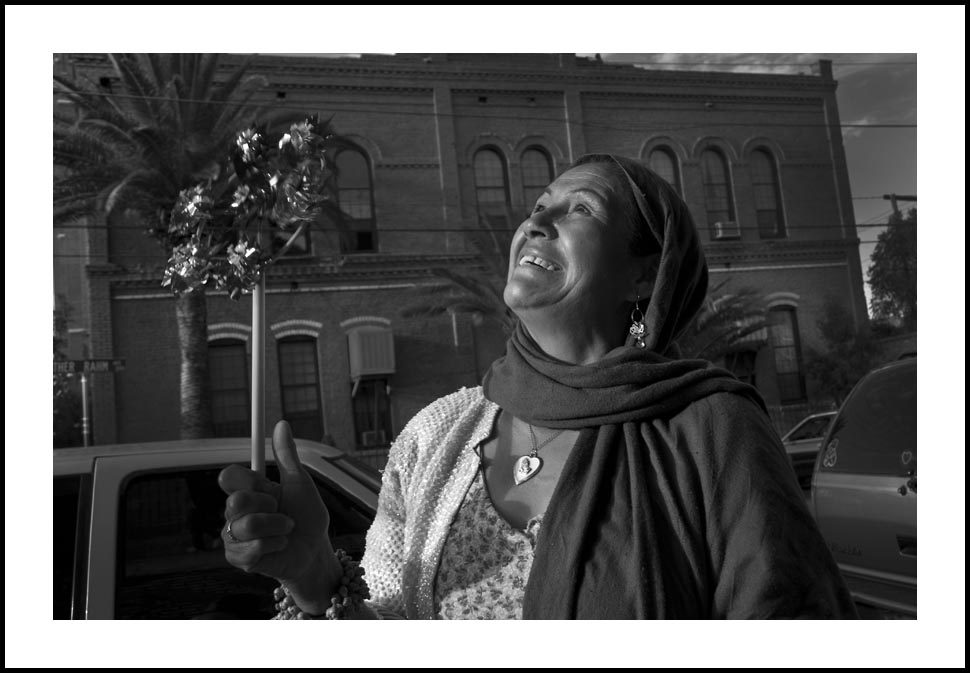
EL PASO –Angelica Alvarez. A true believer. A believer in her faith. A believer in a better day. A believer in joy.
I noticed her as she worked her way down the street, engaging every person that she encountered, leaving each person she talked with a smile on their face, enthusiastically waving goodbye to her, they no longer strangers.
I followed her.
[flagallery gid=6 name=”Gallery”]
Is there any Light at the end of Juárez’s tunnel?
There are a lot of things in Juárez these days: widows, widowers, killers, thugs, riddled bodies, drug addicts, every day normal people, kids going to school, people being married, bombs and death across the street (almost) from the old “City Market.” Everything.
There is very little Light.
The city seems to have turned from sunny and bright and colorful to Black and White, like an old photograph, one that wasn’t “fixed,” very well and is losing it’s contrast and fading away. The brightness is gone. Light is at a premium, right now, for sure, in Juárez.
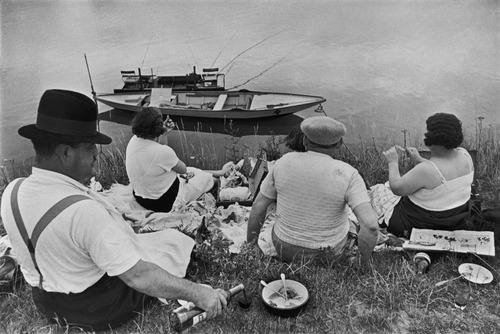
Is Photojournalism Dead Yet?
by Steve Ettlinger
Born in the 1930’s, come of age in the 1950’s and 60’s, and pronounced near dead in the 1970’s and virtually buried by the closing of magazines/rise of the internet–you have to wonder how it is that some aspects of this wonderful world are still around.
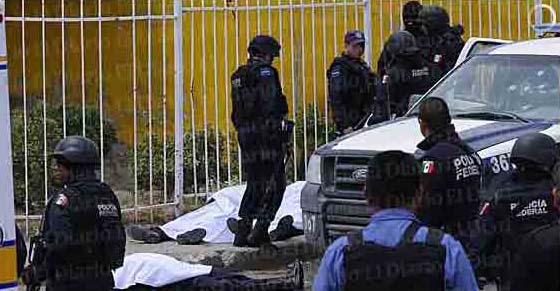
Today in Juarez. More of the same. If this were anywhere else we’d be sending aide and 120,000 troops. Instead we send DEA Agents (under the terms of the “Merida Initiative”) and clandestine military “trainers,” to train soldiers and police…to do what, exactly?
The last time I heard the term “trainers,” it was the early and mid sixties and the trainers were being sent to Viet Nam.
How’d that work out for us?
More importantly, how’d that work out for Viet Nam?
Watch out Mexico, there are many many dollars seeking calamities. Buy cheap, wait, sell strong.
Anyway, six Federales and one murderer (sicario), today, so far.
Same old…
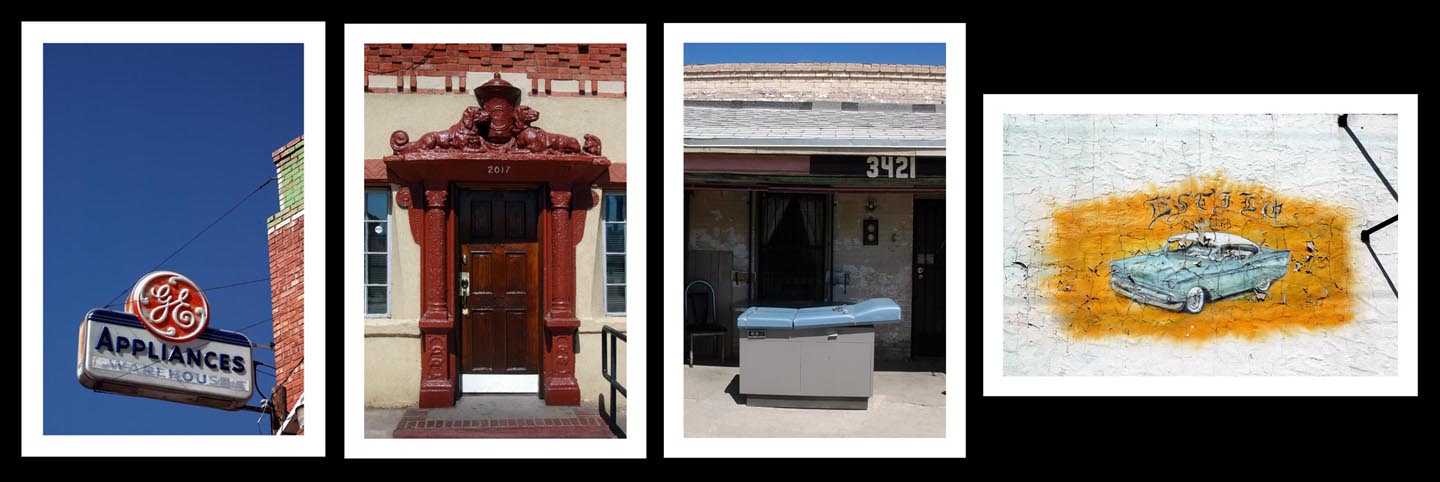
There ain’t much left.
Mostly the pickins’.
This was the Grand Highway, the Spanish Trail, the beginning of the end of the long journey from East to West or vice-versa, the tip of the arrow into the dart board that was Downtown El Paso.
Interstate came and went around, population moved to new turf, businesses followed, but the old Highway 80 lingered, going from Consumer to Warehouse and beyond. A modern day Babitt, Ohio.
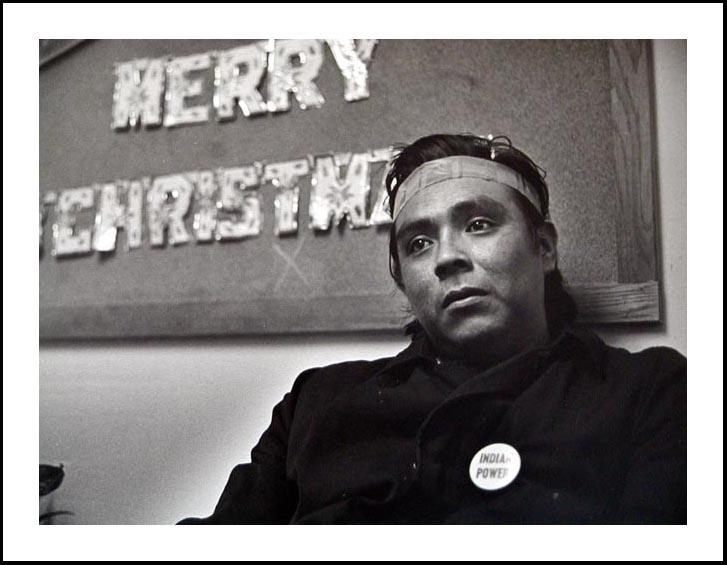
This is Wounded Knee Day. It calls for remembrance.
In the 120 year aftermath, the victims of Wounded Knee have still not received justice, let alone, widespread acknowledgment of the murders of nearly 300 Native American people, murders that capped almost two hundred years of aggression against America’s original residents..
Wounded knee was the end of the mythology of the Good America. It was the end of any illusion that the Indian Wars were anything other than raw power applied to a land grab.
What was Wounded Knee?
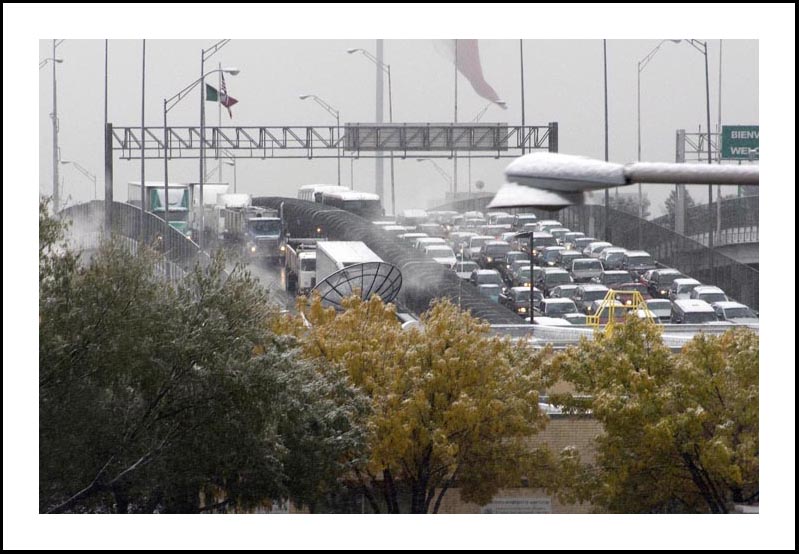
Snow!
A rarity in this no-mans-land.
Hardship. No one is ready for it. Not man nor beast nor domicile. The aftermath will be unnavigable mud on some of the streets in Juarez: there’s always a fire from people using heaters they’re not used to using; tons of $14.95 coats will be sold on El Paso Street and Stanton Street and the various Fallas Paredes tiendas all over town; car crashes aplenty; you can bet on it. The homeless freeze. Rich people buy juniper logs for five bucks apiece to have their moment of apres ski. Everyone will adapt eventually, but by then we’ll be back in T-shirts and shorts; my loft turns to a freezer; life is anew. This is a place of the sun, not really set up for anything else.
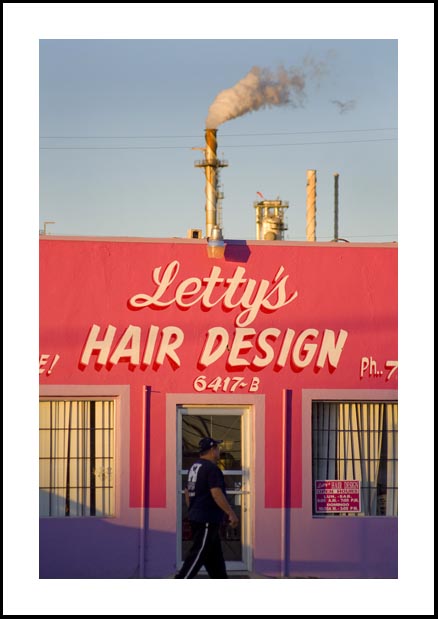
This street is changing. New Medical School and renewed Medical Center just down the block. Oh yeah they have the Grand Plan.
But the south side has its own Plan and the hot paint keeps coming!
Yeah man, this street is the Grand Plan dealing with the No Plan, the natural plan, the reality plan of the people who hang here, hanging onto the funk, south side people.
Like me.
Like Letty.
Been on this street for a long time.
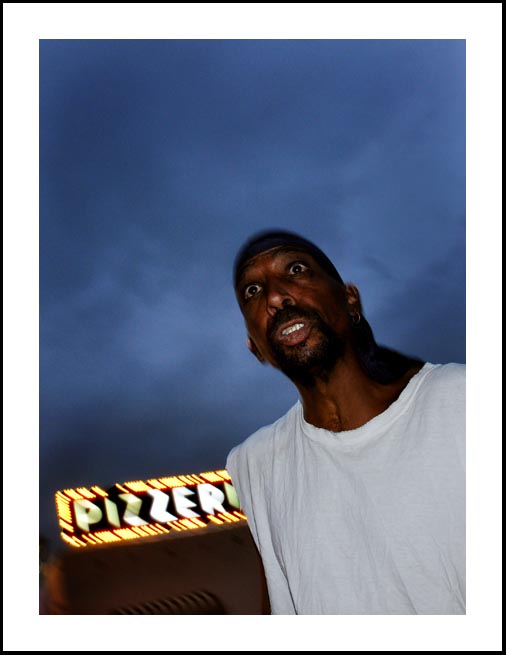
Been thinking about this guy and borders and the idea of the Big Picture versus the small picture ever since I made it (the photo) this summer, on an almost rainy night, in the northeast section of town, out by the military base.
John Hughes.
Angry. Joyous. Funny. Dangerous. Sweet. Full of love, hate and ambivalence. Boozed up, half mad, half brilliant.
“I am free,” he shouts at the night. “I am free and I am in hell.”
I ask him if he ever goes across the border?
“I am borderless,”he replies, “aren’t you?” He shakes his hand and does a twirl, almost stepping into busy Saturday night traffic.
He does a little dance and steps so close to the edge of the curb that I go to grab him but he spins back onto the sidewalk and does a very theatrical bow. He is a tight rope walker and it looks like he has done this toe dance forever.
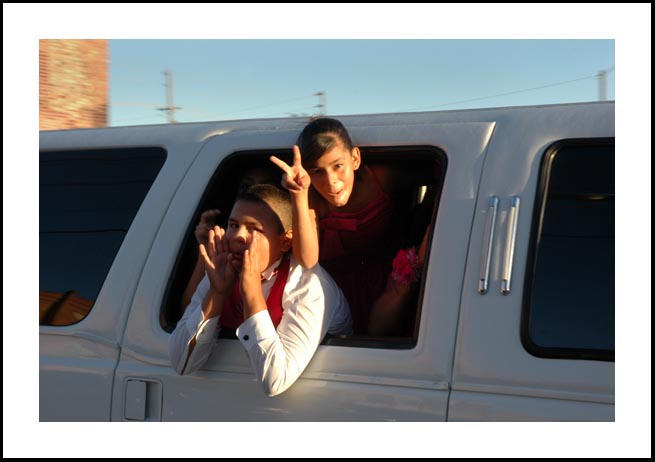
Remember?
Joy?
Fifteen and delirious, defiant and non-idealogical, optimistic and uncertain, determined and hesitant, at times wildly free and untamed.
Quinceañera.
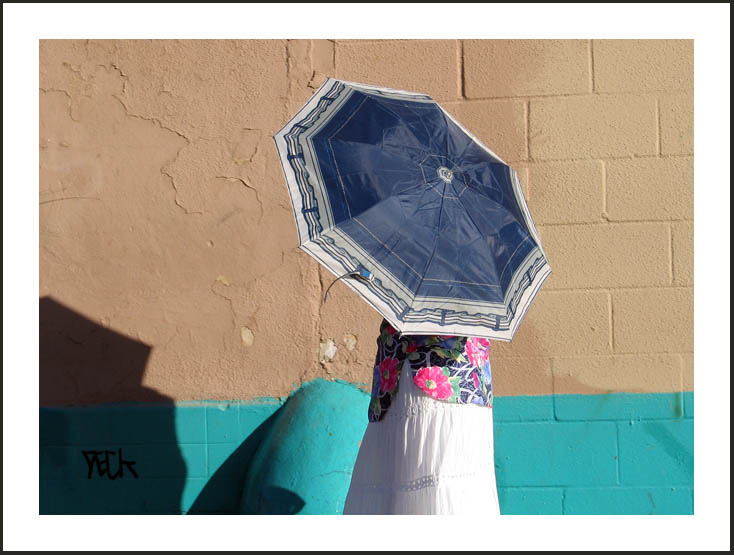
Summer is here on the border. Hot. You know it’s summer when the umbrellas are out. Of course what’s in this image is not very “sopisticated.” Who walks in the Brave New World, anyway?
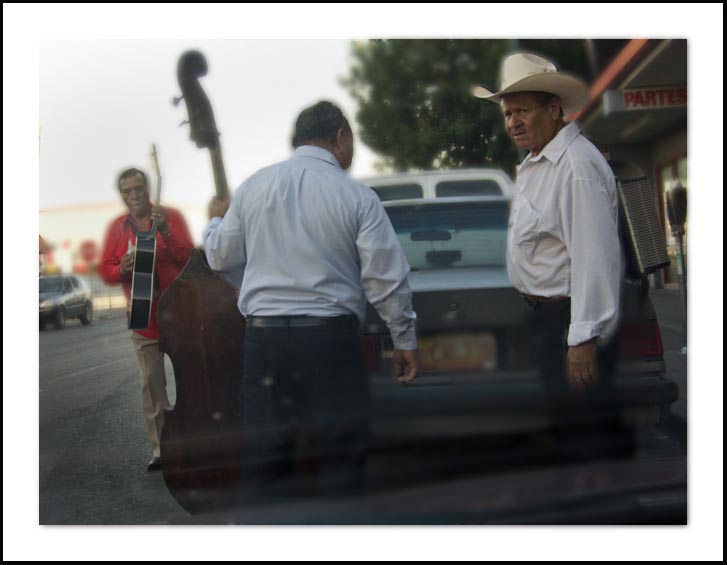
Wary eyes.
Everyone’s wary, in El Paso/Juarez, these days. The border is at war, with itself, with it’s two yin/yang sides, with the Interiors of each of the two sides.
Everyone’s wondering where it’ll end, where they will fall on the have and have not scale, what’ll be left of this little rough Shangri La (not a Shangri La of paradise but a refuge for those who have fallen from paradise. Sort of a suburb of Shangri La).
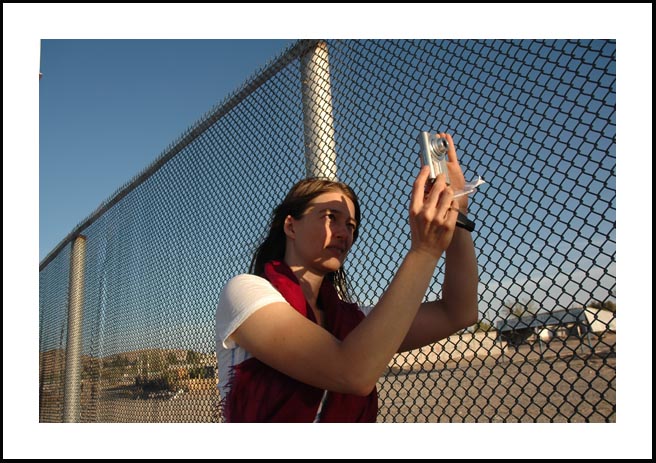
Yesterday I worked with an incredible journalist from Der Spiegel (the German equivalent of Time). She is German, from the north of Germany. Works out of the DC Bureau. Sharp and smart and witty and ironic and puro journalist. We did a story at Fort Bliss. She was bright and lively and brave and charming and funny and we’d had a successful day and did a great story together. She wanted to see “El Paso.”
So we head for the border (I’m a one trick pony. To me, the border is El Paso).
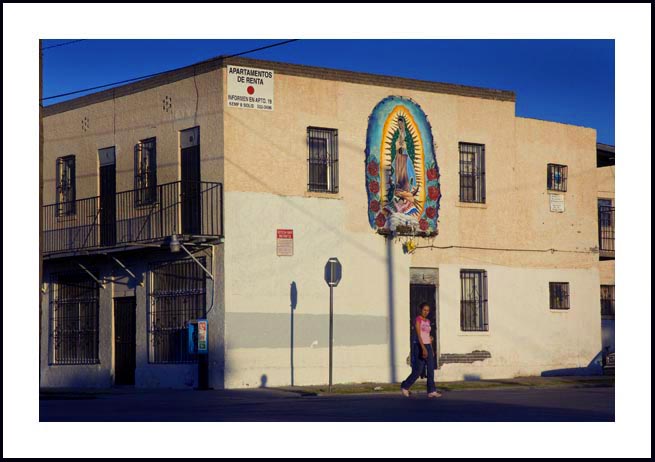
El barrio is a community. Bruised. Not what it was. Sitting on the border and prime target of speculators, er…ah…read that as “Developers,” but still standing. Go back and ask anyone in any American city, for the past 60 years if “Urban Renewal,” was about construction or destruction. If you actually need to, go ahead.
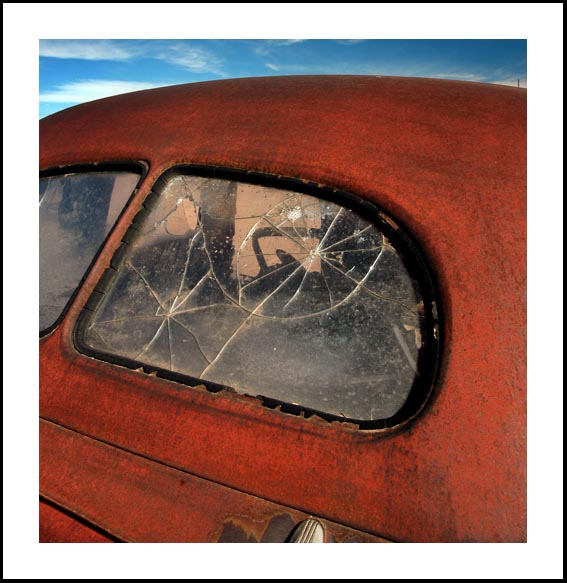
There I am, tooling through the vast landscape of West Texas, working for an English language newspaper working out of Abu Dubai, Arab Emirates. Don’t ask. I’m not sure I understand the assignment. Something about Bush returning to Texas and illustrating what two brothers, who were doing a road trip, saw (except, according to my editor, they were really bad photographers). What that has to do with West Texas, I can’t figure.
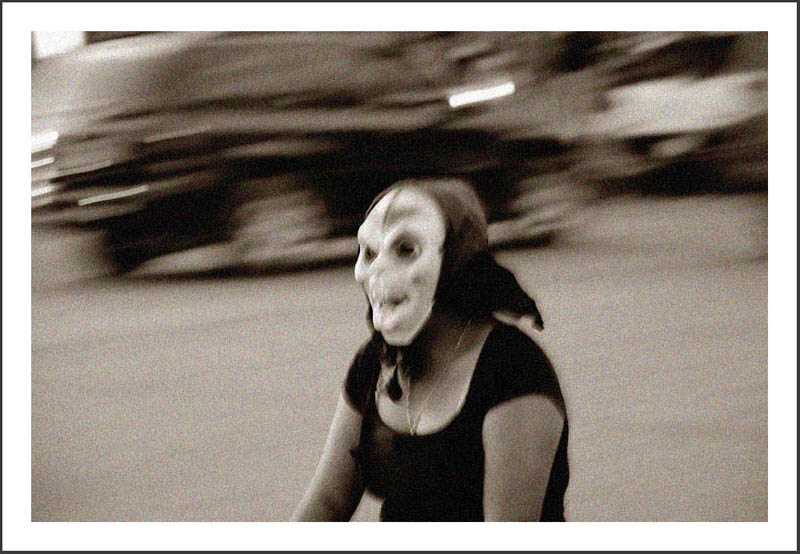
First block of America (FBA).
El Paso Street. La Frontera. I’d call it Texas but it ain’t. Everyone knows it if they’re from here. Texans hold their arms out, full length. Americans think it’s part of Mexico…or hell. New Mexicans…furgidaboutit! It’s all they have to really feel superior to.
El Paso, the nation-state of nowhere.
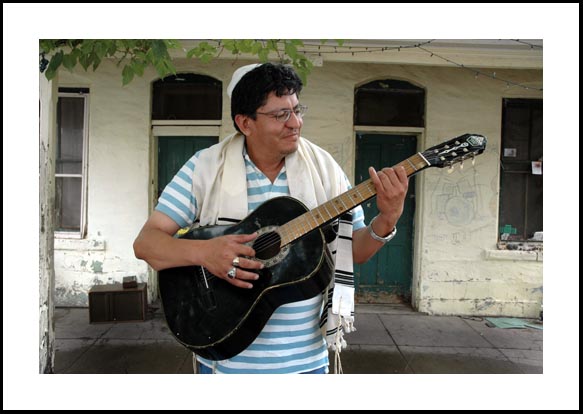
Why do I ever leave my loft?
Went to the gym where a friend of over three years, a retired professor at the local university, someone who has never displayed anything but kindness and goodwill, out of the clear blue, no warning, told me “…the Jews got what they deserved after all the stuff they did as bankers in Germany, don’t you think?”
Wha-a-a-a-a-a?!
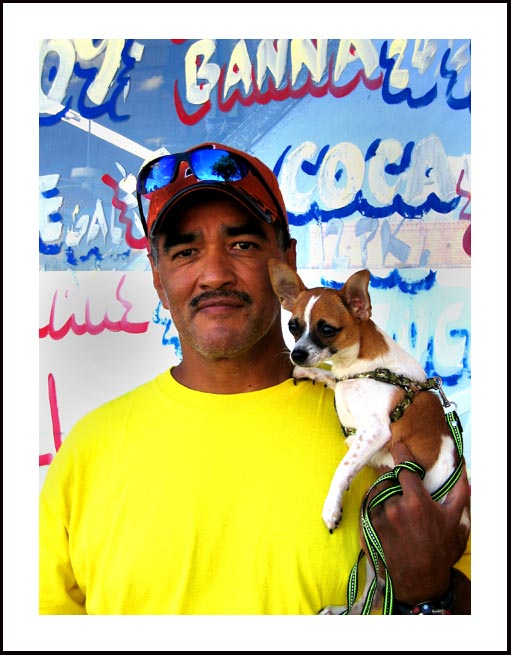
Assume nothing.
I asked this man, in Espanol, if I could photograph him and his Chihuahua (part of a series I’ve been doing for a long time).
“I don’t speak Spanish,” he countered.
Why would I think he was Spanish-speaking?
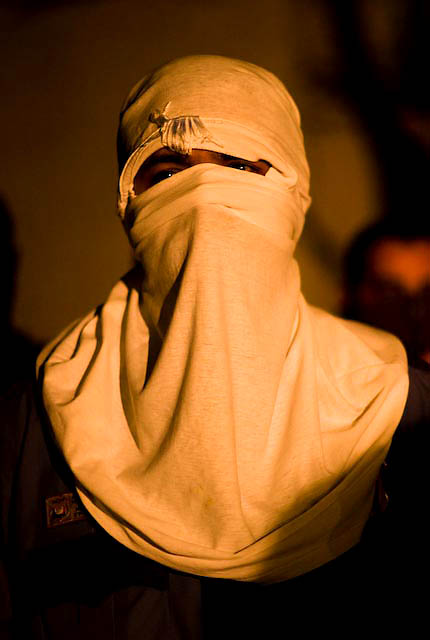
Photo and story by Julian Cardona
March 31, 2008
About 50 Juárez police officers protested what they consider the arbitrary arrests of fellow officers by the recently arrived Mexican army in ciudad Juarez. They were protesting the alleged framing of numerous officers on charges of drug possession.
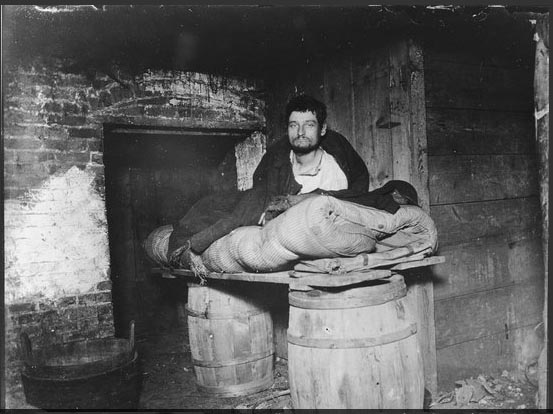
“Slept in the cellar (of a Ludlow Street tenement)
where the water was ankle deep on the mud floor”
View more work -and hear an excellent NPR audio clip- by the great Danish-American documentary photojournalist. He was one of the first to use “flash,” (first introduced in Germany in 1887). Riis cast the mold for what a “Concerned Photographer,” is, and launched a century of relevant, motivating and society-changing “witnessing.”
Editor’s Note:
For more images and audio clip: http://www.npr.org/templates/story/story.php?storyId=91981589
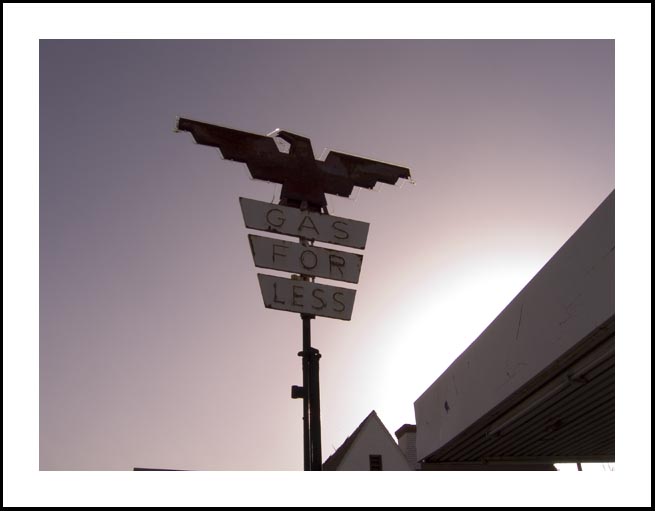
“Gas for less.”
Less gas.
This is not a glitch, it is the changing of a culture.
Usually when a culture changes -sorry Barack- it is the result of a calamity: Depression, war, pandemic, natural disaster. Were it not so, but “change,” is not engineered. Eventually, it is managed.
Editor’s note:
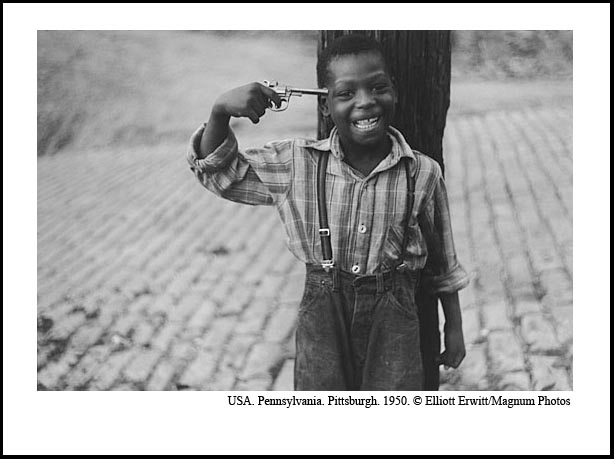
This is an interview with Magnum photo greats, Elliott Erwitt and Burt Glin.These are the oldest current members of Magnum, the great photography cooperative founded, in 1947, by Henri Cartier-Bresson, Robert Capa, Robert “Chim” Seymour and George Rodger. For a certain kind of photography -our kind- this is a group of top notch shooters with really interesting work. If one needed to summarize the “vibe,” of Magnum, the word we would choose is, “Humanistic.” We’d define that as a passion for telling the truth -visually and emotionally- about humanity, all of it, with a predisposition to the idea that, as Anne Frank said, “I still believe…most people are good.” Magnum shows the full range, always entertainingly. These two photographers, are its heart and soul and treasure.
April 22, 2008

Magnum’s reputation is not just based on extraordinary photography. What distinguishes the members of the photoagency, which was founded in 1947, is character. The legendary Magnum photographers Elliott Erwitt and Burt Glinn talk about moments of opportunity, courage, independence – and humor. This interview was conducted by Pia Frankenberg in December 2006 and was first published in Frankfurter Allgemeine Zeitung in January 2007.

USA. New York. Dance School. 1977. The image is from part of a photo story about “upper class” children getting dancing lessons and being taught the “social graces”. © Elliott Erwitt/Magnum Photos
Pia Frankenberg: Since when do you two know each other?
Burt Glinn: We first met in 1952 or ´53 I guess.
Elliott Erwitt: In the morning, I think.
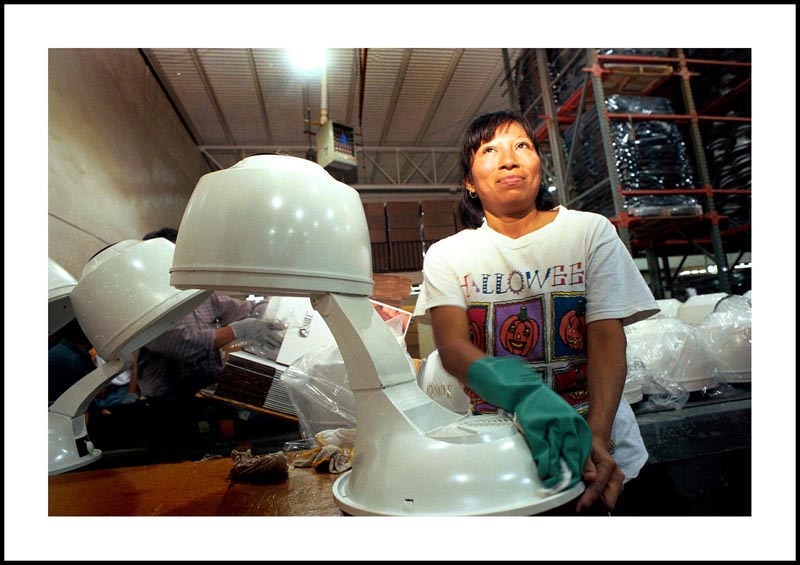
Banks lend money to Americans to buy homes they can’t afford. The homeowners live in a dream bubble, the American Dream bubble. The lenders sell their paper and ride off into their millionaire dream. Everyone’s dreaming.
In Juarez they’re dreaming too.
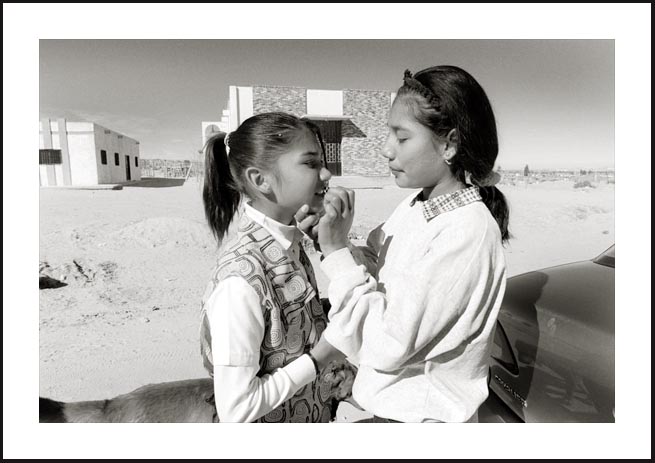
It’s the little moments that work for me.
It’s an exquisite privilege to disappear. It doesn’t always happen. It’s really great -for the photographer- when it does. Photography out in the open, in other people’s realities, nobody even noticing.
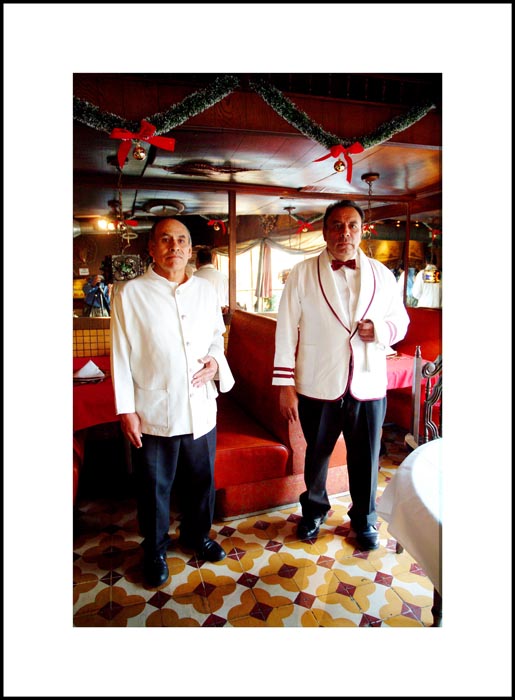
 Ramon Covarrubias Quintana(l) and Francisco Barraza(r) are waiters at the old Martino’s Restaurant on Juarez Avenue in Juarez, Chihuahua, Mexico. The restaurant is located two blocks from the Paso del Norte Bridge that connects downtown Juarez with downtown El Paso.
Martino’s – and these waiters- harken back to the “Golden Era,” of Juarez,
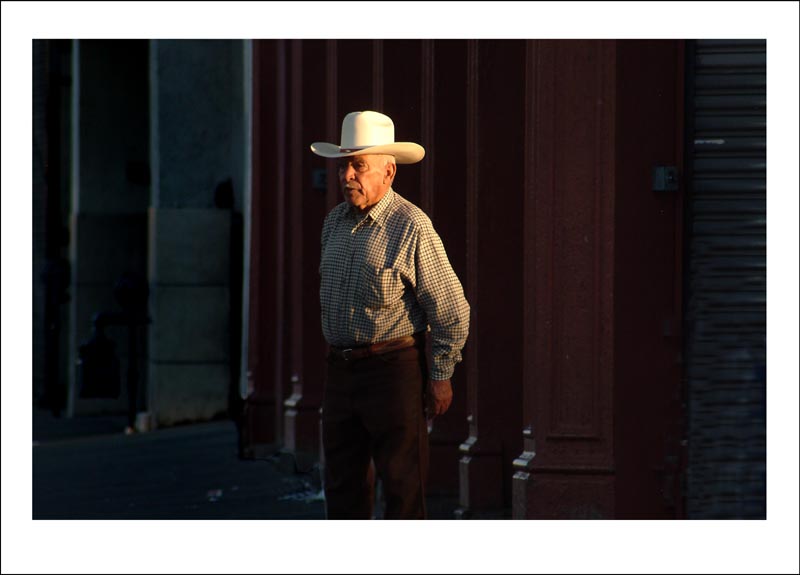
A man stands in the last light of the day at the corner of 6th and El Paso Street in El Paso, Texas. This is the first street of the United States after entering the U.S. from Mexico from the Paso Del Norte International Bridge. The bridge links Ciudad Juarez with El Paso and 6th and El Paso streets could be considered the crossroads of the northern part of the Western Hemisphere from south to north.
A lot of old folks (viejos) grew up in this barrio and are still there. They are the dignity of the barrio.
Imagine how people felt when a picture of an old viejo was used, by City planners, to show what was wrong with El Paso?
Los Viejos are what’s right with El Segundo.
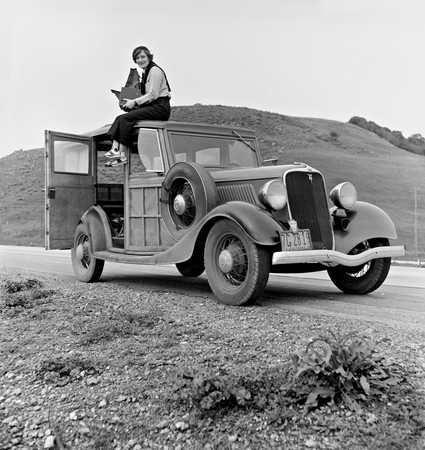
Photograph of Dorothea Lange,
Resettlement Administration photographer,
in California, c. 1936
The car is a 1933 Ford Model B (AKA “V8”).
She is -as well as Russell Lee and the other FSA photographers- the spiritual “Godmother,” of this site.
_______________________________
This is a picture of Dorothea Lange, at work. She was one of my earliest influences (the other was Weegee).
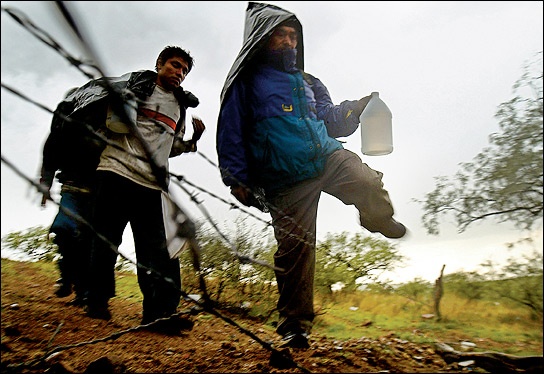
Drug cartels want migrants’ routes
Fight to control corridors on Arizona border turns violent
ALTAR, Mexico ˆ This village on the edge of the Sonoran Desert has been a supermarket for smugglers and the smuggled for nearly a decade. Migrants choose from an array of packages offered by coyotes and pick up day packs and anti-dehydration potions for the trek north.
Now drug smugglers want their route.
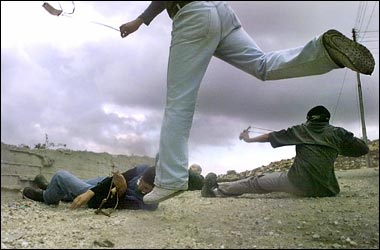
TIJUANA, Mexico ) — The police department has issued about 60
slingshots to officers in the violent border city of Tijuana,
Legislators restarted talks of immigration reform Wednesday with the reintroduction of a bill for a guest-worker program, leading some border farmers to rejoice and some workers’ advocates to worry about potential abuse.
The bill,