Search results
55 results found.

On The Edge of the Edge – The U.S. – Mexico Border
55 results found.
PHOTO OF THE WEEK: Jan. 25-Feb. 1, 2008

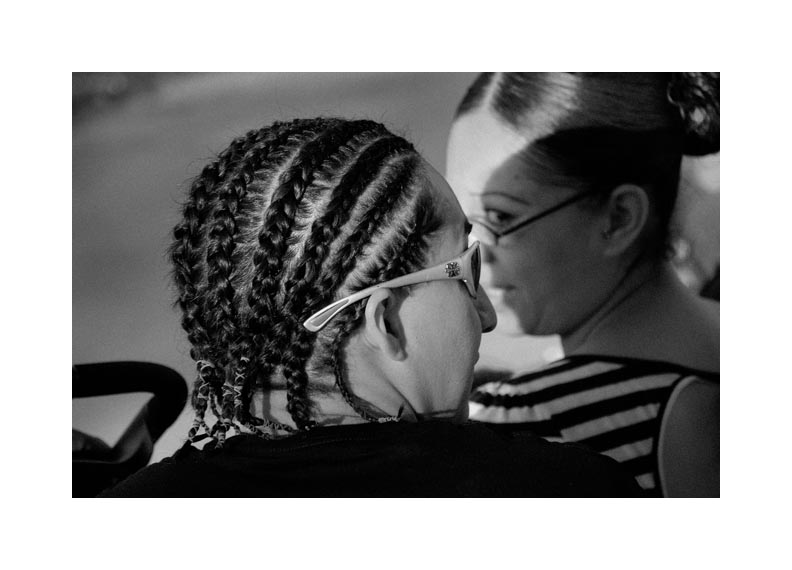
You can leave the border but the border does not leave you. My head snapped when I saw Roberta Flores, up in New Mexico.
“Terrific hair,” I yelled at her. “Gelled,” I asked?
“No,” she said with a sly and proud smile, “Glued,” she shouted back, with a grin that sort of said, “gotcha!”
“Did you get that done around here? ” I asked.
“They don’t know how to do that around here,” she spat, friendly but gently ridiculing.
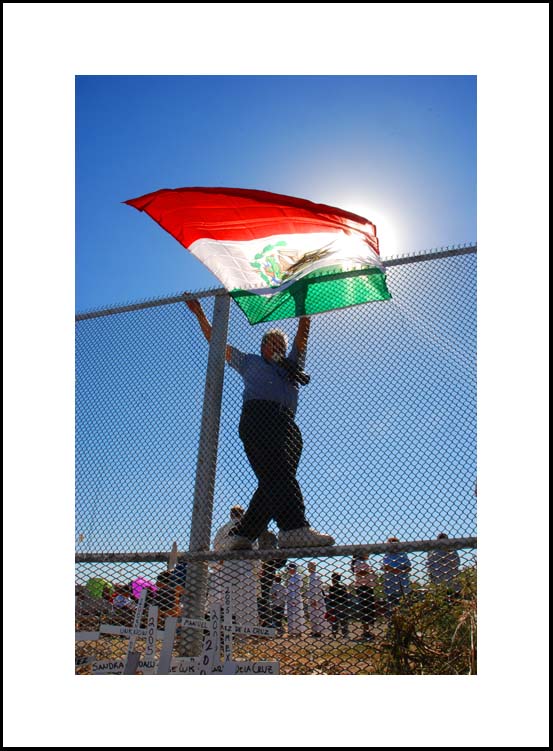
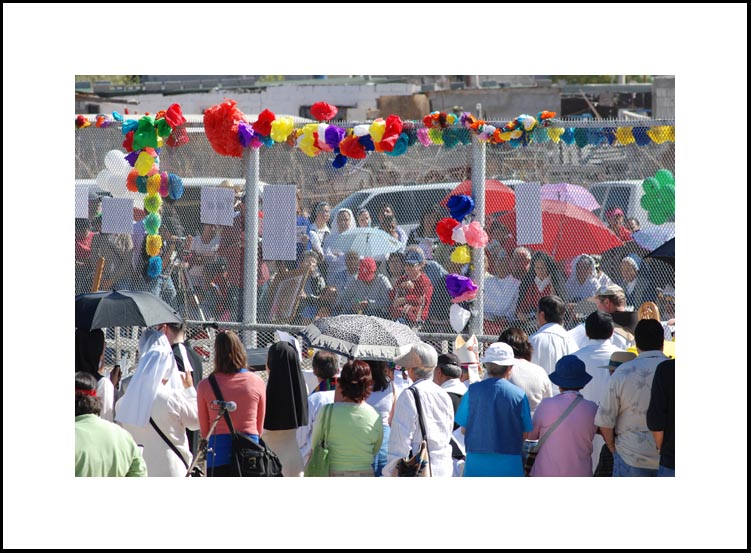
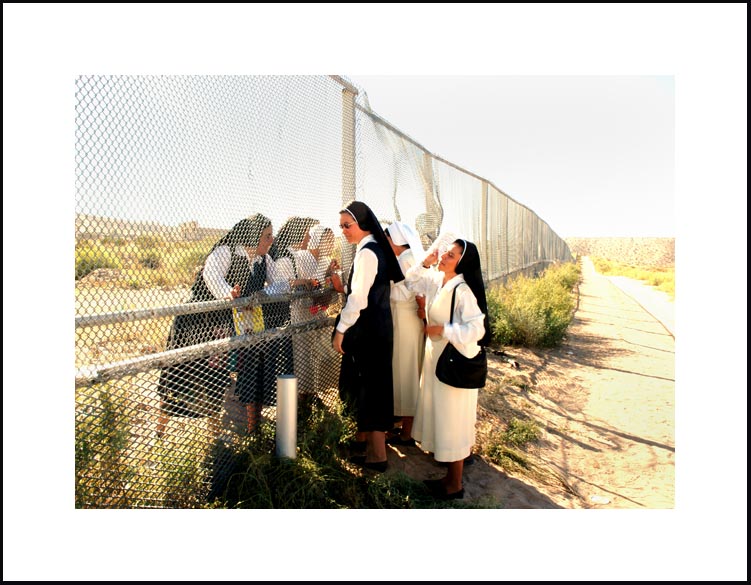
Today the Bishops of El Paso, Las Cruces, NM and Juarez, Chihuahua, Mexico met at the border fence at Sunland Park, NM and Anapra, Chihuahua to protest current immigration policies and to promote understanding for immigrants from Mexico, as well as world wide.

The Border(PBS) | About the Show
Produced by Matthew Sneddon, KNME-TV, Albuquerque, New Mexico 
The economies of Juarez, Mexico and its sister city, El Paso, Texas are driven by a system of assembly plants known as maquiladoras. There are more than 600 maquiladoras in Juarez, two-thirds of them owned by U.S. companies. Since the first maquiladora was built in Juarez in 1976, the population of the city has increased nearly five-fold to more than 1.25 million, making it the largest Mexican city on the border. The Rio Grande fuels Juarez and El Paso’s water supply.
However, the more than 10 million people who live in these desert communities have begun to exhaust the Rio Grande’s capacity to support them.
This segment focuses on one Rancho Anapra family faced with the realities of living in a desert community with no running water. It examines the factors that contributed to growth of this particular border region: the Rio Grande, the maquiladoras and the promise of a better life.
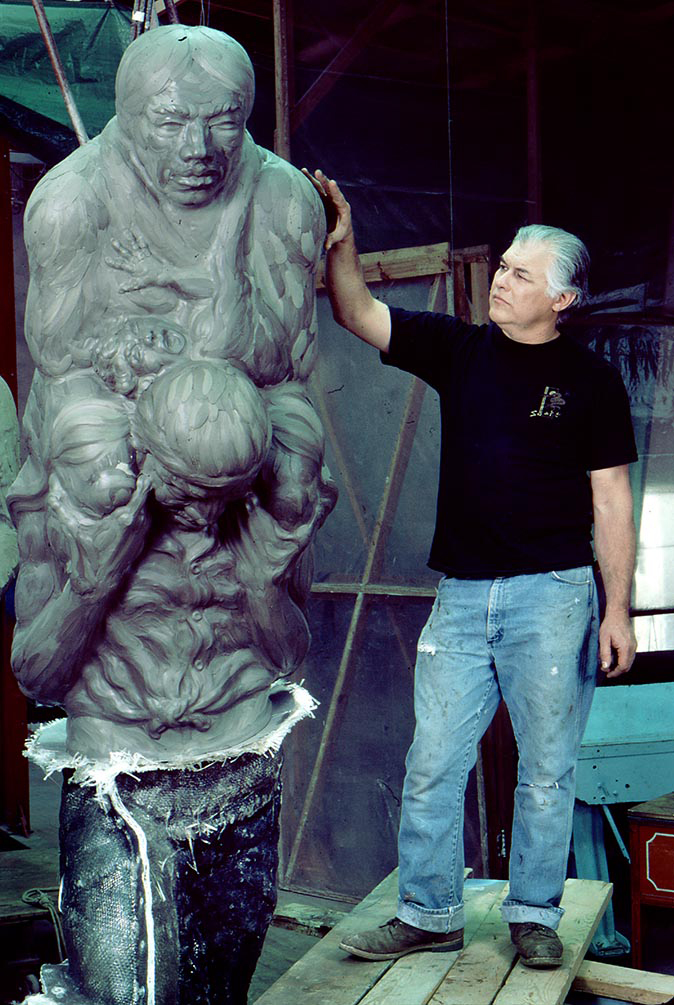
Sculptor; Born July 30, 1940; Died June 13, 2006
Luis Jimenez, a successful but often controversial sculptor, has died after being struck by a falling part of one of his works.
Authorities described the incident as an industrial accident. A segment of a sculpture came loose while it was being moved with a hoist at Jimenez’s New Mexico studio on Tuesday.
It struck the artist, pinning him against a steel support. The 65-year-old sculptor was taken to a hospital, where he was later pronounced dead.
“Luis Jimenez’s loss to the United States, to New Mexico, to the Chicano community, is great,” his friend David Hall told Albuquerque TV station KRQE.
“He was an icon, he was a very famous and well-respected artist. We will dearly miss him.”
Jimenez, a native of El Paso, Texas, was known for his large and colourful fibreglass sculptures that depicted fiesta dancers, a mourning Aztec warrior, steelworkers and illegal immigrants. His work often started arguments and spurred emotions. “It is not my job to censor myself,” Jimenez once said. “An artist’s job is to constantly test the boundaries.” Jimenez’s Vaquero and Plaza de Los Lagartos sculptures became civic landmarks in El
Paso, where he grew up learning to paint and fashion large works out of metal in his father’s sign shop.
“I think Luis shared this border region with the world. Those images will continue to live on,” El Paso art gallery owner Adair Margo said. “You look at the images he left us, and you realise he was a voice that mattered, that
gave form to this region and communicated it with people.”
Jimenez studied fine arts at the University of Texas in Austin and spent time working in New York. In 1969, he created Man on Fire, a sculpture of a man in flames that drew its inspiration both from Buddhist monks in South
Vietnam who burned themselves and the Mexican story of Cuauhtemoc, set on fire by Spanish conquerors. The sculpture was displayed at the Smithsonian Museum.
Jimenez won numerous awards for his work. More recently, he completed a mud casting of firefighters and three fibreglass flames as part of a memorial for Cleveland. He was also working on a piece that was destined for Denver International Airport.
Sculptor; Born July 30, 1940; Died June 13, 2006
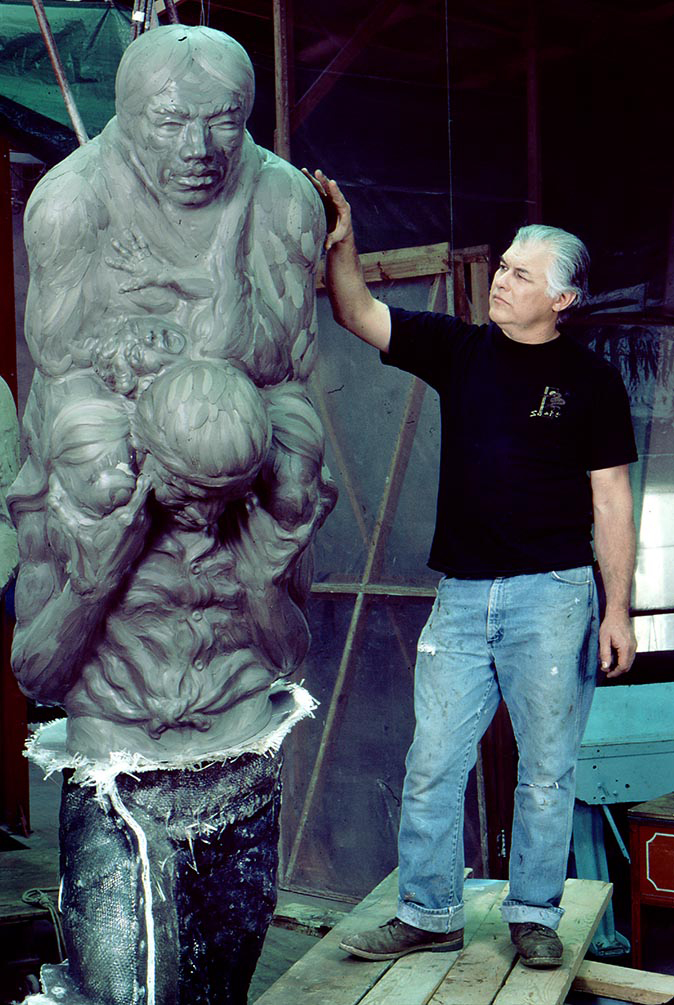
Luis Jimenez, Hondo, New Mexico, 2001
Born: July 30, 1940, El Paso, TX / Died: June 13, 2006, Hondo, NM
The first time I met Luis, back in the seventies, he came into my apartment and seemed to fill the room. It was like no room was big enough for him.
He was that big of a g
Not physically, although he was that powerful.
Not spiritually, although he did have that aura of somebody who really sees the bigger picture.
He was just big. All of it. Life. Love. Art. Humor. Seriousness. Ambition. Regular guyness.
When I first met him, and I suspect this is what most people felt upon first encounter, I felt like my life was just a lot more complete than it had been a moment before.
If you wanted to be good at something, in my case it was to be a photographer- you knew he’d be encouraging for your dream.
He was a brother. A big brother. And like a lot of big brothers, he was larger than anyone could possibly be.
And, man, was he smart.
He said what mattered. He lived He cut the crap.
He made impossibly complex Art and made it look like you could buy it from a south side El Paso Body Shop. And the Art mattered. It was about something. It was about him and our culture and his culture and the idiocy of our system and about the flora and the fauna and intuition and magic and love and joy.
July 11, 2023 No Comments
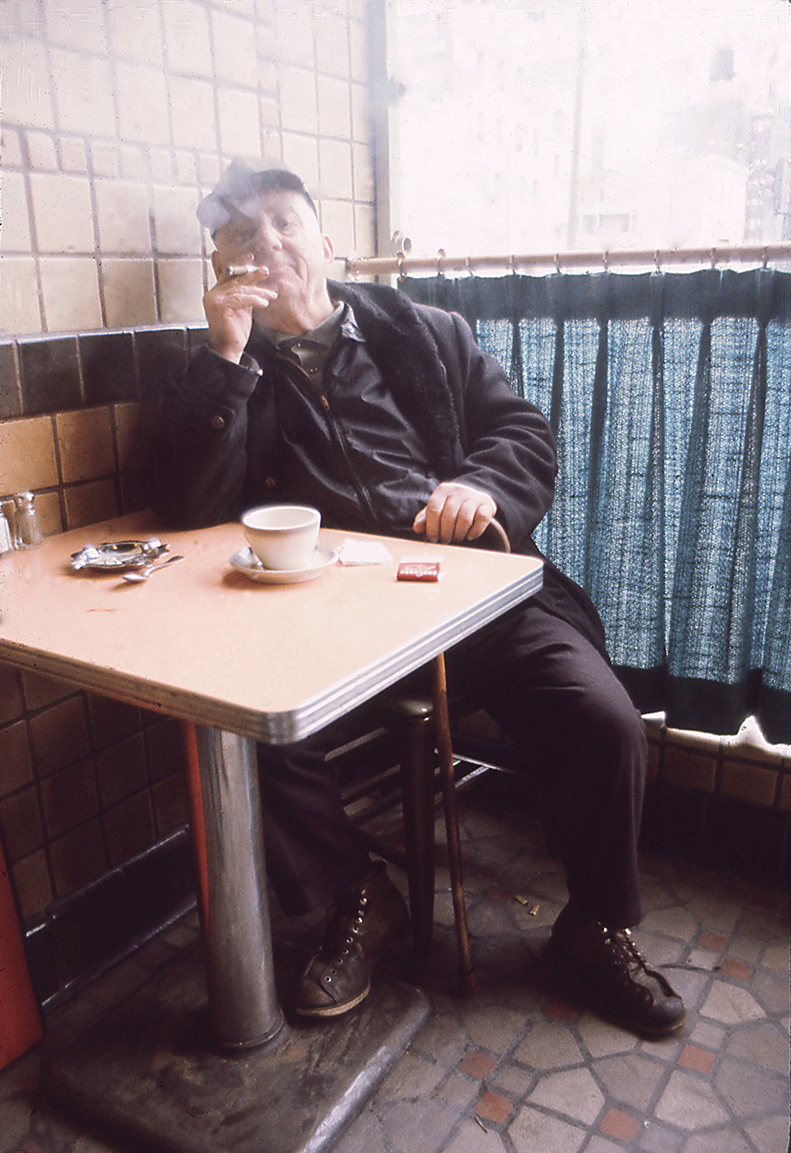
Smoking Man, diner at State and Ohio Streets, Chicago, 1971
Photograph and Text by Bruce Berman
This was the very beginning of my career, when I first realized what I wanted to be … a photographer. Not much has changed since then. This is exactly the kind of photograph I like to make, the kind of experience I like to have. Me on the prowl, encountering a person on the fringe, direct eye contact. The only thing I do now that I did not do then is to get more info about a person, really get to know them. At that time, and for many many years afterwards, I was just satisfied with getting the photograph. As time has gone on I now realize that that is incomplete. It’s the photograph and the text that matter, so that the person photographed is honored, not just used. Maybe that reflects aging, learning the world is not all about me but about me being in the world, about respect for others, maybe just about being a real documentary photographer.
So, here I am, 42 years later and I don’t know who he is, where he was from, what the name of the diner was, what he did for a living, exactly when the date was, etc., i.e., the 5Ws that any journalist knows are essential.
A detail I never noticed before, is his shoes. Believe it or not they are meaningful to me. In my old south side neighborhood, these are the kind of shoes we’d buy every few years. They were our main shoes (except for dress shoes). These were the “better ones,” because they have finished leather. Ours were the exact same 10 lace model but a cheaper brand, and the leather on those was called “rough out.”
Why am I talking about shoes?
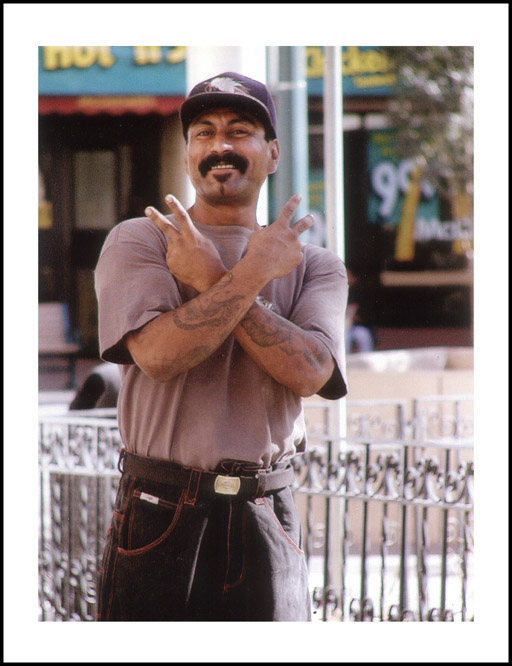
El Paso’s Central Plaza, is officially named San Jacinto Plaza. It is located in the middle of El Paso’s original business district and about 3/4 of a mile from the border with Ciudad Juárez, Mexico. In recent times its unofficially been called Plaza de los Lagartos which refers to the old pool in the middle of the plaza that used to be the home of alligators (lagartos in español) which no longer existed after the early 1970s. The alligators were later commemorated, in 2006, by a fiberglass sculpture of alligators by native son and internationally renowned artist, Luis Jimenez.
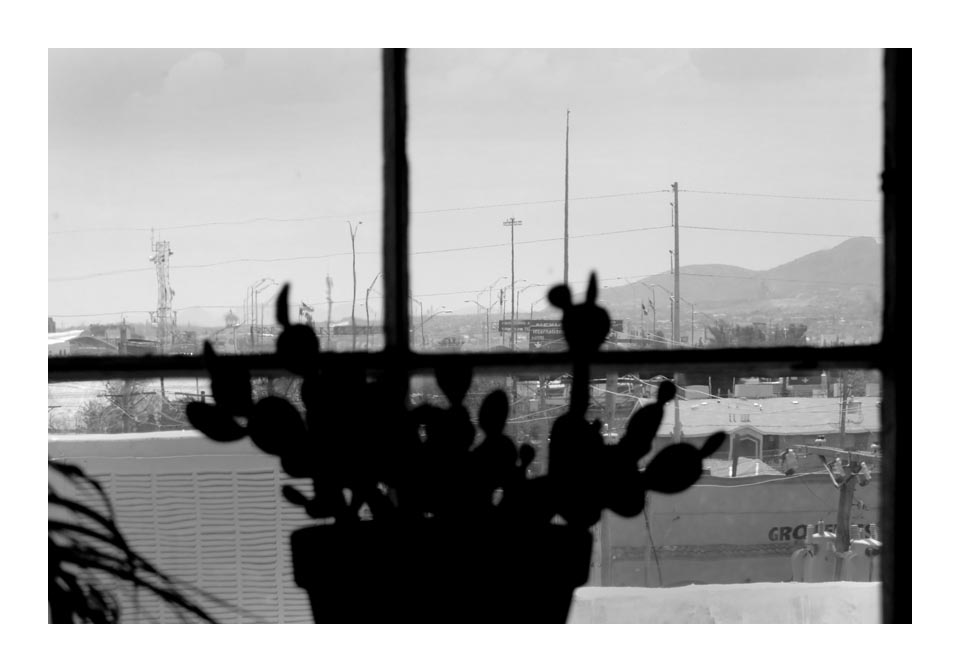
Flags are down in Parque Chamizal. Wind must be up and hopefully a little rain. Just a whisper of a season change. Not yet. But not all that far off either. ‘ta bien. The View South. Days come and go. Then years. Then decades. Then…? I turned my back on the past a long time ago. People tell me that’s good. Bible says it too. Do they really mean it?
Editor’s Note:
Check this video out.
When Americans talk about the violence in Mexico they often view the situation through “western” eyes, thinking of Good Guys v. Bad Guys.
As this Al Jazeera report shows, the conflict is often between Bad Guys and Badder Guys and the public -the oppressed people of Mexico- have to stand on the sidelines, knowing but unable to alter the situation.
This video asks, Where do you turn when there is no one to turn to?
Commentary by Bruce Berman / Video by ©Al Jazeera 2014
There’s something happening in journalism.
When Aljazeera -who shouldn’t give a hoot about what’s happening in Mexico- publishes a well done piece on police kidnapping in Mexico, when Mexican journalists go ahead and publish their own work, under duress, knowing that to publish is to perish, and increasingly the xenophobic U.S. press dithers on entertainment and cheesy presidential inanities, we are talking about a new arrangement of the deck chairs on the the good ship journalism.
The truth is that most American newspapers and magazines aren’t undergoing the huge transformation they are experiencing in a vacuum. It’s not that hey are not irrelevant. They are merely irrelevant as the source for hard news (at a minimum) that relies on being the “go to” media.
For the most part, they are not that any longer.
If there is one source “out there,” it will be Tweeted or Posted on some social media site, within minutes, and then the fun begins. From there, people will Retweet it (RT), add links or complimentary sources and then the multiplier of social media begins. The question isn’t, Are you getting the news, but, rather, How much can you take?
Of course the eternal existential question remains, What happens when there is no longer a source of information (such as the New York Times. Sky News, CNN or Fox, i.e the “media giants?
This is not likely.
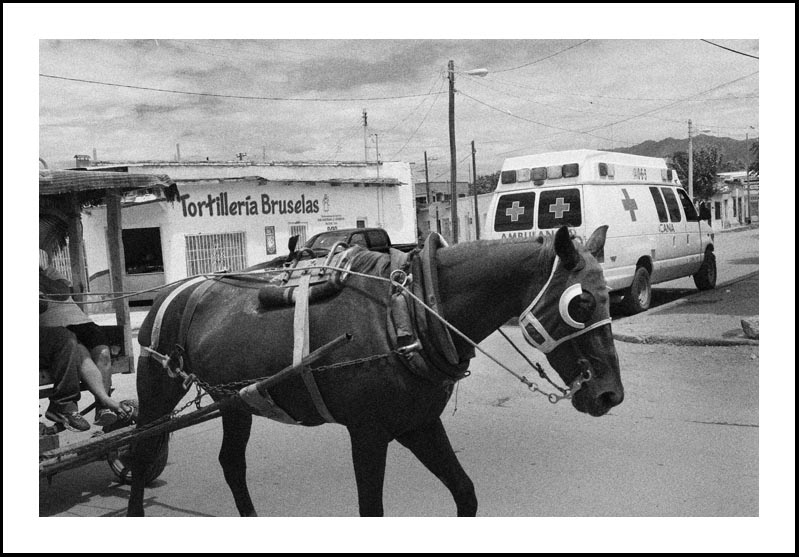
JUAREZ, Mexico – Juarez still stands. It is still Juarez. It is a city of my heart. I am not alone. It is insane what has happened in Juarez. There is no reference or metaphor: it just stinks. I walk the streets and there are “tastes,” of the old city. The “new city,” the one of Malls and chrome and green eco-glass, the nightclubs and shiny new cars has disappeared more than the old city has.
This might say something about what the condition of the city was before “The Troubles.”
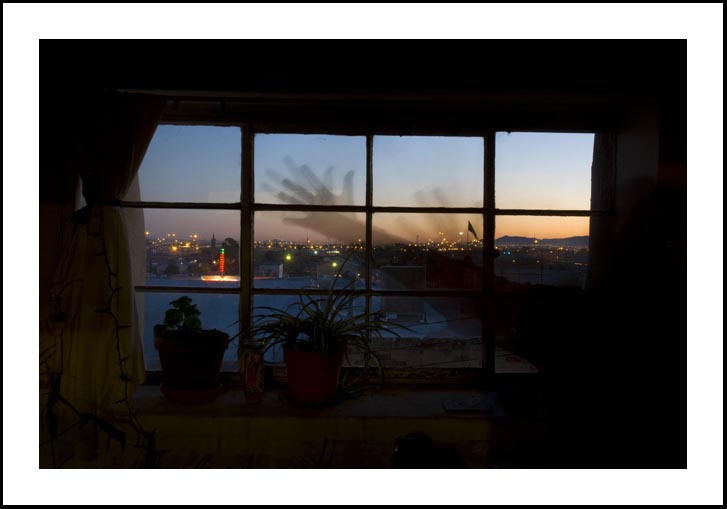
Three of the last four posts have involved this window. The view to the south. One block to Alameda Street, two more down Stevens and, voila, you’re at the bridge, then you’re in Juarez, then if you keep going you’re on the carretera to Ciudad Chihuahua, then Torreon, then Puebla and Mexico and then… well who knows where this ends?
This is the last one of this window for awhile. I’ve been clinging to it. Home. I’ve been shooting from this window and the roof right out my back door for decades. The view hasn’t changed that much.
I have.
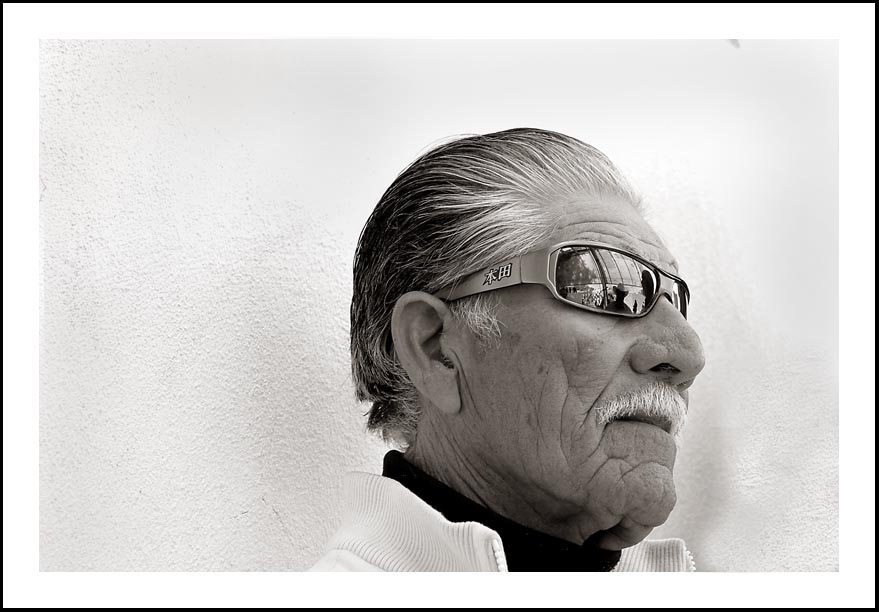
Juarez/13 June 2009
So what else is there in Juarez besides murder and catastrophe?
Right now, it doesn’t seem like anything.
But, then, there are those moments.
Tender Mercies.
I walk the streets. I walk the beaten down downtown. I bus through the factory landscape with For Lease signs more plentiful every time. I walk through the night clubs on Avenida Lincoln, defying myself, defying my fear.
But it’s there. The noise comes out of the clubs, loud, but not the joyous sound, more like the power-driven sound of defiance and booze.
People wait for the situation to end. It will. Someday.
Daily, the murder rate climbs, like an upward missile, slicing through the inherent good nature of this state and city, through this sunny northern Mexico metropolis that was turned into, first, a factory for first world consumption and, then, a monument to the future of world global wage reality. It was that, just a few years ago.
Seems like an entire epoch ago.
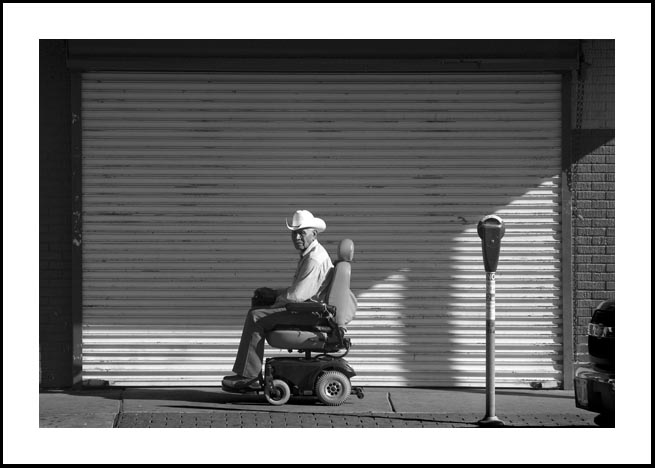
There are a lot of viejos in the Sagundo barrio. They get around.
There are a lot of kids too.
Like it always was but just fewer. It’s the heart of this isolated town.
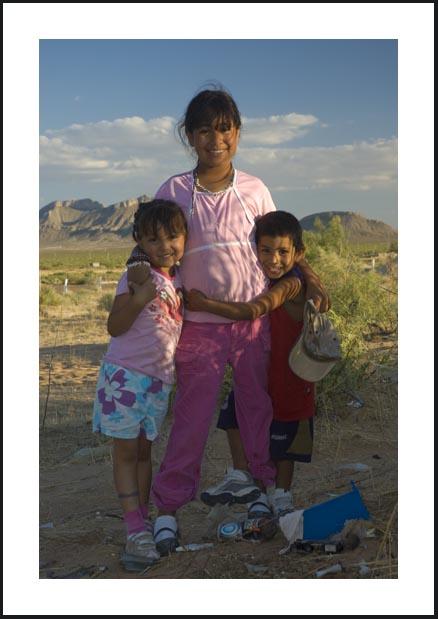
Lomas del Poleo/Juarez, Chihuahua/Mexico
June 20, 2009
Lomas del Poleo. The battle goes on. More people leave. People fight to stay. A mean strip of ten lane highway has snaked its way through Lomas del Poleo (see previous posts or Google it). The Developers got what they needed and left what they didn’t, more or less. They don’t even blink as they plow ahead. This highway is going to happen, no matter what. The development will follow, is gonna happen, no matter what. Nothing stops the grinder. The Grid viene: Diamond Shamrock, The Chicken Colonel, Pemex, trucks full of electronic crap, three bedrooms, two baths, probably a Wal Mart (whoa..let’s not get too crazy!), the same vexing and stinking Grid that we hate and that people fight to have (Iran, Cuba, Libya, you, too, can have it!). There goes the texture, and, in the case of Lomas del Poleo, the isolation and faux rural vibe, the farm at the edge of the city, the special dream that has been Lomas: get out of the city, raise some chickens, leave us alone. A quiet hope on the edge of always possible chaos that is Juarez.
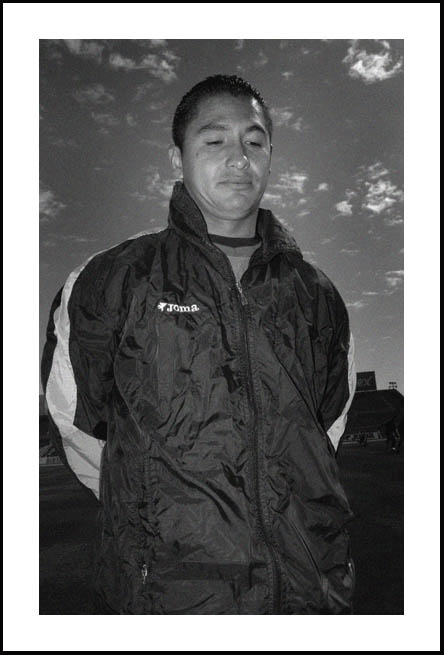
The Juarez Indios are a professional futbol team(soccer). They are in the middle of the Cartel Drug War. Much of the city of Juarez has rallied around the Indios, finding some “normalacy,” in the middle of the troubled Juarez violencia. Julio Daniel “Maleno” Frias is a star of the team, a “striker,” a troubled city’s hero. The city loves him, he’s a hero in the middle of bad news caused by rats. When “Maleno,” was younger he joined a gang. He got shot. He decided to change his life and he did. Maybe this is why the city fell in love with him, he’s a living metaphor for a city’s hopes. Maybe they just like the way he plays: smooth, quiet and intense.
Some players have left the team and others have sent their families back to the cities they came from (some in Mexico, one in Argentina), trying to avoid the touch of violence that has afflicted Juarez, Mexico’s third largest city.
The team is struggling to stay in the top tier of Mexico’s professional soccer league.
Attendance is sold out.
Futbol is trumping the war.
So far.
Life goes on.
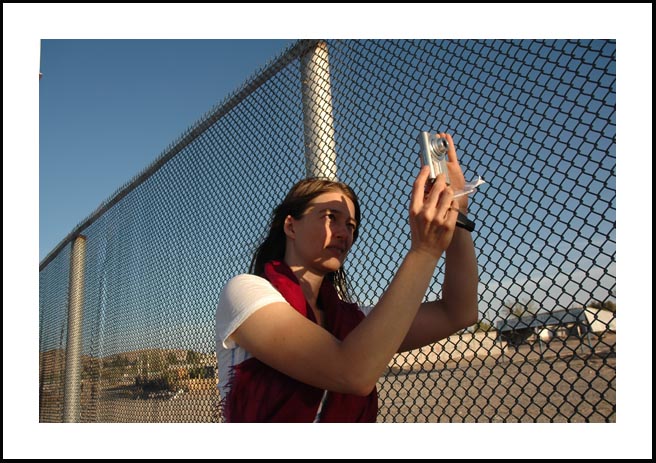
Yesterday I worked with an incredible journalist from Der Spiegel (the German equivalent of Time). She is German, from the north of Germany. Works out of the DC Bureau. Sharp and smart and witty and ironic and puro journalist. We did a story at Fort Bliss. She was bright and lively and brave and charming and funny and we’d had a successful day and did a great story together. She wanted to see “El Paso.”
So we head for the border (I’m a one trick pony. To me, the border is El Paso).
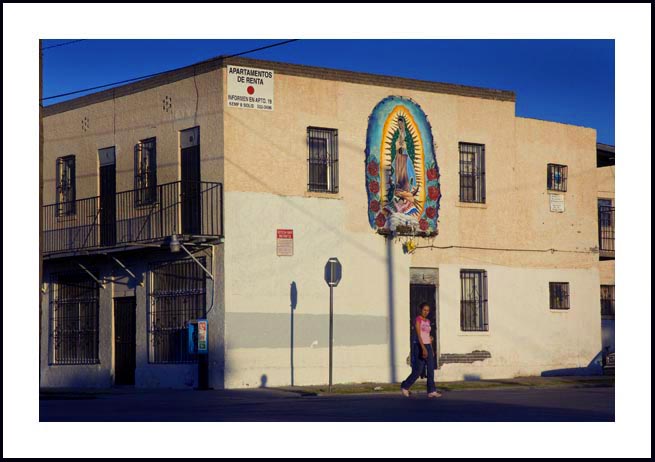
El barrio is a community. Bruised. Not what it was. Sitting on the border and prime target of speculators, er…ah…read that as “Developers,” but still standing. Go back and ask anyone in any American city, for the past 60 years if “Urban Renewal,” was about construction or destruction. If you actually need to, go ahead.
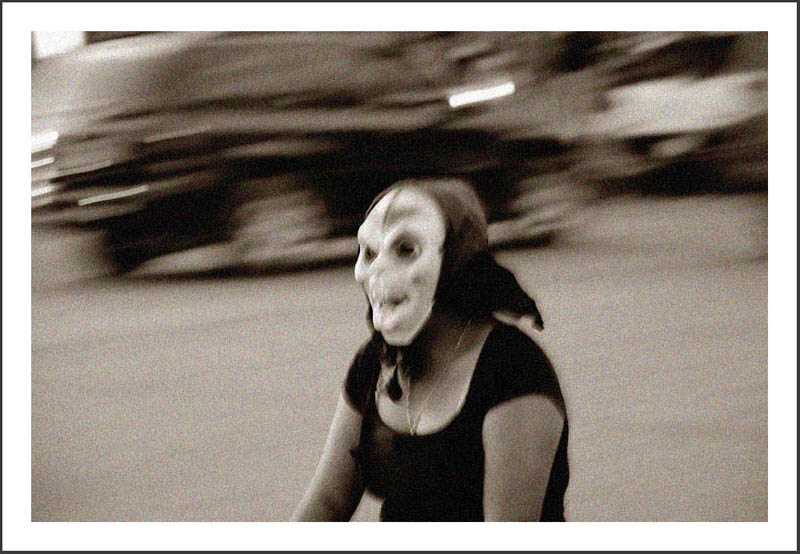
First block of America (FBA).
El Paso Street. La Frontera. I’d call it Texas but it ain’t. Everyone knows it if they’re from here. Texans hold their arms out, full length. Americans think it’s part of Mexico…or hell. New Mexicans…furgidaboutit! It’s all they have to really feel superior to.
El Paso, the nation-state of nowhere.
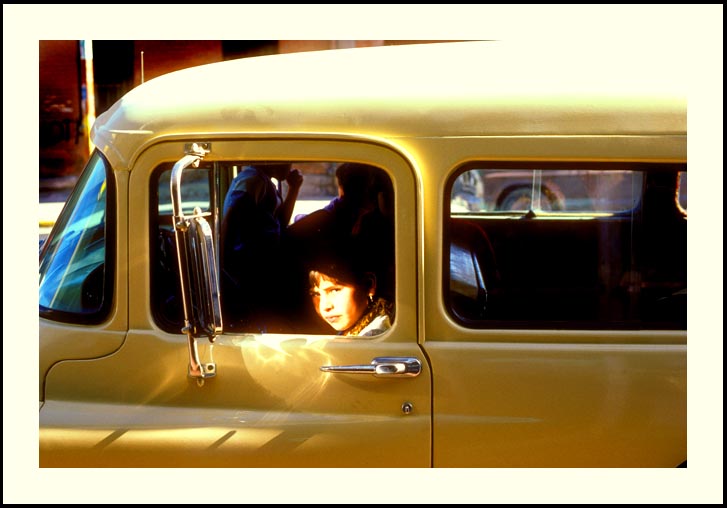
PHOTO OF THE WEEK: May 23-30, 2008
Notes from my Journal, September 1986
I am an illegal alien in a strange land.
That’s a phrase they use a lot in the newspaper here: Illegal Alien.
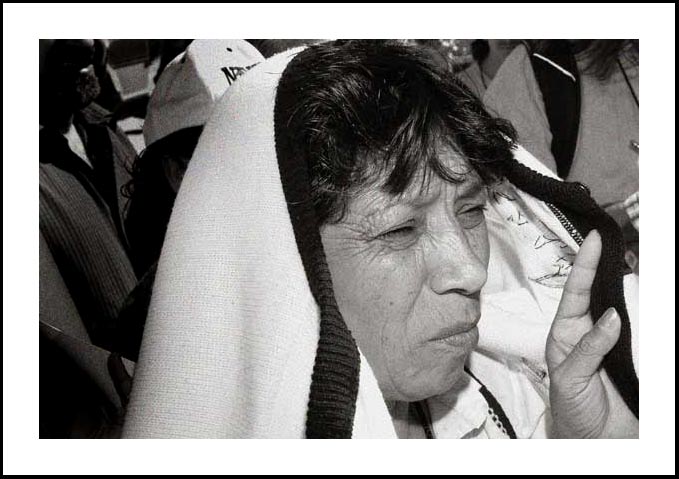
PHOTO OF THE WEEK: April 4-11, 2008
Juarez is in flames right now.
Drug war is raging. I’m calling it a drug war. It’s a lot of things war. Always is.
PHOTO OF THE WEEK: Jan 4-11, 2008
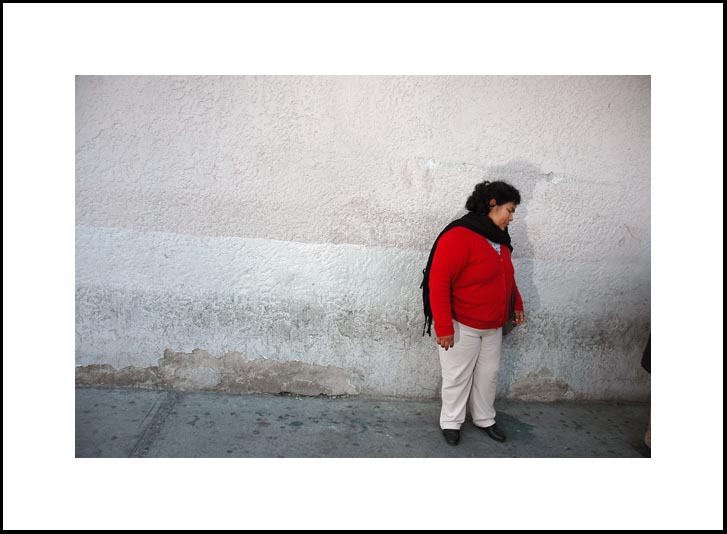
Editor’s Note: To understand this week’s photo it might be useful to read the background of the story of the struggle of the people of Lomas del Poleo. Link number one is two years old, but is, I think, a fair history of this situation. The situation has gotten worse. Link number two is a video discussing the bi-national plight of people who are in the path of “development,” and are facing forced displacement. Another option is to google Lomas del Poleo.
Beware: Knowledge is trouble.
http://www.annunciationhouse.org/news_winter2005_dispute_en.html
http://www.youtube.com/watch?v=tEqkytwHQ5s
____________________________________________________________________________
This was a sad day, one that has been coming for a long time. The confrontation at Granjas Lomas del Poleo, in Juarez is coming to the tipping point.
This was a 16 de Septiembre event in Armijo Park in El Paso. Armijo is in the heart of the historic Segundo Barrio. Armijo is a people’s park. This neighborhood is in, actually, the only”urban,” neighborhood in El Paso (hard to define but you know it when you see it: Life exists on the streets)
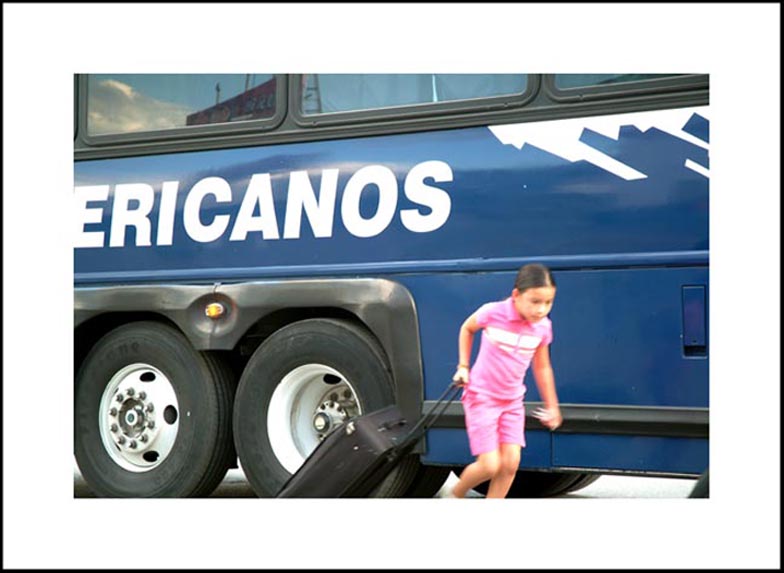
Sixth and El Paso Street is the first street in “America,” after crossing over the Paso del Norte Bridge from Juarez, Chihuahua, Mexico into El Paso, Texas. This is the crossroads.
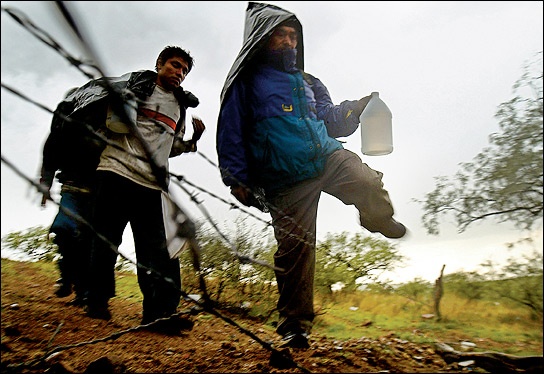
Drug cartels want migrants’ routes
Fight to control corridors on Arizona border turns violent
ALTAR, Mexico ˆ This village on the edge of the Sonoran Desert has been a supermarket for smugglers and the smuggled for nearly a decade. Migrants choose from an array of packages offered by coyotes and pick up day packs and anti-dehydration potions for the trek north.
Now drug smugglers want their route.
The Mexican Election: More Collateral Basura
I ran into a friend at the gym of the local university. He is from Mexico’s interior ( but the north). Smart guy, a brother. The university sits smack dab on the border and looks across to Juarez from El Paso. The university has many Mexican nationals mostly from Juarez but with a significant number of citizens from the interior, a majority of Mexican Americans and a smattering of Anglos. Like many things on the Border, it is physically the United States and pragmatically in Mexico (language, culture, food).
I ask him if he voted in the recent election.