Search results
81 results found.

On The Edge of the Edge – The U.S. – Mexico Border
81 results found.
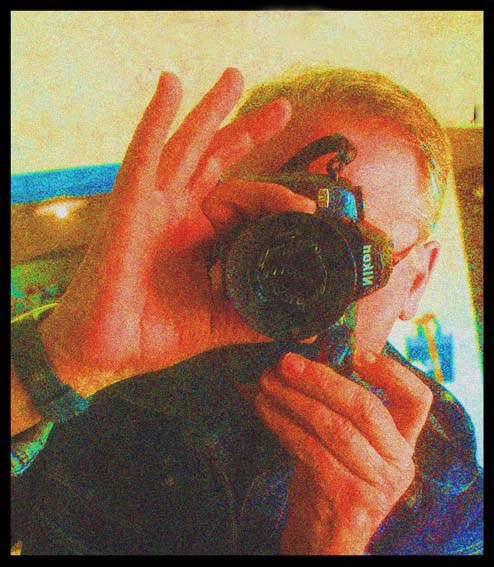
About Bruce Berman
Bruce Berman has been a professional photographer for over four decades. He works in what some have called, “The Concerned Photographer,” style of photography, but brings a poets vibe to his images. His initial documentary projects were in Chicago where he photographed Appalachian migrants to the big city, Black Panthers during the tumultuous 1960’s and the gritty street life of Chicago in its Rust Belt years.
His main work for the past forty years has concentrated on the United States/Mexico border, particularly the narrow stretch of land that encompasses El Paso, Texas and Juarez, Mexico. He also “plows” the southern New Mexico landscape, its people and the vast mysterious lands of West Texas.
After coming back from one of his earliest forays on Alameda Street on El Paso’ south side, in 1980, Berman wrote in his journal, “…I have seen a new world. It is both physical fact and mythical idea. It is a place with a line drawn through it and on each side of that line there are metaphoric mirrors that are reflecting back at each other, perhaps distorting each other, perhaps magnifying each other. It is the US/Mexican border. I will make my stand here. I will try to ‘give face,’ to this place so others can know it, perhaps, even, so those who live in it will know it more deeply.”
The aggregate result of that effort resides in two main bodies of work: The Border Project: 1985-2007, and Juárez: Cartel War Years (2007-2011) .
Additionally -concurrently- he is a chronicler of the disappearing lands beyond cities. He calls this series The Funklands, and notes, “Nothing is just laying around anymore. It’s scooped up, trucked away, rebuilt and becomes a mega buck treasure. My treasure has been the texture of the land and the stuff laying around that attests to who was on that land before… well.. before the homogenization of America.”
Berman lives and works deep in the borderlands of El Paso and Juárez, three blocks from the international bridge that connects Juarez and El Paso, surrounded by and isolated in the the vast lands of West Texas and northern Chihuahua. He refers to this as the “City-State of No Man’s Land.”
Berman continues to cover his “beat,” for major publications throughout the world and for his own book publishing enterprise. The Border Blog Press. His recent book, Walking Juárez is a compilation of photographs and stories covering the years 1975-2018.
Since 2008, Berman has added “Professor” to his name. He now teaches photojournalism at New Mexico State University (NMSU), 50 miles north of the El Paso/ Juárez ports of entry, in Las Cruces, NM. His teaching concentration is on Documentary Photojournalism and multimedia reporting. He still does occasional assignments and personal documentary work but spends equal time “Passing the torch,” he says.
Lately Berman has concentrated on doing books: Walking Juárez, 2017, Cutting the wire, 2019 and his newest, BACKLAND, 2022.
Many of his students don’t know about the border too much, but for the most part are of it. The G Generation, he says, “… are the hope of photojournalism, and maybe the world.”
He thinks working with them is his best project ever.
About the Website
The Border Blog covers the news, opinions and culture of the 2000 mile border of Mexico and the United States, concentrating on the epicenter of El Paso and Juarez. The Border Blog is not meant to be a news source as much as it is meant to be a news “feel.”
Another “border,” of interest to Berman is less obvious, the border between The Grid (his descriptor) and and those on the margins, unwilling or unable to keep up with “development,” and “progress.”
The site is a collaborative project. Besides Bruce Berman, who acts as editor and photographer and sometimes writer, the staff includes writer and painter, Juarez native and resident, Nathan Zarate, and, Beatriz Andino Zamora, a poet and writer from Zacatecas, Mexico. Zarate and Zamora post occasional articles concerning the politics and history of Mexico, in general and La Frontera, in particular. The site is always appreciative of the creative inspiration, brilliant chutzpah and deep goodwill -as well as extensive Web skills- of Manuel Rivera, a fronterizo “to the bone.”
Contributions to the site are welcome. Diverse viewpoints will be cherished. The site’s point of view and orientation will be no mystery to its readers, however, there will always be plenty of room and appreciation for other voices as long as they are informed, well articulated and sincere and fueled by passion tempered by reason.
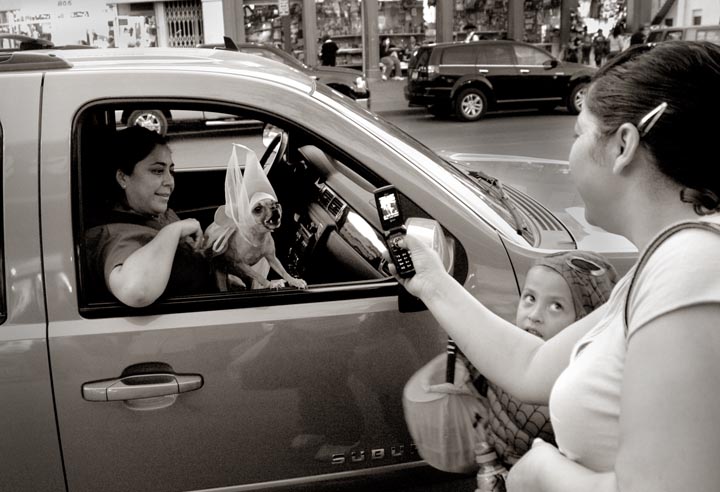
El Paso, Oct. 31 (Halloween), 2008
Halloween on El Paso Street, the first (or last) block of America. Everyone is dressed and laying a festival veneer over the street. 5:30pm, people still rushing to the bridge to Juarez to get home (especially these days, trying to get home before dark, before the murders begin).
Cookie is one angry Chihuahua.
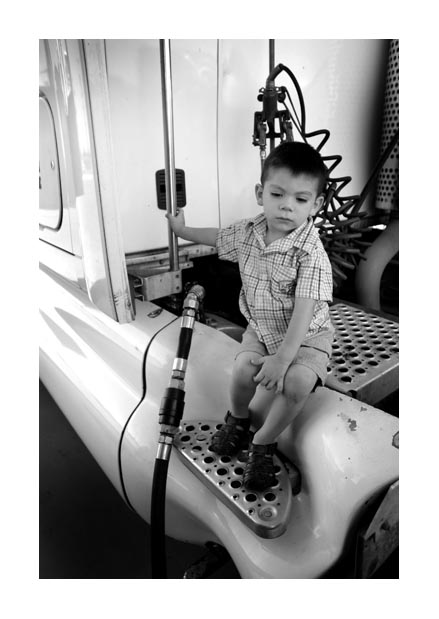
Ciudad Acuna, Mexico
A Mexican border city has begun fining U.S. drivers who cross the border to fill extra drums, tanks or barrels with government-subsidized Mexican fuel.
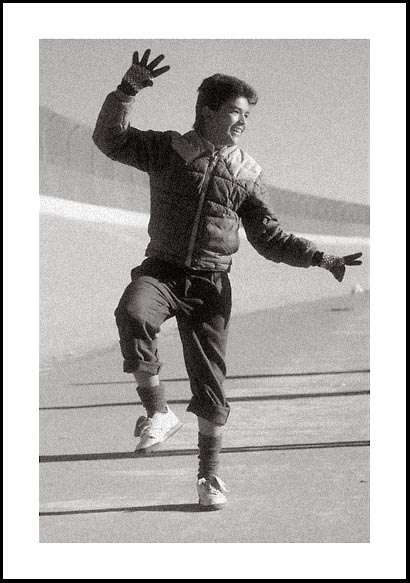
PHOTO OF THE WEEK (#2): May 16-23, 2008
standing on US side/ El Paso-Juarez, 1990’s
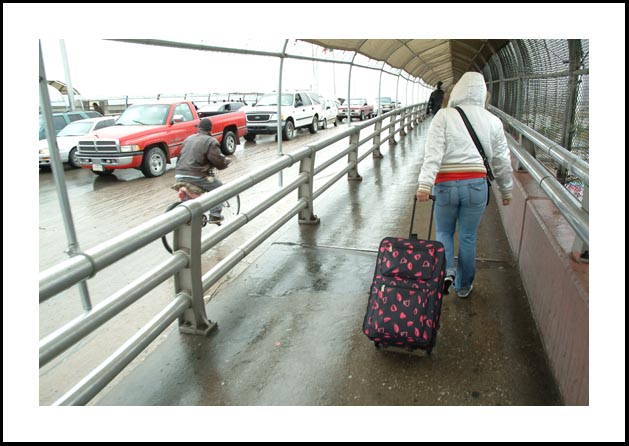
PHOTO OF THE WEEK: May 2-9, 2008
The Paso del Norte bridge between Juarez and El Paso. This is a bridge in hell.
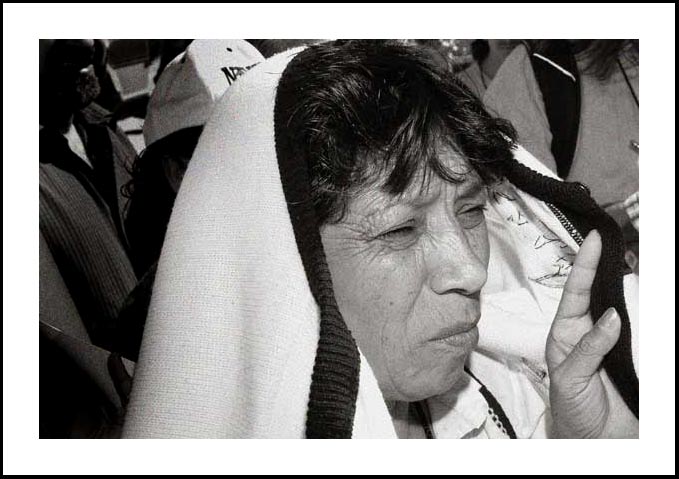
PHOTO OF THE WEEK: April 4-11, 2008
Juarez is in flames right now.
Drug war is raging. I’m calling it a drug war. It’s a lot of things war. Always is.
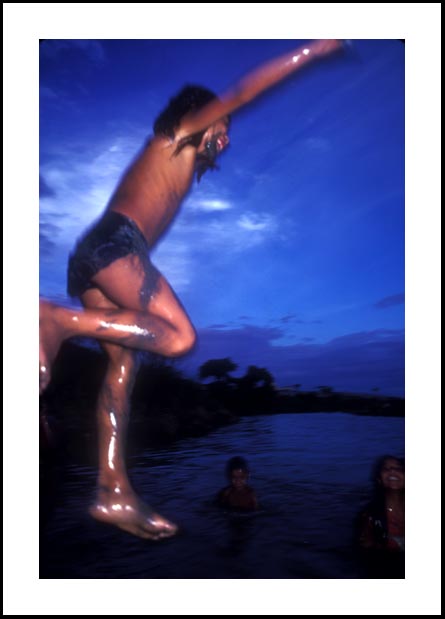
Leap into the river with two names
Leap Day in the Leap Year 2008. Let’s all take a leap. Come on…why not!
This boy and his friends use the river with two names as a playground, a swimming pool, a back yard.
Why not.
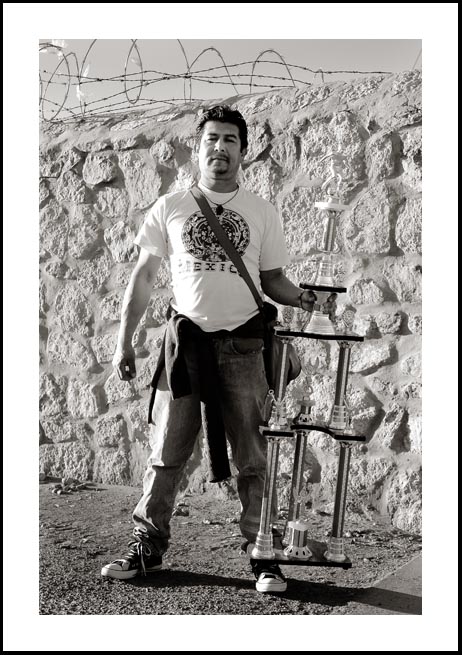
Prounouns
Working on my series, “Lives Separated.”
Jesus come over the bridge from Juarez with this giant trophy.
“It’s the trophy we got for playing Juarez, we played Juarez football (soccer),” he says not saying who “we,” or,”they,” are.

Maria Monteros Rodriquez had been looking for her daughter Carmen for days. She had disappeared without a trace from their central Juarez home.
Notes from my Journal
Immigration. Swim, drive, and crawl. People do what they need to do and making them do any of the aforementioned things, put lives at risk.
The river is more than a highway of migration, though.
In the summers, when it’s hot, the river is a giant pool.
People play.
The river is polluted with chemicals from upstream pesticides from the farms, loaded with garbage and debris, has really tricky currents that, every summer, takes lives.
But people live in that river. That river is life for many in Juarez.
If the Jefes could see past their own little tight plans, this would be THE development that would be right for El Paso/Juarez: Play in the river.
Too simple, though, huh?
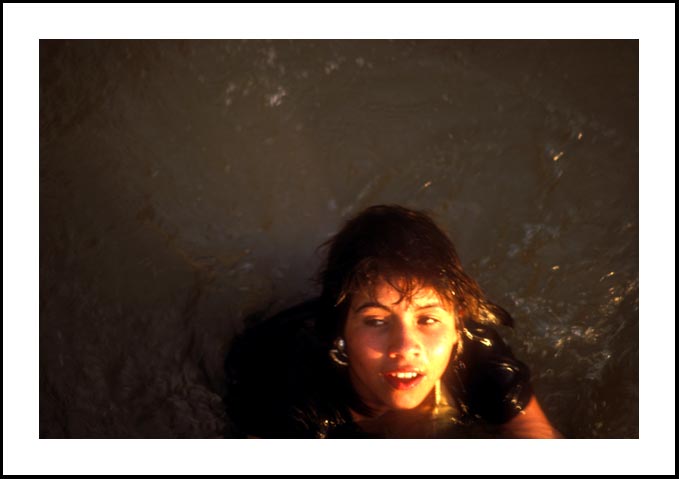
This girl is clinging to the El Paso side bank. ILLEGAL! La Migra comes and chases her away and she joyously splashes back to the Juarez side where her friends and family jeer and gesture at the Border patrolman. Everyone is having a good time. The Migra laughs, waves, knows he’s part of this great immigration farce, climbs back into his Suburban and drives off and the girl –and her friends- come back, swim to the U.S. side, pose for pictures, live the evening.
The sun sets. I go home. I played in the river, too.
One of the border Patrol’s favorite PR releases is about how their agents saved people from drowning. There’s one or two or three every year.
They never mention people caught playing. Before the fence.
PHOTO OF THE WEEK: Jan. 25-Feb. 1, 2008
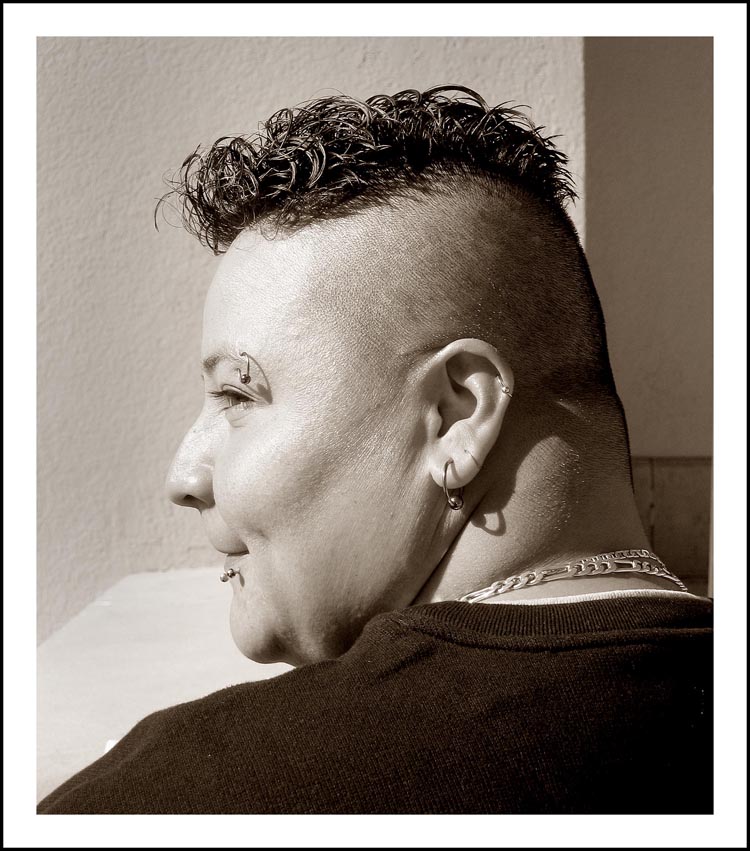
You can leave the border but the border does not leave you. My head snapped when I saw Roberta Flores, up in New Mexico.
“Terrific hair,” I yelled at her. “Gelled,” I asked?
“No,” she said with a sly and proud smile, “Glued,” she shouted back, with a grin that sort of said, “gotcha!”
“Did you get that done around here? ” I asked.
“They don’t know how to do that around here,” she spat, friendly but gently ridiculing.
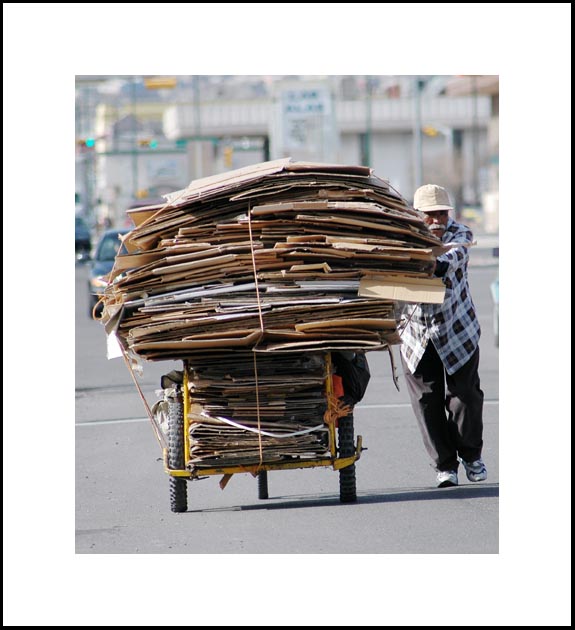
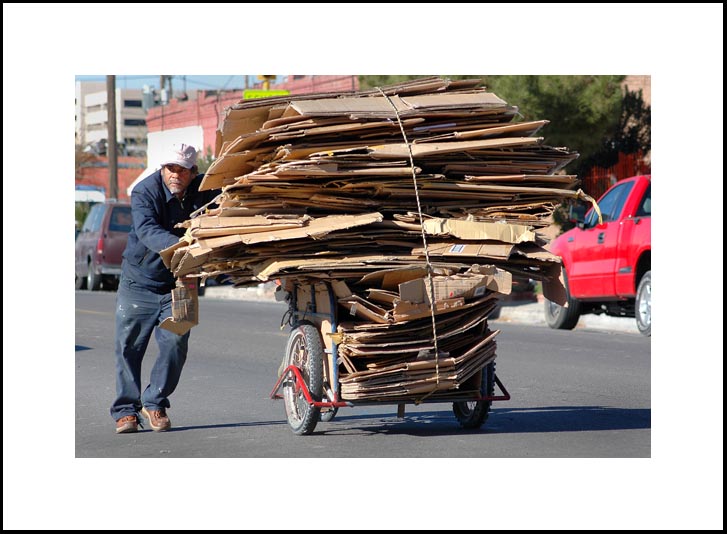
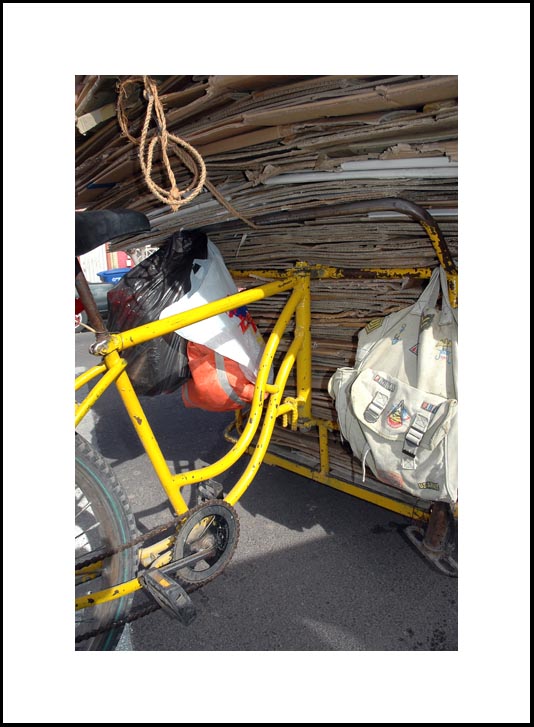
Los Cartoneros
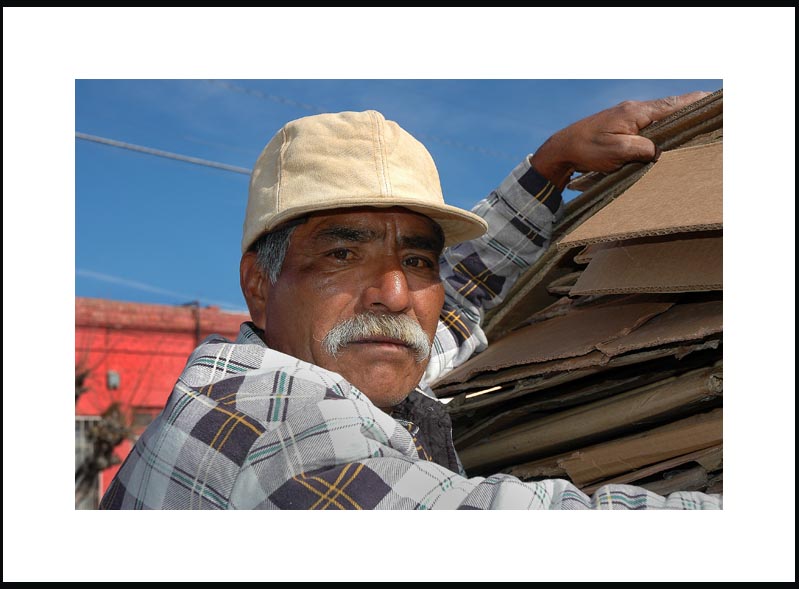
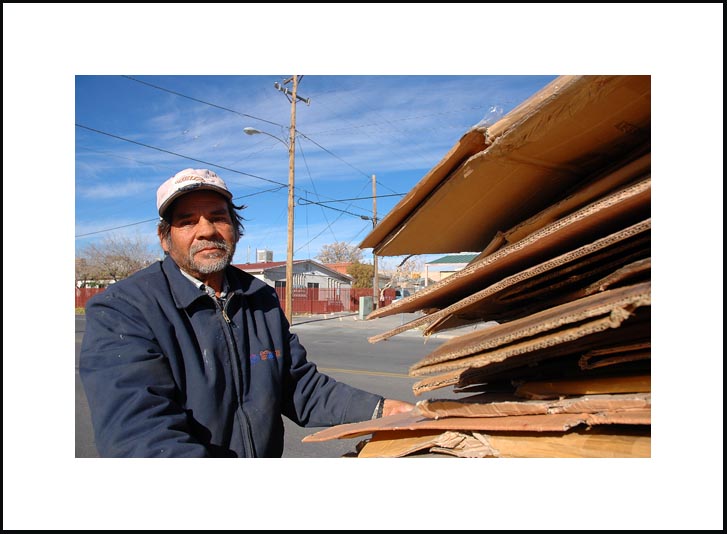
In a desert, on the border, nothing much gets wasted.
Cartoneros, paper haulers, collect discarded and surplus paper and card board from border streets and from border merchants and haul it on their customized ” tricicletas.” They then sell it to scrap buyers, located about a mile from the border shopping district in the Segundo barrio.
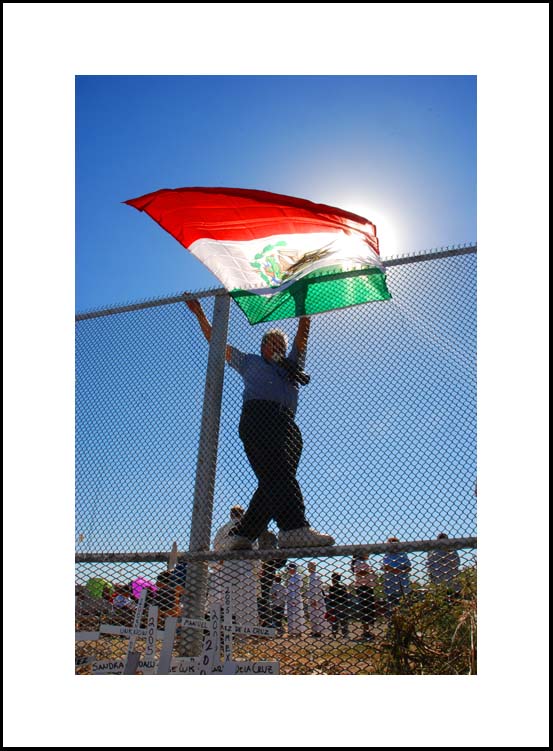
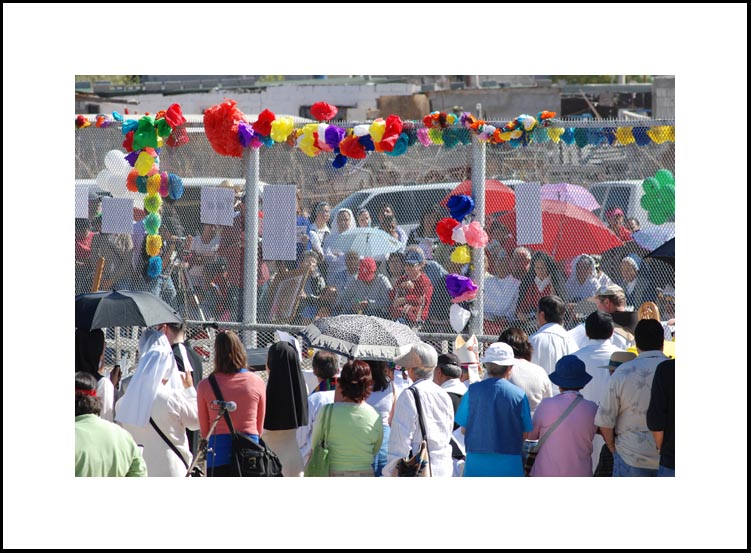
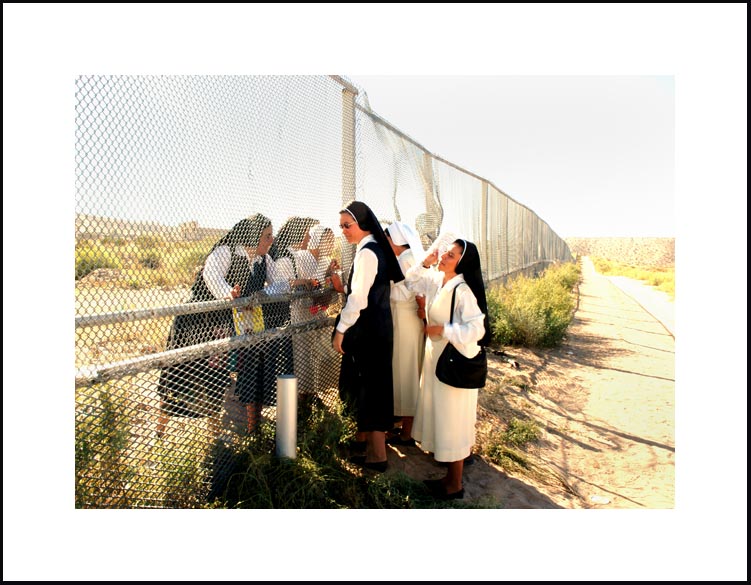
Today the Bishops of El Paso, Las Cruces, NM and Juarez, Chihuahua, Mexico met at the border fence at Sunland Park, NM and Anapra, Chihuahua to protest current immigration policies and to promote understanding for immigrants from Mexico, as well as world wide.
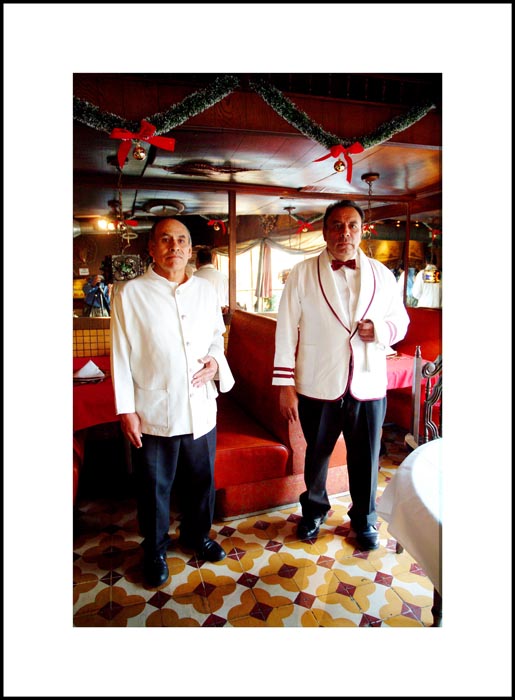
 Ramon Covarrubias Quintana(l) and Francisco Barraza(r) are waiters at the old Martino’s Restaurant on Juarez Avenue in Juarez, Chihuahua, Mexico. The restaurant is located two blocks from the Paso del Norte Bridge that connects downtown Juarez with downtown El Paso.
Martino’s – and these waiters- harken back to the “Golden Era,” of Juarez,
Summer on the FBA. Hot. 100.
This is Father Rahm Street, which is, actually, Fifth Street. Around the corner is El Paso Street which is the first block of America (or the last, depending on where you’re coming from).
Around the corner, to the south is where the Paso del Norte bridge from Juarez empties out. There are stories on this street, big life-journeys begin here. This is where dreams begin. Some people have called this the “Ellis Island of South America.” Maybe that’s the draw for me (my Father was born on that other immigration island in 1907). That was another dream. These are places where dreams can start.
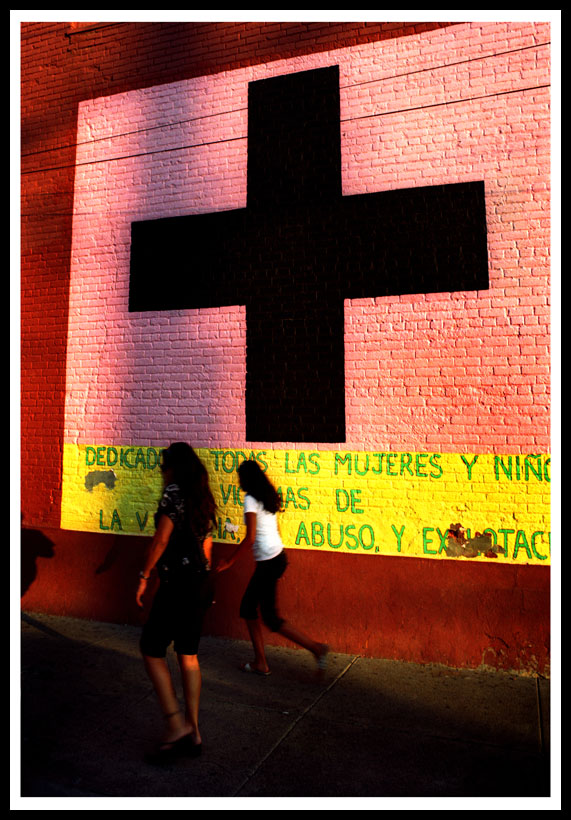
The Black Cross mural for the violence against women in Juarez appeared a couple of years ago. Then they put a bus stop in front of it (dumb). Then they took the bus stop out but painted over the text (also dumb) about the violence to the women.
Whatever. Life passes and passes strongly. This is where I have spent a lot of my life.
Nothing stops the energy on the FBA. People are looking for their place, their direction, their dream. I’m looking. I’m there almost every afternoon.
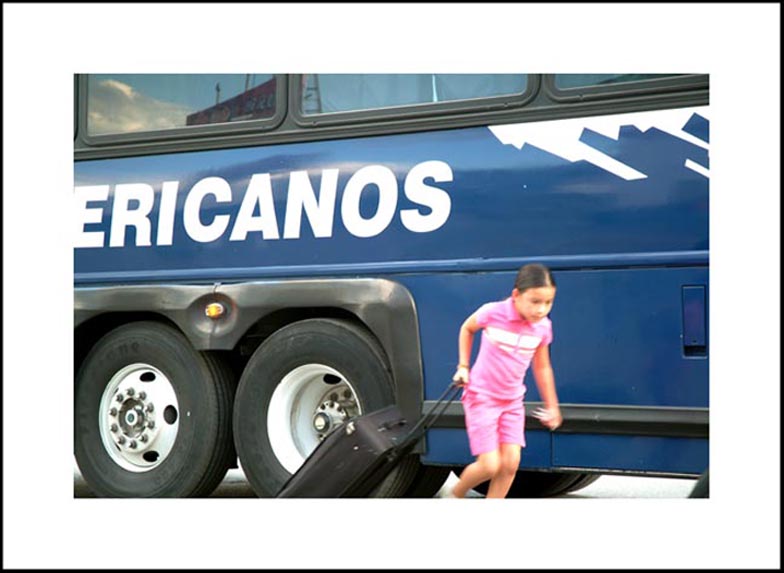
Sixth and El Paso Street is the first street in “America,” after crossing over the Paso del Norte Bridge from Juarez, Chihuahua, Mexico into El Paso, Texas. This is the crossroads.
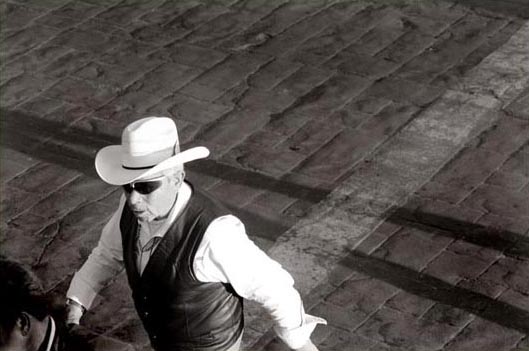
Cool Norteno, Plaza de Juarez – Juarez, Mexico / June 2007
The Plaza de Juarez in Juarez, Mexico is an ancient crossroads. The plaza stands in front of the Mision de Guadalupe, a church established in 1659 along the El Camino Real. The plaza today is still a crossroads and a transportation hub and, on Sundays, is vibrant, eclectic and fully the heart of the old Centro Juarez. Much of the area north of the Centro, the Plaza, and the Mision, the area between the old Juarez commercial district stretching north all the way to the U.S. border and El Paso, is currently, being demolished. The demolition is clearing the way for a commercial development that is projected to link up with El Paso’s south side and Downtown, also scheduled for demolition, just across the river to the north.
The transportation hub that has made the Plaza de Juarez the intense and interesting center of Juarez that it is, is scheduled to be relocated away from its current location.
The “Cool Norteno,” garbed in standard norteno clothes, and others, may or may not survive the “development.”
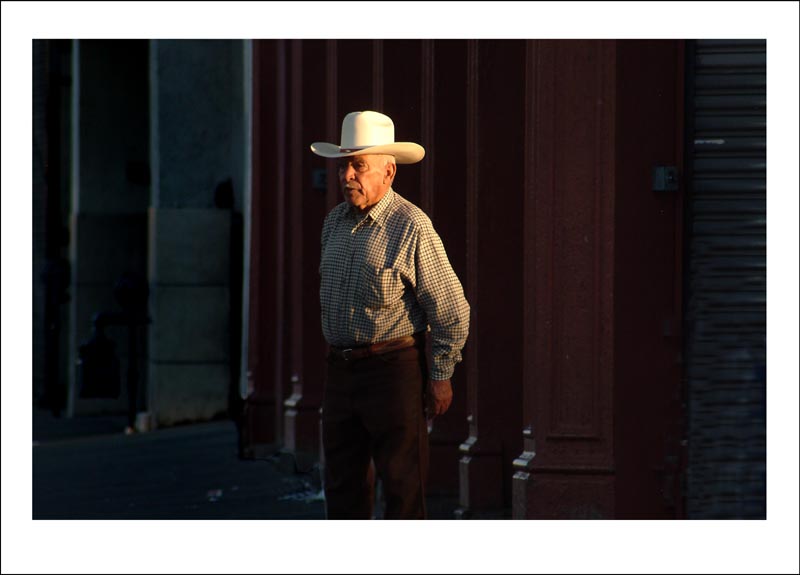
A man stands in the last light of the day at the corner of 6th and El Paso Street in El Paso, Texas. This is the first street of the United States after entering the U.S. from Mexico from the Paso Del Norte International Bridge. The bridge links Ciudad Juarez with El Paso and 6th and El Paso streets could be considered the crossroads of the northern part of the Western Hemisphere from south to north.
A lot of old folks (viejos) grew up in this barrio and are still there. They are the dignity of the barrio.
Imagine how people felt when a picture of an old viejo was used, by City planners, to show what was wrong with El Paso?
Los Viejos are what’s right with El Segundo.
Whacked
The Border(PBS) | About the Show
Produced by Matthew Sneddon, KNME-TV, Albuquerque, New Mexico 
The economies of Juarez, Mexico and its sister city, El Paso, Texas are driven by a system of assembly plants known as maquiladoras. There are more than 600 maquiladoras in Juarez, two-thirds of them owned by U.S. companies. Since the first maquiladora was built in Juarez in 1976, the population of the city has increased nearly five-fold to more than 1.25 million, making it the largest Mexican city on the border. The Rio Grande fuels Juarez and El Paso’s water supply.
However, the more than 10 million people who live in these desert communities have begun to exhaust the Rio Grande’s capacity to support them.
This segment focuses on one Rancho Anapra family faced with the realities of living in a desert community with no running water. It examines the factors that contributed to growth of this particular border region: the Rio Grande, the maquiladoras and the promise of a better life.
The Mexican Election: More Collateral Basura
I ran into a friend at the gym of the local university. He is from Mexico’s interior ( but the north). Smart guy, a brother. The university sits smack dab on the border and looks across to Juarez from El Paso. The university has many Mexican nationals mostly from Juarez but with a significant number of citizens from the interior, a majority of Mexican Americans and a smattering of Anglos. Like many things on the Border, it is physically the United States and pragmatically in Mexico (language, culture, food).
I ask him if he voted in the recent election.