Search results
81 results found.

On The Edge of the Edge – The U.S. – Mexico Border
81 results found.
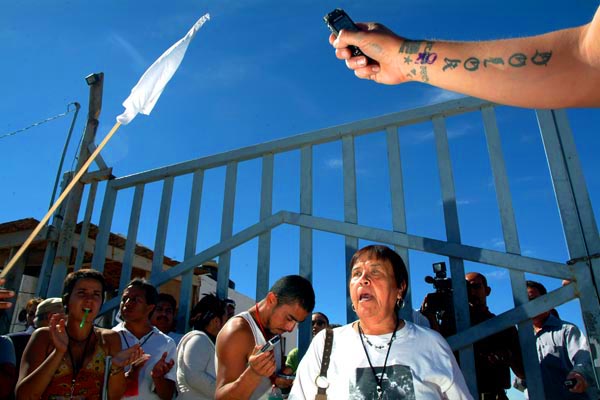
October 20, 2007
A group of 150 people from different grass roots and human rights organizations from Juarez, El Paso, Guanajuato and Mexico City, arrived in a school bus and private cars at noon, October 20, to discuss globalization, displacement, human rights violations and femecide.
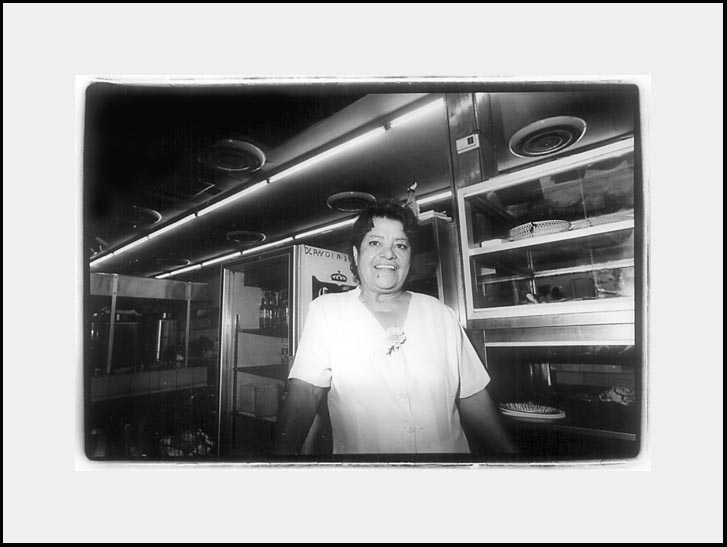
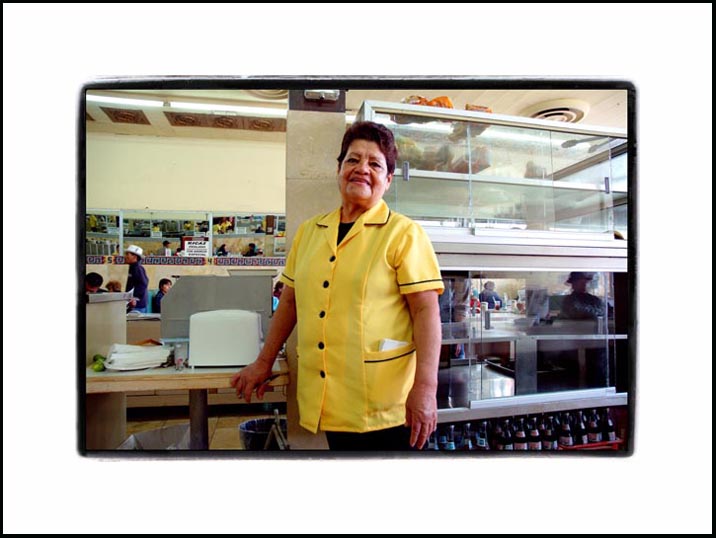
Amada has worked the counter at the Central Cafe in downtown Juarez, since the early 1980’s. The cafe is next door to the cathedral and is a major crossroads for buses -and most of all, people on foot- heading to all directions in the city. The cafe is a crossroads, the city’s heart, and a center of transition and change.
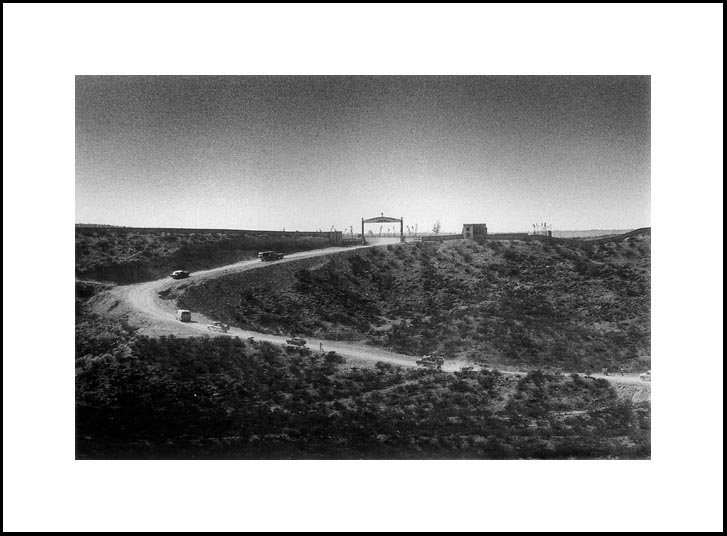
28-October 5, 2007
The cemetery came before the barrio. An ultimate act of realism.
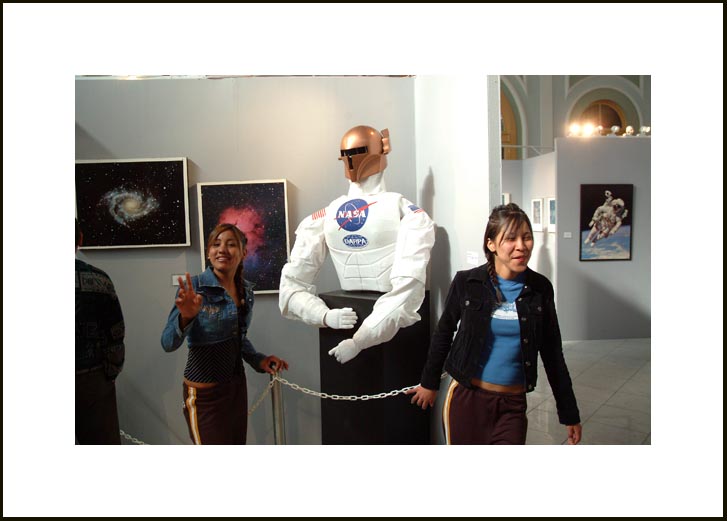
Two Juarez girls hamming it up at the NASA traveling exhibition that was shown at the Centro Municipal de las Artes in downtown Juarez, Chihuahua, Mexico in May through June.
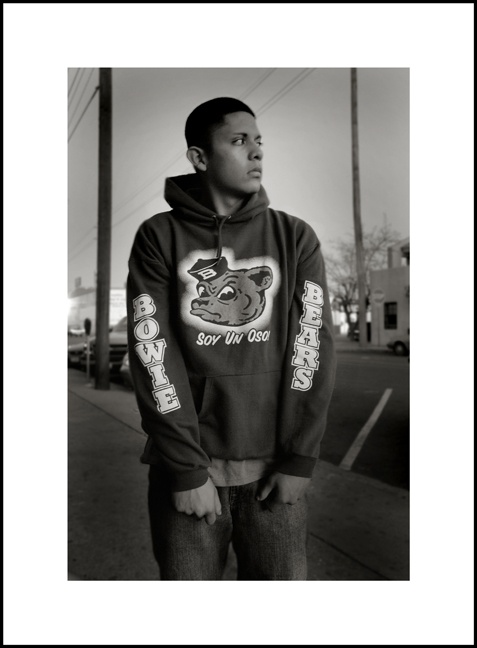
Hugo(last name not given) shows his high school “colors,” on Father Rahm Street on El Paso’s south side. It is twilight and he has been working on a mural at the Sagrado Corazon church’s gym.
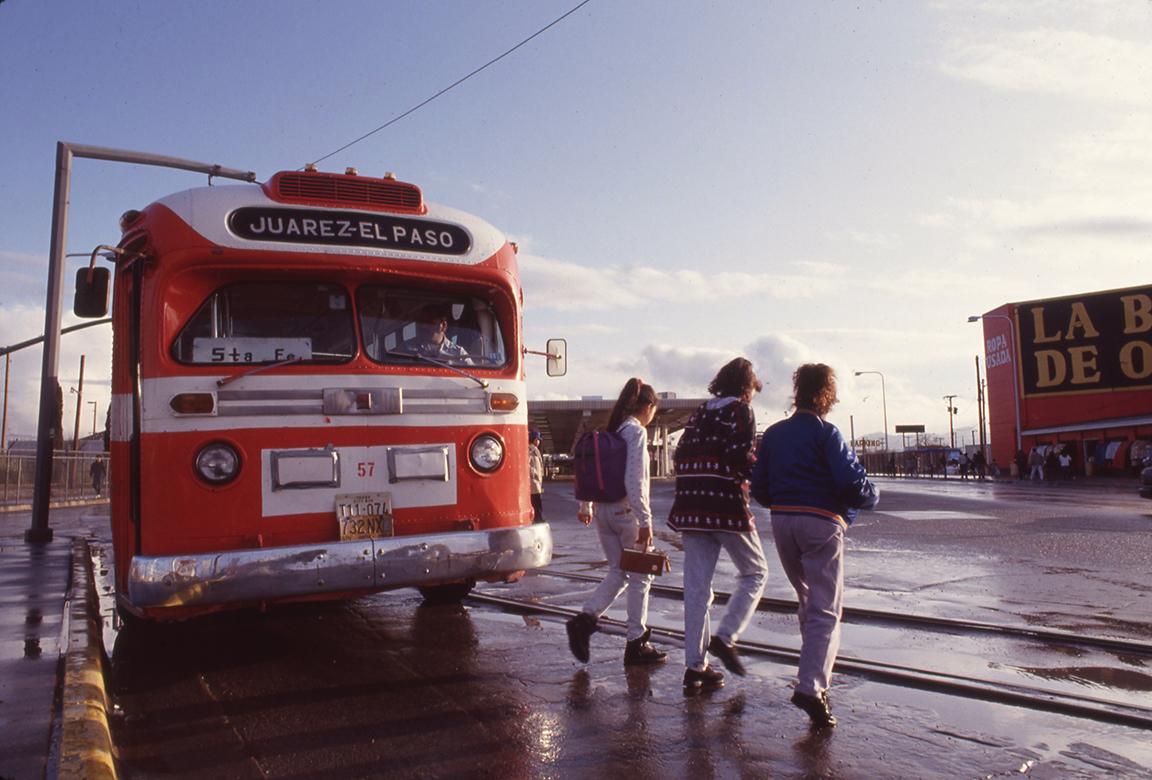
The Red Bus, Paso del Norte International Bridge, El Paso/Juárez, 1989
Photograph and Text by Bruce Berman
The Old Red Bus ran back and forth over the Juárez International bridge for decades. The bus itself was from the late 1950s, a GM. First photo I ever took when I got to El Paso and started wandering around was of the Red Bus, on El Paso Street. I noticed the women, from 18 to late 40s, lined up. I came to know that they were “maids,” low wage women from Juárez that came over every day and served the Anglos of a neighborhood north of downtown. It was called Kern Place. At the end of the day -those that worked by the day and not the week- would walk south down the hill to “EL Centro,” get on the bus and go home, to Juárez
Generations of Anglo kids were raised by these “maids.” Tons of dishes were washed. Beds were made. Laundry was done. They watched the American culture and went home. Key word: Home. Theirs. Another world.
I shot that old photo in October 1975.
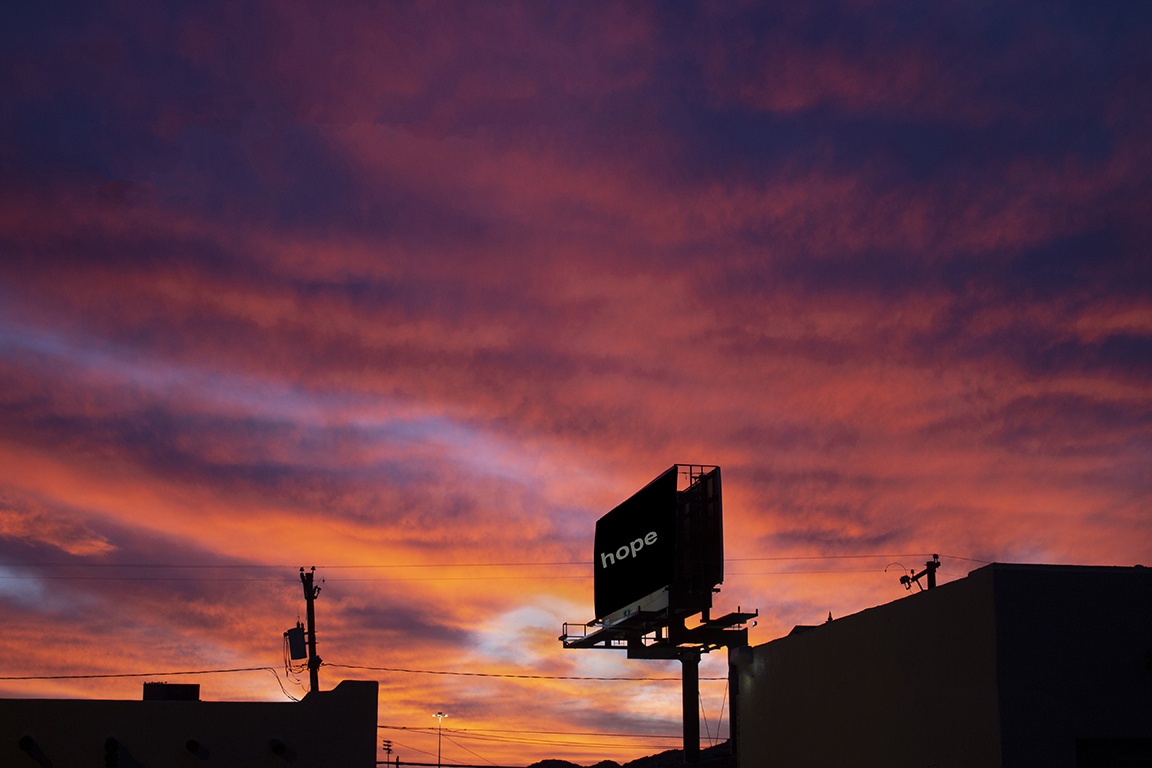
Hope on the border (Illustration), El Paso-Juárez, 2021
Text/Photography by Bruce Berman
This is not a photograph. It is an “illustration.” It’s a “montage,” a form of photography that goes all the way back to the near beginnings of photography. The distinction between “illustration,” and “photograph,” is that the former is an idea and an opinion and the latter exploits photography’s main strength: believability.
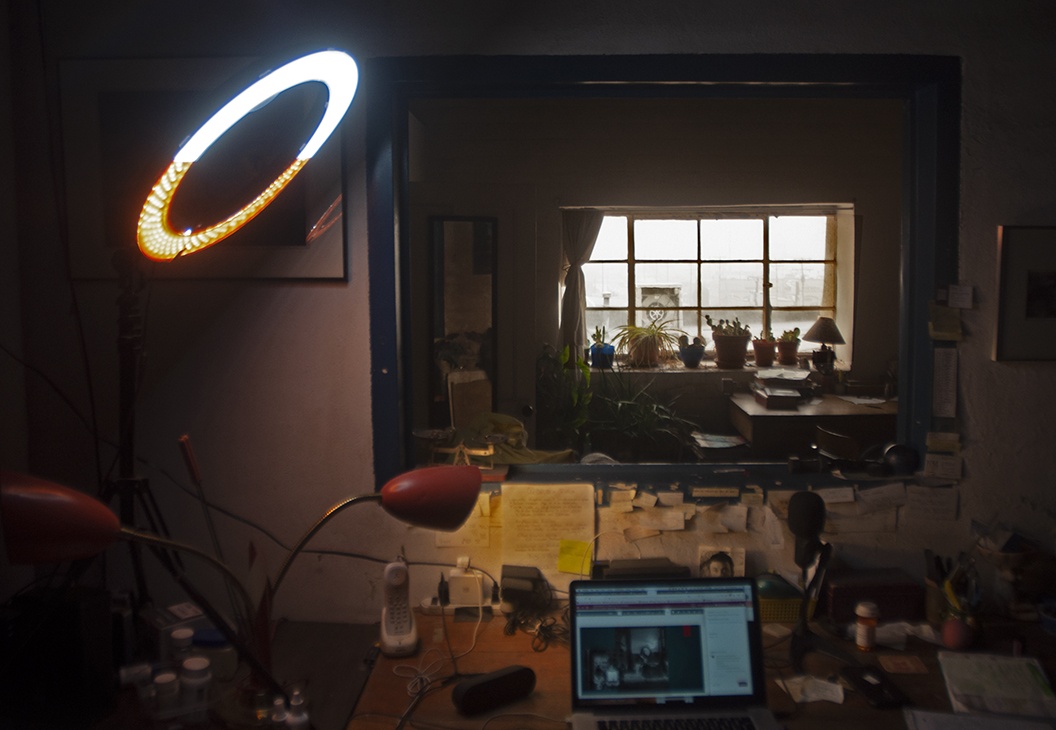
End of a semester. End of an era. My smiling mask of self confidence, of confidence-projecting, of being reassuring has wound down to a needle tip. Sat at this desk for 14 months, rising to the occasion of teaching remotely. Three semesters of little grey rectangles talking with me and me with them.
They rose to the challenge and so have I.
And I’m fried!
THIS SITE HAS BEEN DOWN FOR TWO MONTHS. WE’RE BACK. THE SITE WAS SUSPENDED AND IT TOOK THIS LONG TO RESTORE IT TO TOTAL BUG-FREE HEALTH. TO BE HONEST THERE HAS BEEN VERY LITTLE “ME.” THE BORDER BLOG WEBMASTER, MANNY RIVERA, FOUGHT THE MALWARE FORCES OF EVIL… AND AS HE ALWAYS DOES, BROUGHT US BACK TO LIFE.
SO GLAD WE’RE HERE. SO GLAD YOU’RE HERE.
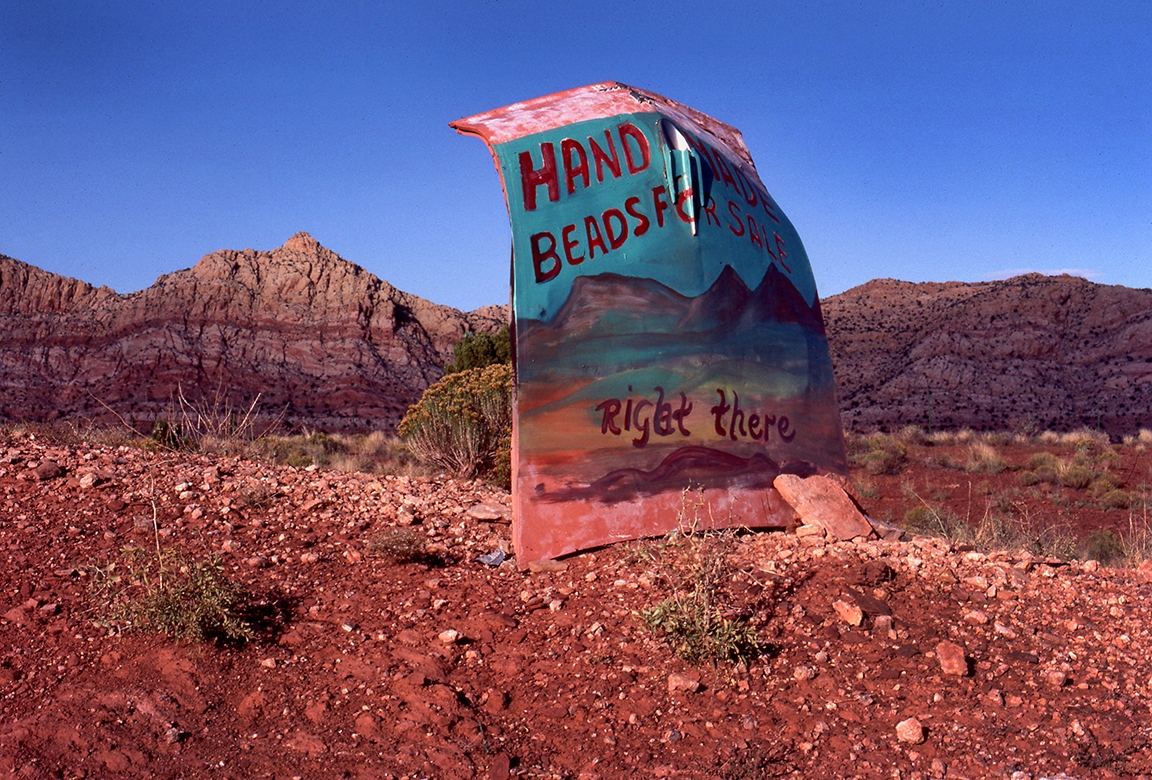
1951 Ford hood, Navajo Reservation, Utah, 1974
So here we are, searching for borders again. It’s been a long time since I began this photo journey in 1968. First there was the “border” of Appalachians in Chicago.
Then there was the Five Nations of Oklahoma and the last refuge of the Buffalo in southwest Oklahoma.
Eventually I found my way to El Paso/Juárez. That one’s took thirty-five years plus.
And now?
Not sure. Usually I have wandered into my “forward.” Been stuck lately, taking care of business, being a professor, thinking, living in the old paradigm.
I suspect it’ll be that way again. I’ll bumble into the “next.”
I just mentioned -above- all the stuff that’s in the rearview mirror.
Looking out, over the hood… well you have to get the car into first gear first.
It’s coming.
Stay tuned. The Border Blog is back.
So am I.
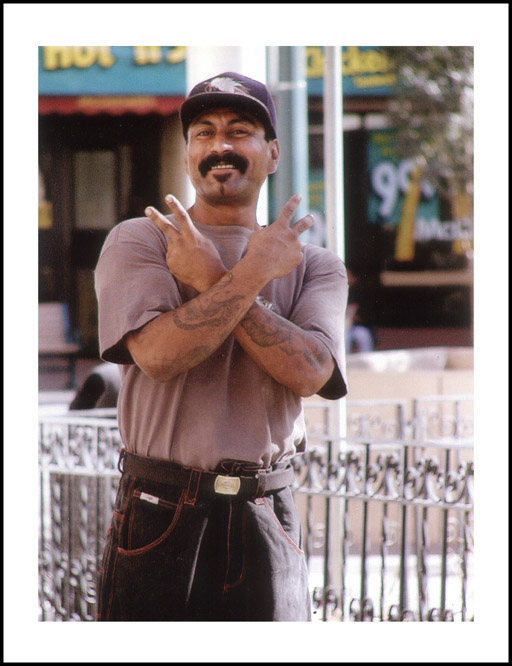
El Paso’s Central Plaza, is officially named San Jacinto Plaza. It is located in the middle of El Paso’s original business district and about 3/4 of a mile from the border with Ciudad Juárez, Mexico. In recent times its unofficially been called Plaza de los Lagartos which refers to the old pool in the middle of the plaza that used to be the home of alligators (lagartos in español) which no longer existed after the early 1970s. The alligators were later commemorated, in 2006, by a fiberglass sculpture of alligators by native son and internationally renowned artist, Luis Jimenez.
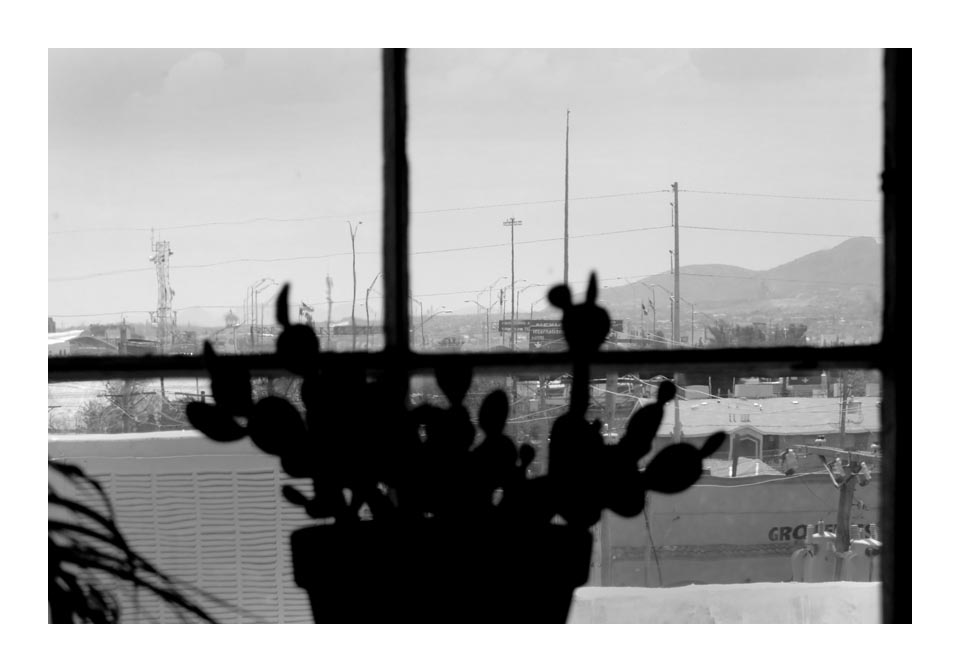
Flags are down in Parque Chamizal. Wind must be up and hopefully a little rain. Just a whisper of a season change. Not yet. But not all that far off either. ‘ta bien. The View South. Days come and go. Then years. Then decades. Then…? I turned my back on the past a long time ago. People tell me that’s good. Bible says it too. Do they really mean it?
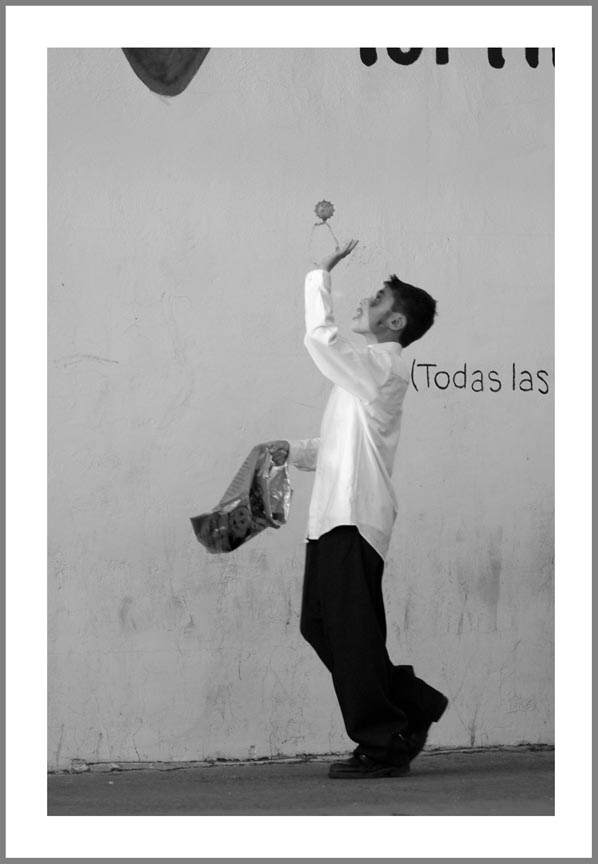
Text by Bruce Berman (in full snide mode)
Halloween is The Great Day in El Segundo barrio. The ‘hood comes alive. People are pouring over the bridges heading from Juarez on the candy quest. People in the neighborhood put on the costumes and come out of invisibility. The first block of America (6th and El Paso) is a riot of laughing and color and wild abandon.
Nothing is sure on this border in this neighborhood anymore. “They” are back! The Developers. “The 180s” aren’t around on this day. The Developers, their Pol puppies, the Gov. employee “Good Germans,” even the The Do Gooders (even if they are really the Do Badders). That’s what I have come to call them all. They say something and if you want to find out what they just said just think 180 degrees opposite from what it was. Most of them are up in Kern Place handing out candy, their yearly contact with the rabble. They’re all afraid of the people when they have fun.
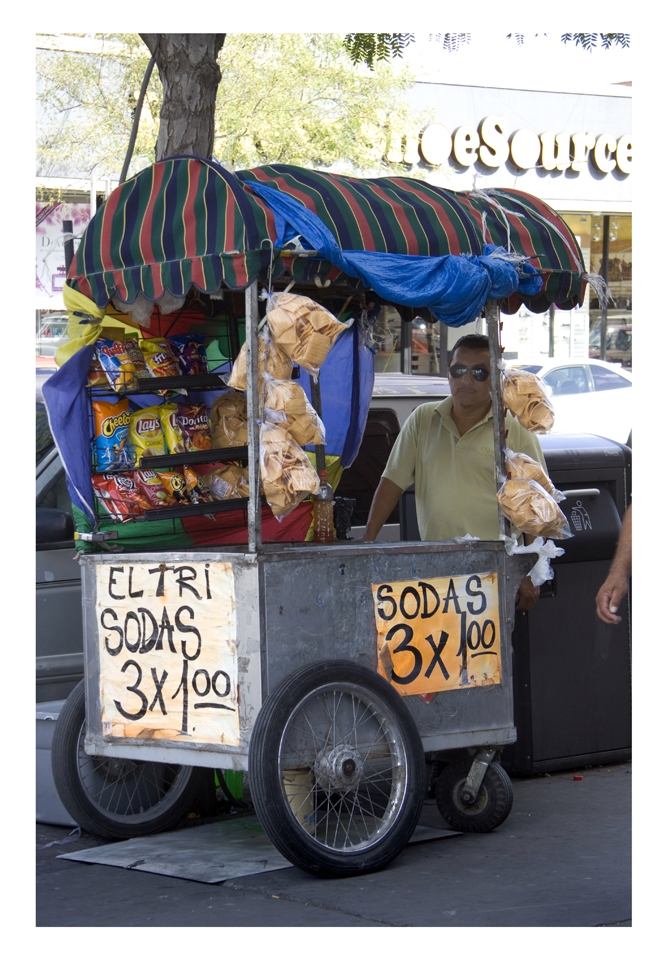
Commentary by Border Blog Editor
El Paso Street in El Paso. It’s the first block of America. Or the last block of America. It depends on which direction you’re headed.
Going north it’s the first. Going south, it’s the last, the next block is Mexico.
This is a street of life, bulging with people, an array of goods from school and household supplies to clothes to audio stuff to high heels to T-shirts with everything from Revolutionaries to cartoons on them. It’s juicy, alive and has texture and odor.
It’s 3D street.
CORRECTION:
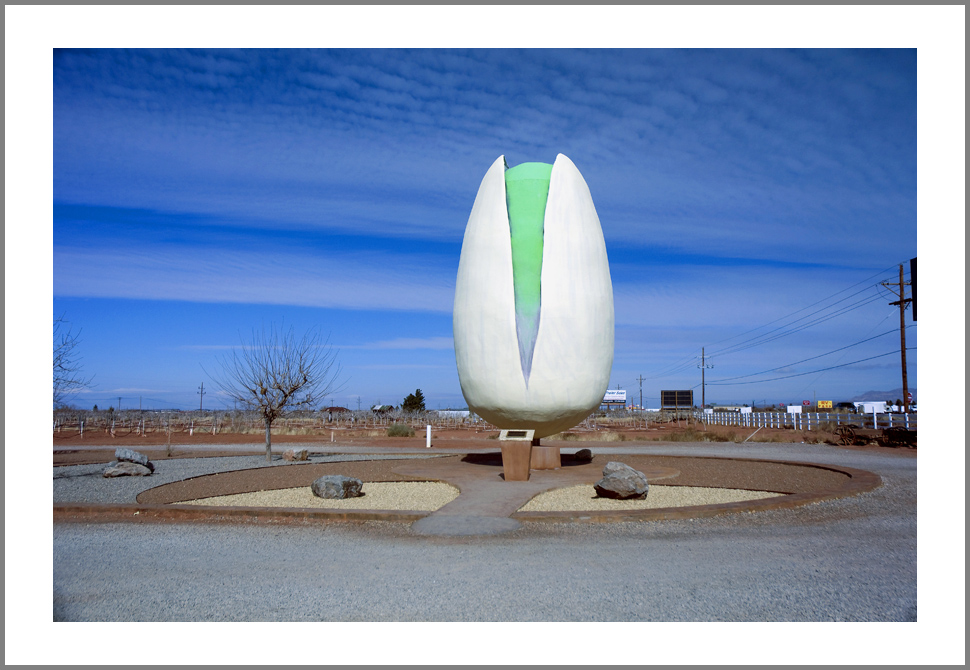
Just got a very welcome announcement from a Border Blog viewer. He pointed out that the above image is a representation of a pistachio not a pecan.
Correct!
We don’t have much of a defense, but really, when this was posted on April 24, your Border Blog photographer, Bruce Berman, wasn’t much Bruce Berman either. That’s what happens when one “does what one has got to do as opposed to doing what you do.”
We at Border Blog are pleased to announce that the real Bruce Berman is back, on the border, three blocks from the bridge, in his decaying ruin, tape -metaphorically- over his mouth, no longer talking about photography but living his life, and making images that, hopefully, will do, as we wrote almost a decade ago, stating our intention to (see the “About” tab above), “…cover the news, opinions and culture of the 2000 mile border of Mexico and the United States, concentrating on the epicenter of El Paso and Juarez. The Border Blog is not meant to be a news source as much as it is meant to be a news ‘feel’.”
Thank you MB and thank you Bruce (but tsk tsk on your caption!).
-The Editors
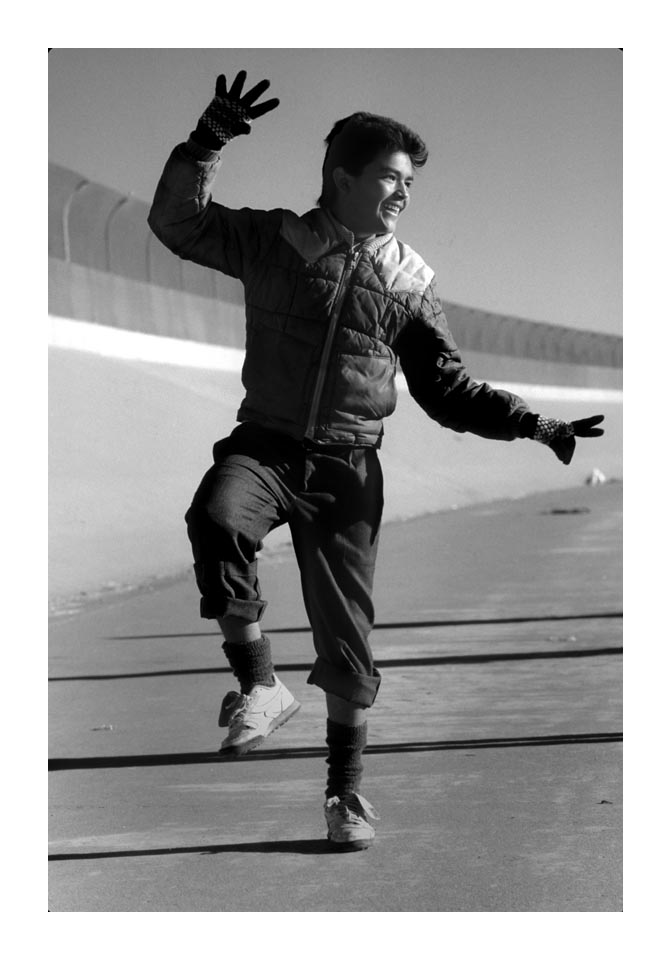
A Dear John Letter to ASARCO
by Bruce Berman
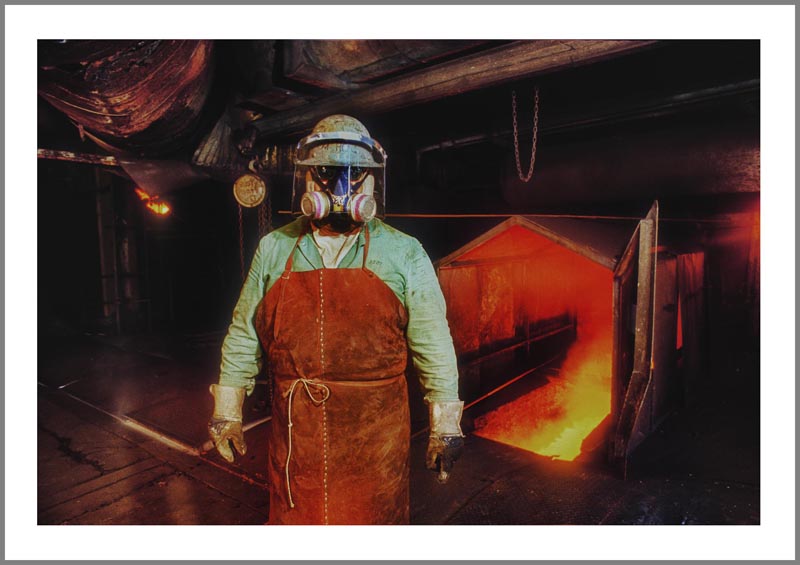
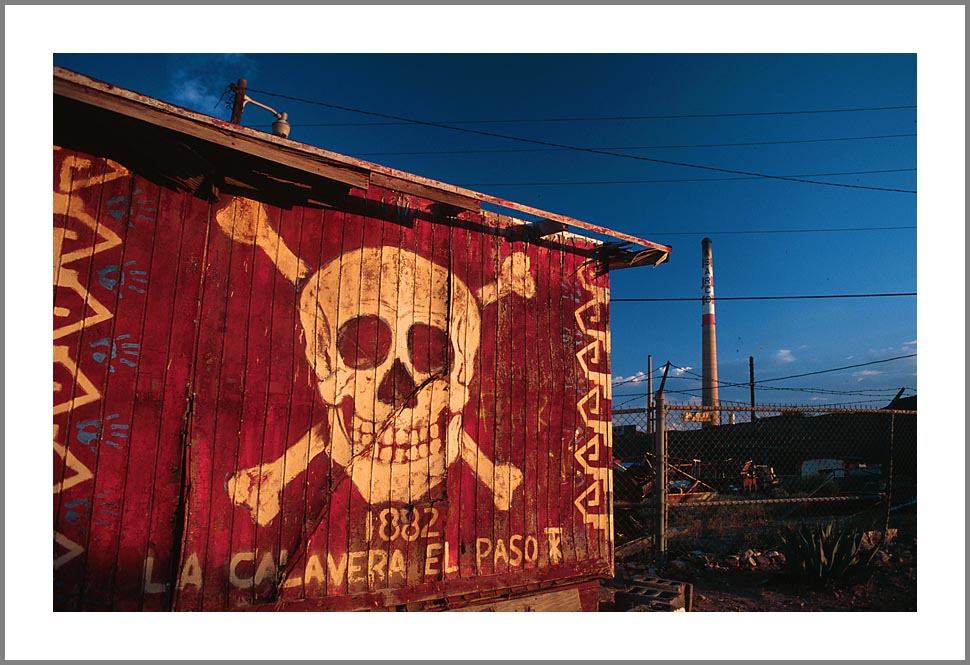
Au revoir ASARCO. You were the spine of the border, a big giant dong sticking up out of the river, pouring flames and sulfur, lead and smoke. The town grew up around you, fed off of you, then outlived you. You looked down on battles and traffic, always with the bifocals of looking at two countries at once. Looking east to El Paso, you looked down on the dusty foothills of the Franklins that became Kern Place and Mesa Hills, the sheik and elite (in its own mind). On the other, looking west, down into the dust and turbulence of Juarez, you looked down onto Colonia Felipe Angeles, which, too was foothills, that became a shanty town which became a barrio which became (shhhh..not quite yet) a path to a port of entry into New Mexico. What a vantage point you have had. When I first saw you I stood up straight, saluted and said, Wow, yes sir!
I dug you from the gitgo, had the pleasure of working inside you, being constantly re-awakened by you, of working inside you near those flames with the weather outside 105 degrees, feeling the comradie of your workers, the satisfaction of being inside something that wild and crazy and productive, a caldron of energy and raw power.
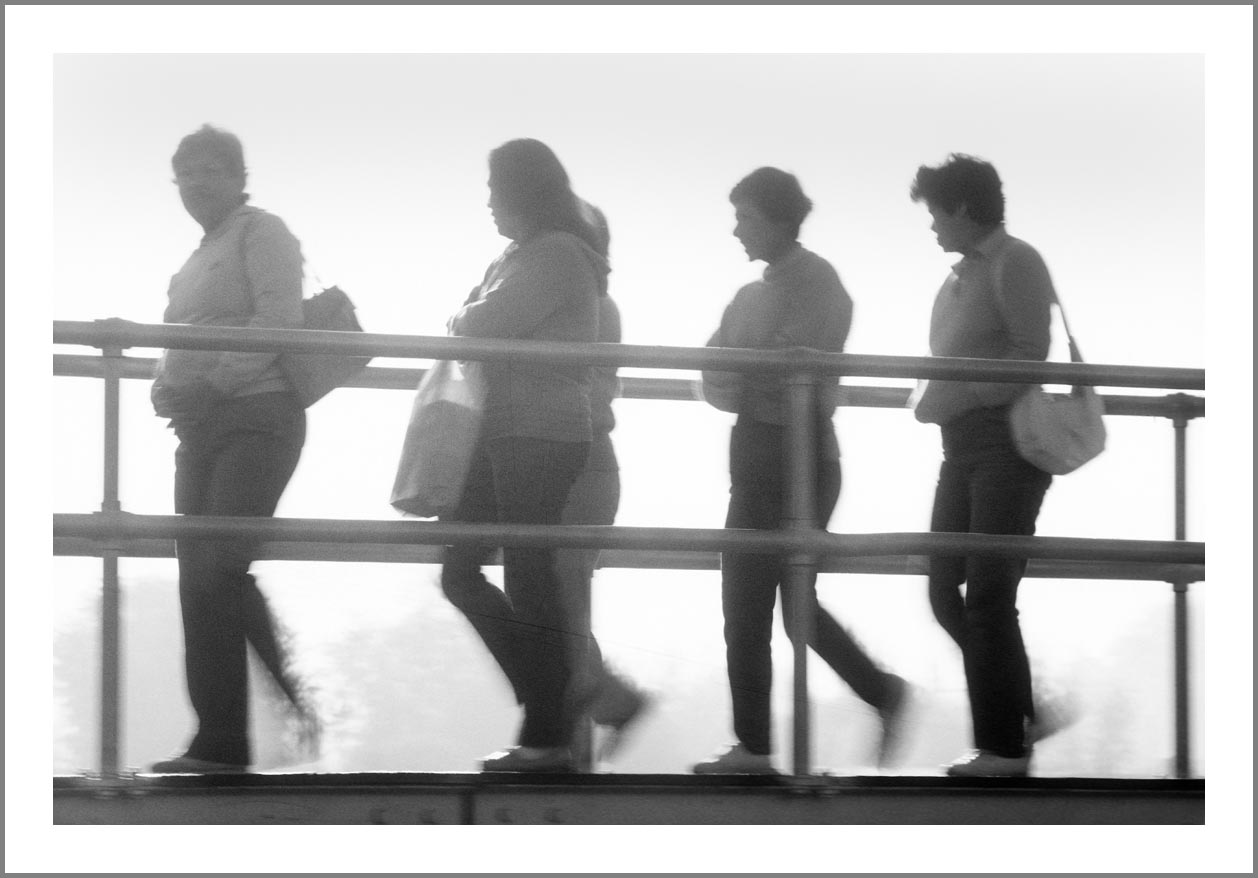
The river with two names: Rio Grande/Rio Bravo del Norte. Depends where you begin and where you end and where you return to. These women are heading north. It was a long time ago. Everything has changed and nothing has changed and I suspect it will continue to change and not change forever.
The river with two names, the R2, is also the place of the personality with two halves.
Confusing, no?
It is the place of bifurcation. But even that has two sides: twice as much insight.
Where are these women now? Which side happened to them? What happened to me? What happened to Juárez and the U.S.?
What happened to me?
I know this: people will cross going north no matter what and no matter the year. People will cross less, going south, depending on the year.
The river will flow south from Colorado (a Spanish name) to the Gulf of Mexico (an English language name).
And none of it matters to anyone living here except that one government makes it hard for another people to do what they have done for thousands of years and another government makes it necessary.
Who’s confused and who’s doing the confusing?
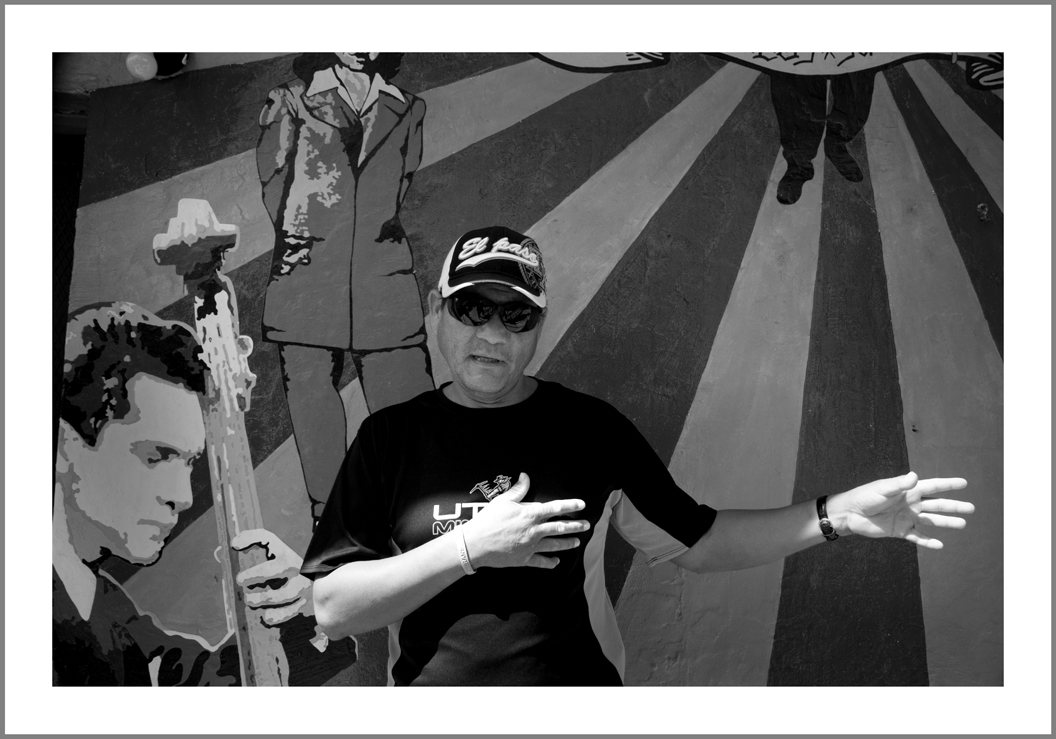
Photo and Text by Bruce Berman
Man from Anthony, New Mexico, describing his younger days in the Segundo barrio.
The Segundo barrio is El Paso’s most historic neighborhood, hugging the border with Juarez, Mexico and architecturally intact from the 1880’s “railroad boom,” that brought fired brick architecture and “Chicago Brick (which is atypical red).” Some adobe structures go back to the early 19th century. This part of the city has had human habitation for thousands of years. Spanish travelers began European settlement at this place in the Rio Grande/Rio Bravo in the mid 1600’s.
The real significance of the Segundo barrio, however, is the Latino community and it is significant. The barrio, historically, was the first “stop” on the journey north to “El Norte,” whether it was a matter of days for rest or for a generation of orientation. Many people in El Paso trace their roots to family who lived in El Segundo barrio in their first years in the United States.
FOR CAFÉ TACUBA VIDEO (and the rest of this article):
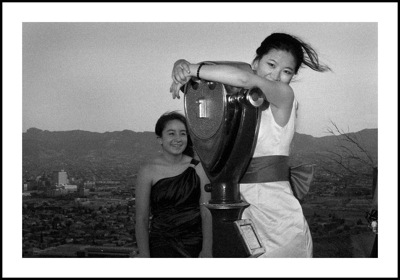
Murder schmurder! It’s Prom Night in El Paso.
Those buildings in the background are downtown El Paso. The space behind, the mountain, that’s Juarez. That girl there, in the foreground, the one with the whimsy and the joy and the hopes and the fragility, she’s a million miles away from this borderland desert, that stupid and brutal war (Juarez), that trying parking lot monotony (El Paso), at least for this night.
What is the news anyway? Is it what “they (in my case, us)” say it is? Or is it the dreams of a young girl (or boy) on one of the most remembered nights of one’s life?
I’m thinking the news, the significant events of our world are days and evenings, like this. Viewpoint. Remember that (!) as we become addicted to trouble and stress and our live’s of “quiet desperation (you wouldn’t know it if you looked at TV commercials would you?).”
One can hope it’s that way.
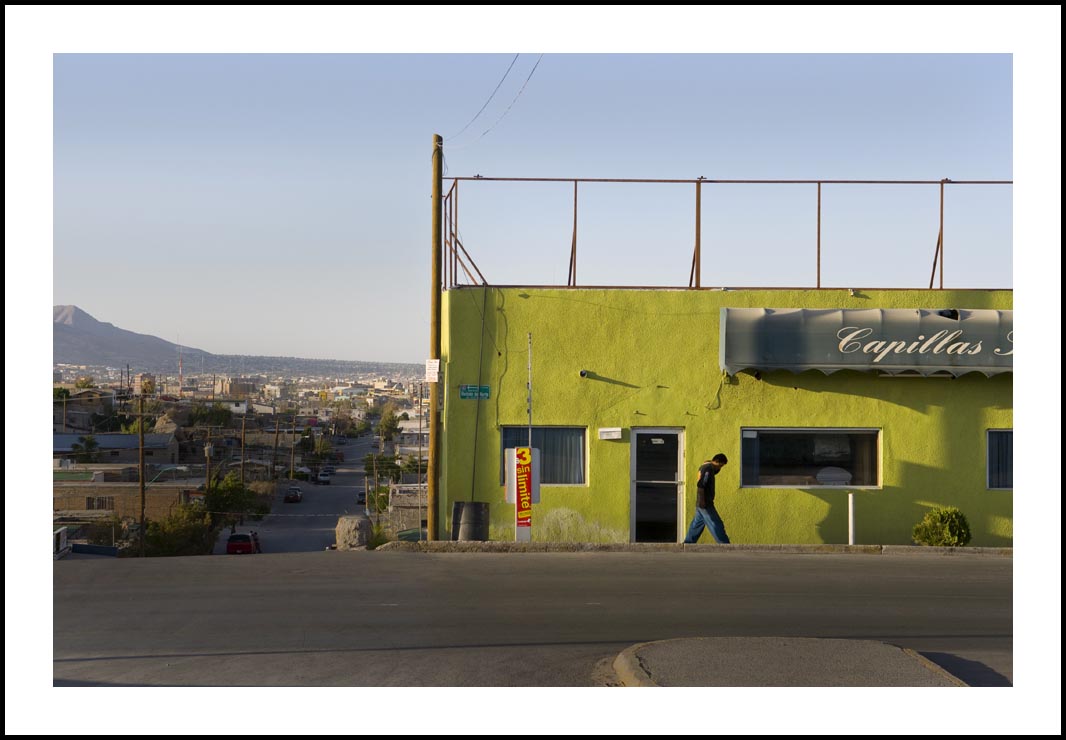
Juarez –You keep hearing that “Juarez is dead.” Juarez is not dead. It’s stripped, diminished, bruised and humbled but is it is not dead.
Most small business commercial strips are shuttered or just smashed and abandoned.
The streets are amazingly empty, the bustle and sheer madness of the traffic that was Juarez is gone. That Petromex smell of burning diesel that always hung in the air, along with the smell of fresh tortillas and dust, lessened.
But it is not dead.
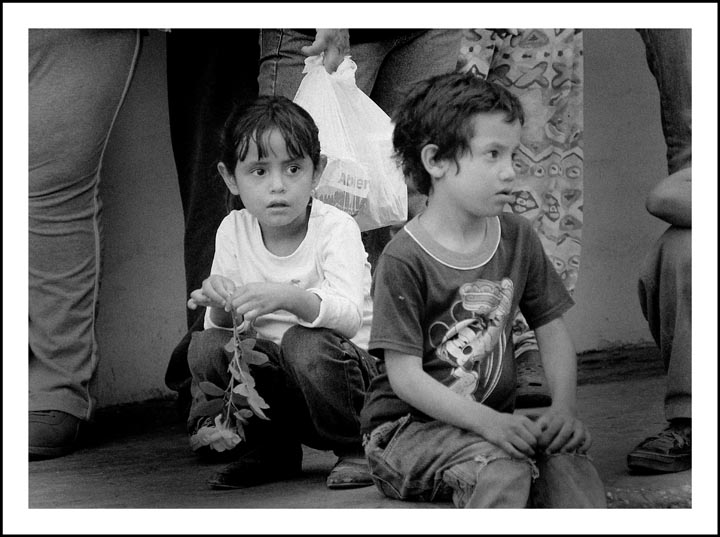
Two border towns.
El Paso and Juarez.
One city is half dead and the other is in a coma. Guess which is which?
As always, a trip to Juarez puts everything in perspective and raises big questions. For openers: We don’t have to do all the things we think we need to do, there are worse things than physical death and injury, watch out for what you hear, and, we should never believe anything except what our eyes feel.
My eyes tell me Ciudad Juárez is alive.
I salute you, injured Madame Juárez.
FOR SLIDESHOW, GO TO NEXT PAGE:
EL PASO –
New Years Day. A time for “beginnings.”
I hope. Should be.
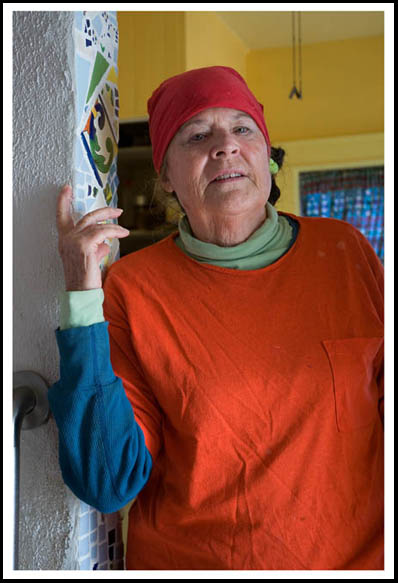
She is an extraordinary artist. A force of nature. A giver. A maker of strong things and deep inspiration. Unmovable. A force.
The sicarios came to her studio in Juarez right before Christmas. The new scourge. “Start paying up or we’ll kill you and burn your studio down when we’re finished,” they said
This is the studio she willed into existence. Up against the mountain in Juarez she created a wall of tile and mirrors, mosaic sculpture, a thing for Juarez like nothing else. A monument. A love gesture to the city of her heart and to the heart of many of us in la frontera.
Their threat wasn’t idle. Not in these hard times in Juarez. Shortly before, the storekeeper down the street, refused to pay. She was murdered.
The Artist called her family in El Paso. They came with a pickup. All in a day. She took as much of her art as she could. She fled Juarez. Her Father, in 1910, a hundred years before, after Villa issued a death warrant, also ran from Juarez. “Fleeing runs in my blood,” she says, as we talk, in her new refuge, in El Paso.
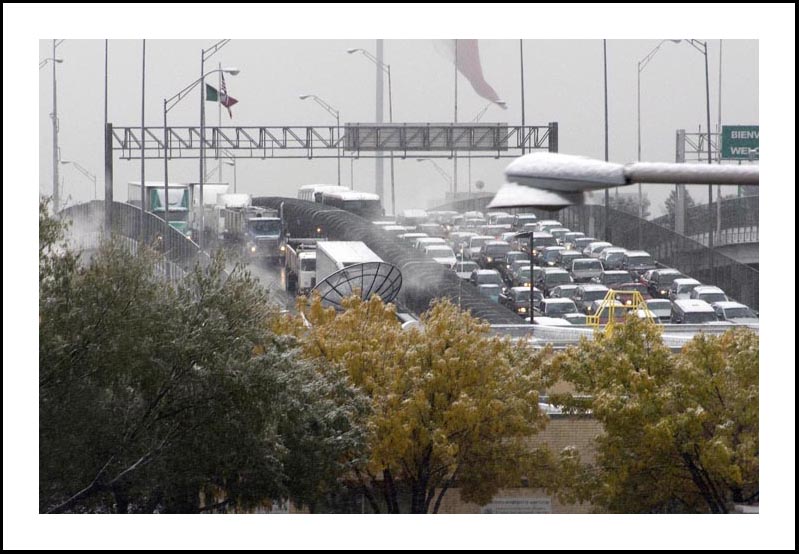
Snow!
A rarity in this no-mans-land.
Hardship. No one is ready for it. Not man nor beast nor domicile. The aftermath will be unnavigable mud on some of the streets in Juarez: there’s always a fire from people using heaters they’re not used to using; tons of $14.95 coats will be sold on El Paso Street and Stanton Street and the various Fallas Paredes tiendas all over town; car crashes aplenty; you can bet on it. The homeless freeze. Rich people buy juniper logs for five bucks apiece to have their moment of apres ski. Everyone will adapt eventually, but by then we’ll be back in T-shirts and shorts; my loft turns to a freezer; life is anew. This is a place of the sun, not really set up for anything else.
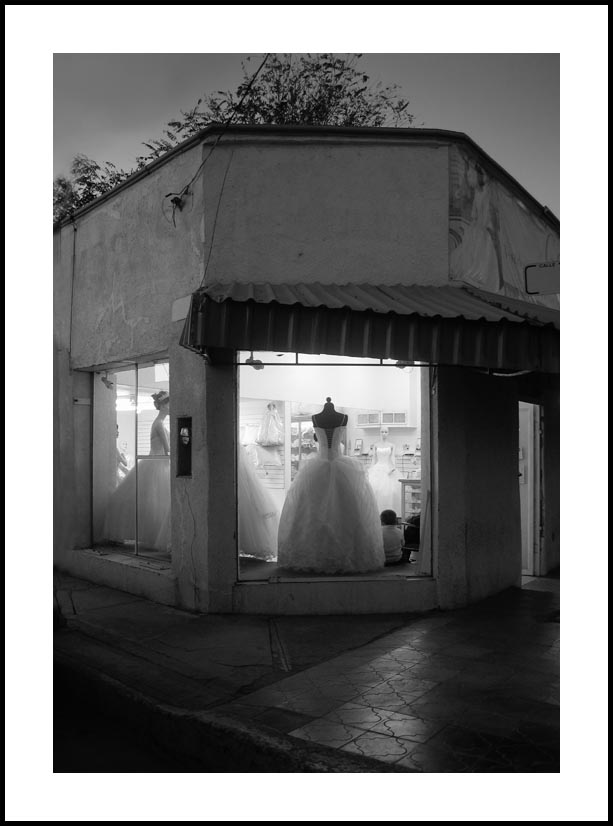
Juarez / October 2009
Murders continue.
Record year.
Day of the Dead is coming. Like every day hasn’t been that.
The streets have an eerie decay to them. Litter. Boarded up windows. Still a lot of hustle but the nights are empty and in the shadows are things no one wants to see.
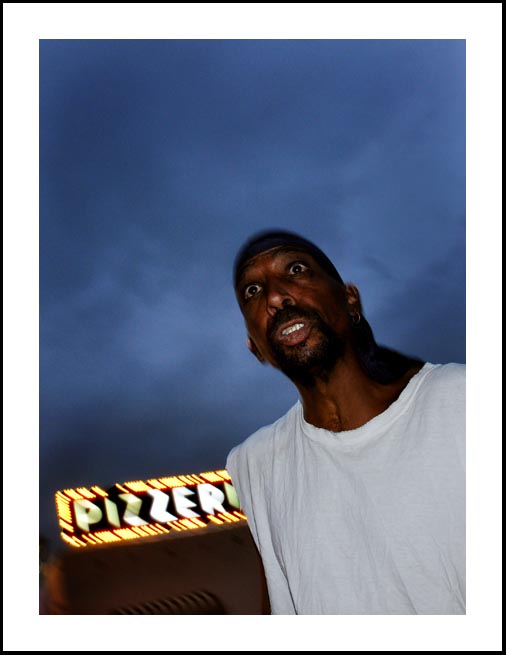
Been thinking about this guy and borders and the idea of the Big Picture versus the small picture ever since I made it (the photo) this summer, on an almost rainy night, in the northeast section of town, out by the military base.
John Hughes.
Angry. Joyous. Funny. Dangerous. Sweet. Full of love, hate and ambivalence. Boozed up, half mad, half brilliant.
“I am free,” he shouts at the night. “I am free and I am in hell.”
I ask him if he ever goes across the border?
“I am borderless,”he replies, “aren’t you?” He shakes his hand and does a twirl, almost stepping into busy Saturday night traffic.
He does a little dance and steps so close to the edge of the curb that I go to grab him but he spins back onto the sidewalk and does a very theatrical bow. He is a tight rope walker and it looks like he has done this toe dance forever.
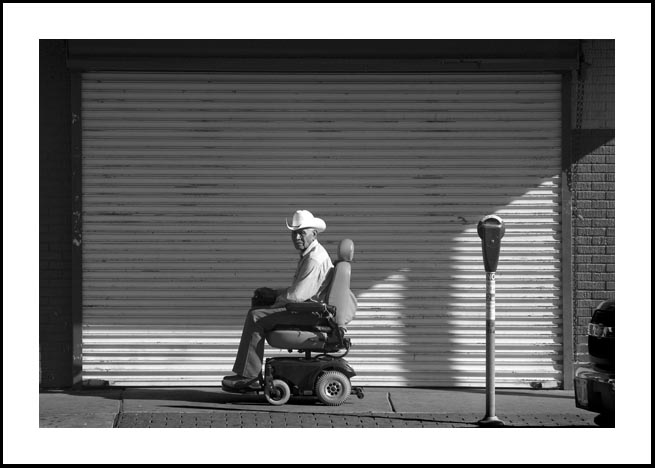
There are a lot of viejos in the Sagundo barrio. They get around.
There are a lot of kids too.
Like it always was but just fewer. It’s the heart of this isolated town.
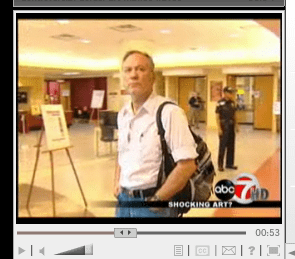

Local TV Handles Vilolence In Juarez (at least Art about violence)
Your Editor Stumbles Into a Defense Of Decapitated Heads (Art) At El Paso’s Library
July 9, 2009
Editor’s Note: Here is what they left on the “cutting room floor”
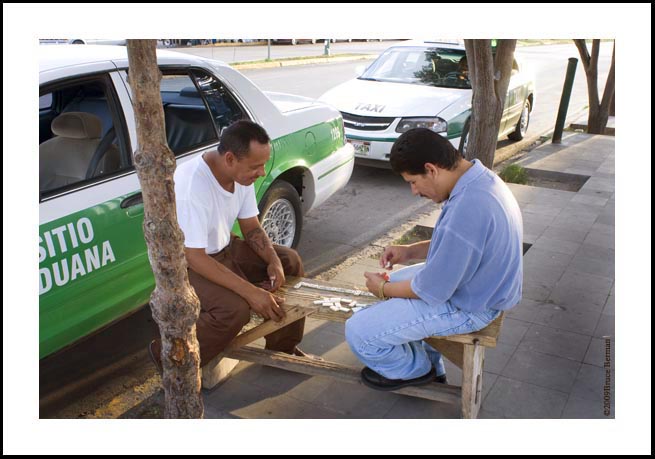
You keep hearing about the murders.
Bad.
Real bad.
They are the wind that blows in the perfect storm.
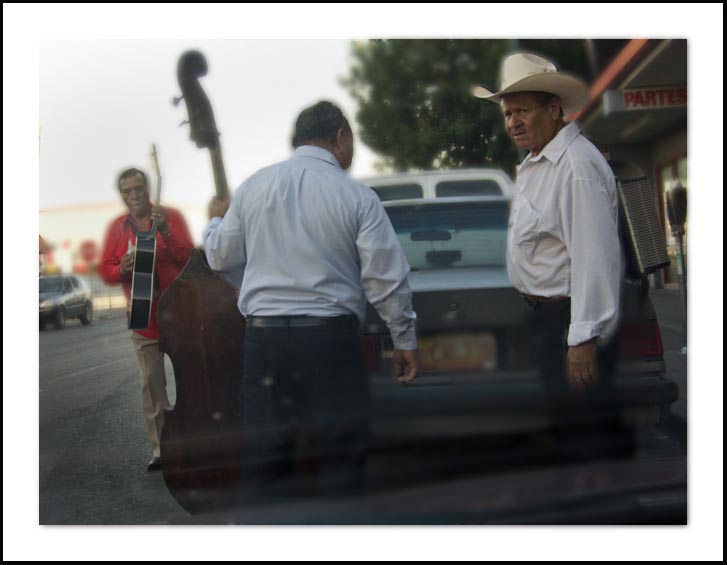
Wary eyes.
Everyone’s wary, in El Paso/Juarez, these days. The border is at war, with itself, with it’s two yin/yang sides, with the Interiors of each of the two sides.
Everyone’s wondering where it’ll end, where they will fall on the have and have not scale, what’ll be left of this little rough Shangri La (not a Shangri La of paradise but a refuge for those who have fallen from paradise. Sort of a suburb of Shangri La).
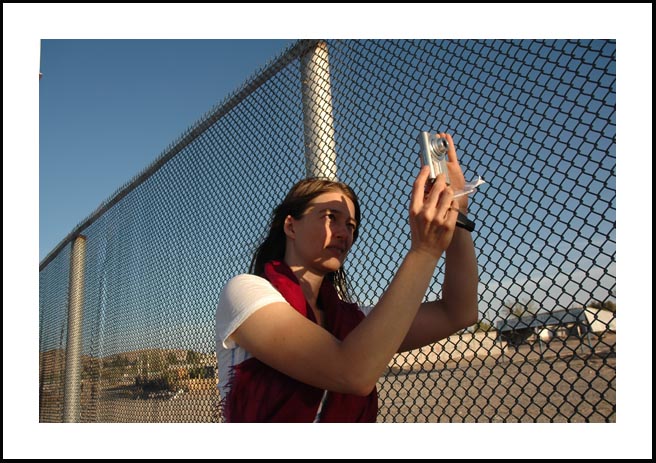
Yesterday I worked with an incredible journalist from Der Spiegel (the German equivalent of Time). She is German, from the north of Germany. Works out of the DC Bureau. Sharp and smart and witty and ironic and puro journalist. We did a story at Fort Bliss. She was bright and lively and brave and charming and funny and we’d had a successful day and did a great story together. She wanted to see “El Paso.”
So we head for the border (I’m a one trick pony. To me, the border is El Paso).