Search results
31 results found.

On The Edge of the Edge – The U.S. – Mexico Border
31 results found.
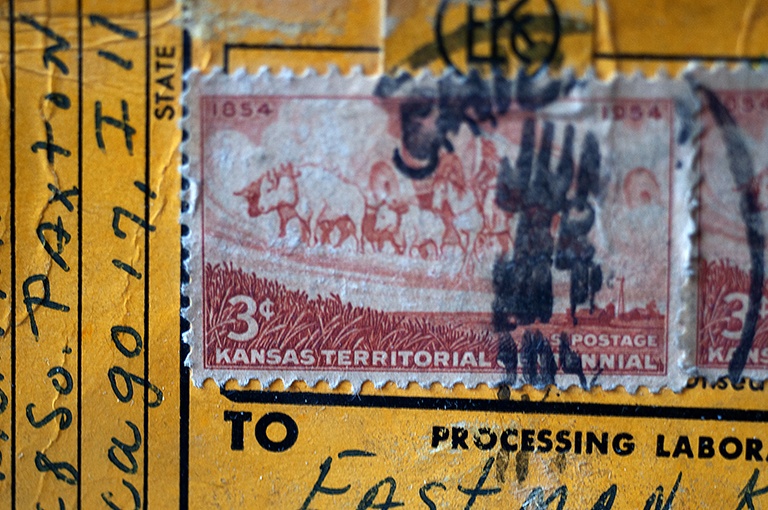
Cancellation #93, Mom’s Kodak film, Chicago, 1950s
I once did an entire series of photographs called “Cancellations.”
It started because one day I was looking at a stack of shipping boxes of my photographs that I had sent to various galleries and museums (pre Internet) that had been summarily rejected. Thanks. No thanks, return to sender. There were a lot of stamps on those heavy boxes. The post office cancellations were ruthless, slashing, colorful. It’s like the post office knew I was unworthy, as well. I half jokingly wondered if the galleries hadn’t done it themselves.
I got lucky here and there, exhibited them for awhile. Dallas. Houston. Cologne, Germany. The art world thought they had found a new star. I knew I was a fraud.
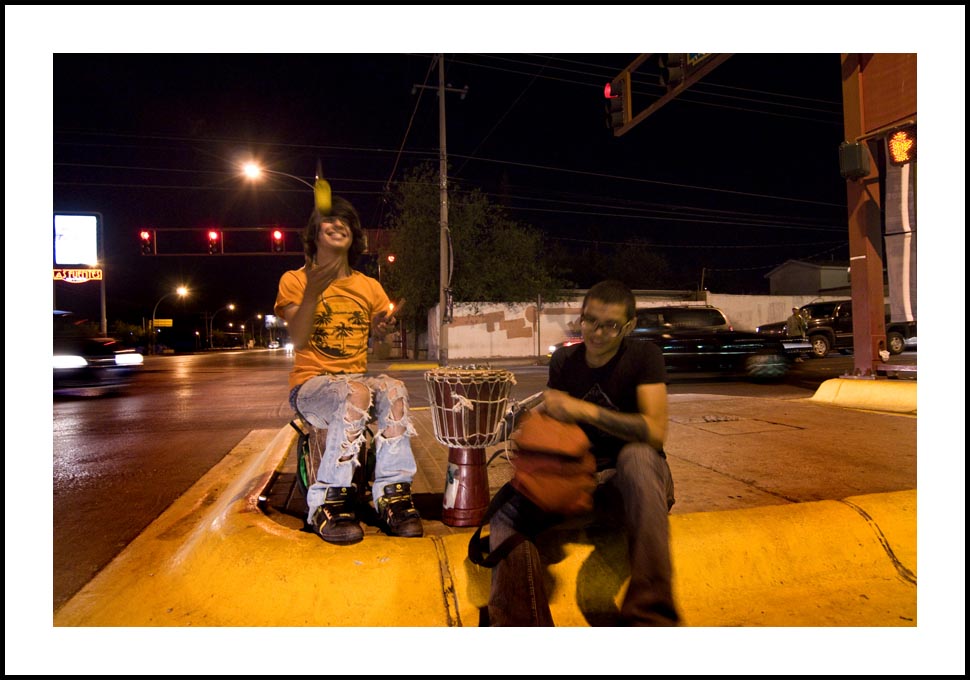
Pictures?
More pictures of dead bodies in the streets of Juárez?
Hard to want to do. I’m not visiting. I live here. It’s better when you have to get the images for your boss/editor and then high-tail it to the airport.
But, I’m not working for a daily paper anymore.
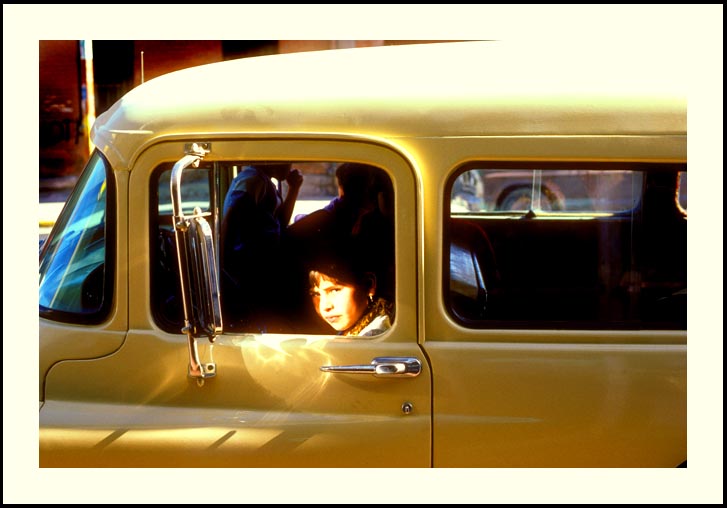
PHOTO OF THE WEEK: May 23-30, 2008
Notes from my Journal, September 1986
I am an illegal alien in a strange land.
That’s a phrase they use a lot in the newspaper here: Illegal Alien.
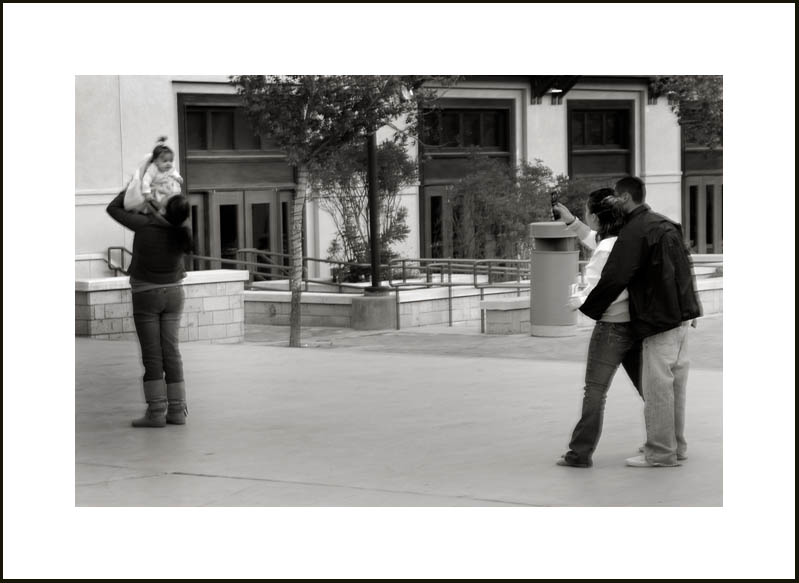
El Paso’s El Centro, the downtown, is packed with people at Christmastime. Unlike most cities of the southwest and of the rest of the United States, El Paso’s downtown is alive and bustling at all times of year, but especially during this season.
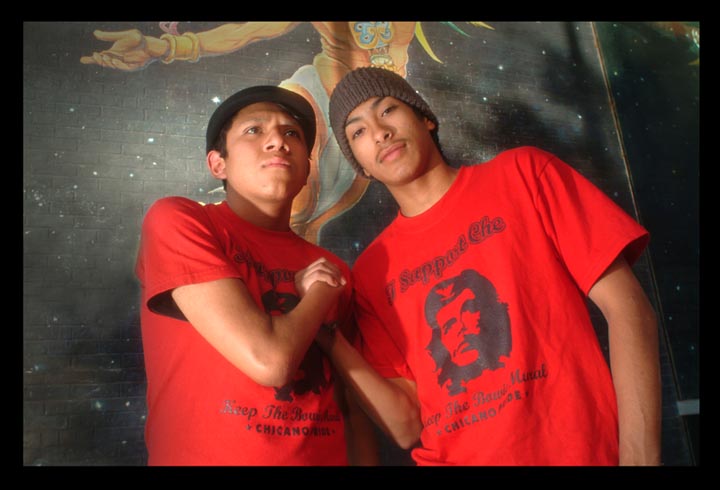
Spring and summer of 2006.
“Revolution,” in the streets. Faux Revolution? Revolt. Spurt of protest? Quien sabe?
Remember? The immigration demonstrations and walk outs?
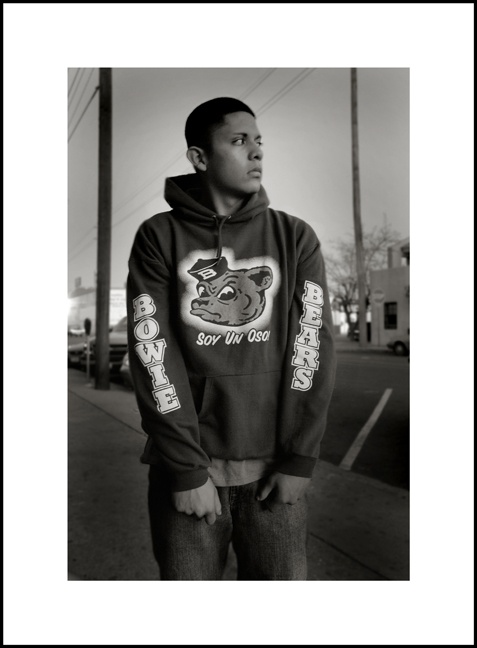
Hugo(last name not given) shows his high school “colors,” on Father Rahm Street on El Paso’s south side. It is twilight and he has been working on a mural at the Sagrado Corazon church’s gym.
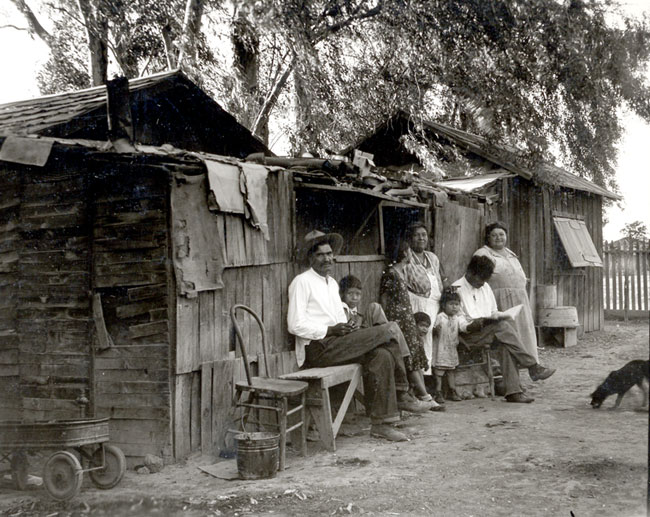
Legislators restarted talks of immigration reform Wednesday with the reintroduction of a bill for a guest-worker program, leading some border farmers to rejoice and some workers’ advocates to worry about potential abuse.
The bill,
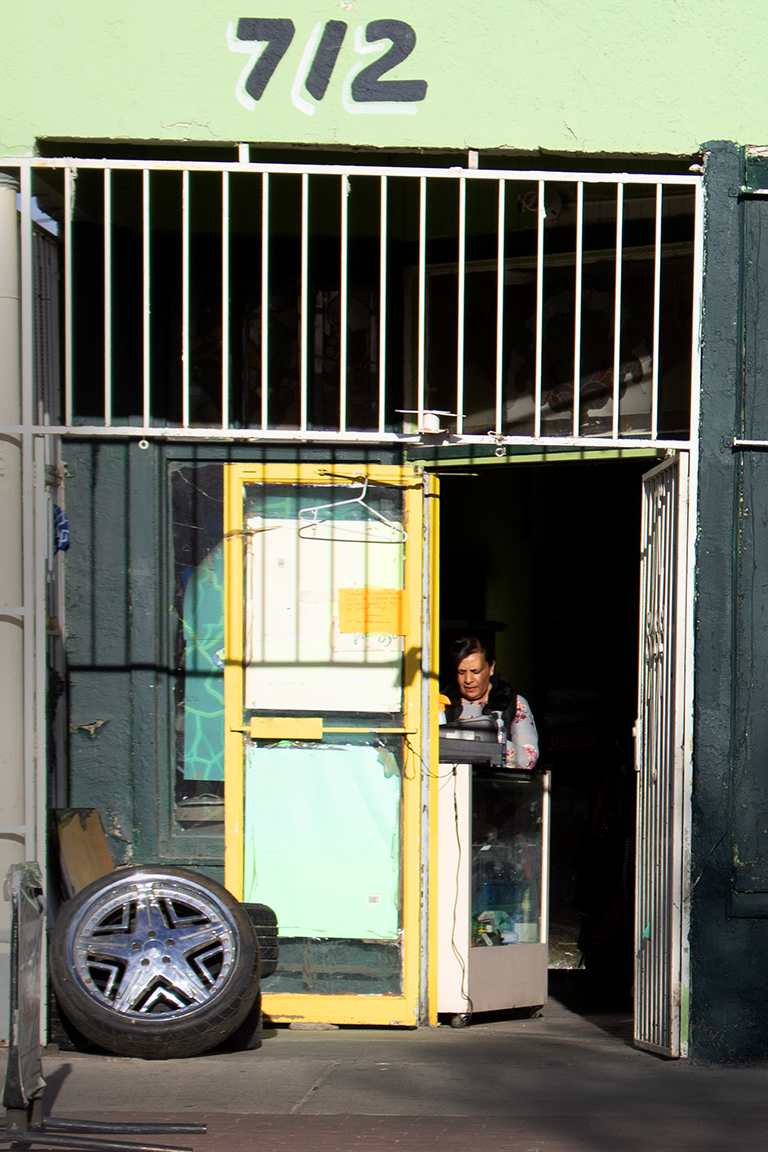
Southside El Paso, February 27, 2024
Text and Photograph by Bruce Berman
Dodged the bullet again. Well, this time there is no ‘explainin’ it so it’s fair to say, a hand deflected the fatal bullet.
Another chance.
Haven’t been doing photography much–for myself–in recent years. Been teaching. 34 semesters and most days in between spent on working at it. Caught up with me. Every word that went out came out of somewhere, somewhere where ghosts dance, that place deep inside where who we are actually lives. I built that up for years. Can one afford to let it go, driveled out in a million repetitions? And, for what? On February 12 a bomb exploded in my chest during my first class of the day. I taught my way through the whole class while The Reaper toyed with me, as God stood by and watched me gamble. Idiot! Why would I think God would intervene for a fool?
It wasn’t my time it turns out. Not now. Not yet. Why? All the right pieces fell together on the timeline, miraculous people showed up, the traffic parted ways for Mary’s defacto EMS Hyundai, and colleague Darren, always quiet, protecting his genius, appeared. Navy man. He all but carried me to the car then went into the building and with the precision of a true leader, with his cellphone, assembled the “troops,” at the nearby hospital, the cardiac team. Mary battled noon traffic. I was in and out, almost gone. We got there and Dr. Miracle, Abdul, his Rock ‘n Roll med team, waiting, like a great band about to play the once in a lifetime anthem; Lights Out.
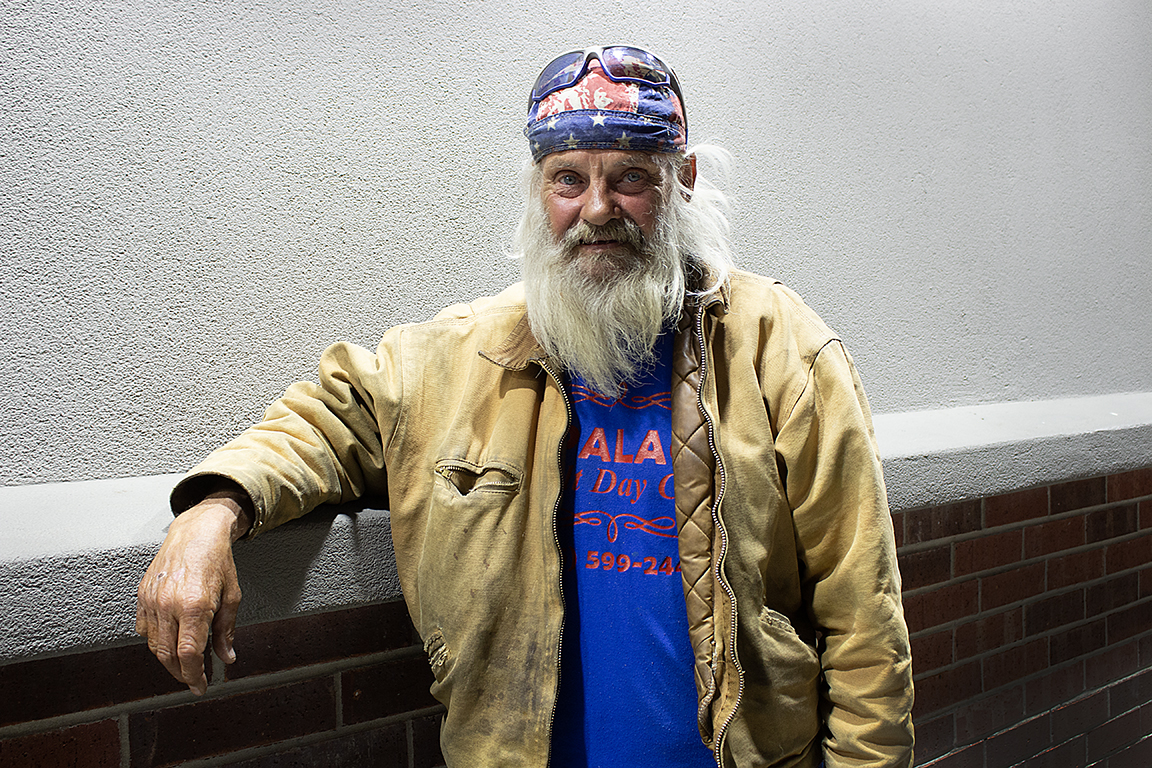
Ghost, Exit Zero, Anthony, Texas, May 18, 2023
Text and Photograph by Bruce Berman
This is the first photograph I’ve taken in a long time that actually means anything to me.
I’ve been a photographer for fifty-five years. So that’s kind of a sad statement, eh?
I’ve been teaching photography at New Mexico State University for the past seventeen years. It takes its toll.
All the energy I ever put into my own work and the work of the work that allowed me to live off of it gradually but inevitably goes into inspiring others to do what I used to do.
Anyone that teaches can tell you there are some great students that make it all worth it. They’ll probably also tell you there are a plethora of others that didn’t treasure the gift you gave. It’s part of “the biz.” You roll with it.
I do think there comes a time, a rubicon, where your own creative desires become endangered. It’s not just the endless repetition about the mechanics, and the history and the nuances of doing photography, it’s also the endless drivel of academia, the business of being in a university, the committees that mean nothing to me personally, seemingly a bubble of detachment from reality, the occasional obscenity of human behavior, acting so massively vicious because, the stakes are so low. Politics are vicious and low. The feeling of irrelevance can be very high.
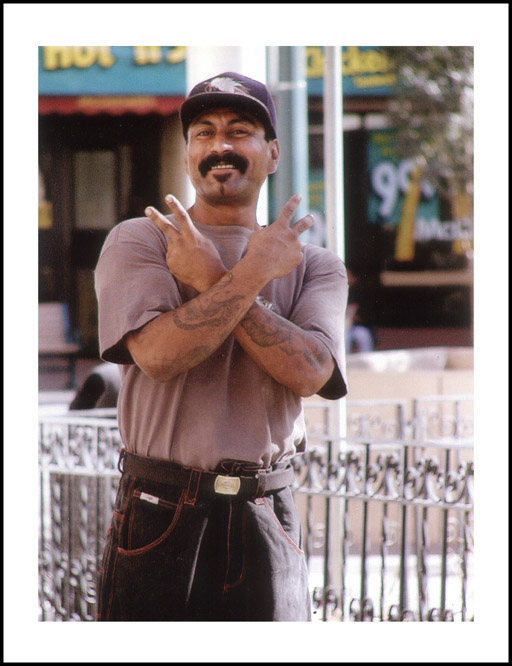
El Paso’s Central Plaza, is officially named San Jacinto Plaza. It is located in the middle of El Paso’s original business district and about 3/4 of a mile from the border with Ciudad Juárez, Mexico. In recent times its unofficially been called Plaza de los Lagartos which refers to the old pool in the middle of the plaza that used to be the home of alligators (lagartos in español) which no longer existed after the early 1970s. The alligators were later commemorated, in 2006, by a fiberglass sculpture of alligators by native son and internationally renowned artist, Luis Jimenez.
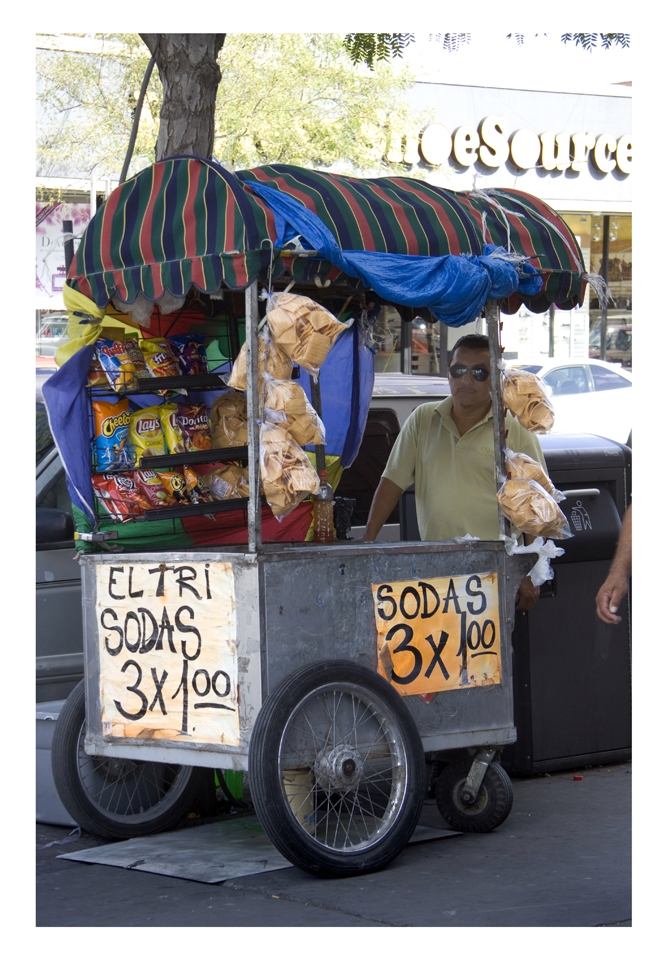
Commentary by Border Blog Editor
El Paso Street in El Paso. It’s the first block of America. Or the last block of America. It depends on which direction you’re headed.
Going north it’s the first. Going south, it’s the last, the next block is Mexico.
This is a street of life, bulging with people, an array of goods from school and household supplies to clothes to audio stuff to high heels to T-shirts with everything from Revolutionaries to cartoons on them. It’s juicy, alive and has texture and odor.
It’s 3D street.
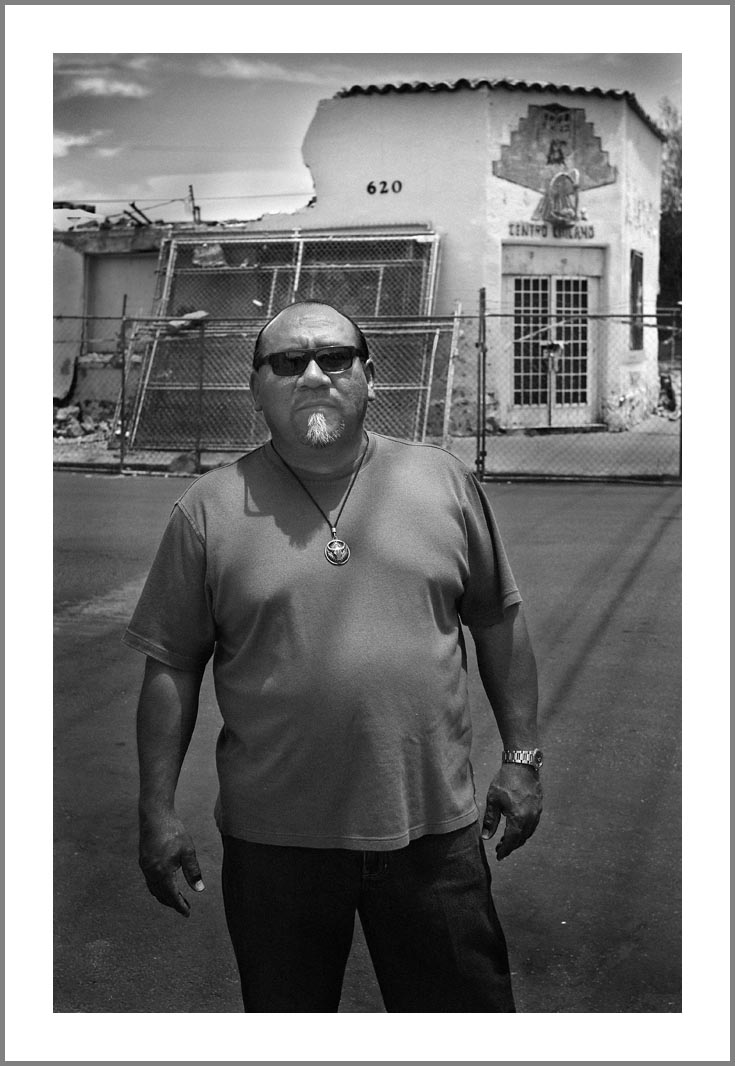
Centro Chicano gone. Rosas’ place gone (goodbye early 19th century, hello Denver to El Paso bus station). Flea market gone (it was so, “messy”). Museo Urbano, barely here and now gone. Koreans on S Street seem to be throwing in the towel, going. Can’t sell to Juarenses that aren’t there. The bi-national plan rising like a phoenix, unchanged and in better shape than it was (thank you Cartel War).
I know where “El Paso,” is right now. Bright New World. Shiny. All’s they need is a theme park and it’s on its way.
But Chicano El Paso, the turf south of Paisano, south side, El Segundo?
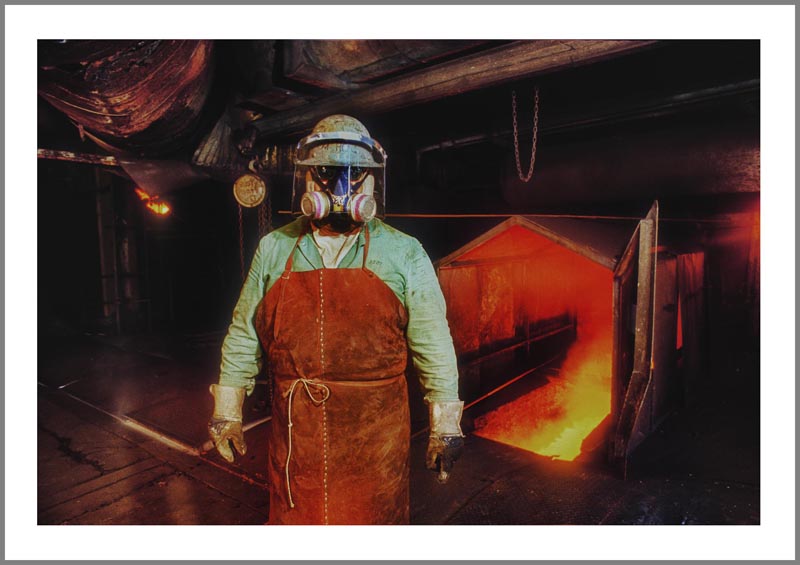
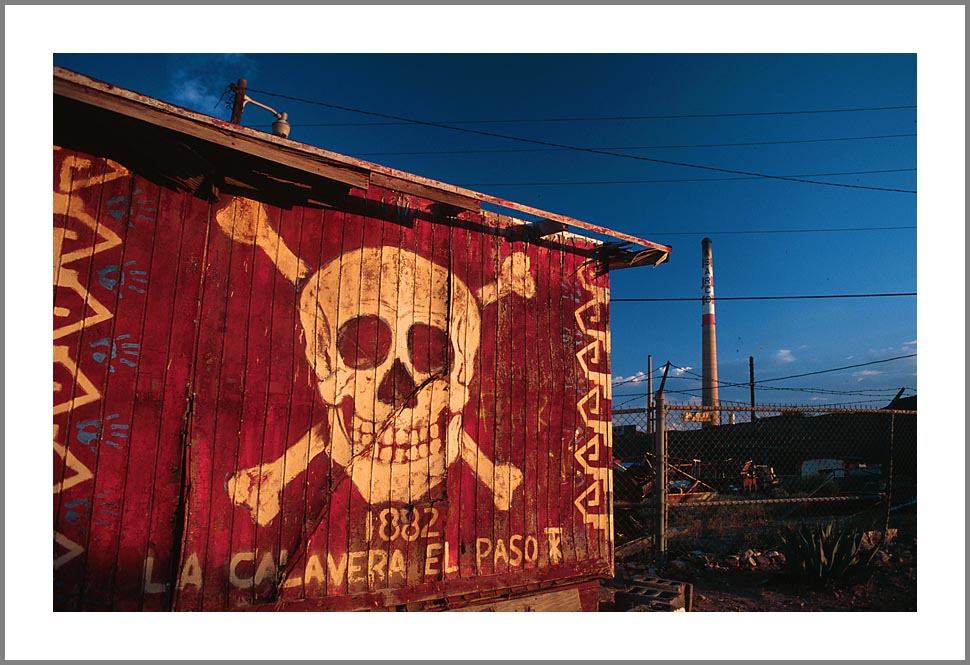
A Dear John Letter to ASARCO
by Bruce Berman
Au revoir ASARCO. You were the spine of the border, a big giant dong sticking up out of the river, pouring flames and sulfur, lead and smoke. The town grew up around you, fed off of you, then outlived you. You looked down on battles and traffic, always with the bifocals of looking at two countries at once. Looking east to El Paso, you looked down on the dusty foothills of the Franklins that became Kern Place and Mesa Hills, the sheik and elite (in its own mind). On the other, looking west, down into the dust and turbulence of Juarez, you looked down onto Colonia Felipe Angeles, which, too was foothills, that became a shanty town which became a barrio which became (shhhh..not quite yet) a path to a port of entry into New Mexico. What a vantage point you have had. When I first saw you I stood up straight, saluted and said, Wow, yes sir!
I dug you from the gitgo, had the pleasure of working inside you, being constantly re-awakened by you, of working inside you near those flames with the weather outside 105 degrees, feeling the comradie of your workers, the satisfaction of being inside something that wild and crazy and productive, a caldron of energy and raw power.
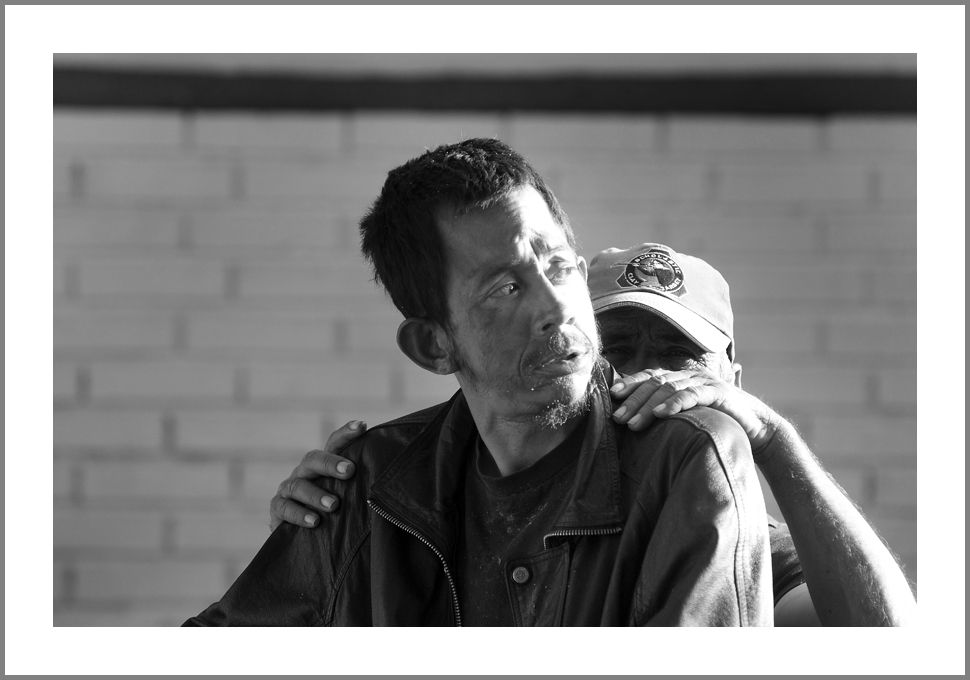
Christmas Eve/El Paso
A Personal Narrative
Lost and abandoned. Christmas Eve reminds me of that, right now, as I look out my south-facing window to Juarez (three blocks away) across the valley of Juarez, to the foothills of the Sierra Madre, where Creamac sits, CREAMAC, the “mental Institution” there, where the people huddle, people with trouble, trying to be warm, trying to make sense of the world, trying to live. CREAMAC, the House of the Abandoned and Troubled and Hurt.
I should be there. Today. Often. More often. I struggle with that. It’s snowing outside. Excuses to stay home, safe, just wrestling my own demons. I should cross the bridge (would my car get back over the ice on the bridge later tonight?), I should do SOMETHING!
Do I?
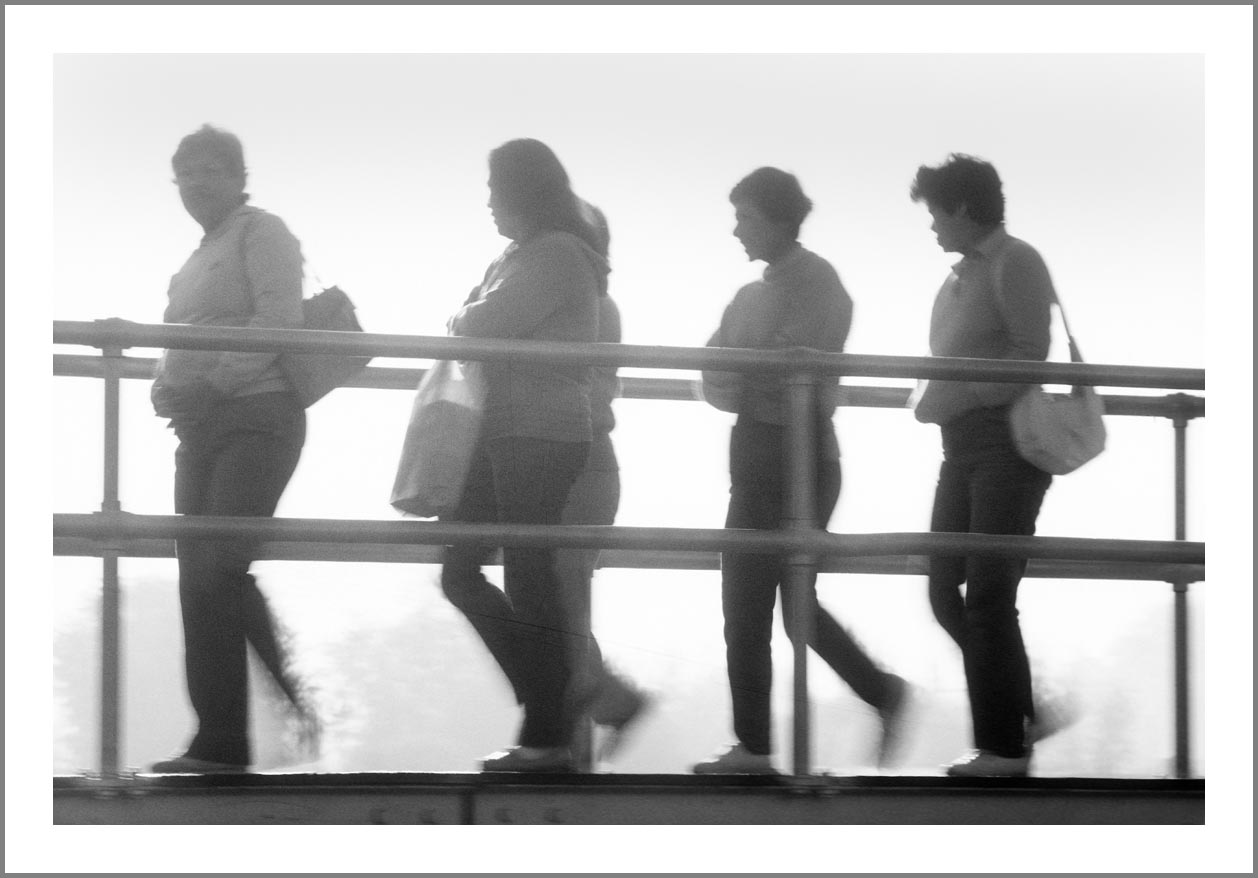
The river with two names: Rio Grande/Rio Bravo del Norte. Depends where you begin and where you end and where you return to. These women are heading north. It was a long time ago. Everything has changed and nothing has changed and I suspect it will continue to change and not change forever.
The river with two names, the R2, is also the place of the personality with two halves.
Confusing, no?
It is the place of bifurcation. But even that has two sides: twice as much insight.
Where are these women now? Which side happened to them? What happened to me? What happened to Juárez and the U.S.?
What happened to me?
I know this: people will cross going north no matter what and no matter the year. People will cross less, going south, depending on the year.
The river will flow south from Colorado (a Spanish name) to the Gulf of Mexico (an English language name).
And none of it matters to anyone living here except that one government makes it hard for another people to do what they have done for thousands of years and another government makes it necessary.
Who’s confused and who’s doing the confusing?
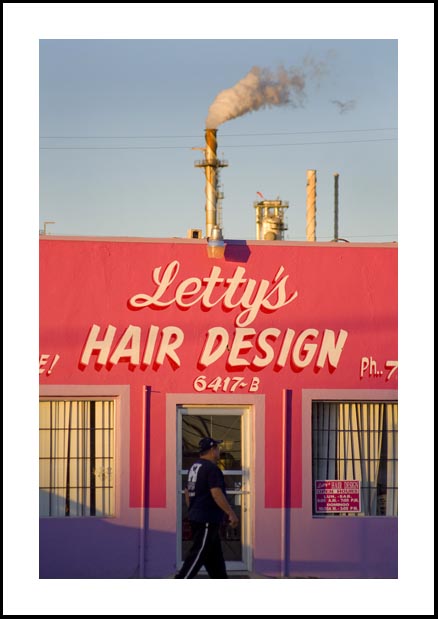
This street is changing. New Medical School and renewed Medical Center just down the block. Oh yeah they have the Grand Plan.
But the south side has its own Plan and the hot paint keeps coming!
Yeah man, this street is the Grand Plan dealing with the No Plan, the natural plan, the reality plan of the people who hang here, hanging onto the funk, south side people.
Like me.
Like Letty.
Been on this street for a long time.
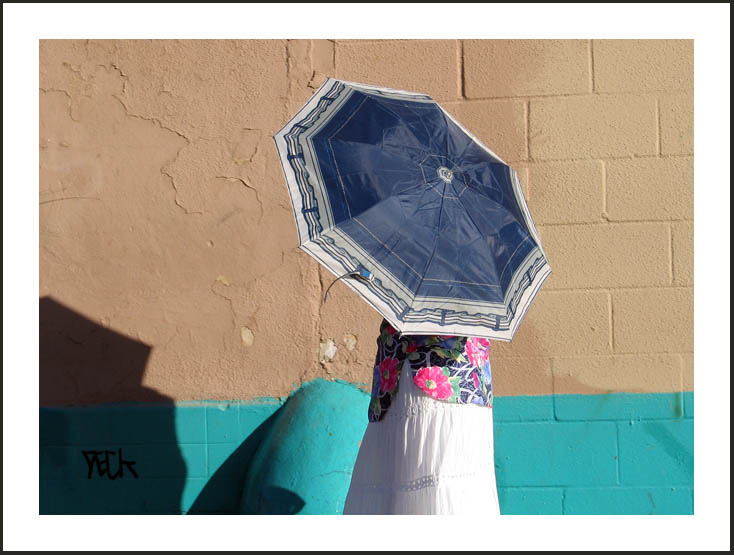
Summer is here on the border. Hot. You know it’s summer when the umbrellas are out. Of course what’s in this image is not very “sopisticated.” Who walks in the Brave New World, anyway?
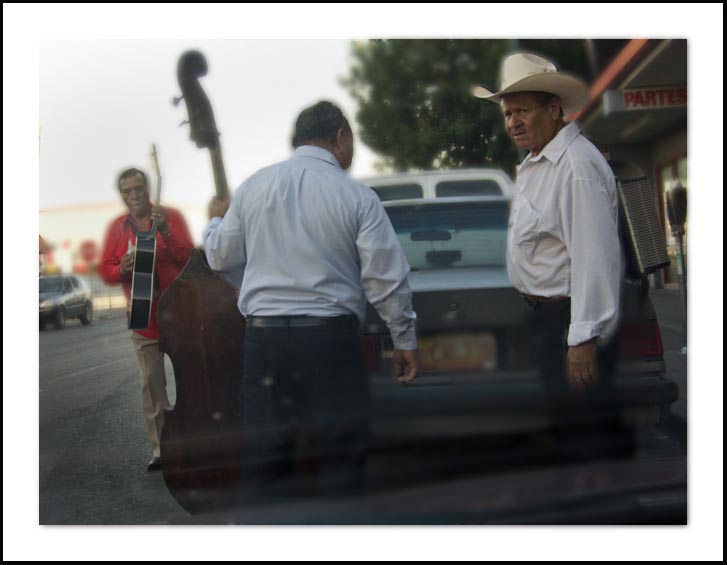
Wary eyes.
Everyone’s wary, in El Paso/Juarez, these days. The border is at war, with itself, with it’s two yin/yang sides, with the Interiors of each of the two sides.
Everyone’s wondering where it’ll end, where they will fall on the have and have not scale, what’ll be left of this little rough Shangri La (not a Shangri La of paradise but a refuge for those who have fallen from paradise. Sort of a suburb of Shangri La).
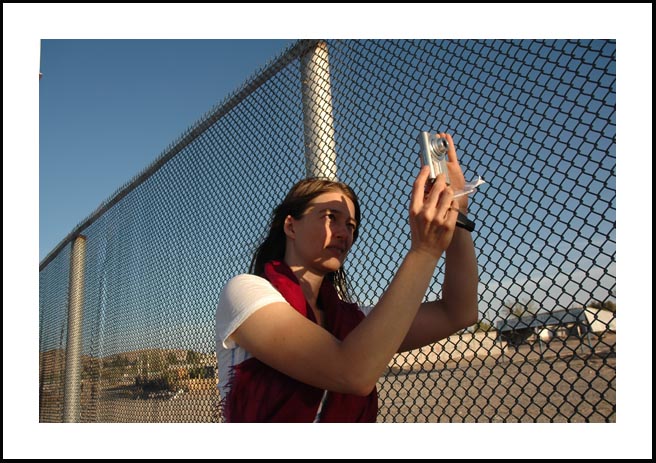
Yesterday I worked with an incredible journalist from Der Spiegel (the German equivalent of Time). She is German, from the north of Germany. Works out of the DC Bureau. Sharp and smart and witty and ironic and puro journalist. We did a story at Fort Bliss. She was bright and lively and brave and charming and funny and we’d had a successful day and did a great story together. She wanted to see “El Paso.”
So we head for the border (I’m a one trick pony. To me, the border is El Paso).
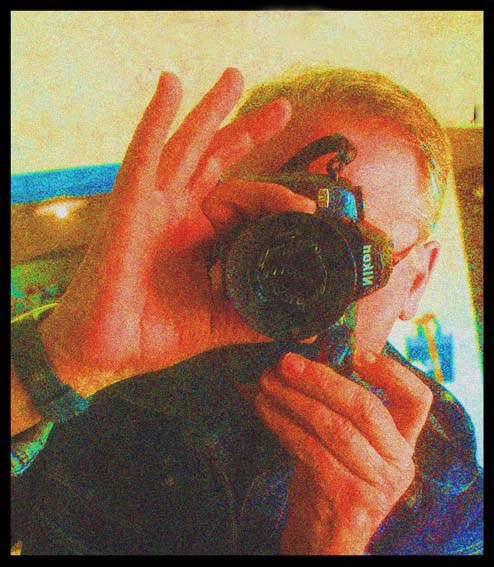
About Bruce Berman
Bruce Berman has been a professional photographer for over four decades. He works in what some have called, “The Concerned Photographer,” style of photography, but brings a poets vibe to his images. His initial documentary projects were in Chicago where he photographed Appalachian migrants to the big city, Black Panthers during the tumultuous 1960’s and the gritty street life of Chicago in its Rust Belt years.
His main work for the past forty years has concentrated on the United States/Mexico border, particularly the narrow stretch of land that encompasses El Paso, Texas and Juarez, Mexico. He also “plows” the southern New Mexico landscape, its people and the vast mysterious lands of West Texas.
After coming back from one of his earliest forays on Alameda Street on El Paso’ south side, in 1980, Berman wrote in his journal, “…I have seen a new world. It is both physical fact and mythical idea. It is a place with a line drawn through it and on each side of that line there are metaphoric mirrors that are reflecting back at each other, perhaps distorting each other, perhaps magnifying each other. It is the US/Mexican border. I will make my stand here. I will try to ‘give face,’ to this place so others can know it, perhaps, even, so those who live in it will know it more deeply.”
The aggregate result of that effort resides in two main bodies of work: The Border Project: 1985-2007, and Juárez: Cartel War Years (2007-2011) .
Additionally -concurrently- he is a chronicler of the disappearing lands beyond cities. He calls this series The Funklands, and notes, “Nothing is just laying around anymore. It’s scooped up, trucked away, rebuilt and becomes a mega buck treasure. My treasure has been the texture of the land and the stuff laying around that attests to who was on that land before… well.. before the homogenization of America.”
Berman lives and works deep in the borderlands of El Paso and Juárez, three blocks from the international bridge that connects Juarez and El Paso, surrounded by and isolated in the the vast lands of West Texas and northern Chihuahua. He refers to this as the “City-State of No Man’s Land.”
Berman continues to cover his “beat,” for major publications throughout the world and for his own book publishing enterprise. The Border Blog Press. His recent book, Walking Juárez is a compilation of photographs and stories covering the years 1975-2018.
Since 2008, Berman has added “Professor” to his name. He now teaches photojournalism at New Mexico State University (NMSU), 50 miles north of the El Paso/ Juárez ports of entry, in Las Cruces, NM. His teaching concentration is on Documentary Photojournalism and multimedia reporting. He still does occasional assignments and personal documentary work but spends equal time “Passing the torch,” he says.
Lately Berman has concentrated on doing books: Walking Juárez, 2017, Cutting the wire, 2019 and his newest, BACKLAND, 2022.
Many of his students don’t know about the border too much, but for the most part are of it. The G Generation, he says, “… are the hope of photojournalism, and maybe the world.”
He thinks working with them is his best project ever.
About the Website
The Border Blog covers the news, opinions and culture of the 2000 mile border of Mexico and the United States, concentrating on the epicenter of El Paso and Juarez. The Border Blog is not meant to be a news source as much as it is meant to be a news “feel.”
Another “border,” of interest to Berman is less obvious, the border between The Grid (his descriptor) and and those on the margins, unwilling or unable to keep up with “development,” and “progress.”
The site is a collaborative project. Besides Bruce Berman, who acts as editor and photographer and sometimes writer, the staff includes writer and painter, Juarez native and resident, Nathan Zarate, and, Beatriz Andino Zamora, a poet and writer from Zacatecas, Mexico. Zarate and Zamora post occasional articles concerning the politics and history of Mexico, in general and La Frontera, in particular. The site is always appreciative of the creative inspiration, brilliant chutzpah and deep goodwill -as well as extensive Web skills- of Manuel Rivera, a fronterizo “to the bone.”
Contributions to the site are welcome. Diverse viewpoints will be cherished. The site’s point of view and orientation will be no mystery to its readers, however, there will always be plenty of room and appreciation for other voices as long as they are informed, well articulated and sincere and fueled by passion tempered by reason.
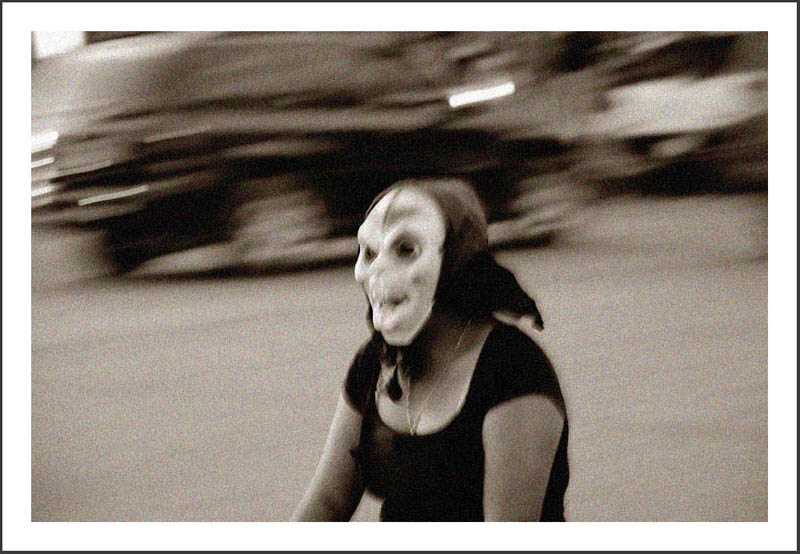
First block of America (FBA).
El Paso Street. La Frontera. I’d call it Texas but it ain’t. Everyone knows it if they’re from here. Texans hold their arms out, full length. Americans think it’s part of Mexico…or hell. New Mexicans…furgidaboutit! It’s all they have to really feel superior to.
El Paso, the nation-state of nowhere.
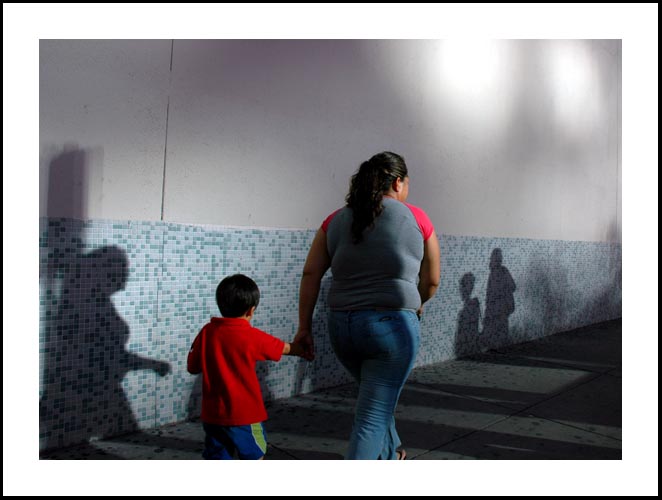
I am supposed to be packing right now. I have a job in another city. It starts in three weeks. I won’t be leaving. This corner, this light, these people, their shadows, have inveighed my life for an adulthood…a long time.
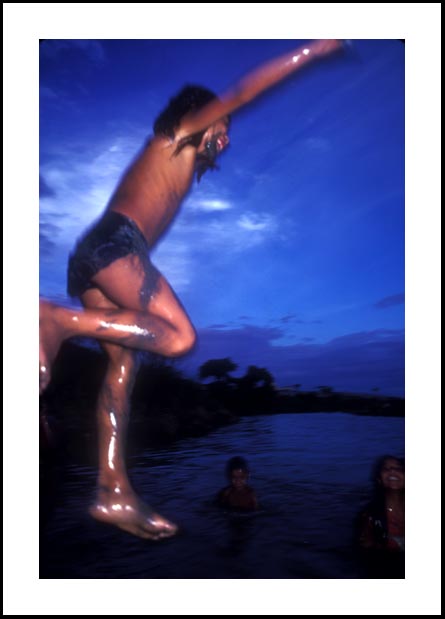
Leap into the river with two names
Leap Day in the Leap Year 2008. Let’s all take a leap. Come on…why not!
This boy and his friends use the river with two names as a playground, a swimming pool, a back yard.
Why not.
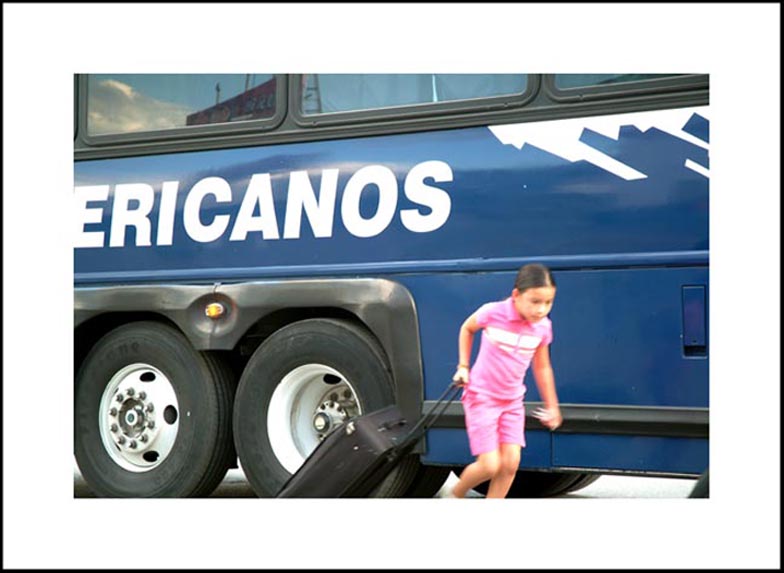
Sixth and El Paso Street is the first street in “America,” after crossing over the Paso del Norte Bridge from Juarez, Chihuahua, Mexico into El Paso, Texas. This is the crossroads.
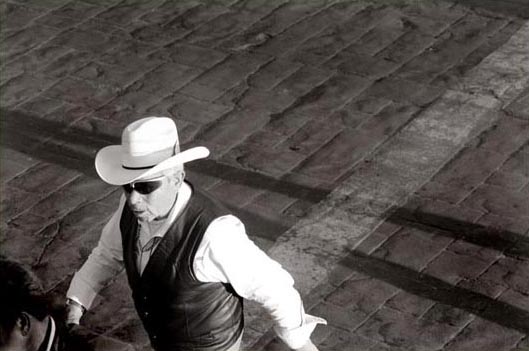
Cool Norteno, Plaza de Juarez – Juarez, Mexico / June 2007
The Plaza de Juarez in Juarez, Mexico is an ancient crossroads. The plaza stands in front of the Mision de Guadalupe, a church established in 1659 along the El Camino Real. The plaza today is still a crossroads and a transportation hub and, on Sundays, is vibrant, eclectic and fully the heart of the old Centro Juarez. Much of the area north of the Centro, the Plaza, and the Mision, the area between the old Juarez commercial district stretching north all the way to the U.S. border and El Paso, is currently, being demolished. The demolition is clearing the way for a commercial development that is projected to link up with El Paso’s south side and Downtown, also scheduled for demolition, just across the river to the north.
The transportation hub that has made the Plaza de Juarez the intense and interesting center of Juarez that it is, is scheduled to be relocated away from its current location.
The “Cool Norteno,” garbed in standard norteno clothes, and others, may or may not survive the “development.”
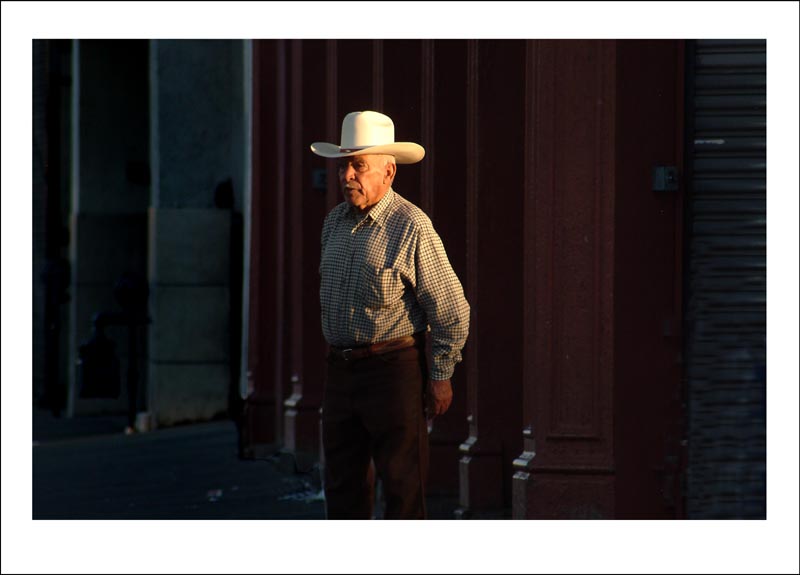
A man stands in the last light of the day at the corner of 6th and El Paso Street in El Paso, Texas. This is the first street of the United States after entering the U.S. from Mexico from the Paso Del Norte International Bridge. The bridge links Ciudad Juarez with El Paso and 6th and El Paso streets could be considered the crossroads of the northern part of the Western Hemisphere from south to north.
A lot of old folks (viejos) grew up in this barrio and are still there. They are the dignity of the barrio.
Imagine how people felt when a picture of an old viejo was used, by City planners, to show what was wrong with El Paso?
Los Viejos are what’s right with El Segundo.
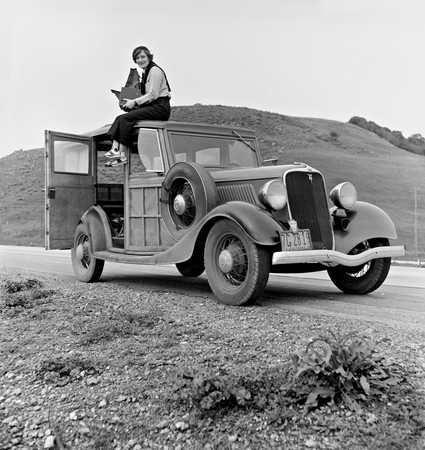
Photograph of Dorothea Lange,
Resettlement Administration photographer,
in California, c. 1936
The car is a 1933 Ford Model B (AKA “V8”).
She is -as well as Russell Lee and the other FSA photographers- the spiritual “Godmother,” of this site.
_______________________________
This is a picture of Dorothea Lange, at work. She was one of my earliest influences (the other was Weegee).
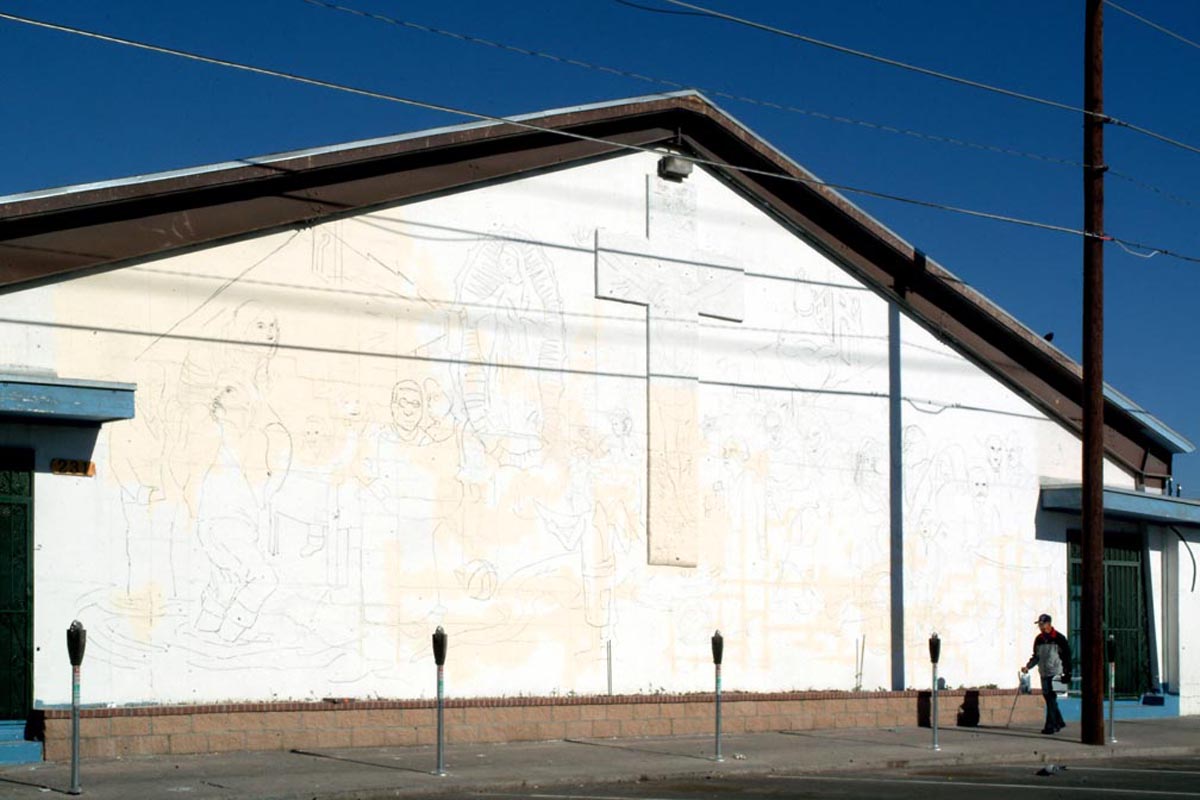
Day 2 / Christmas Eve eve
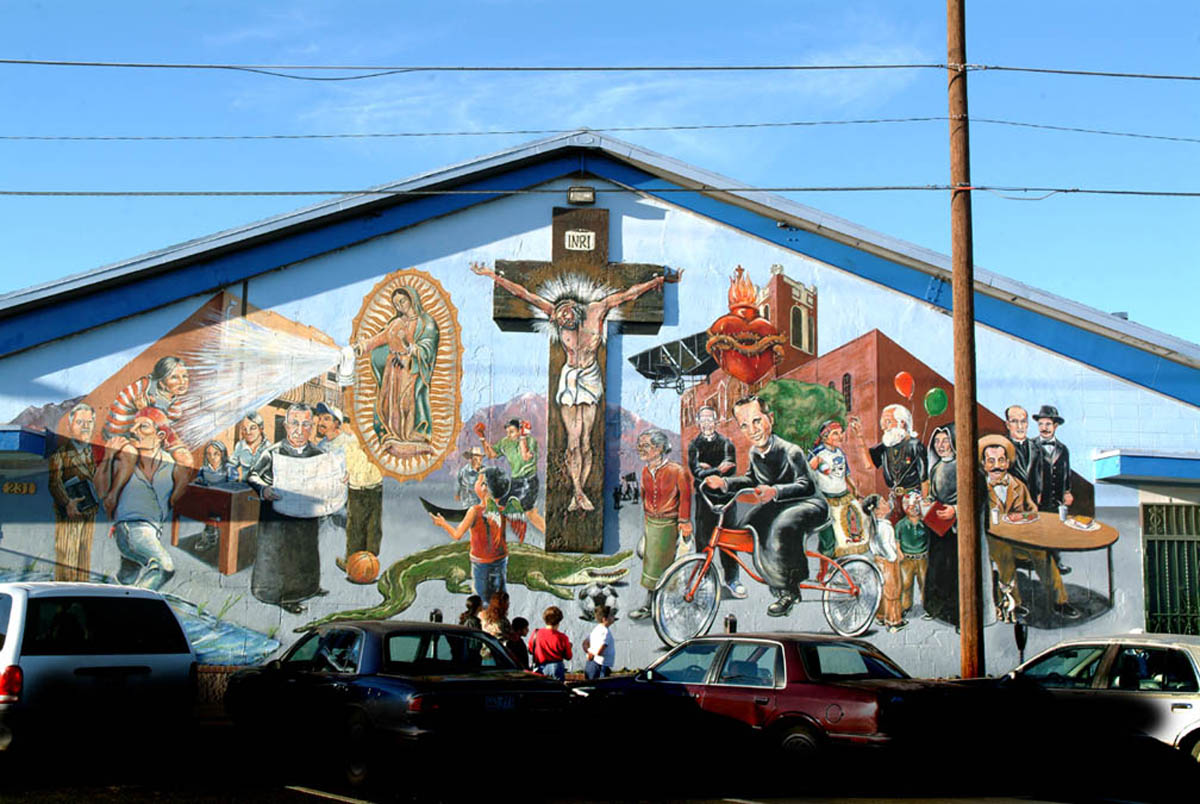
Day 44 / Finished
by Nathan Zarate
photograph by Jaime Ojo
Artist Francisco Delgado, his brother Oswaldo, his friend, artist Mauricio Olaque and a large helping hand from Bowie High School students and neighborhood residents began the Sagrado Corazon Mural on the night of Christmas Eve eve, 2006.
The mural, with support from Sagrado Corazon, local businessmen, concerned residents and ex-residents of the Segundo Barrio,
photo by Jaime Ojo
Artist Francisco Delgado with the assistance of Artist Mauricio Olague and numerous south side student volunteers have, once again, affirmed that El Segundo Barrio is the coolest neighborhood in El Paso.
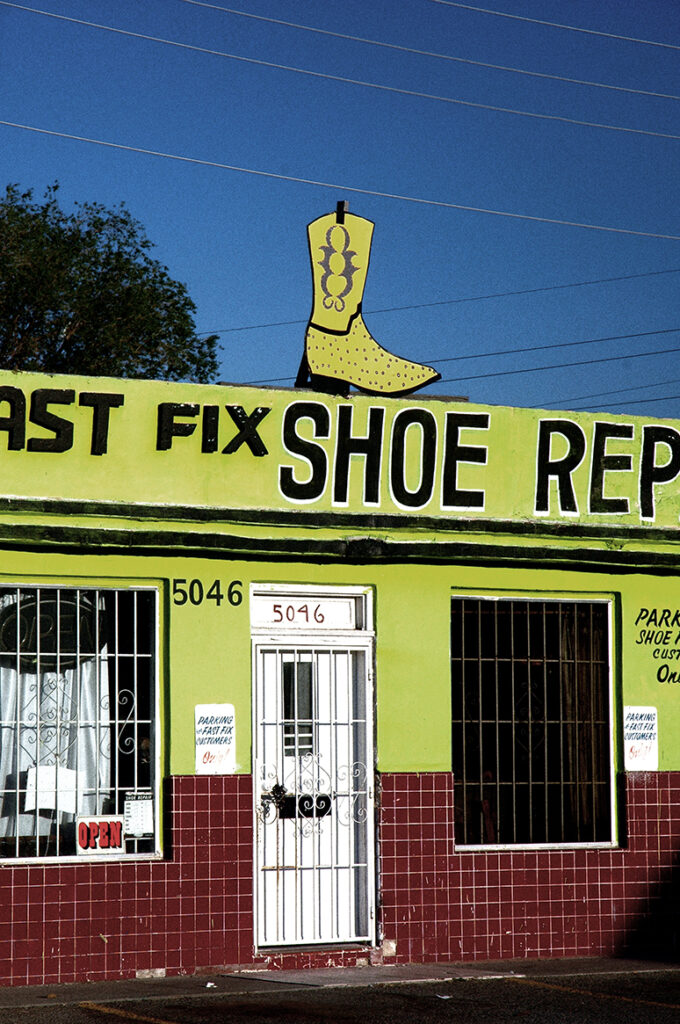
Boot/Shoe, El Paso, Texas, Highway 60/182 (Alameda Street), 2006
Text and Photography by Bruce Berman
Mexican presidential candidate Andres Manuel Lopez Obrador has called for a ballot-by-ballot review of Sunday’s presidential vote. He says the stability of the country is at stake. Mexico’s Federal Electoral Institute Wednesday began reviewing the totals from polling stations to determine whether Obrador’s rival, Felipe Calderon, really won the election Sunday. A preliminary count showed him ahead by only one percentage point. Both candidates declared victory Sunday night.
