Search results
255 results found.

On The Edge of the Edge – The U.S. – Mexico Border
255 results found.
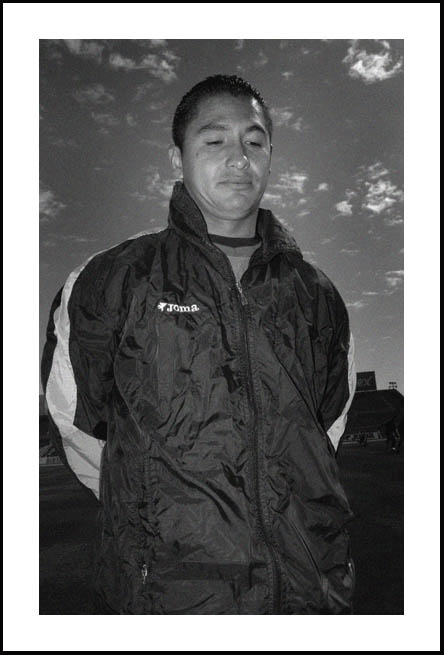
The Juarez Indios are a professional futbol team(soccer). They are in the middle of the Cartel Drug War. Much of the city of Juarez has rallied around the Indios, finding some “normalacy,” in the middle of the troubled Juarez violencia. Julio Daniel “Maleno” Frias is a star of the team, a “striker,” a troubled city’s hero. The city loves him, he’s a hero in the middle of bad news caused by rats. When “Maleno,” was younger he joined a gang. He got shot. He decided to change his life and he did. Maybe this is why the city fell in love with him, he’s a living metaphor for a city’s hopes. Maybe they just like the way he plays: smooth, quiet and intense.
Some players have left the team and others have sent their families back to the cities they came from (some in Mexico, one in Argentina), trying to avoid the touch of violence that has afflicted Juarez, Mexico’s third largest city.
The team is struggling to stay in the top tier of Mexico’s professional soccer league.
Attendance is sold out.
Futbol is trumping the war.
So far.
Life goes on.
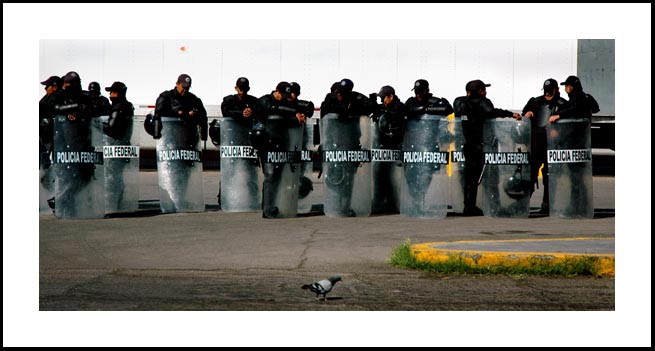
You start to wonder if it’ll ever end but it will end.
La violencia. The violence.
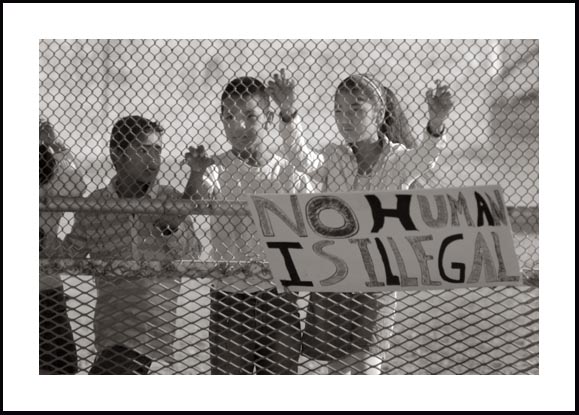
The border fence is a stinkin’ dirty bad joke.
Do these kids look like terrorists or narcotraficantes or, even, the dreaded low wage worker that every American company has winked at, invited, used and exploited for decades?
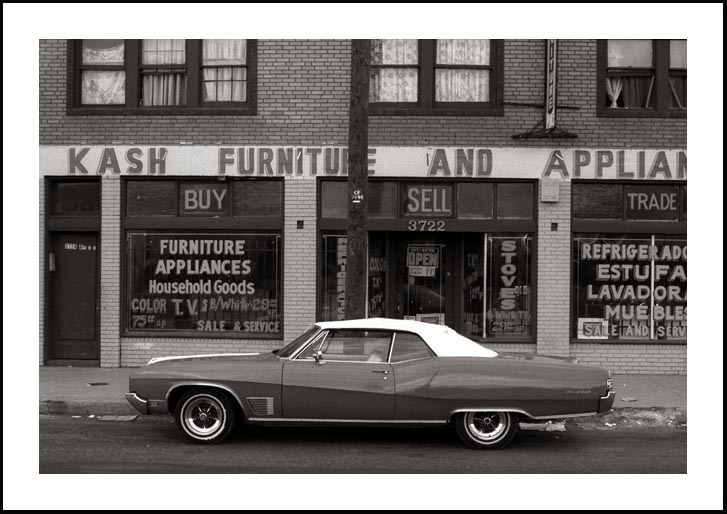
Alameda Street is about (what’s this “about,” stuff?) to get stomped. Progress. New Hospital and Medical School down the Street. Progress.
‘ta bien, really. Time to move on. One thing about Urban Renewal and Plans: we have had the best of it and now you can have the rest. The next “blight,” that I move to -older and wiser now- there will be no Forwarding Address.
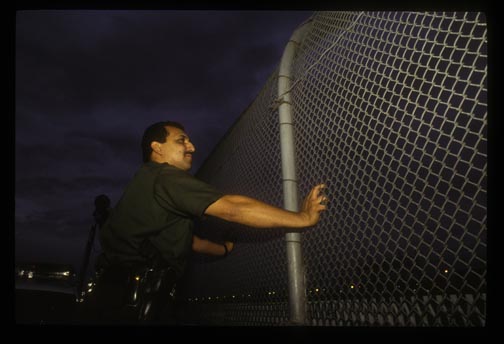
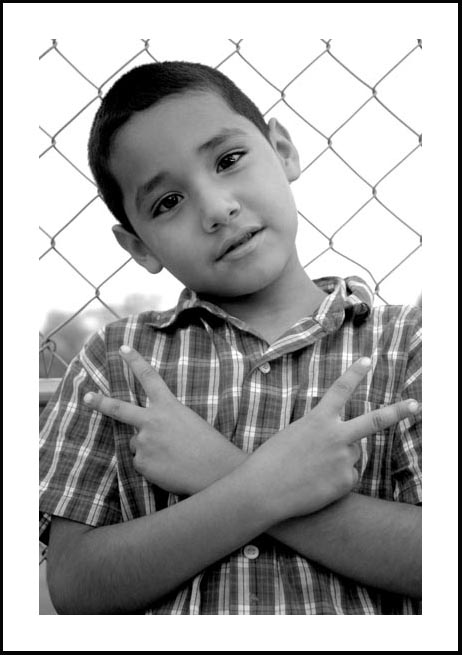
Jesus is greeting me. Or showing off his gang signage. Or just jivin’. Behind him, three blocks to the south, is Juarez. Armijo Park, deep in the Segundo barrio of El Paso is Jesus’ refuge.
Mine too.
About Bruce Berman
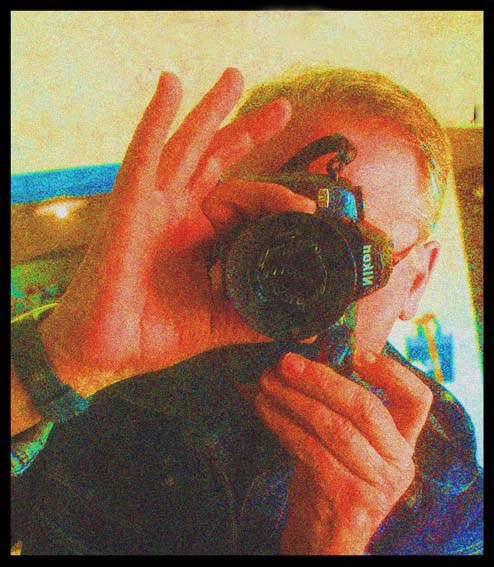
Bruce Berman has been a professional photographer for over four decades. He works in what some have called, “The Concerned Photographer,” style of photography, but brings a poets vibe to his images. His initial documentary projects were in Chicago where he photographed Appalachian migrants to the big city, Black Panthers during the tumultuous 1960’s and the gritty street life of Chicago in its Rust Belt years.
His main work for the past forty years has concentrated on the United States/Mexico border, particularly the narrow stretch of land that encompasses El Paso, Texas and Juarez, Mexico. He also “plows” the southern New Mexico landscape, its people and the vast mysterious lands of West Texas.
After coming back from one of his earliest forays on Alameda Street on El Paso’ south side, in 1980, Berman wrote in his journal, “…I have seen a new world. It is both physical fact and mythical idea. It is a place with a line drawn through it and on each side of that line there are metaphoric mirrors that are reflecting back at each other, perhaps distorting each other, perhaps magnifying each other. It is the US/Mexican border. I will make my stand here. I will try to ‘give face,’ to this place so others can know it, perhaps, even, so those who live in it will know it more deeply.”
The aggregate result of that effort resides in two main bodies of work: The Border Project: 1985-2007, and Juárez: Cartel War Years (2007-2011) .
Additionally -concurrently- he is a chronicler of the disappearing lands beyond cities. He calls this series The Funklands, and notes, “Nothing is just laying around anymore. It’s scooped up, trucked away, rebuilt and becomes a mega buck treasure. My treasure has been the texture of the land and the stuff laying around that attests to who was on that land before… well.. before the homogenization of America.”
Berman lives and works deep in the borderlands of El Paso and Juárez, three blocks from the international bridge that connects Juarez and El Paso, surrounded by and isolated in the the vast lands of West Texas and northern Chihuahua. He refers to this as the “City-State of No Man’s Land.”
Berman continues to cover his “beat,” for major publications throughout the world and for his own book publishing enterprise. The Border Blog Press. His recent book, Walking Juárez is a compilation of photographs and stories covering the years 1975-2018.
Since 2008, Berman has added “Professor” to his name. He now teaches photojournalism at New Mexico State University (NMSU), 50 miles north of the El Paso/ Juárez ports of entry, in Las Cruces, NM. His teaching concentration is on Documentary Photojournalism and multimedia reporting. He still does occasional assignments and personal documentary work but spends equal time “Passing the torch,” he says.
Lately Berman has concentrated on doing books: Walking Juárez, 2017, Cutting the wire, 2019 and his newest, BACKLAND, 2022.
Many of his students don’t know about the border too much, but for the most part are of it. The G Generation, he says, “… are the hope of photojournalism, and maybe the world.”
He thinks working with them is his best project ever.
About the Website
The Border Blog covers the news, opinions and culture of the 2000 mile border of Mexico and the United States, concentrating on the epicenter of El Paso and Juarez. The Border Blog is not meant to be a news source as much as it is meant to be a news “feel.”
Another “border,” of interest to Berman is less obvious, the border between The Grid (his descriptor) and and those on the margins, unwilling or unable to keep up with “development,” and “progress.”
The site is a collaborative project. Besides Bruce Berman, who acts as editor and photographer and sometimes writer, the staff includes writer and painter, Juarez native and resident, Nathan Zarate, and, Beatriz Andino Zamora, a poet and writer from Zacatecas, Mexico. Zarate and Zamora post occasional articles concerning the politics and history of Mexico, in general and La Frontera, in particular. The site is always appreciative of the creative inspiration, brilliant chutzpah and deep goodwill -as well as extensive Web skills- of Manuel Rivera, a fronterizo “to the bone.”
Contributions to the site are welcome. Diverse viewpoints will be cherished. The site’s point of view and orientation will be no mystery to its readers, however, there will always be plenty of room and appreciation for other voices as long as they are informed, well articulated and sincere and fueled by passion tempered by reason.
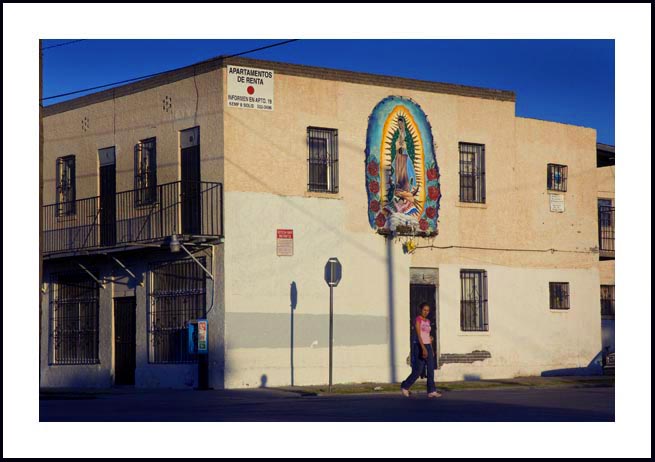
El barrio is a community. Bruised. Not what it was. Sitting on the border and prime target of speculators, er…ah…read that as “Developers,” but still standing. Go back and ask anyone in any American city, for the past 60 years if “Urban Renewal,” was about construction or destruction. If you actually need to, go ahead.
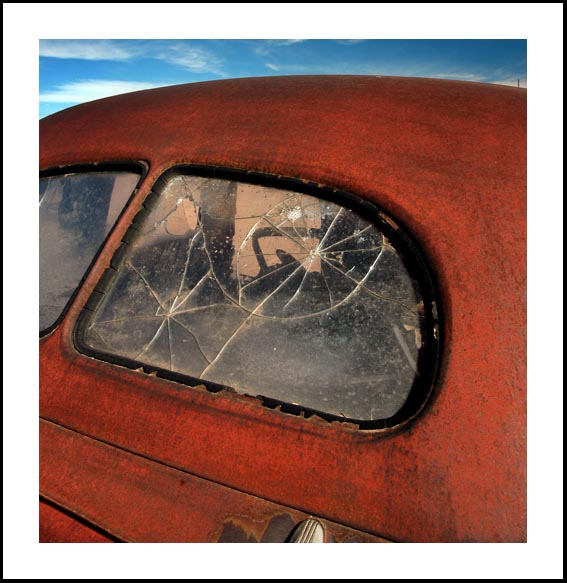
There I am, tooling through the vast landscape of West Texas, working for an English language newspaper working out of Abu Dubai, Arab Emirates. Don’t ask. I’m not sure I understand the assignment. Something about Bush returning to Texas and illustrating what two brothers, who were doing a road trip, saw (except, according to my editor, they were really bad photographers). What that has to do with West Texas, I can’t figure.
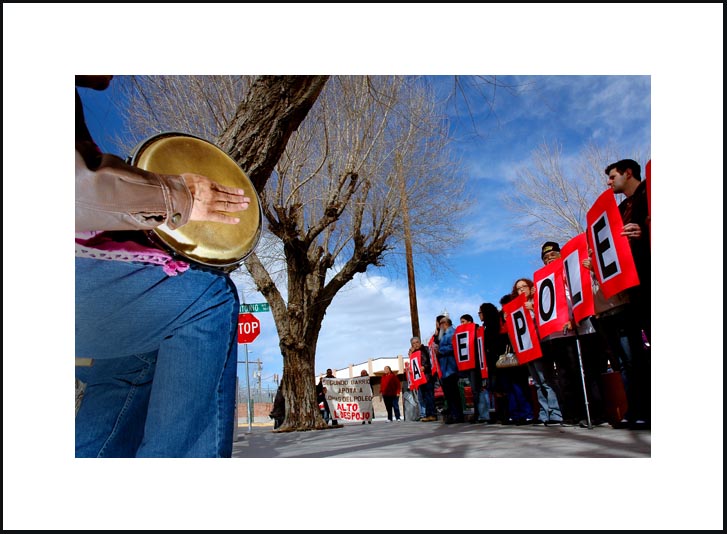
It was only a year ago that the plight of the people of Lomas del Poleo was the highest priority of cross border activist politics. The people were systematically being robbed of their land, their court actions were, basically, being stonewalled, the injustice of the top to the bottom was blatant and a coalition of forces stepped up and, on this day did, a bi-national protest at the Mexican Counsulate in El Paso and the Mexican Counsulate in Jaurez.
That seems like long ago.
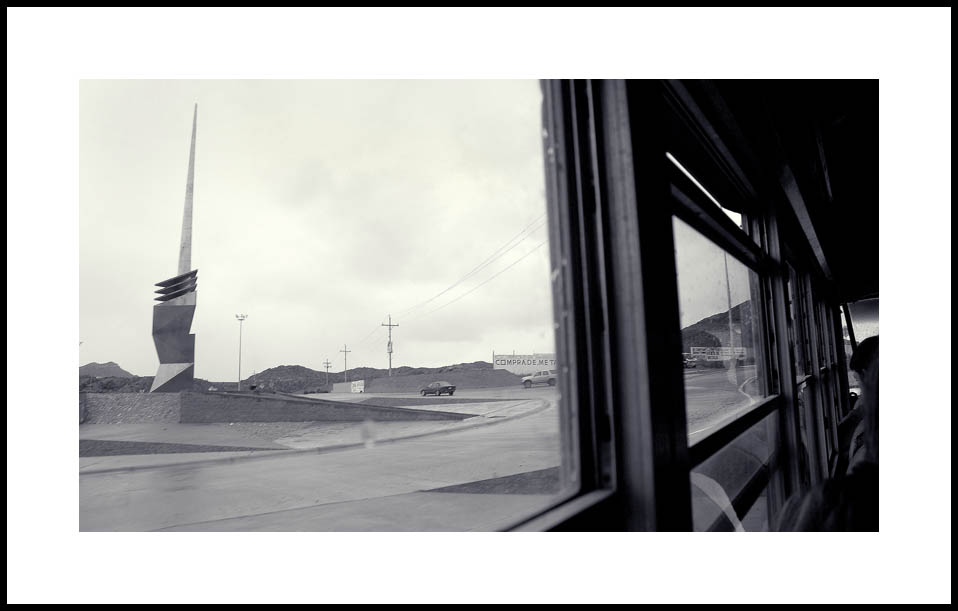
There’s a sword hanging over Juarez. The sword of Juarez. Murder. 1500, this year and we have a month to go. A drug war? A crazy’s war. Get it over with. Somebody win the war for turf, already. Nobody cares. Get it over with, one side win, one side lose, then send your drug shit to the gringos and let the people go free, let them come out of their houses at night, let the undertakers worry about their bills, again. Somebody win, already, because nobody is winning at all.
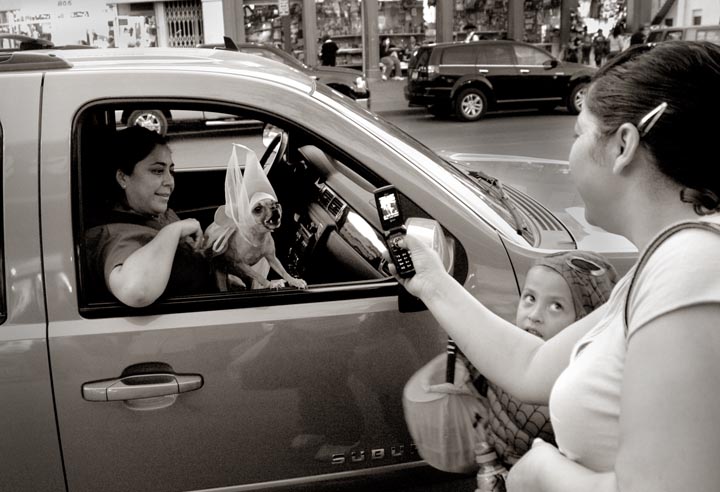
El Paso, Oct. 31 (Halloween), 2008
Halloween on El Paso Street, the first (or last) block of America. Everyone is dressed and laying a festival veneer over the street. 5:30pm, people still rushing to the bridge to Juarez to get home (especially these days, trying to get home before dark, before the murders begin).
Cookie is one angry Chihuahua.
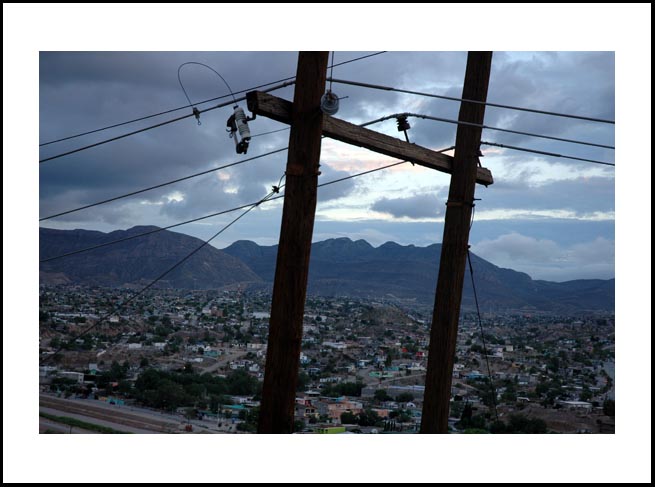
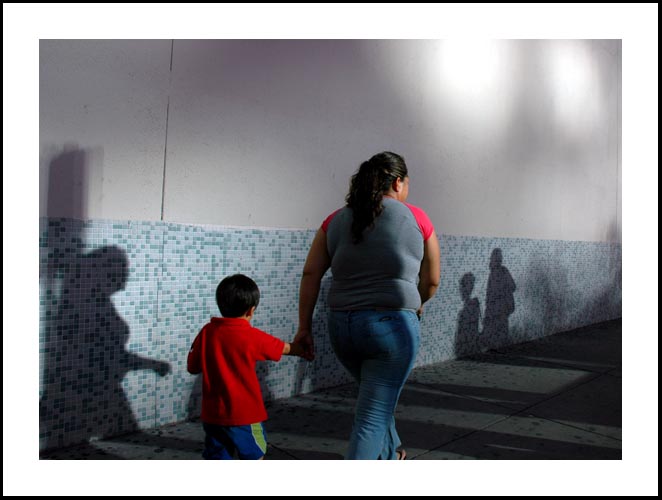
I am supposed to be packing right now. I have a job in another city. It starts in three weeks. I won’t be leaving. This corner, this light, these people, their shadows, have inveighed my life for an adulthood…a long time.
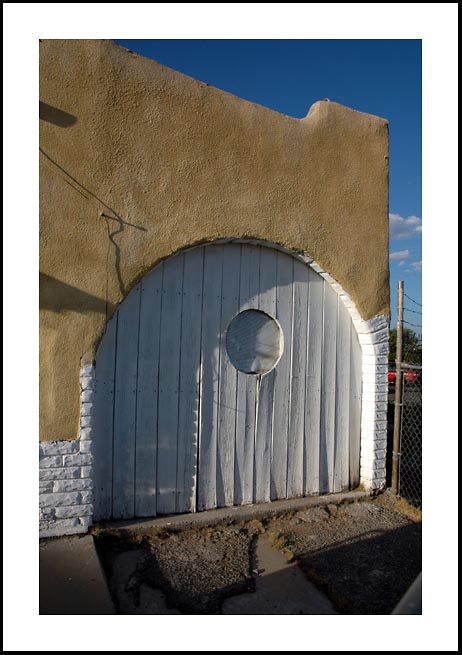
Editor’s Note: For other images from the Remnant series, see the July 13, 2007 and the May 12, 2008 posts. Use the calendar in the right column.
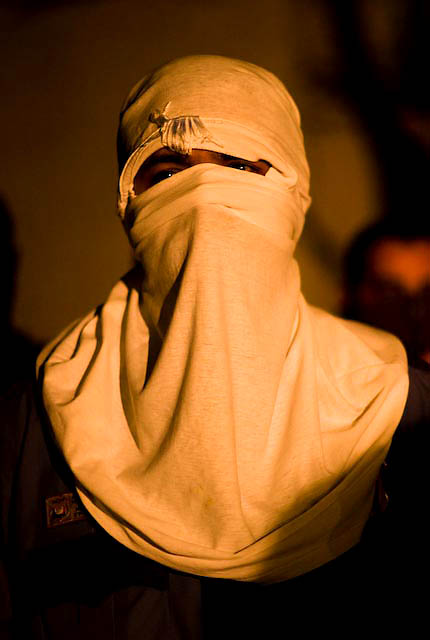
Photo and story by Julian Cardona
March 31, 2008
About 50 Juárez police officers protested what they consider the arbitrary arrests of fellow officers by the recently arrived Mexican army in ciudad Juarez. They were protesting the alleged framing of numerous officers on charges of drug possession.
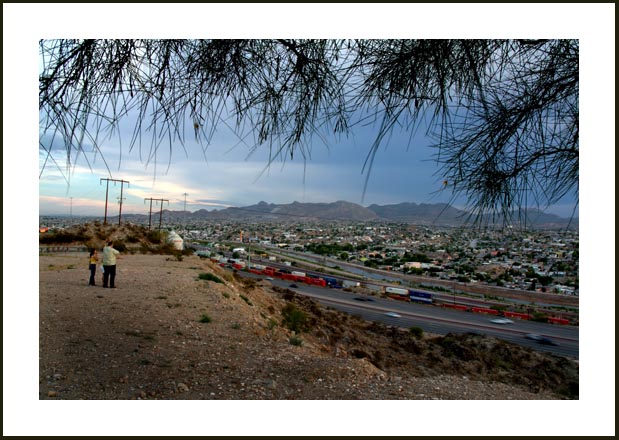
El Paso: foreground.
Juarez: Background.
Words written in blood on old documents and rattling around in people’s heads who don’t live there.
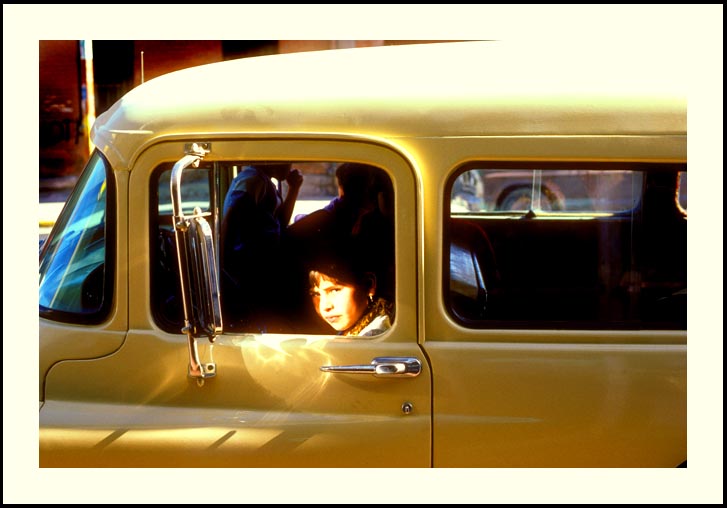
PHOTO OF THE WEEK: May 23-30, 2008
Notes from my Journal, September 1986
I am an illegal alien in a strange land.
That’s a phrase they use a lot in the newspaper here: Illegal Alien.
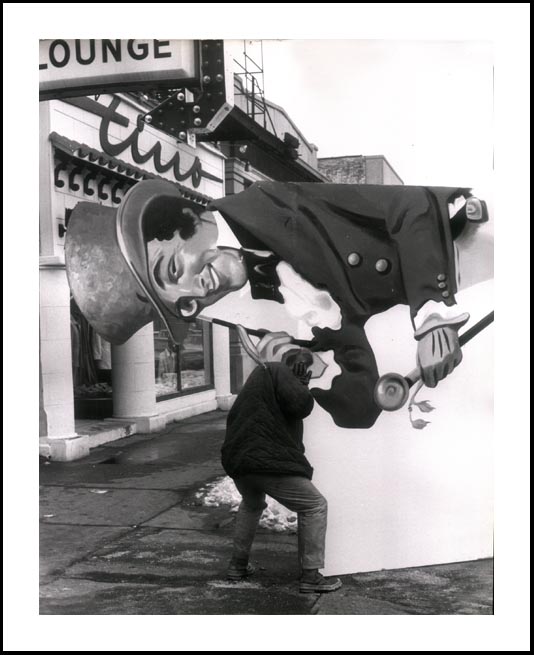
PHOTO OF THE WEEK (#1): May 16-23, 2008
I have moving on my mind. I don’t do it often. When I do it is a reincarnation for the better or worse. I am about to do it. In so doing, I came up with this image from the boyhood of my life as a photographer. One of the very first. I still like the street puns.
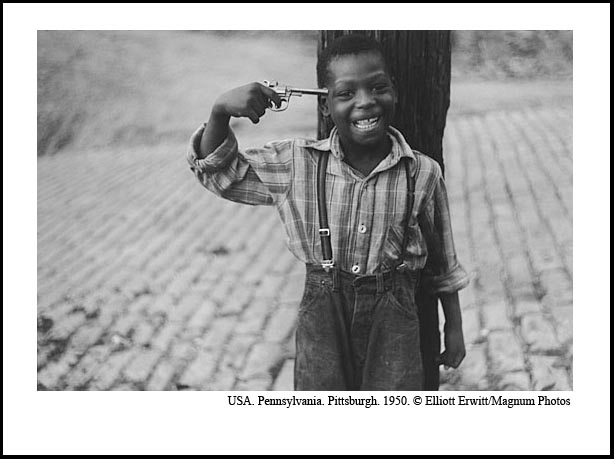
Editor’s note:
This is an interview with Magnum photo greats, Elliott Erwitt and Burt Glin.These are the oldest current members of Magnum, the great photography cooperative founded, in 1947, by Henri Cartier-Bresson, Robert Capa, Robert “Chim” Seymour and George Rodger. For a certain kind of photography -our kind- this is a group of top notch shooters with really interesting work. If one needed to summarize the “vibe,” of Magnum, the word we would choose is, “Humanistic.” We’d define that as a passion for telling the truth -visually and emotionally- about humanity, all of it, with a predisposition to the idea that, as Anne Frank said, “I still believe…most people are good.” Magnum shows the full range, always entertainingly. These two photographers, are its heart and soul and treasure.
April 22, 2008

Magnum’s reputation is not just based on extraordinary photography. What distinguishes the members of the photoagency, which was founded in 1947, is character. The legendary Magnum photographers Elliott Erwitt and Burt Glinn talk about moments of opportunity, courage, independence – and humor. This interview was conducted by Pia Frankenberg in December 2006 and was first published in Frankfurter Allgemeine Zeitung in January 2007.

USA. New York. Dance School. 1977. The image is from part of a photo story about “upper class” children getting dancing lessons and being taught the “social graces”. © Elliott Erwitt/Magnum Photos
Pia Frankenberg: Since when do you two know each other?
Burt Glinn: We first met in 1952 or ´53 I guess.
Elliott Erwitt: In the morning, I think.
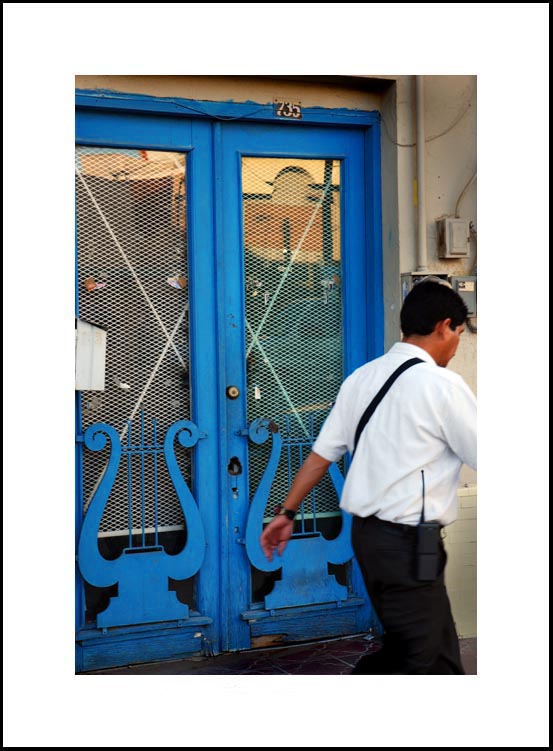
There hasn’t been so much gunfire in Juarez since 1910. Since Jan.1, there have been over 230 drug war-related murders.
There was a time in Juarez -bourgeoise and ugly Americano, for sure, but what the hell- that it was just the old fashioned sins: getting drunk, dancing, straggling around with whatever “date,” that’d allow you to put your hands on her ( or whatever) and, if you survived, you crawled home over the bridge to El Paso and woke up late the next day.
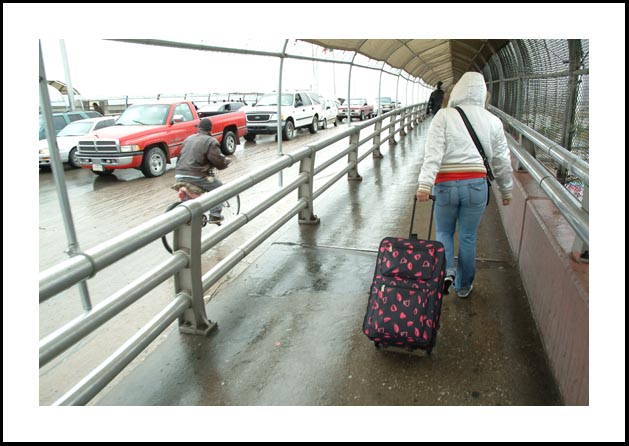
PHOTO OF THE WEEK: May 2-9, 2008
The Paso del Norte bridge between Juarez and El Paso. This is a bridge in hell.
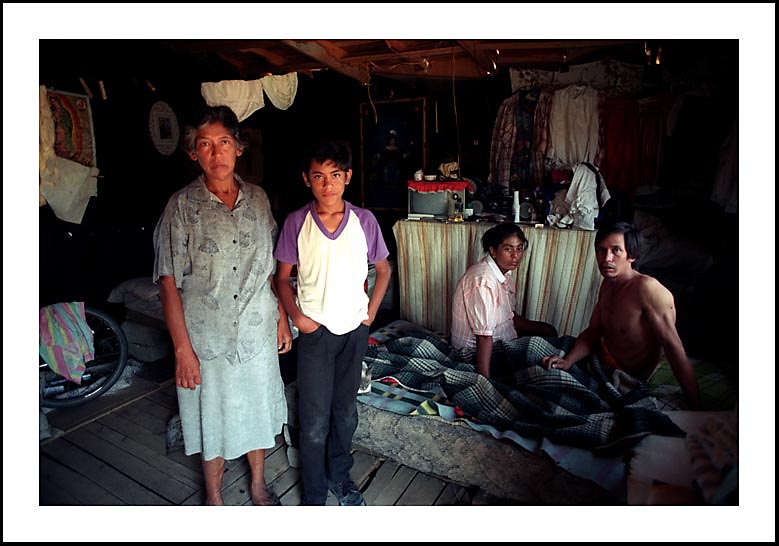
PHOTO OF THE WEEK: April 25-May2, 2008
The Silva family came to Juarez with the intention of crossing the border, into the U.S. and then traveling to the Midwest, where a family member had preceded them. They intended to work in agriculture in the wheat fields of Kansas. A dream. The American dream. It wasn’t to be their dream.
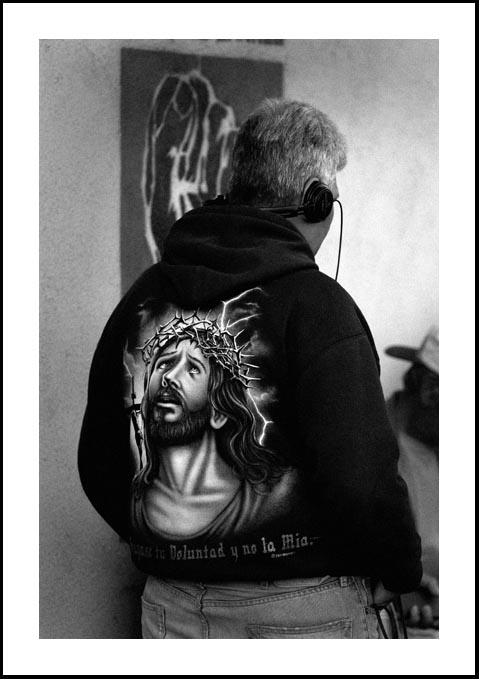
PHOTO OF THE WEEK: April 18-25, 2008
Headphones Ninth Street and Oregon. The first street north of the border in El Paso, Texas. Jan. 31, 2008.
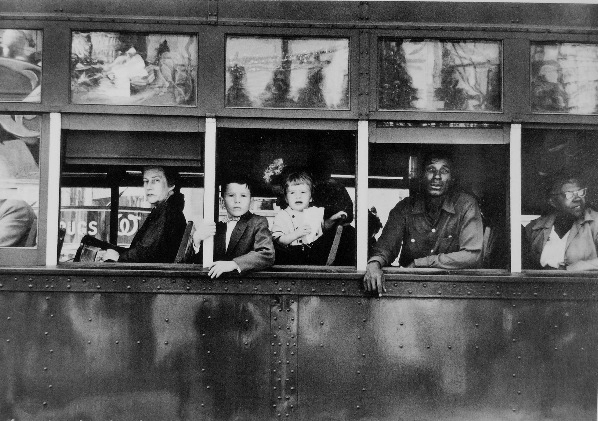
from The Americans
Robert Frank
b. 1924
“I am always looking outside, trying to look inside.”
This is da man! King of the road. He saw what everyone saw but he saw it through a 35mm camera and with a critical eye. To look at it now -the Global Village which used to be just America- needs a new eye. The question has been out there for awhile: What have we become?
PHOTO OF THE WEEK: April 11-18, 2008
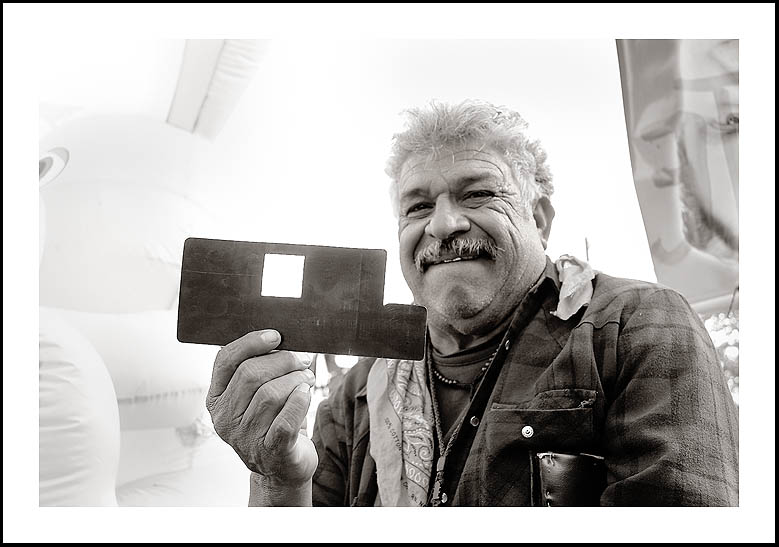
Polaroid Corporation announced in early February that they no longer will make Polaroid instant cameras or film.
This announcement, world wide was greeted, mostly, by a collective shrug of the shoulders and a “ho-hum.”
For Juarez street photographers the news was immediately alarming, living-threatening, and was a call to action for a new learning curve to transition to digital photography.
PHOTO OF THE WEEK: April 4-11, 2008
Juarez is in flames right now.
Drug war is raging. I’m calling it a drug war. It’s a lot of things war. Always is.
La Plaza/A Memoir
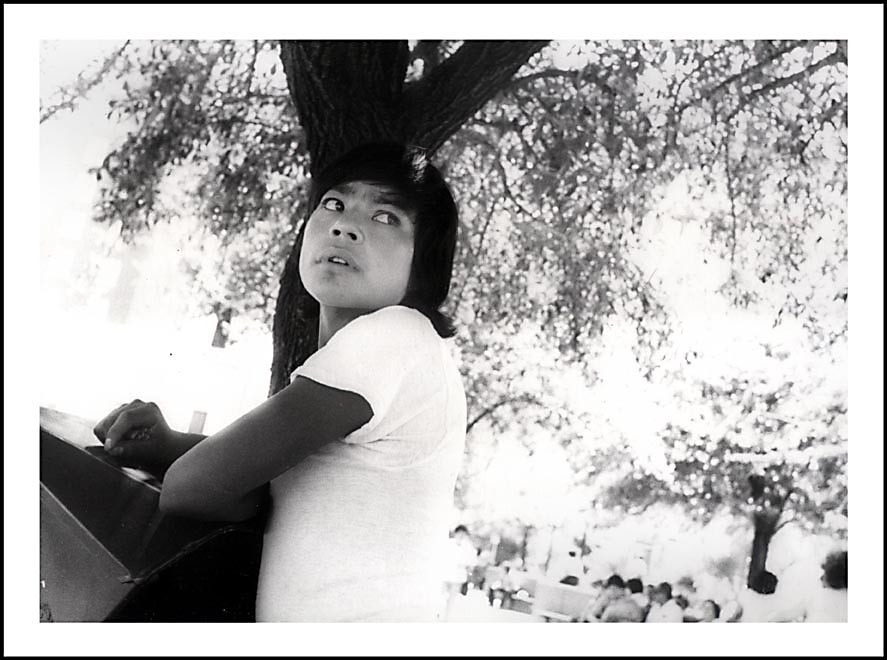
I went to the plaza today.
It was deserted.