Search results
19 results found.

On The Edge of the Edge – The U.S. – Mexico Border
19 results found.
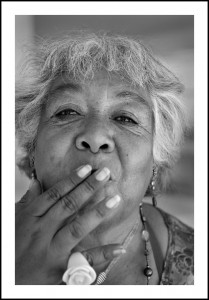
Love them. Always have. Strength. Endurance. Verve. Strongest people on this planet.
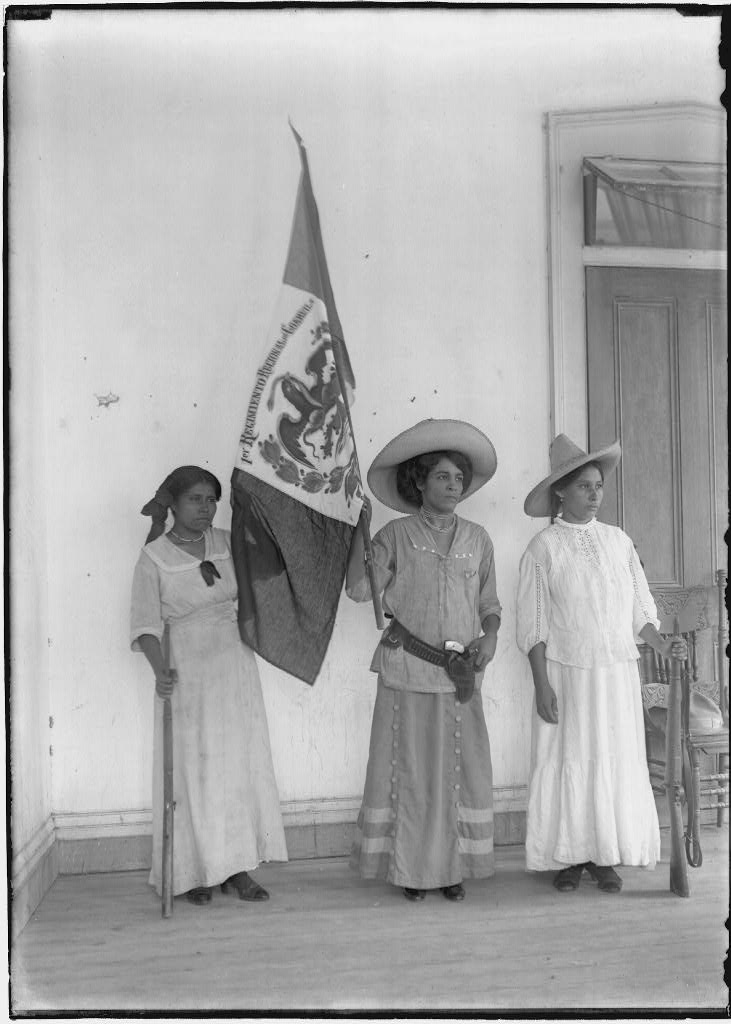
This photograph was taken during the Mexican Revolution (1910-1920), exact date unkown.The photograph was taken by commercial photographer Robert Runyon (1881-1968), a longtime resident of South Texas. His photographs document the history and development of South Texas and the border, including the Mexican Revolution, the U.S. military presence at Fort Brown and along the border prior to and during World War I, and the growth and development of the Rio Grande Valley.
This image was shot on a glass-plate negative ; 5×7 in. Camera unknown.
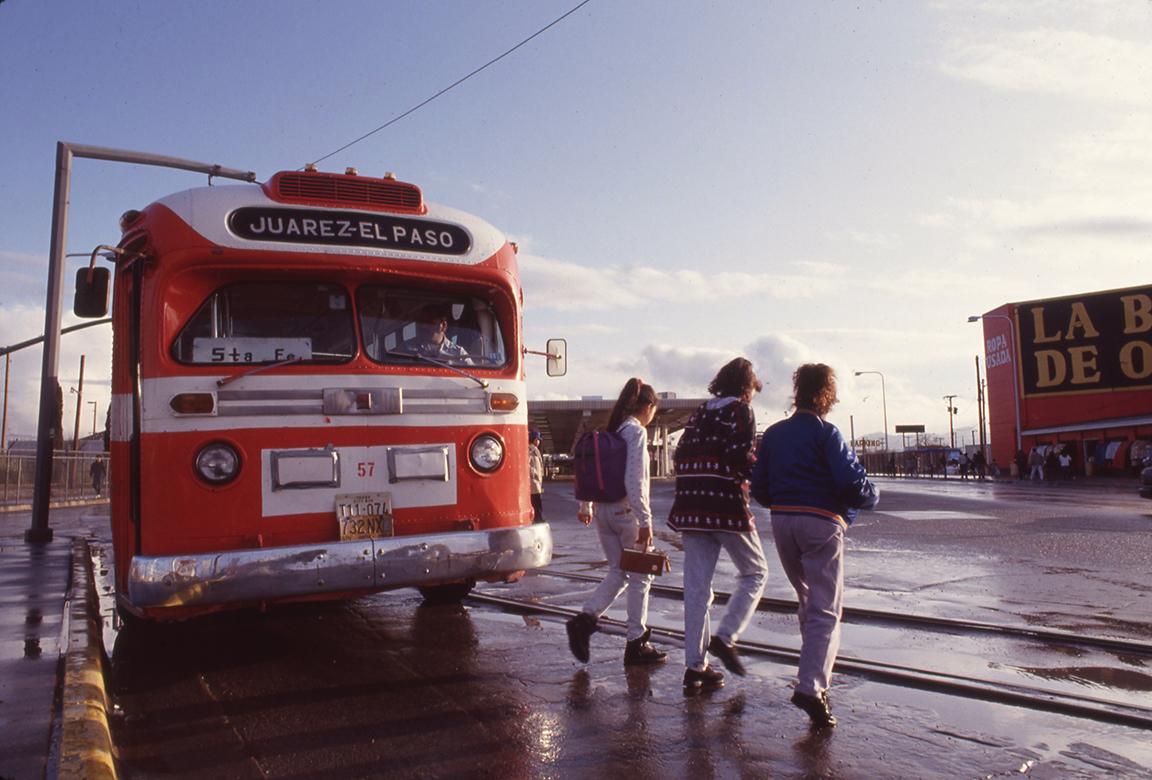
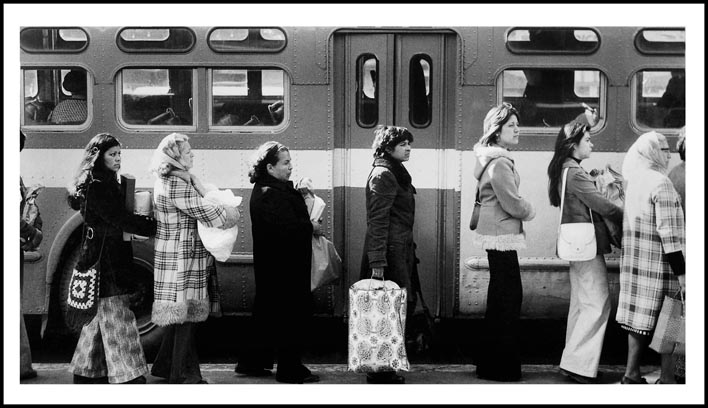
The Red Bus, Paso del Norte International Bridge, El Paso/Juárez, 1989
Photograph and Text by Bruce Berman
The Old Red Bus ran back and forth over the Juárez International bridge for decades. The bus itself was from the late 1950s, a GM. First photo I ever took when I got to El Paso and started wandering around was of the Red Bus, on El Paso Street. I noticed the women, from 18 to late 40s, lined up. I came to know that they were “maids,” low wage women from Juárez that came over every day and served the Anglos of a neighborhood north of downtown. It was called Kern Place. At the end of the day -those that worked by the day and not the week- would walk south down the hill to “EL Centro,” get on the bus and go home, to Juárez
Generations of Anglo kids were raised by these “maids.” Tons of dishes were washed. Beds were made. Laundry was done. They watched the American culture and went home. Key word: Home. Theirs. Another world.
I shot that old photo in October 1975.
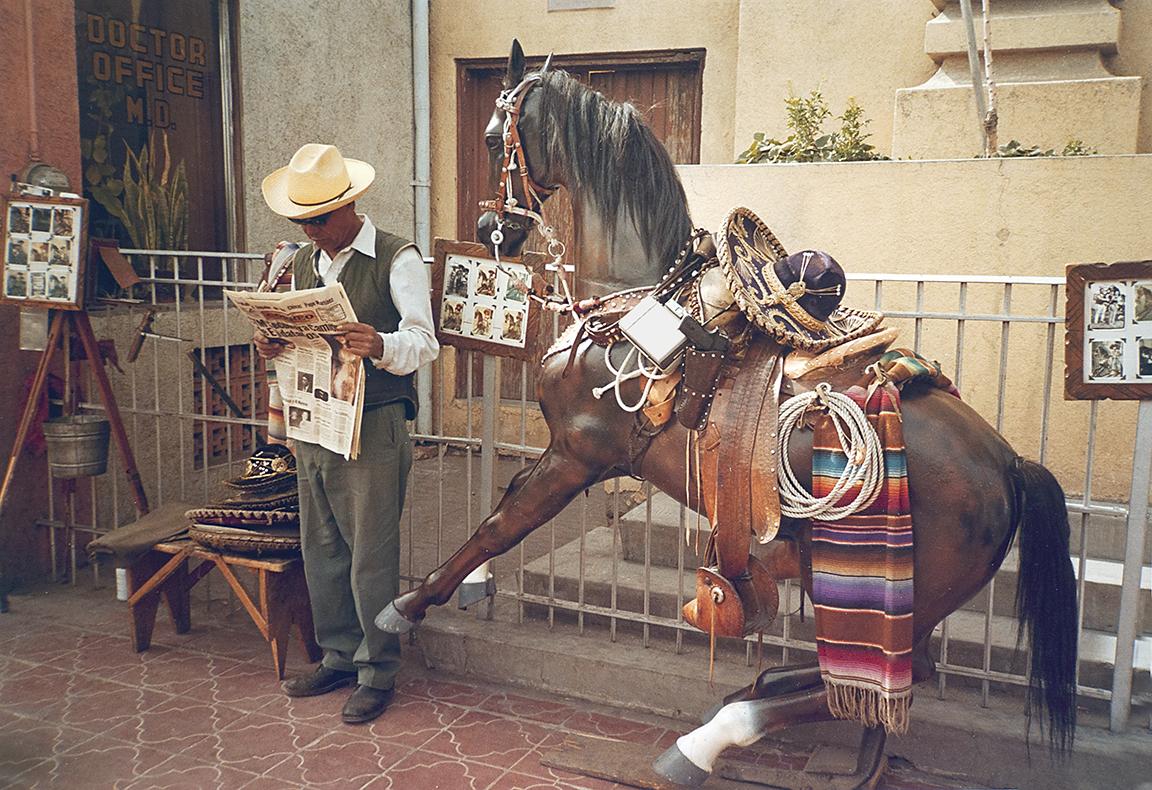
Fotografó, Sunday morning, Calle Juárez, 1981 by Bruce Berman
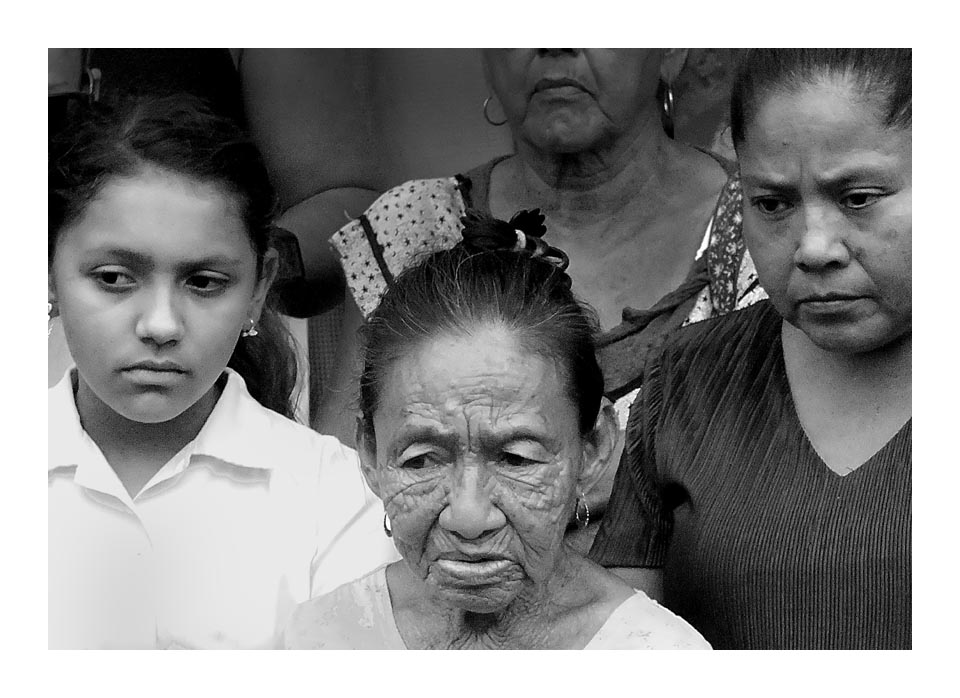
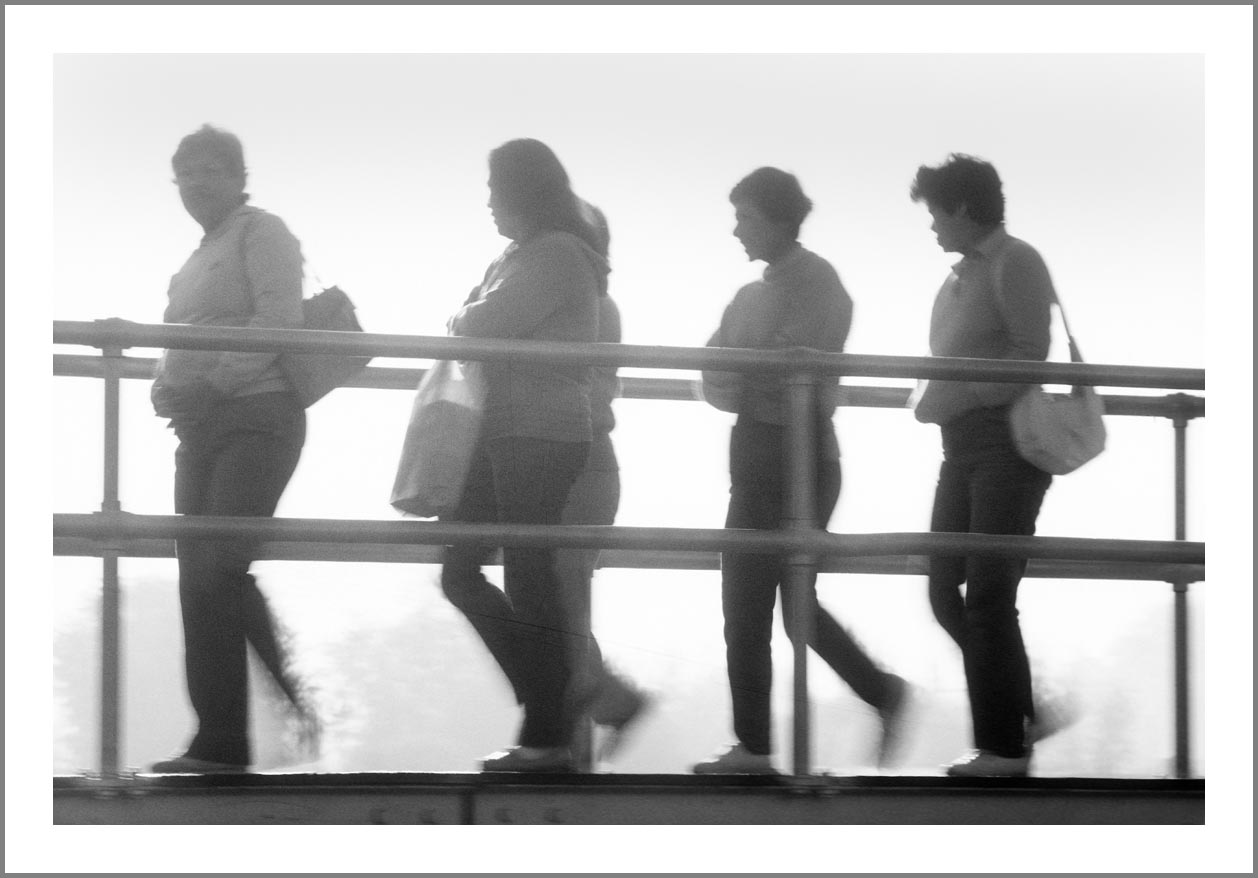
The river with two names: Rio Grande/Rio Bravo del Norte. Depends where you begin and where you end and where you return to. These women are heading north. It was a long time ago. Everything has changed and nothing has changed and I suspect it will continue to change and not change forever.
The river with two names, the R2, is also the place of the personality with two halves.
Confusing, no?
It is the place of bifurcation. But even that has two sides: twice as much insight.
Where are these women now? Which side happened to them? What happened to me? What happened to Juárez and the U.S.?
What happened to me?
I know this: people will cross going north no matter what and no matter the year. People will cross less, going south, depending on the year.
The river will flow south from Colorado (a Spanish name) to the Gulf of Mexico (an English language name).
And none of it matters to anyone living here except that one government makes it hard for another people to do what they have done for thousands of years and another government makes it necessary.
Who’s confused and who’s doing the confusing?
[flagallery gid=6 name=”Gallery”]
Is there any Light at the end of Juárez’s tunnel?
There are a lot of things in Juárez these days: widows, widowers, killers, thugs, riddled bodies, drug addicts, every day normal people, kids going to school, people being married, bombs and death across the street (almost) from the old “City Market.” Everything.
There is very little Light.
The city seems to have turned from sunny and bright and colorful to Black and White, like an old photograph, one that wasn’t “fixed,” very well and is losing it’s contrast and fading away. The brightness is gone. Light is at a premium, right now, for sure, in Juárez.
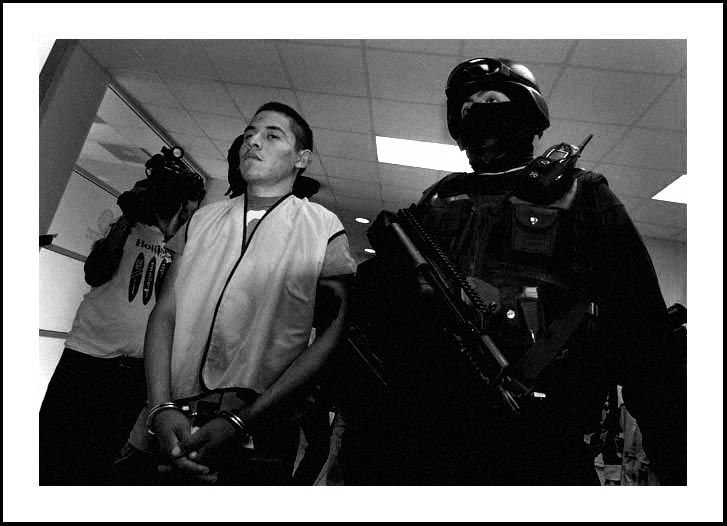
Iasi Emanuel Rodriquez Gamez , aka “El Enano (the dwarf),” 22, is led down a hallway, by a member of the Federal Police at the Ministry of Justice (Procuraduria de Justicia del Estado) in Cd. Juarez, Chihuahua, Mexico.
He is accused of being the leader of a kidnapping gang that kidnapped at least 19 people. Authorities alleged Rodriguez, 22, took orders from suspected kidnappers Ernesto “El Neto” Piñon de la Cruz and Jesus Eduardo “El
Lalo” Soto Rodriguez. This group is accused of committing 39 kidnappings since December 2008. The “El Lalo y de Neto,” gang has operated in Juarez over the past three years.
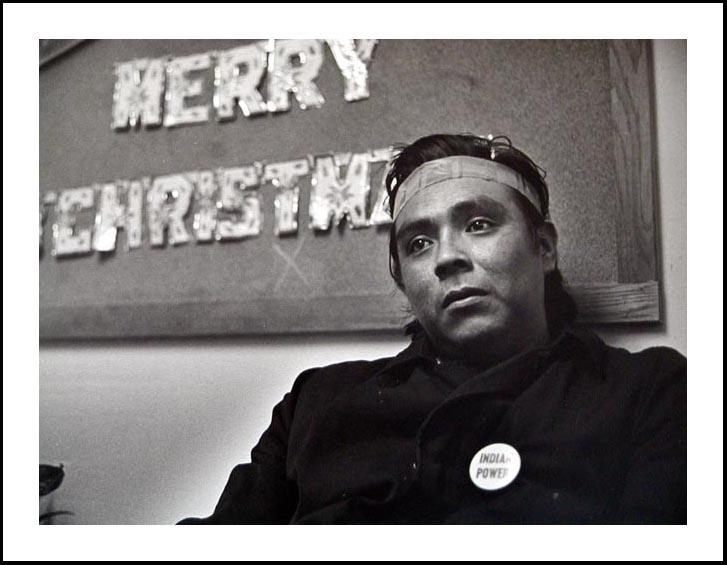
This is Wounded Knee Day. It calls for remembrance.
In the 120 year aftermath, the victims of Wounded Knee have still not received justice, let alone, widespread acknowledgment of the murders of nearly 300 Native American people, murders that capped almost two hundred years of aggression against America’s original residents..
Wounded knee was the end of the mythology of the Good America. It was the end of any illusion that the Indian Wars were anything other than raw power applied to a land grab.
What was Wounded Knee?
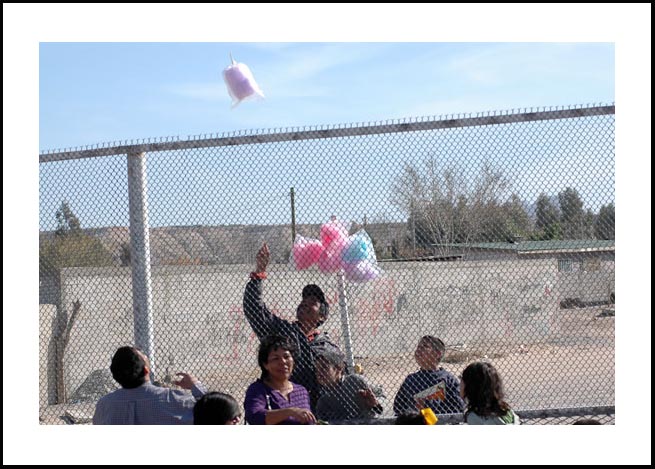
Life goes on.
Mexico is a great pueblo. So is El Paso and southern New Mexico.
One reads the newspapers and one thinks the world has gone insane. Particularly here, on the border.
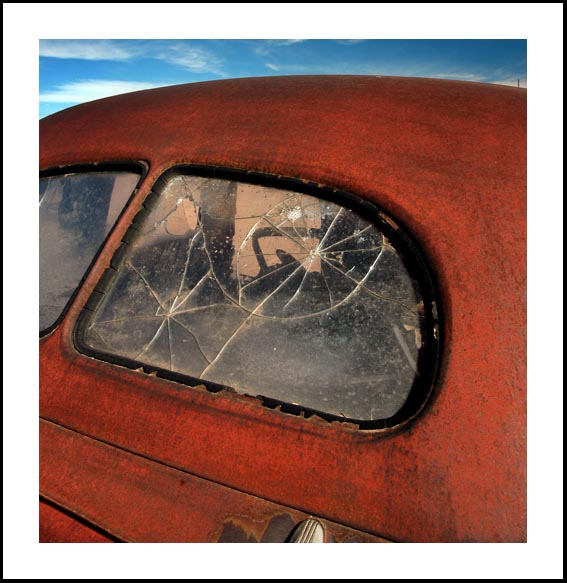
There I am, tooling through the vast landscape of West Texas, working for an English language newspaper working out of Abu Dubai, Arab Emirates. Don’t ask. I’m not sure I understand the assignment. Something about Bush returning to Texas and illustrating what two brothers, who were doing a road trip, saw (except, according to my editor, they were really bad photographers). What that has to do with West Texas, I can’t figure.
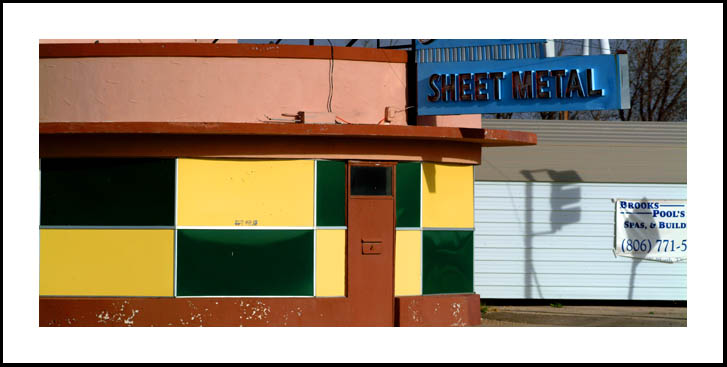
Been working on the Land Before the Interstate (LBI) series for a long time. Every chance I get to go there I grab. Time machine. No Interstate. No giant concrete suppository running right through your heart. The kinds of places Duvall would crash down in in Tender Mercies.
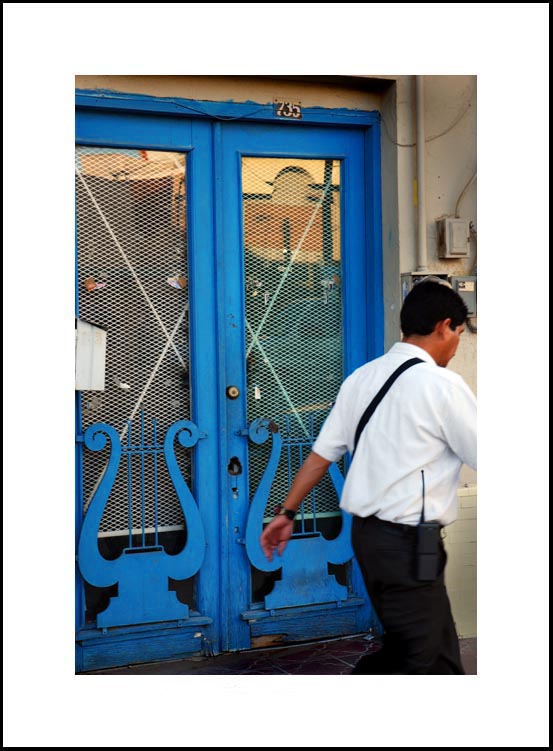
There hasn’t been so much gunfire in Juarez since 1910. Since Jan.1, there have been over 230 drug war-related murders.
There was a time in Juarez -bourgeoise and ugly Americano, for sure, but what the hell- that it was just the old fashioned sins: getting drunk, dancing, straggling around with whatever “date,” that’d allow you to put your hands on her ( or whatever) and, if you survived, you crawled home over the bridge to El Paso and woke up late the next day.
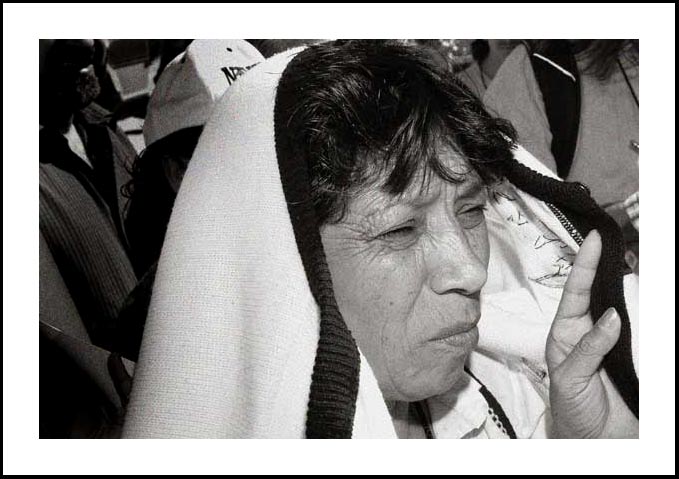
PHOTO OF THE WEEK: April 4-11, 2008
Juarez is in flames right now.
Drug war is raging. I’m calling it a drug war. It’s a lot of things war. Always is.
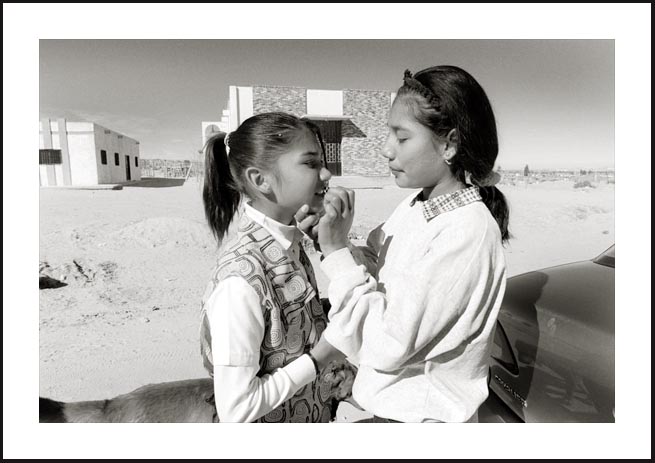
It’s the little moments that work for me.
It’s an exquisite privilege to disappear. It doesn’t always happen. It’s really great -for the photographer- when it does. Photography out in the open, in other people’s realities, nobody even noticing.

Maria Monteros Rodriquez had been looking for her daughter Carmen for days. She had disappeared without a trace from their central Juarez home.
October 5, 2007
A funny thing about photography and time: it can capture milliseconds and it can capture decades, and all in the same photograph.
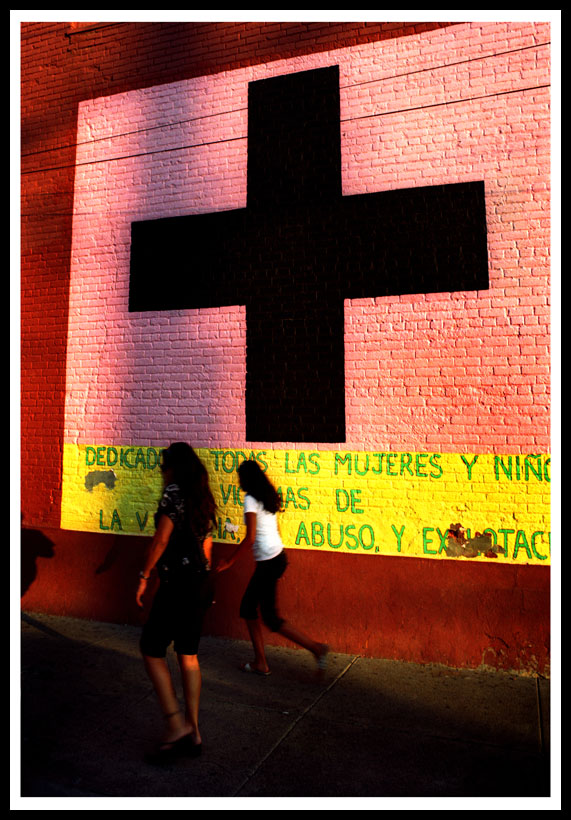
Summer on the FBA. Hot. 100.
This is Father Rahm Street, which is, actually, Fifth Street. Around the corner is El Paso Street which is the first block of America (or the last, depending on where you’re coming from).
Around the corner, to the south is where the Paso del Norte bridge from Juarez empties out. There are stories on this street, big life-journeys begin here. This is where dreams begin. Some people have called this the “Ellis Island of South America.” Maybe that’s the draw for me (my Father was born on that other immigration island in 1907). That was another dream. These are places where dreams can start.
The Black Cross mural for the violence against women in Juarez appeared a couple of years ago. Then they put a bus stop in front of it (dumb). Then they took the bus stop out but painted over the text (also dumb) about the violence to the women.
Whatever. Life passes and passes strongly. This is where I have spent a lot of my life.
Nothing stops the energy on the FBA. People are looking for their place, their direction, their dream. I’m looking. I’m there almost every afternoon.