Search results
35 results found.

On The Edge of the Edge – The U.S. – Mexico Border
35 results found.
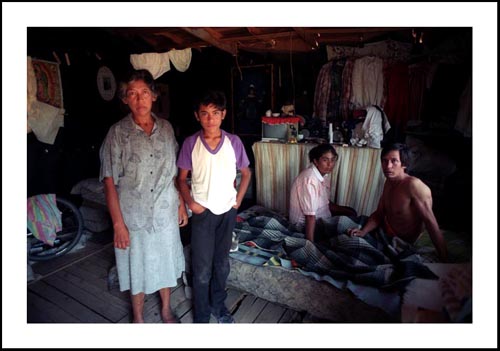
 Roberto Martinez is the former director of the U.S./Mexico Border Program. A lifelong Chicano activist, he has spent 30 years monitoring human rights in the San Diego/Tijuana area. In 1992, he was honored as an Intermational Human Rights Monitor by Human Rights Watch, the first U.S. citizen to be honored in such a way.The following essay, published here as a call for a humane U.S. immigration policy, was written as the introduction for the American Friends Service Committee 2003 human rights report.
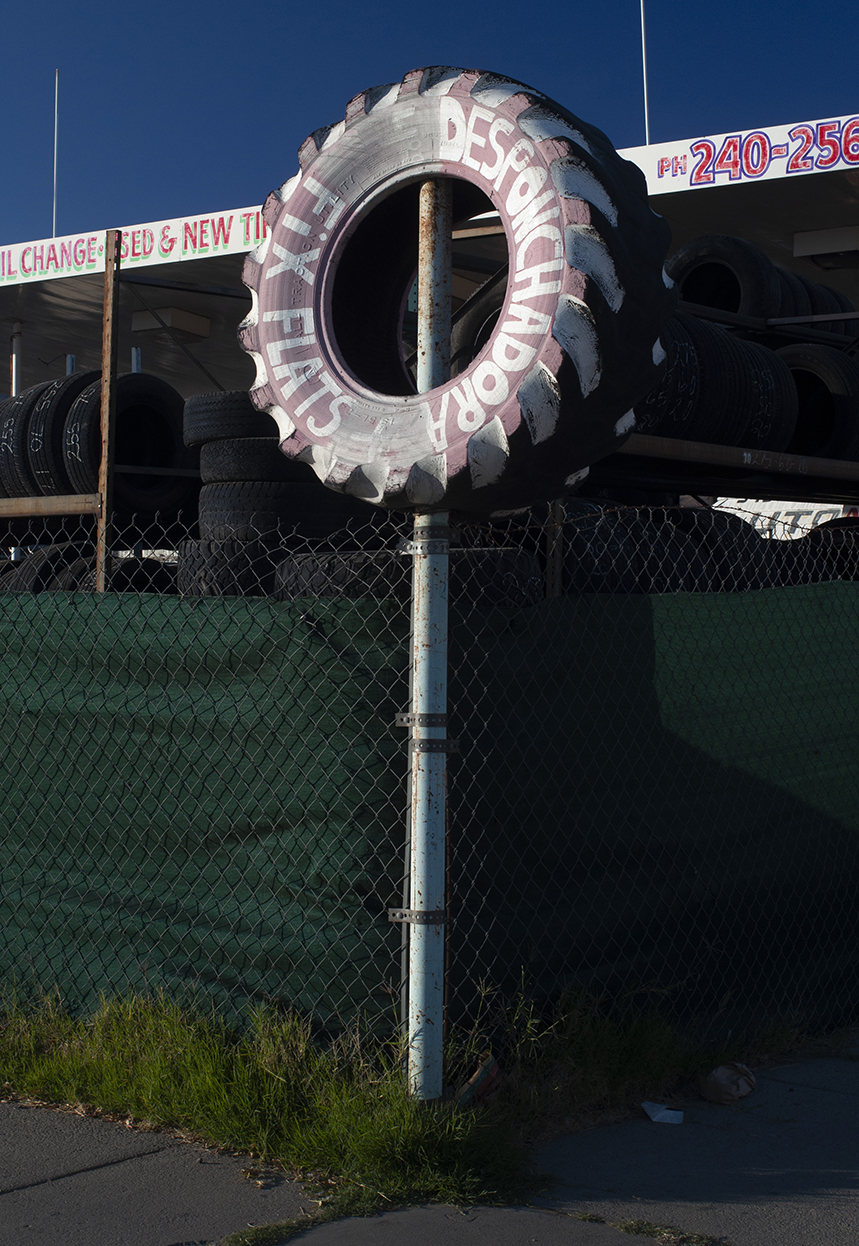
Fix Flats, Alameda Street (U.S. 80), El Paso, Texas, 2007
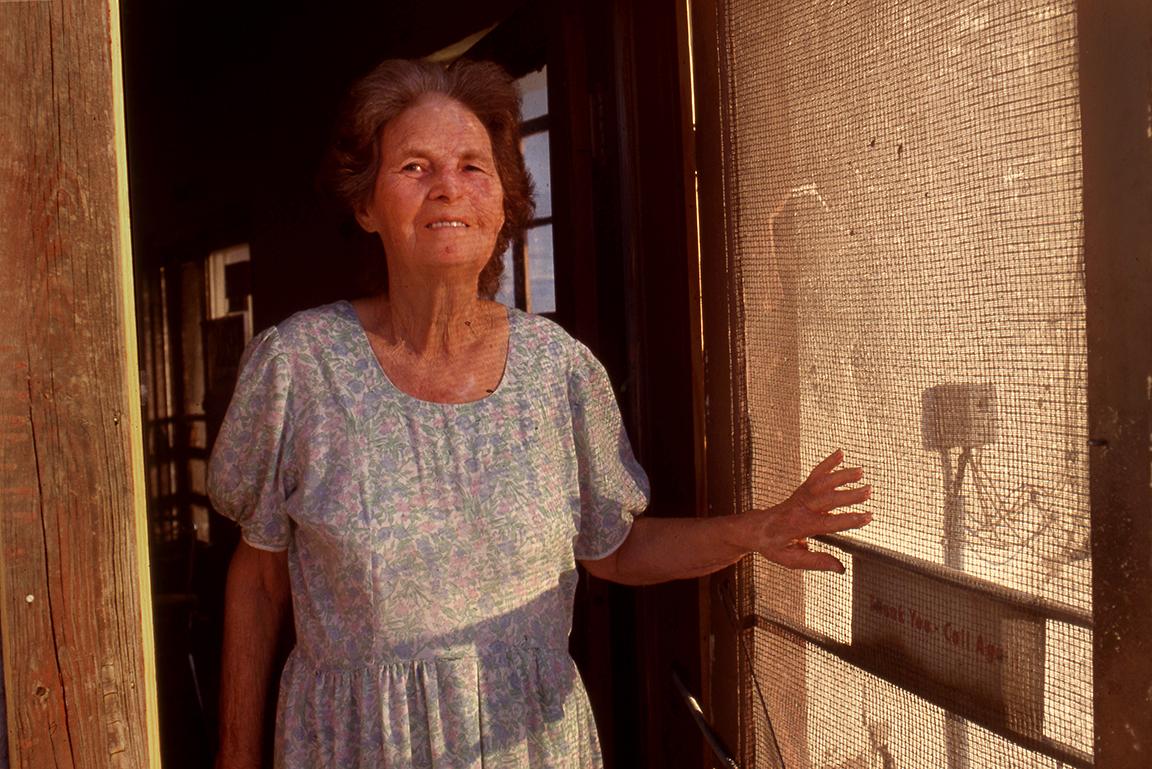
Isabel Gilmore, Salt Flat Cafe, Salt Flat, Texas, 1988
Story and photograph by Bruce Berman
There were people who grew up along two lane highways who had, at most, radios to connect them to the outer world. They lived in quietude. A car would occasionally pass on U.S. 62/180. Some would stop.
I stopped.
She put down her local paper (from Van Horn, I think it was). She made eggs, fried some hash browns and made toast. Everything she was and did was from a past time. These were moments of grace.
She was far from being a receding type, had lots of questions, and I think her main form of being informed was interviewing anyone who stopped at her cafe. She had been doing this for a long time and I think her parents did it before her.
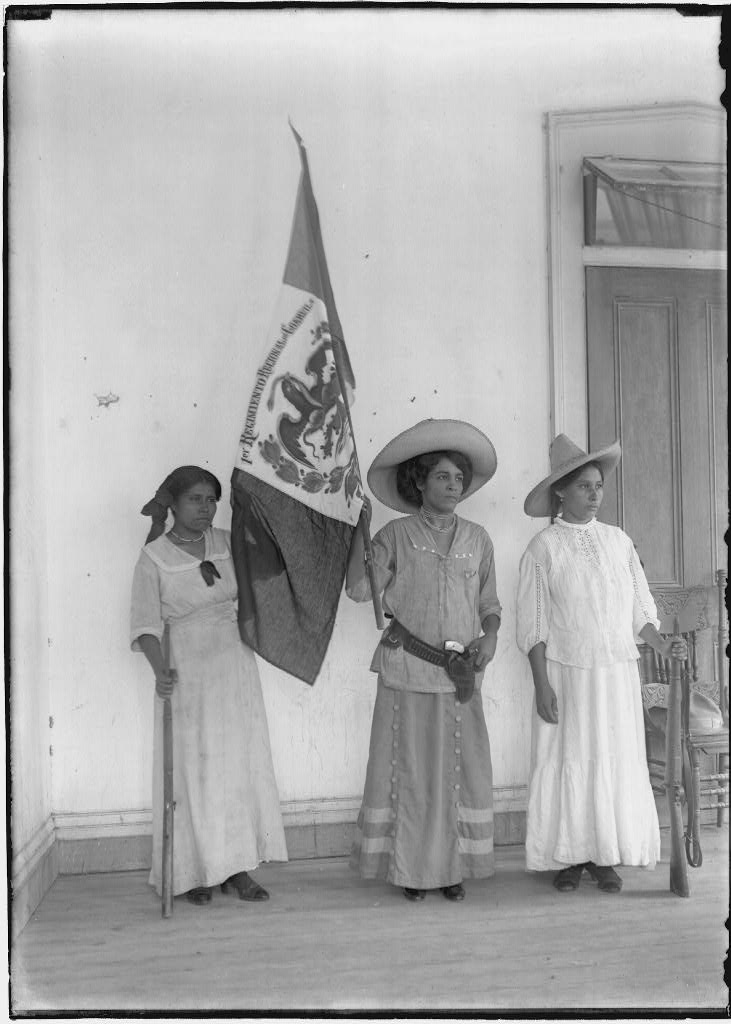
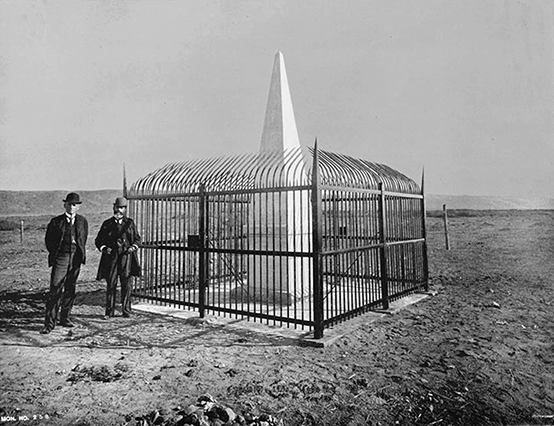
This photograph was taken during the Mexican Revolution (1910-1920), exact date unkown.The photograph was taken by commercial photographer Robert Runyon (1881-1968), a longtime resident of South Texas. His photographs document the history and development of South Texas and the border, including the Mexican Revolution, the U.S. military presence at Fort Brown and along the border prior to and during World War I, and the growth and development of the Rio Grande Valley.
This image was shot on a glass-plate negative ; 5×7 in. Camera unknown.
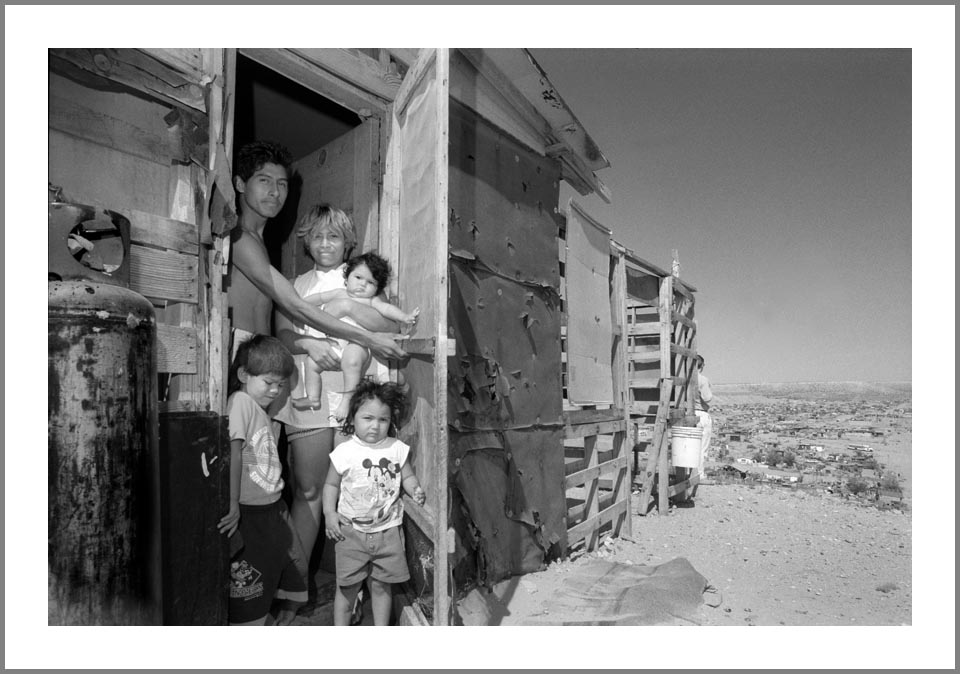
Commentary by the Editor
Juarez, Chih., Mex. — So how did this Cartel War begin and how does it end?
The Border Blog will not answer that today. We look for the things that make the heart tick and leave the fancy thinking to those that make these messes in the first place.
Roughly, for me, it began a long time ago, when the people who have most of the marbles understood that they didn’t have to do a thing about bringing along another class of people who had hardly any marbles at all. Impunity. No apologies. In Juarez the maquila industry began when someone figured out that Labor was a cheap product that Mexico had a lot of and that it could be exchanged for some major profit. Of course nothing so crass as that was said. Rather, this was the bright new day that would lead to a burgeoning “middle class,” and bring everyone up from the bottom. So they said. So the “development” of Juarez began. The powers that be brought willing companies looking for labor and they delivered “labor.” This labor, also known as the citizens of Mexico came from the far flung corners of Mexico. They had nothing else to do and would work at any price, went the theory. Everyone would be happy. You move here, we’ll give you subsistence (and societal dislocation), and we’ll go to the bank. Everyone will be happy.
Right?
When I first started photographing in the maquila factories of Juarez in the early 1980’s the salary in a maquila was $5 per day. Today it’s a little over $7. A full two dollar increase in 20 years. Imagine!
It wasn’t sustainable then and it isn’t now.
The promise of some kind of job, of rising above downright depraved poverty, was strong and people flocked to the border factories. First from Veracruz, then from Durango, then from Torreon and on and on.
If you were a Mexicano and wanted to improve your life without the terrible alternative of actually crossing the border and trying to make it work in El Norte, you headed to the maquilas of Juarez or Tijuana or Nuevo Laredo. If you made that journey you left your culture and customs behind. This was the brave new world.
Bienvenidos campesinos.
Editor’s Note:
Check this video out.
When Americans talk about the violence in Mexico they often view the situation through “western” eyes, thinking of Good Guys v. Bad Guys.
As this Al Jazeera report shows, the conflict is often between Bad Guys and Badder Guys and the public -the oppressed people of Mexico- have to stand on the sidelines, knowing but unable to alter the situation.
This video asks, Where do you turn when there is no one to turn to?
Commentary by Bruce Berman / Video by ©Al Jazeera 2014
There’s something happening in journalism.
When Aljazeera -who shouldn’t give a hoot about what’s happening in Mexico- publishes a well done piece on police kidnapping in Mexico, when Mexican journalists go ahead and publish their own work, under duress, knowing that to publish is to perish, and increasingly the xenophobic U.S. press dithers on entertainment and cheesy presidential inanities, we are talking about a new arrangement of the deck chairs on the the good ship journalism.
The truth is that most American newspapers and magazines aren’t undergoing the huge transformation they are experiencing in a vacuum. It’s not that hey are not irrelevant. They are merely irrelevant as the source for hard news (at a minimum) that relies on being the “go to” media.
For the most part, they are not that any longer.
If there is one source “out there,” it will be Tweeted or Posted on some social media site, within minutes, and then the fun begins. From there, people will Retweet it (RT), add links or complimentary sources and then the multiplier of social media begins. The question isn’t, Are you getting the news, but, rather, How much can you take?
Of course the eternal existential question remains, What happens when there is no longer a source of information (such as the New York Times. Sky News, CNN or Fox, i.e the “media giants?
This is not likely.
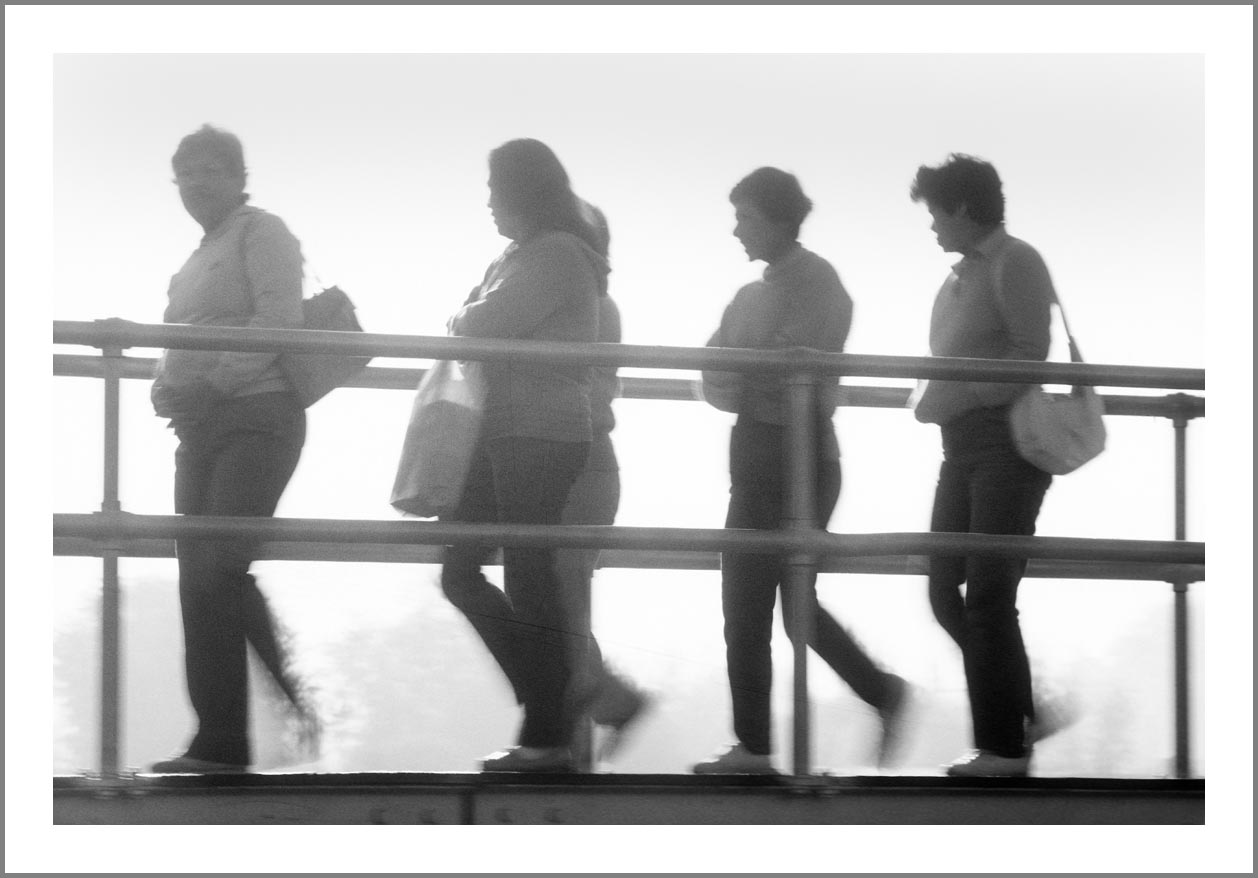
The river with two names: Rio Grande/Rio Bravo del Norte. Depends where you begin and where you end and where you return to. These women are heading north. It was a long time ago. Everything has changed and nothing has changed and I suspect it will continue to change and not change forever.
The river with two names, the R2, is also the place of the personality with two halves.
Confusing, no?
It is the place of bifurcation. But even that has two sides: twice as much insight.
Where are these women now? Which side happened to them? What happened to me? What happened to Juárez and the U.S.?
What happened to me?
I know this: people will cross going north no matter what and no matter the year. People will cross less, going south, depending on the year.
The river will flow south from Colorado (a Spanish name) to the Gulf of Mexico (an English language name).
And none of it matters to anyone living here except that one government makes it hard for another people to do what they have done for thousands of years and another government makes it necessary.
Who’s confused and who’s doing the confusing?
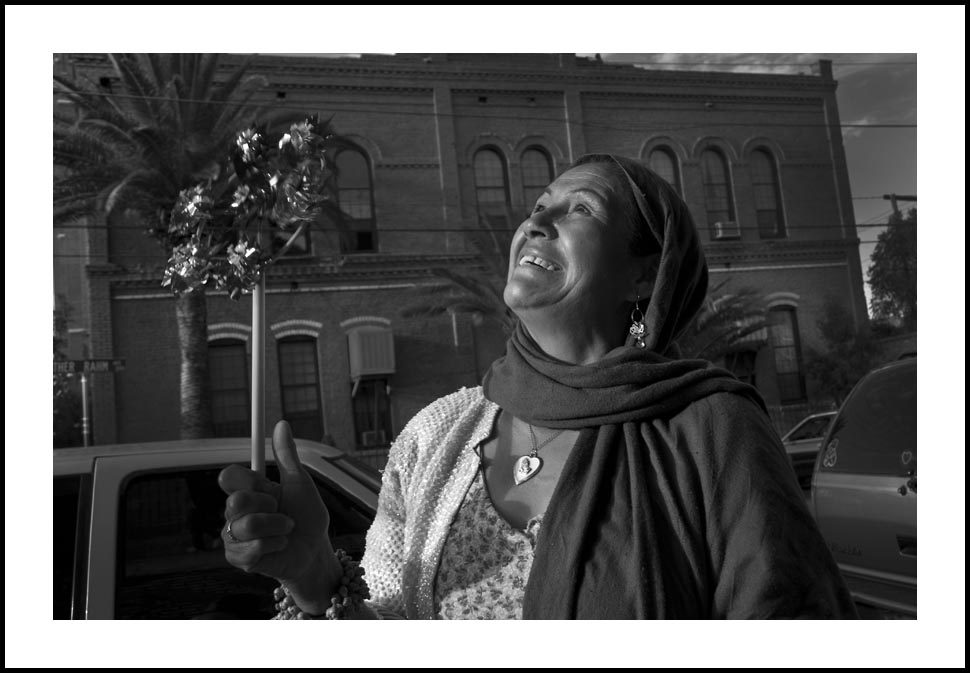
EL PASO –Angelica Alvarez. A true believer. A believer in her faith. A believer in a better day. A believer in joy.
I noticed her as she worked her way down the street, engaging every person that she encountered, leaving each person she talked with a smile on their face, enthusiastically waving goodbye to her, they no longer strangers.
I followed her.
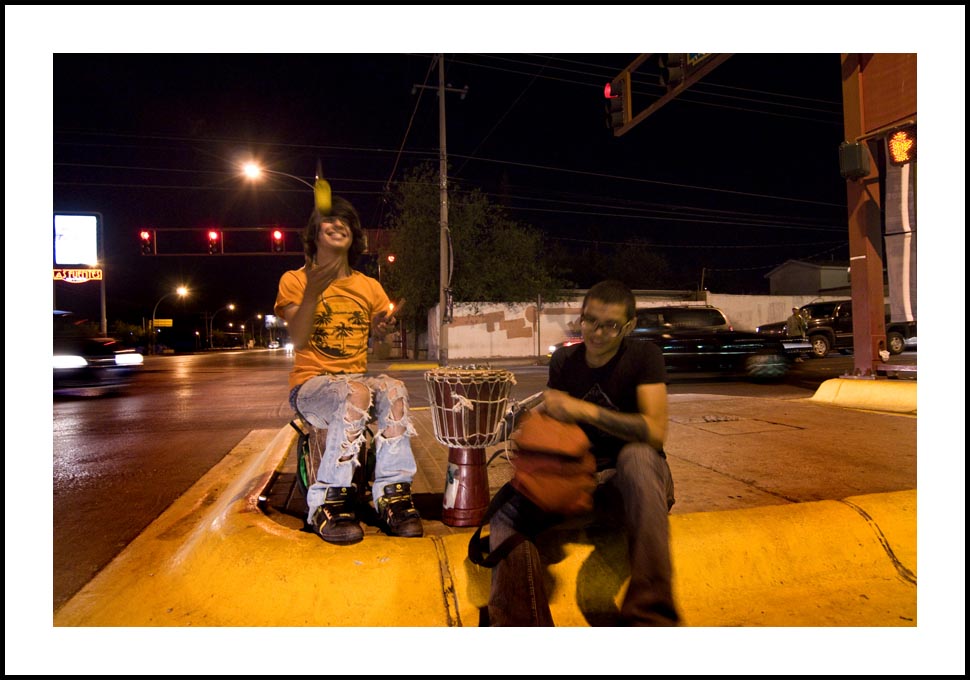
Pictures?
More pictures of dead bodies in the streets of Juárez?
Hard to want to do. I’m not visiting. I live here. It’s better when you have to get the images for your boss/editor and then high-tail it to the airport.
But, I’m not working for a daily paper anymore.
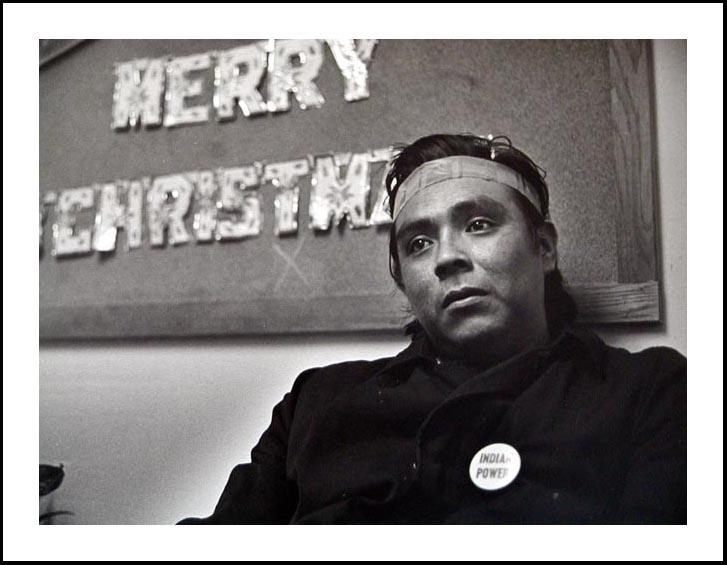
This is Wounded Knee Day. It calls for remembrance.
In the 120 year aftermath, the victims of Wounded Knee have still not received justice, let alone, widespread acknowledgment of the murders of nearly 300 Native American people, murders that capped almost two hundred years of aggression against America’s original residents..
Wounded knee was the end of the mythology of the Good America. It was the end of any illusion that the Indian Wars were anything other than raw power applied to a land grab.
What was Wounded Knee?
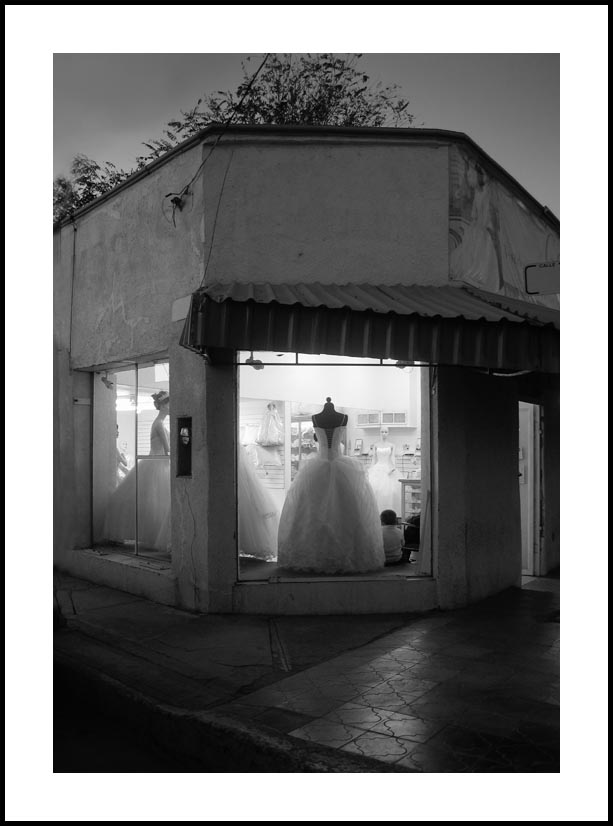
Juarez / October 2009
Murders continue.
Record year.
Day of the Dead is coming. Like every day hasn’t been that.
The streets have an eerie decay to them. Litter. Boarded up windows. Still a lot of hustle but the nights are empty and in the shadows are things no one wants to see.
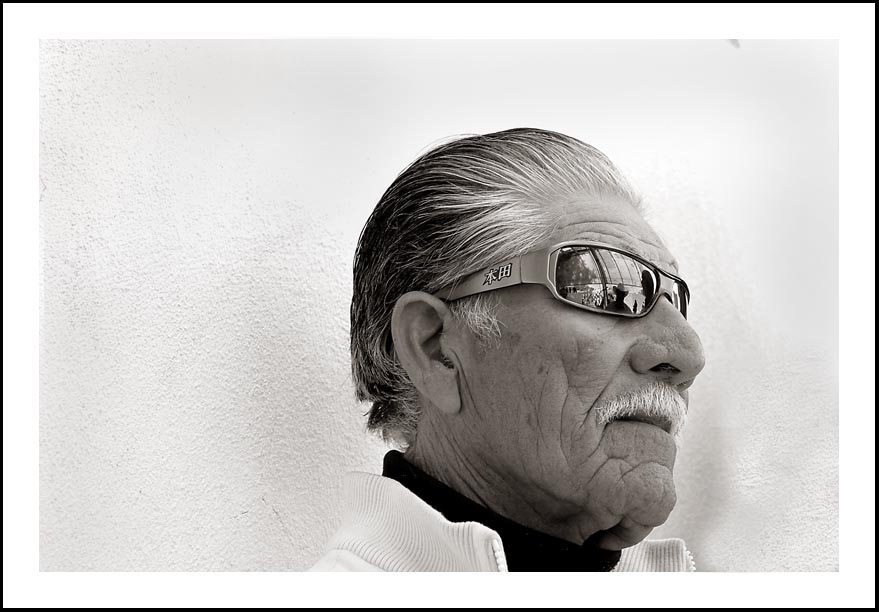
Juarez/13 June 2009
So what else is there in Juarez besides murder and catastrophe?
Right now, it doesn’t seem like anything.
But, then, there are those moments.
Tender Mercies.
I walk the streets. I walk the beaten down downtown. I bus through the factory landscape with For Lease signs more plentiful every time. I walk through the night clubs on Avenida Lincoln, defying myself, defying my fear.
But it’s there. The noise comes out of the clubs, loud, but not the joyous sound, more like the power-driven sound of defiance and booze.
People wait for the situation to end. It will. Someday.
Daily, the murder rate climbs, like an upward missile, slicing through the inherent good nature of this state and city, through this sunny northern Mexico metropolis that was turned into, first, a factory for first world consumption and, then, a monument to the future of world global wage reality. It was that, just a few years ago.
Seems like an entire epoch ago.
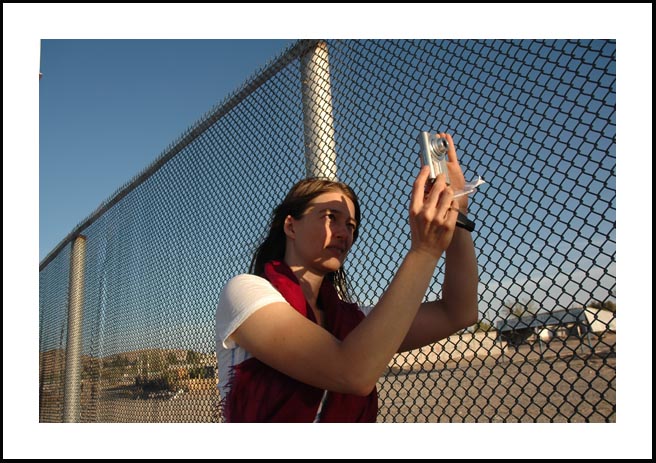
Yesterday I worked with an incredible journalist from Der Spiegel (the German equivalent of Time). She is German, from the north of Germany. Works out of the DC Bureau. Sharp and smart and witty and ironic and puro journalist. We did a story at Fort Bliss. She was bright and lively and brave and charming and funny and we’d had a successful day and did a great story together. She wanted to see “El Paso.”
So we head for the border (I’m a one trick pony. To me, the border is El Paso).
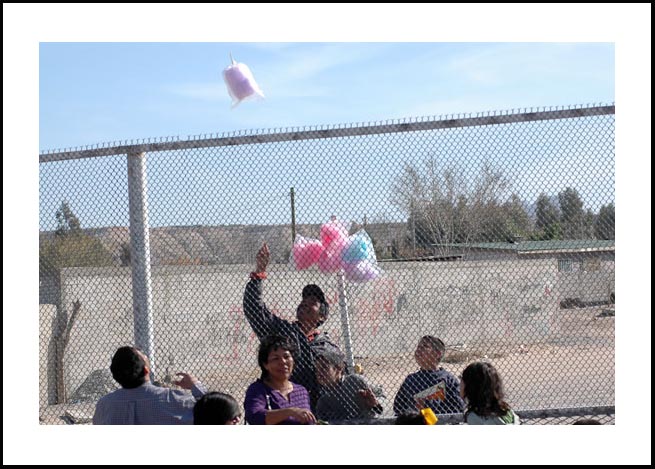
Life goes on.
Mexico is a great pueblo. So is El Paso and southern New Mexico.
One reads the newspapers and one thinks the world has gone insane. Particularly here, on the border.
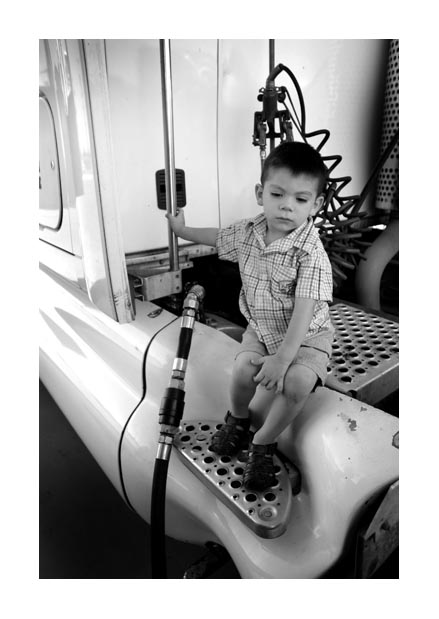
Ciudad Acuna, Mexico
A Mexican border city has begun fining U.S. drivers who cross the border to fill extra drums, tanks or barrels with government-subsidized Mexican fuel.
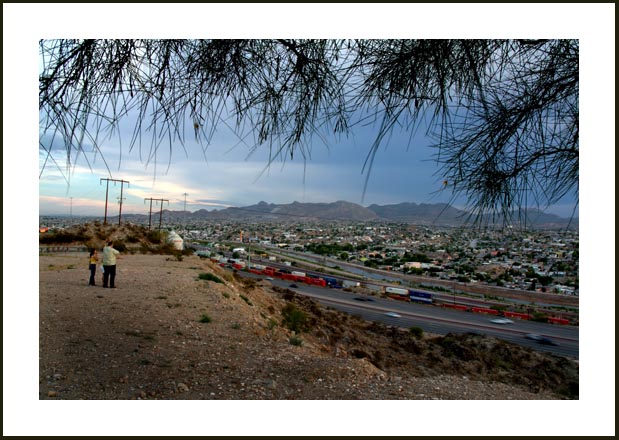
El Paso: foreground.
Juarez: Background.
Words written in blood on old documents and rattling around in people’s heads who don’t live there.
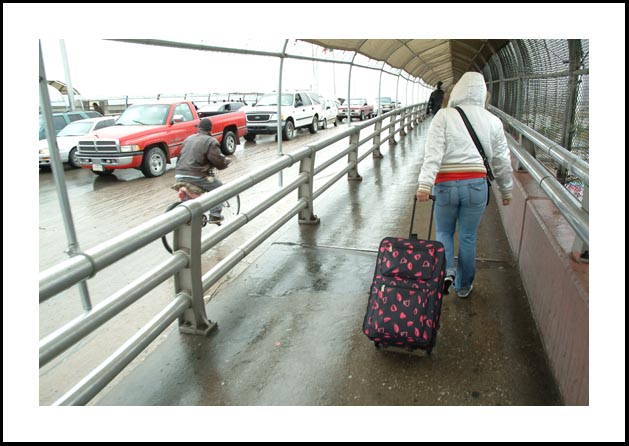
PHOTO OF THE WEEK: May 2-9, 2008
The Paso del Norte bridge between Juarez and El Paso. This is a bridge in hell.
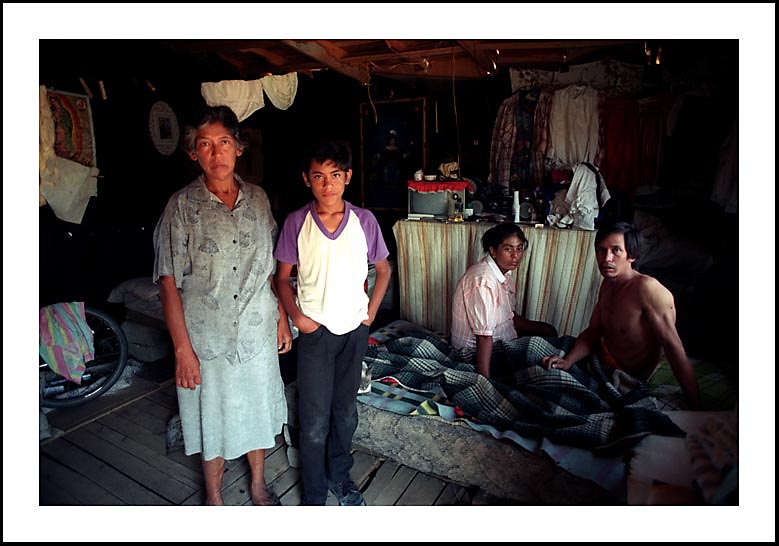
PHOTO OF THE WEEK: April 25-May2, 2008
The Silva family came to Juarez with the intention of crossing the border, into the U.S. and then traveling to the Midwest, where a family member had preceded them. They intended to work in agriculture in the wheat fields of Kansas. A dream. The American dream. It wasn’t to be their dream.

Leap into the river with two names
Leap Day in the Leap Year 2008. Let’s all take a leap. Come on…why not!
This boy and his friends use the river with two names as a playground, a swimming pool, a back yard.
Why not.

Maria Monteros Rodriquez had been looking for her daughter Carmen for days. She had disappeared without a trace from their central Juarez home.
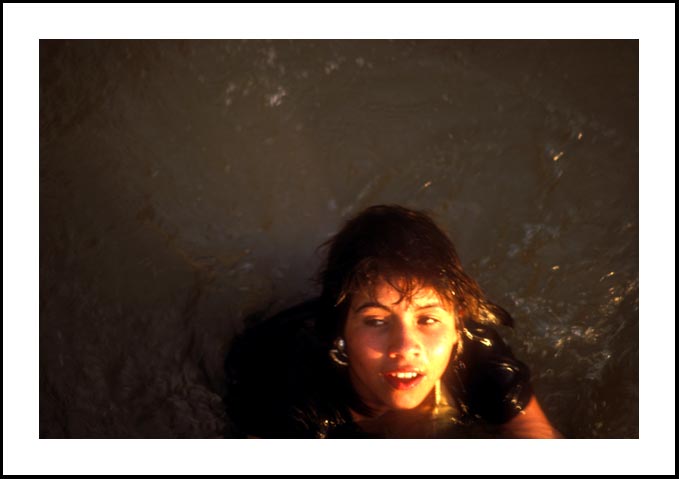
Notes from my Journal
Immigration. Swim, drive, and crawl. People do what they need to do and making them do any of the aforementioned things, put lives at risk.
The river is more than a highway of migration, though.
In the summers, when it’s hot, the river is a giant pool.
People play.
The river is polluted with chemicals from upstream pesticides from the farms, loaded with garbage and debris, has really tricky currents that, every summer, takes lives.
But people live in that river. That river is life for many in Juarez.
If the Jefes could see past their own little tight plans, this would be THE development that would be right for El Paso/Juarez: Play in the river.
Too simple, though, huh?
This girl is clinging to the El Paso side bank. ILLEGAL! La Migra comes and chases her away and she joyously splashes back to the Juarez side where her friends and family jeer and gesture at the Border patrolman. Everyone is having a good time. The Migra laughs, waves, knows he’s part of this great immigration farce, climbs back into his Suburban and drives off and the girl –and her friends- come back, swim to the U.S. side, pose for pictures, live the evening.
The sun sets. I go home. I played in the river, too.
One of the border Patrol’s favorite PR releases is about how their agents saved people from drowning. There’s one or two or three every year.
They never mention people caught playing. Before the fence.
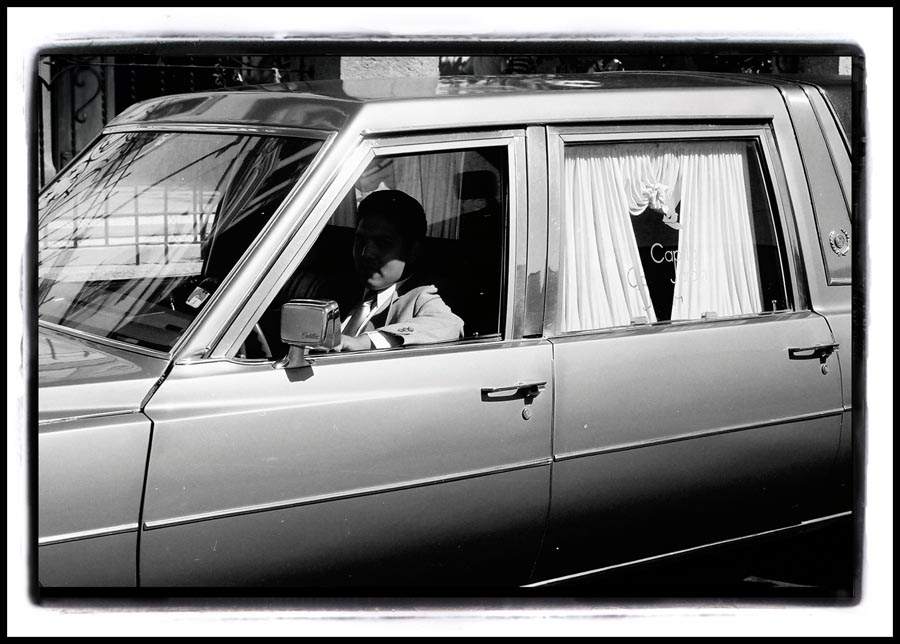
Waiting.
It’s hard to remember the last time I was waiting for something and not pressured to be thinking about the next stop, the next appointment.
Leisure?
Barely remember that…
Slow time? Time seems to be on steroids, going faster and faster.
So I came across this guy and time seemed stopped. He was waiting for the grieving and the return of the dead to his vehicle.
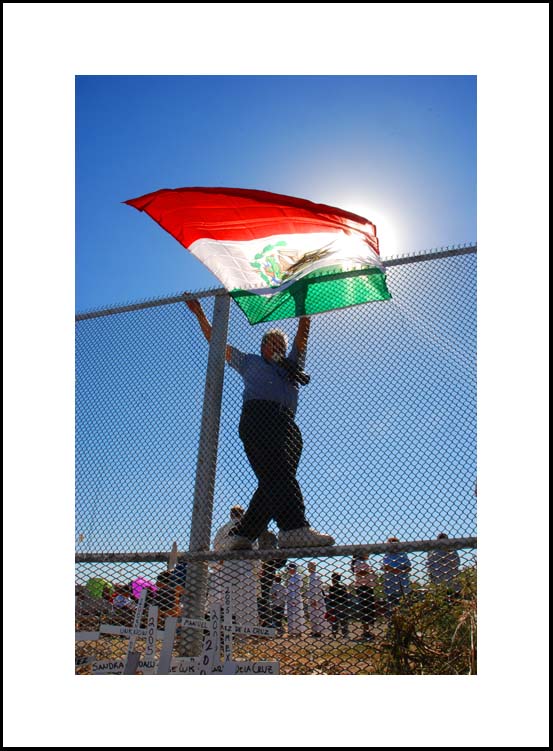
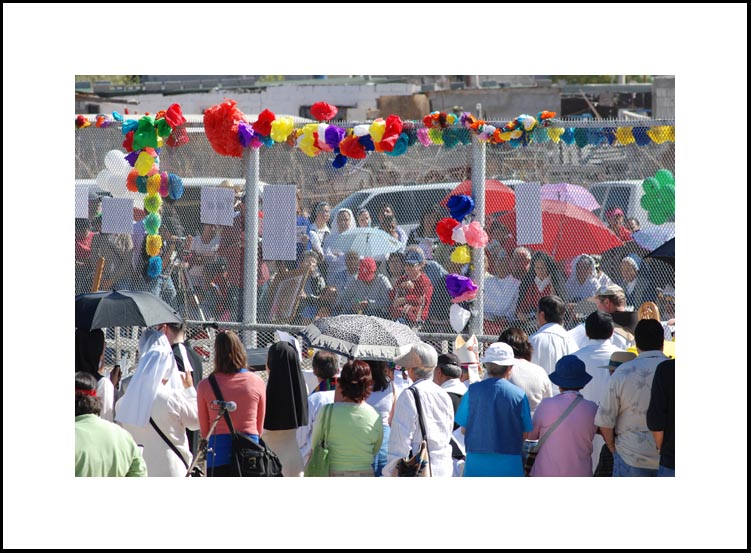
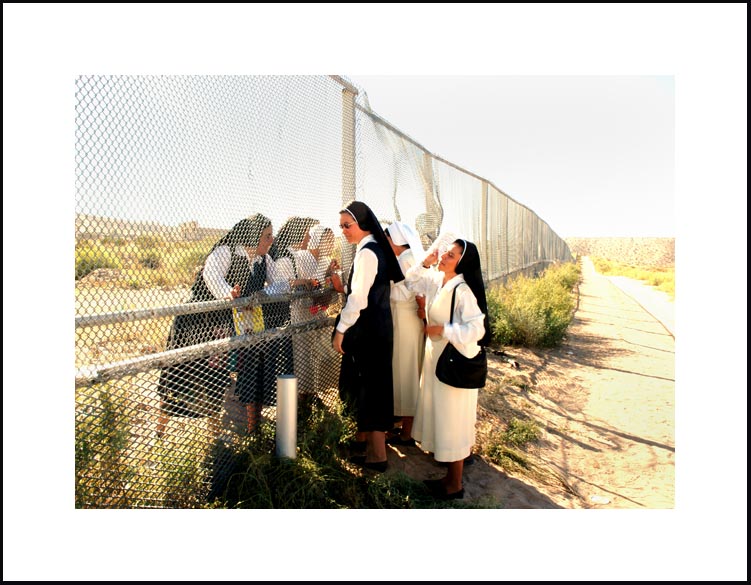
Today the Bishops of El Paso, Las Cruces, NM and Juarez, Chihuahua, Mexico met at the border fence at Sunland Park, NM and Anapra, Chihuahua to protest current immigration policies and to promote understanding for immigrants from Mexico, as well as world wide.
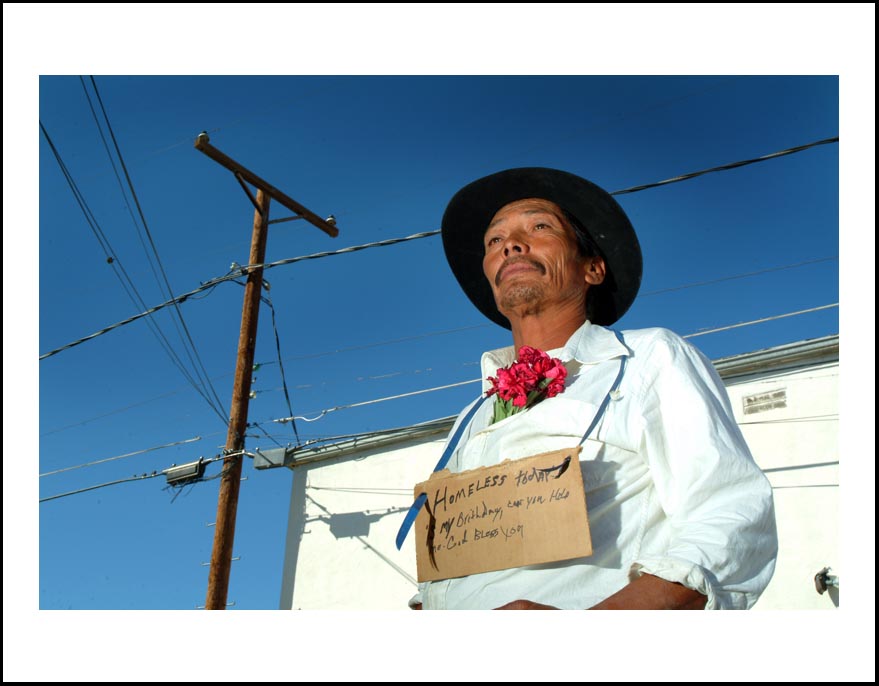
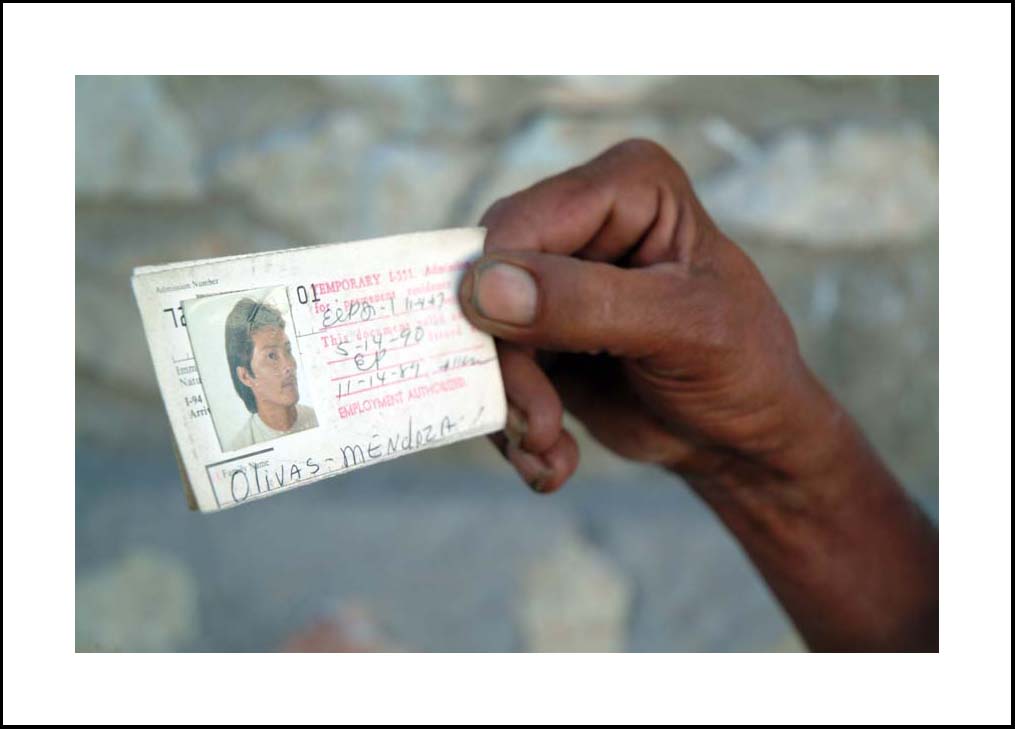
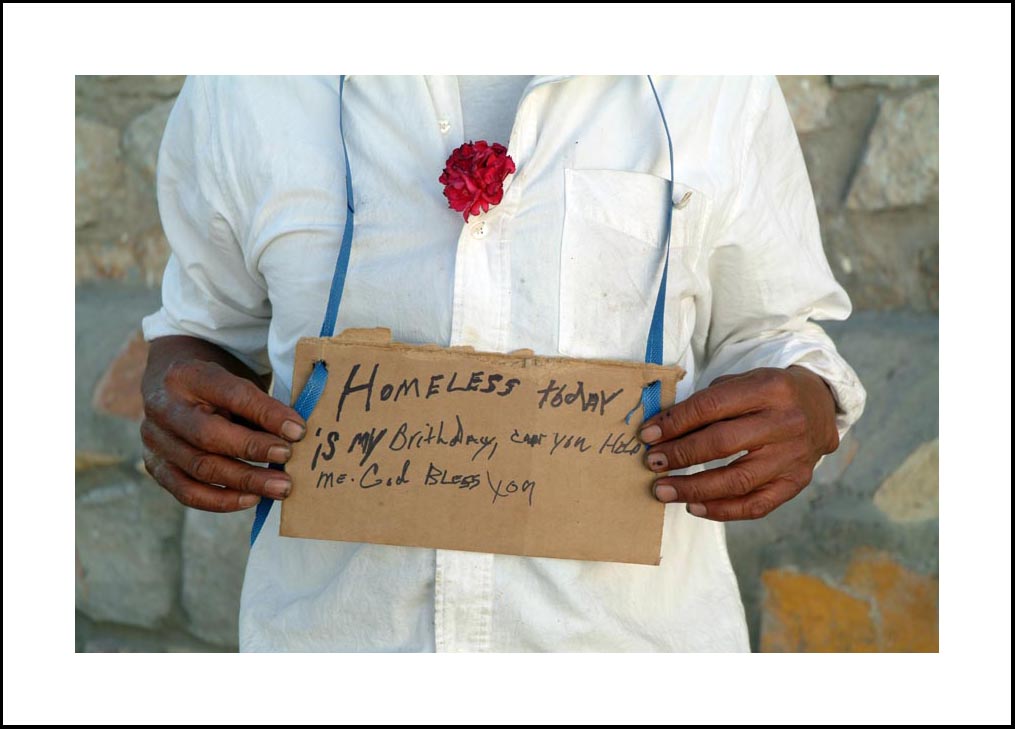
Regino Olivas-Mendoza, 47, hangs around a car wash in central El Paso. He wears a sign that says, “Homeless today, Is my birthday, can you help me?”
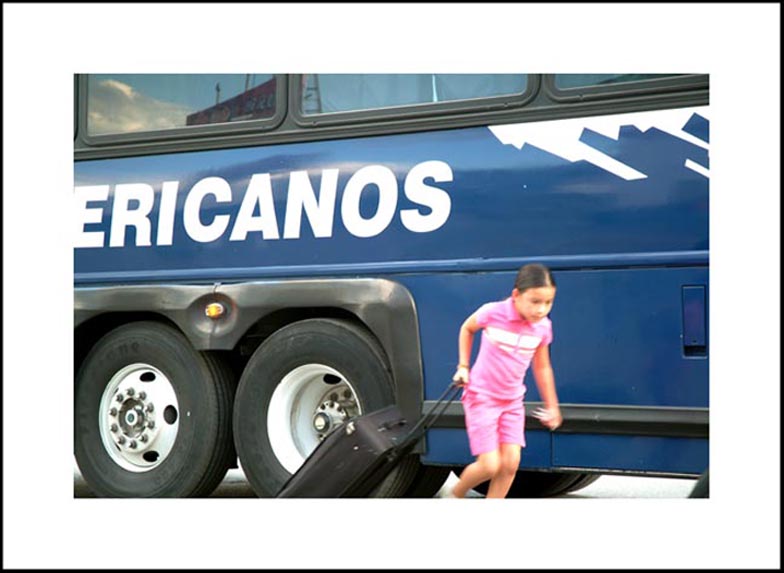
Sixth and El Paso Street is the first street in “America,” after crossing over the Paso del Norte Bridge from Juarez, Chihuahua, Mexico into El Paso, Texas. This is the crossroads.
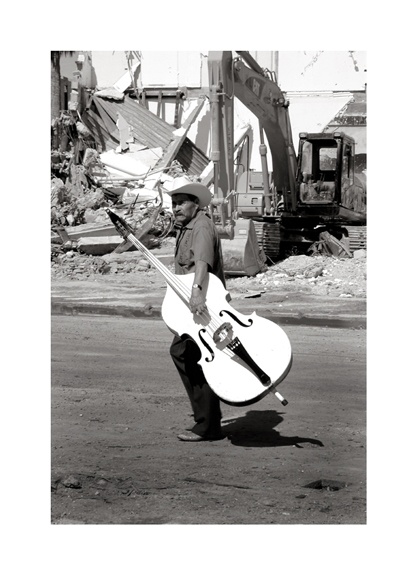
El Centro, the downtown of Juarez, is going down.
La Mariscal, the zone of shops and bars and (say this quietly) brothels north of El Centro, the commercial zone north of El Centro stretching to the border with the U.S., is being demolished and is, mostly, gone.
The “Plan,” has come. Progress is here. Now there is hope for those who need the border to be “clean.”
It shall be sanitized.
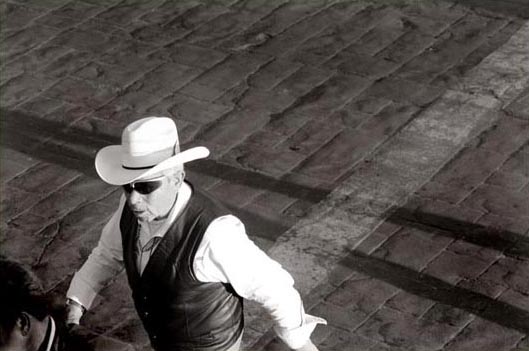
Cool Norteno, Plaza de Juarez – Juarez, Mexico / June 2007
The Plaza de Juarez in Juarez, Mexico is an ancient crossroads. The plaza stands in front of the Mision de Guadalupe, a church established in 1659 along the El Camino Real. The plaza today is still a crossroads and a transportation hub and, on Sundays, is vibrant, eclectic and fully the heart of the old Centro Juarez. Much of the area north of the Centro, the Plaza, and the Mision, the area between the old Juarez commercial district stretching north all the way to the U.S. border and El Paso, is currently, being demolished. The demolition is clearing the way for a commercial development that is projected to link up with El Paso’s south side and Downtown, also scheduled for demolition, just across the river to the north.
The transportation hub that has made the Plaza de Juarez the intense and interesting center of Juarez that it is, is scheduled to be relocated away from its current location.
The “Cool Norteno,” garbed in standard norteno clothes, and others, may or may not survive the “development.”
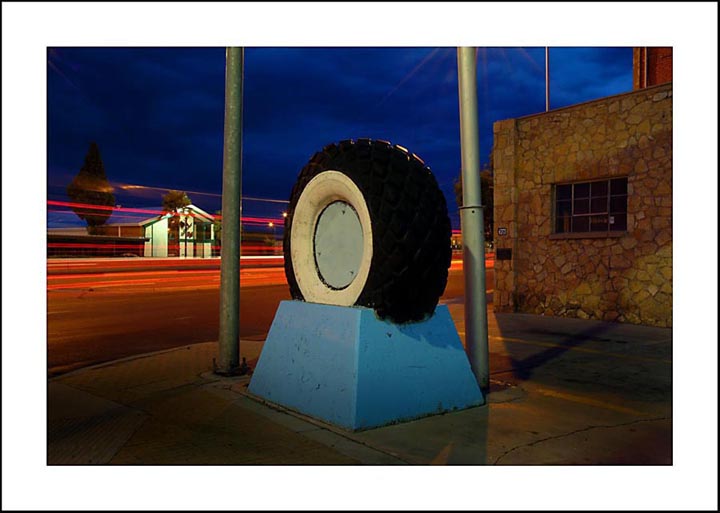
This giant tire is in front of Wicker Tire Company at 701 San Antonio St. in El Paso, Texas. It has been there since the late 1960’s and has become an El Paso landmark. The tire was originally on an earth moving vehicle that worked on the Panama Canal. It was brought to El Paso in the late 1960’s, where it has rested at the corner of Paisano Drive and San Antonio Street. Before Interstate 10 came to El Paso, Paisano Drive was U.S. Alt Route 80, the truck diversion route around El Paso, part of U.S. Route 80 that was the main southern route starting in Savannah, Georgia, and ending in San Diego, California. When Interstate 10, was completed, most cross country traffic was diverted from Paisano Drive, but, the Wicker tire has endured and enriched the landscape for several generations of El Pasoans and other passerby. Highway Art, a commercial mainstay of travel in the United States in the 1930’s through the 60’s, has become true art and and this one endures as a true El Paso landmark. Tom Wicker, son of the founder of Wicker Tire Company, maintains the Giant Tire, repainting it approximately every three years, “Or sooner if it’s graffiti-ed,” says Mr. Wicker .
Additional Notes on US Highway 80
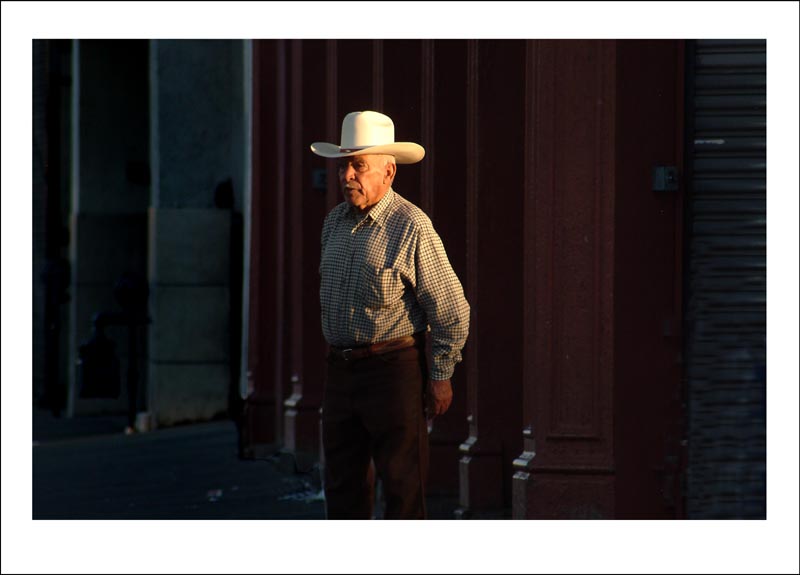
A man stands in the last light of the day at the corner of 6th and El Paso Street in El Paso, Texas. This is the first street of the United States after entering the U.S. from Mexico from the Paso Del Norte International Bridge. The bridge links Ciudad Juarez with El Paso and 6th and El Paso streets could be considered the crossroads of the northern part of the Western Hemisphere from south to north.
A lot of old folks (viejos) grew up in this barrio and are still there. They are the dignity of the barrio.
Imagine how people felt when a picture of an old viejo was used, by City planners, to show what was wrong with El Paso?
Los Viejos are what’s right with El Segundo.