Search results
33 results found.

On The Edge of the Edge – The U.S. – Mexico Border
33 results found.
All photographs are ©FrankOscarLarsen2015
http://historymatters.gmu.edu/mse/Photos/online.htm

This is a good place to see some documentary photography collections.There are a lot of sites on Native Americans. That’s good. But, I find a scarcity of sites relating to Latinos, Mexican Americans or the Border. Do you have to be eliminated to get documented.
While I’m at it, here are a few more documentary sites:
http://www.maryellenmark.com
http://chnm.gmu.edu/fsa/
http://www.soros.org/initiatives/photography/focus_areas/mw/10
http://www.edelmangallery.com/misrach.htm
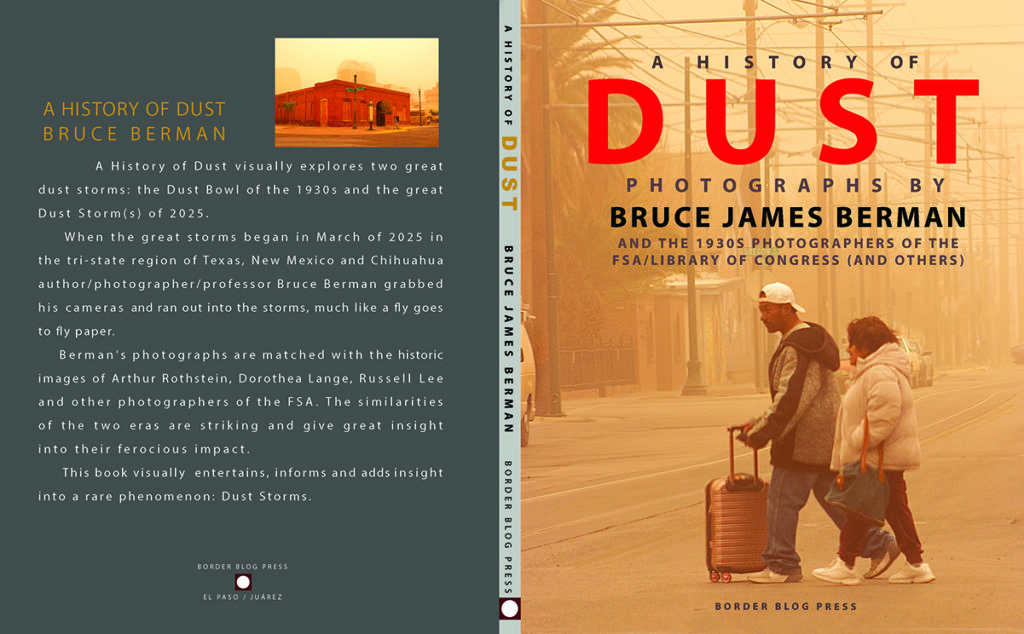
The HISTORY OF DUST book is out. Available on Amazon as of now.
The book explores two different major dust seasons, both record-setting: The 1930’s Dust Bowl and the 2025 tri-state Great Dust Storm, that enveloped New Mexico, West Texas and Chihuahua.
The book features the photography of Bruce Berman (2025) and the 1930’s FSA (Farm Security Administration) photographers of the Dust Bowl, including Dorothea Lange, Arthur Rothstein, Jack Delano and others. With quotes and narrative the book show the similarity of the storms but points out the differences as well.
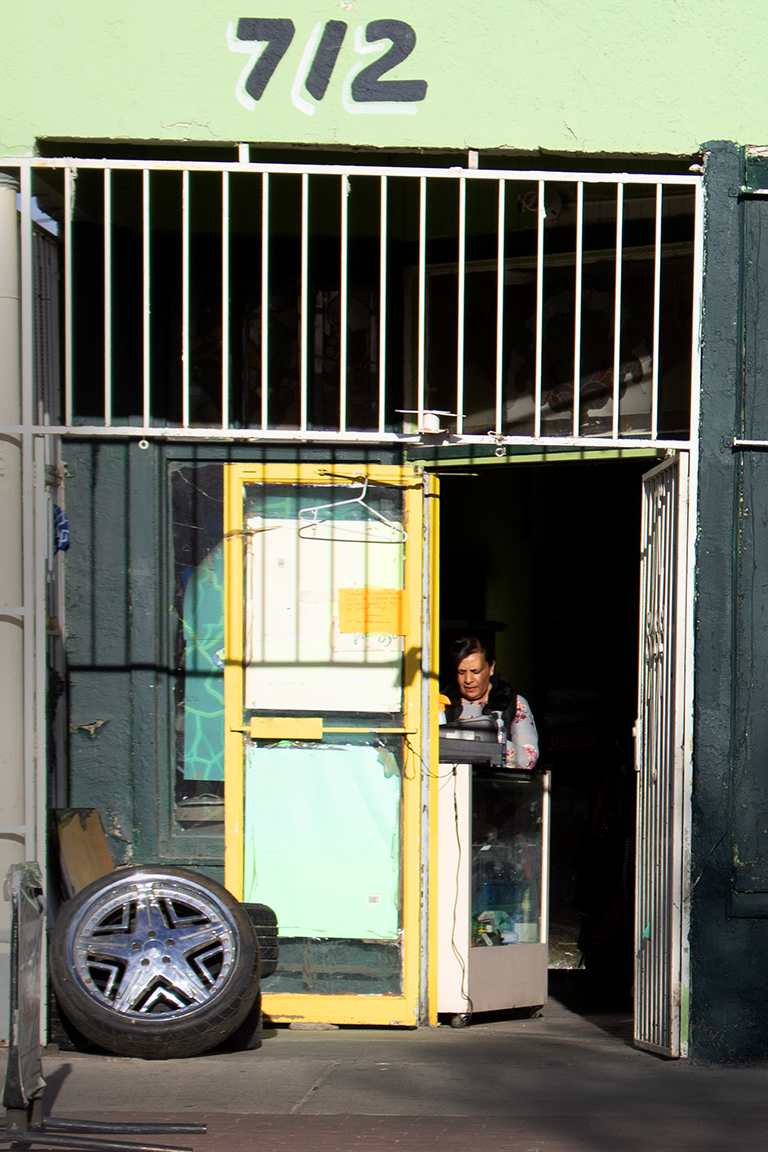
Southside El Paso, February 27, 2024
Text and Photograph by Bruce Berman
Dodged the bullet again. Well, this time there is no ‘explainin’ it so it’s fair to say, a hand deflected the fatal bullet.
Another chance.
Haven’t been doing photography much–for myself–in recent years. Been teaching. 34 semesters and most days in between spent on working at it. Caught up with me. Every word that went out came out of somewhere, somewhere where ghosts dance, that place deep inside where who we are actually lives. I built that up for years. Can one afford to let it go, driveled out in a million repetitions? And, for what? On February 12 a bomb exploded in my chest during my first class of the day. I taught my way through the whole class while The Reaper toyed with me, as God stood by and watched me gamble. Idiot! Why would I think God would intervene for a fool?
It wasn’t my time it turns out. Not now. Not yet. Why? All the right pieces fell together on the timeline, miraculous people showed up, the traffic parted ways for Mary’s defacto EMS Hyundai, and colleague Darren, always quiet, protecting his genius, appeared. Navy man. He all but carried me to the car then went into the building and with the precision of a true leader, with his cellphone, assembled the “troops,” at the nearby hospital, the cardiac team. Mary battled noon traffic. I was in and out, almost gone. We got there and Dr. Miracle, Abdul, his Rock ‘n Roll med team, waiting, like a great band about to play the once in a lifetime anthem; Lights Out.
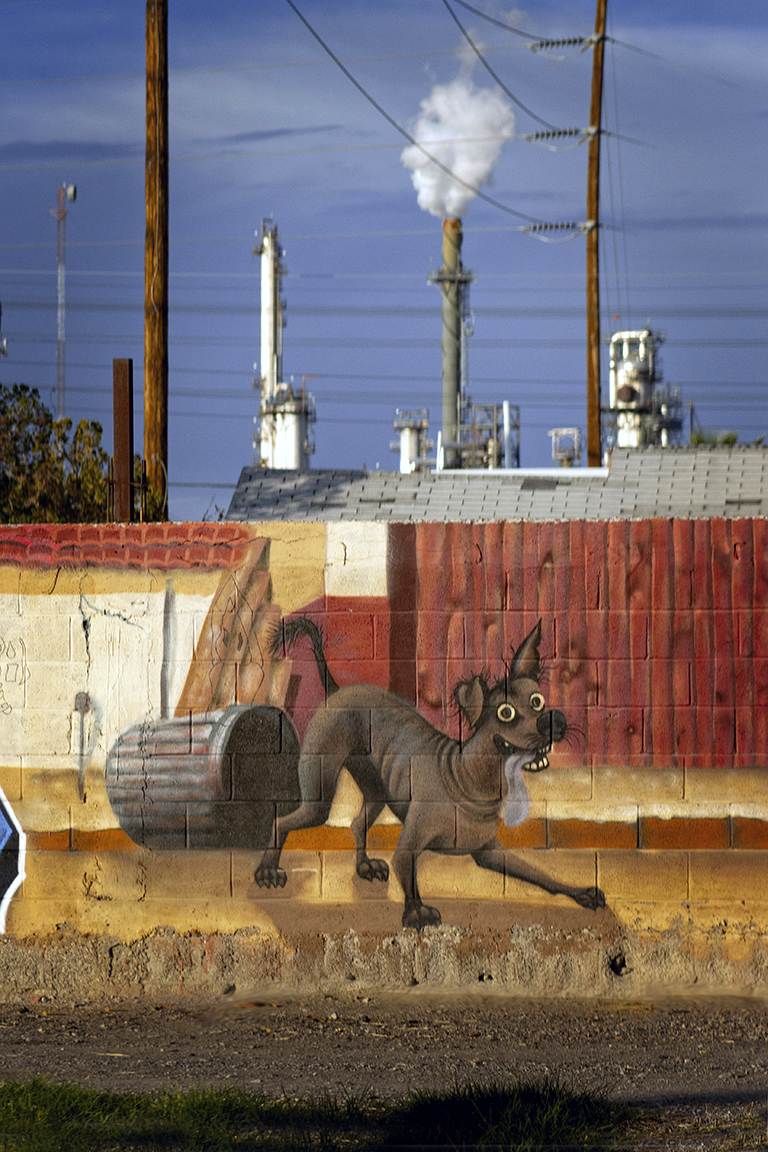
Running Dog, El Paso, November 2023
Text and Photograph by Bruce Berman
I thought I was bringing “the border” into homes that knew it not.
I no longer think that.
I remember an acquaintance, at an exhibition I had, coming up to me after the show and talk and saying, “Now I really know the border and I’ve lived here all my life.”
I was flattered and felt great gratitude. After all, that was my intention in photography, to show and tell what others didn’t see or know.
He then said, I’d buy a photograph, but my wife just couldn’t see one that fit her new color scheme for our living room.
I didn’t know what to say. What could you say?
I understood that when he said he finally “knew the border,” he actually meant he finally could see how he could use what I saw and made for his own needs and wants.
¿Interesante, eh? It’s OK, but I hope for more.
I’ve come to know that most people overlay themselves on the border–maybe on all photography–and for them whatever is there is what is already embedded there, within them, no matter what the image shows.
So be it.
I look for coherence in what is incoherent and hope that someone–anyone–sees what I saw, felt what I felt, but most importantly, comes to know what I know from it.
I have have no expectations.
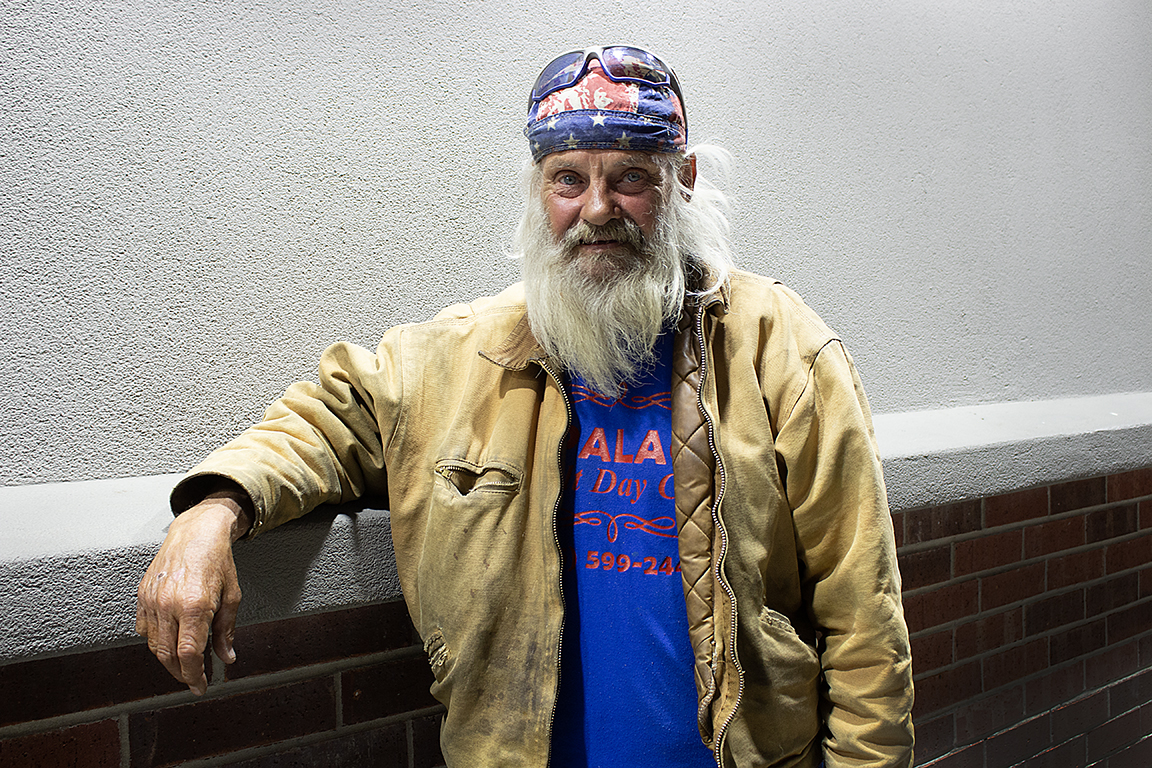
Ghost, Exit Zero, Anthony, Texas, May 18, 2023
Text and Photograph by Bruce Berman
This is the first photograph I’ve taken in a long time that actually means anything to me.
I’ve been a photographer for fifty-five years. So that’s kind of a sad statement, eh?
I’ve been teaching photography at New Mexico State University for the past seventeen years. It takes its toll.
All the energy I ever put into my own work and the work of the work that allowed me to live off of it gradually but inevitably goes into inspiring others to do what I used to do.
Anyone that teaches can tell you there are some great students that make it all worth it. They’ll probably also tell you there are a plethora of others that didn’t treasure the gift you gave. It’s part of “the biz.” You roll with it.
I do think there comes a time, a rubicon, where your own creative desires become endangered. It’s not just the endless repetition about the mechanics, and the history and the nuances of doing photography, it’s also the endless drivel of academia, the business of being in a university, the committees that mean nothing to me personally, seemingly a bubble of detachment from reality, the occasional obscenity of human behavior, acting so massively vicious because, the stakes are so low. Politics are vicious and low. The feeling of irrelevance can be very high.
For almost twenty years photography has been my voice and the border has never stopped callin’ me.
Photography moves me still, but in conversation, more and more I’ve talkedf about my teaching job at New Mexico State University, as “passing the torch.”
I’m not sure, but maybe it’s been passed (and will continue to be).
I’ve been fretting fora few years about “what’s next?”
Right now, all I know is, if you aren’t feeling as good as these kids (on this video) or even something a little like it, it’s time to stop fretting and get the “next” going.
And I shall.
Two things are calling me and calling me hard these days and nights: Music (guitar… which doesn’t let me go to bed early or even late) and Africa ()which just won’t get out of my head).
Stay tuned, when Im know more I’ll let you know.
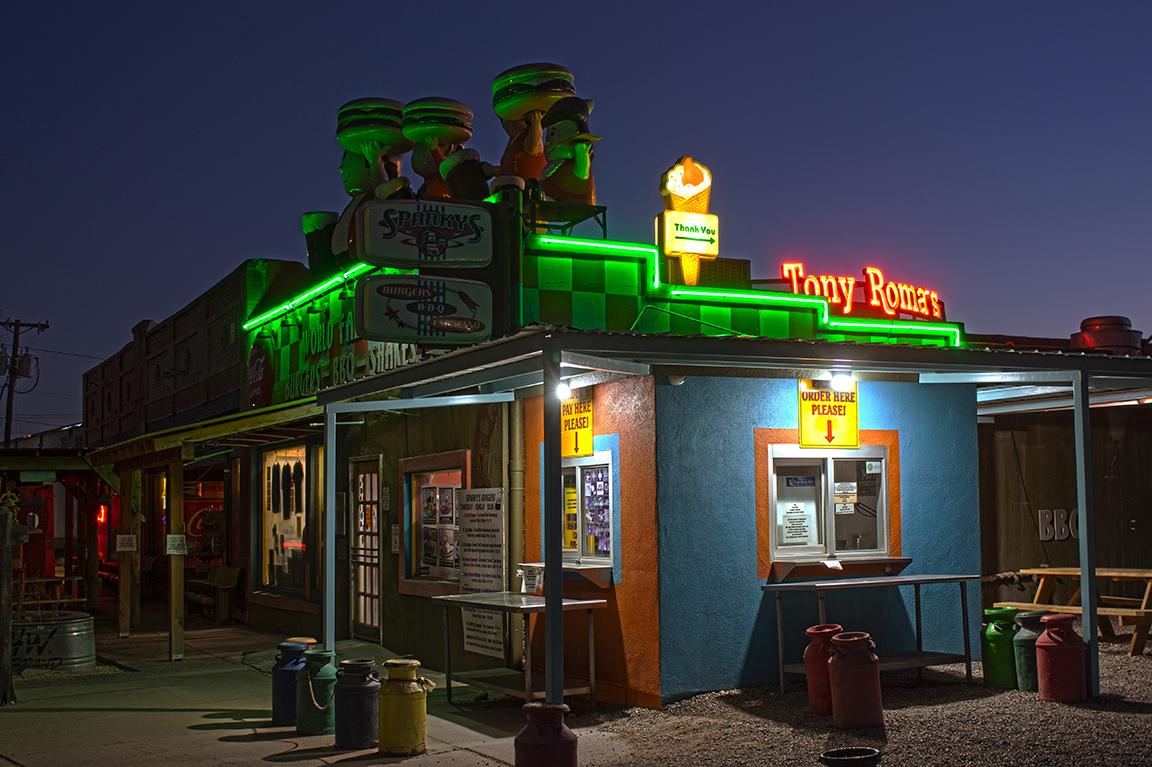
Tony Roma’s, Hatch, NM (SVNM/Small Village New Mexico Project),
March 2022 by Bruce Berman
Text and photography by Bruce Berman
The SVNM Project is a group documentary project done by the students (and professor) of the photojournalism program in the Journalism and Media Studies Department at the New Mexico State University (NMSU). The project is an ongoing project done over the past ten years.
It is a document of the Rio Grande river valley of southern New Mexico.
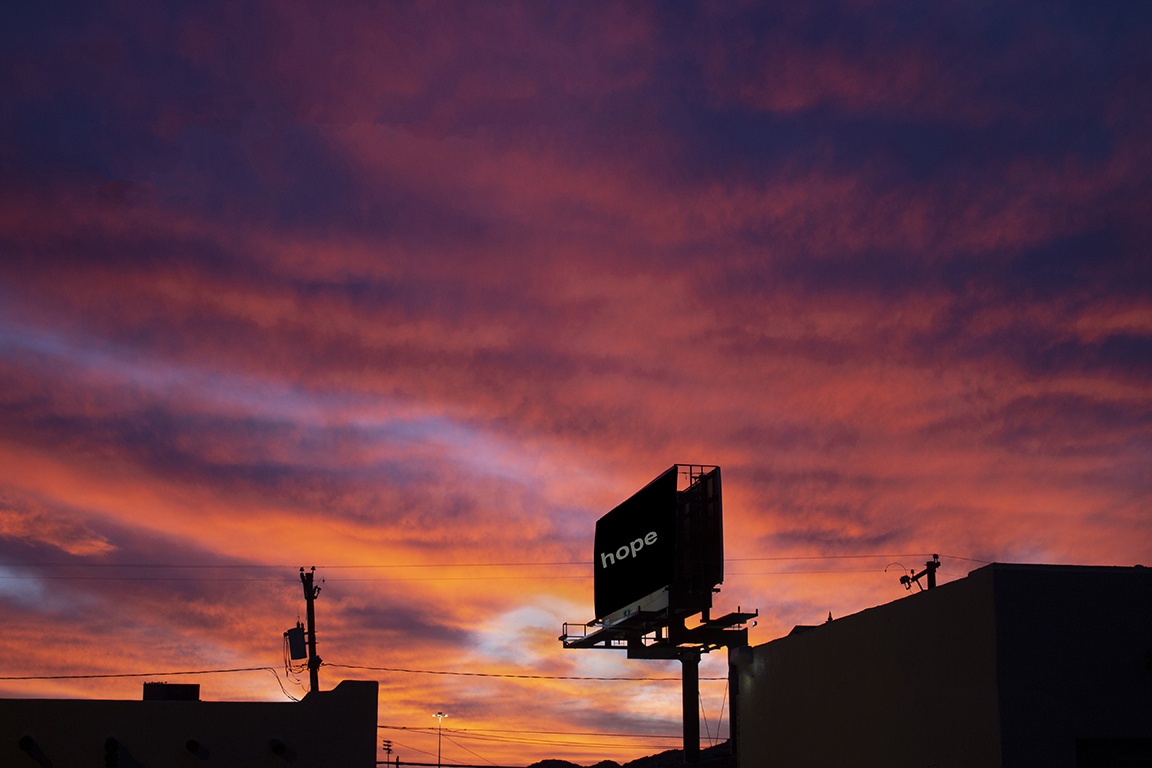
Hope on the border (Illustration), El Paso-Juárez, 2021
Text/Photography by Bruce Berman
This is not a photograph. It is an “illustration.” It’s a “montage,” a form of photography that goes all the way back to the near beginnings of photography. The distinction between “illustration,” and “photograph,” is that the former is an idea and an opinion and the latter exploits photography’s main strength: believability.
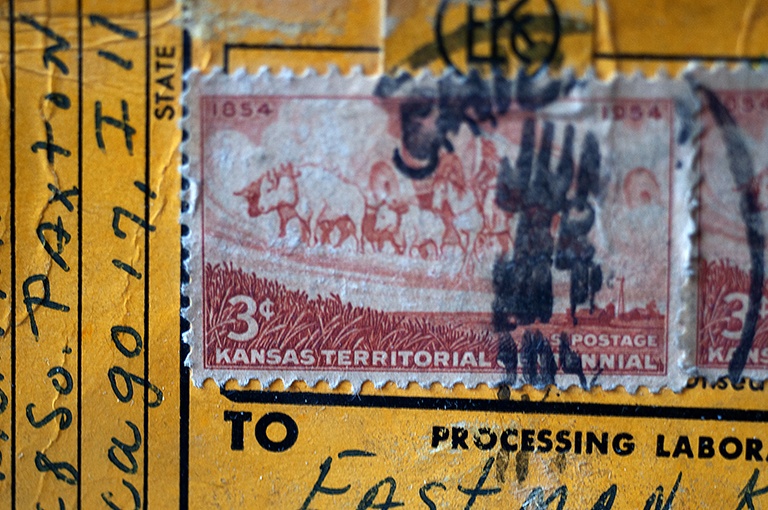
Cancellation #93, Mom’s Kodak film, Chicago, 1950s
I once did an entire series of photographs called “Cancellations.”
It started because one day I was looking at a stack of shipping boxes of my photographs that I had sent to various galleries and museums (pre Internet) that had been summarily rejected. Thanks. No thanks, return to sender. There were a lot of stamps on those heavy boxes. The post office cancellations were ruthless, slashing, colorful. It’s like the post office knew I was unworthy, as well. I half jokingly wondered if the galleries hadn’t done it themselves.
I got lucky here and there, exhibited them for awhile. Dallas. Houston. Cologne, Germany. The art world thought they had found a new star. I knew I was a fraud.
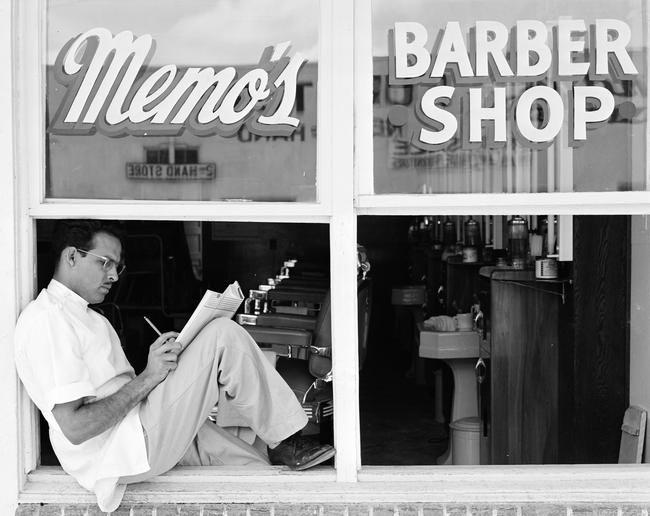
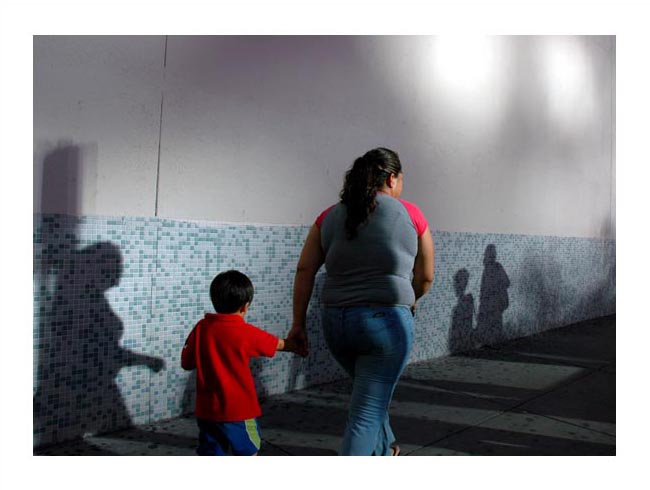
photography by Russell Lee, 1949
Opinion/Observation
by Co-Editor Bruce Berman
___________________
I drive my old routes. Camera on the passenger seat or my lap. As always, these days it usually stays there, untouched. There are things along the way that spark memories. Object that aren’t there anymore. Gorgeous commercial signs constructed by craftsmen in the 1950s and 60s (not the least of which from the Jimenez Sign Company) were carted off to other cities that were twenty years ahead of El Paso in their bourgeoisie ambitions.You can drink under some of El Paso’s “Motel, Vacancies,” signs in various bars from Austin to Houston to Baton Rouge. There’s a withering away now, aging and weathered, but mostly not endearing anymore, not worth stopping for (to make images). There came a year, a month, a day when the treasures of El Paso were either gone, carted off or just left to rot.
There are whole swaths of this incredible and authentic city that are gone, at least for the long gaze of a photograph: Alameda. El Centro (downtown). Segundo is shrinking fast, bordered by El Paso Street on the west (with nasty tentacles of them all over it) and Cotton on the far east, with old residents living out their days, youth getting out fast and them with their bulging eyes all over it. Off of Delta there are condominiums and some revamped industrial buildings, residents living an almost urban lifestyle (sans humanity). Even the Gay Bars have fled, a sure sign of urban renewal/removal.
It’s not my job to do anything about any of this. My job, as I saw it, at the beginning, in 1980, was to give face to a face that was not known and I have tried. As The Grid lays out its future in the city with two hearts, it’s clear to me that my mission isn’t to pick sides in land rights, power exchanges, or to watch -or judge- the inevitable blandification. But blandification has come. Oh happy day. Some loudly exhale and go, finally! The city is becoming presentable to visitors again. It’s cleaner. It’s newer. There’s baseball. Soccer is coming (watch out Chamizal! The final blow that started in the mid 1960s is finally here). There are restaurants with the preface Le with Foo Fo thing-a-ma-jig dishes with little portions of things that look like they squiggle -vegetables- on top of things it’d be hard to identify below. Fancy. Plates of Foo Foo. There are young people downtown again, well, the kind of young people that look like they’d also be comfortable up in Kern Place on Cincinnati and the upper Westside.
Finally, there’s a Starbucks downtown near the Plaza and the Westin. The kids from the ‘hood can serve the hipsters that come in from outer Zaragosa Road and beyond.
Boring? Not to everyone and I wish them the best. I am not part of this. I left this scene in three other places I lived before this very long stretch here. It’s the same message: you’re in the gentry or you’re equitied out of the gentry.
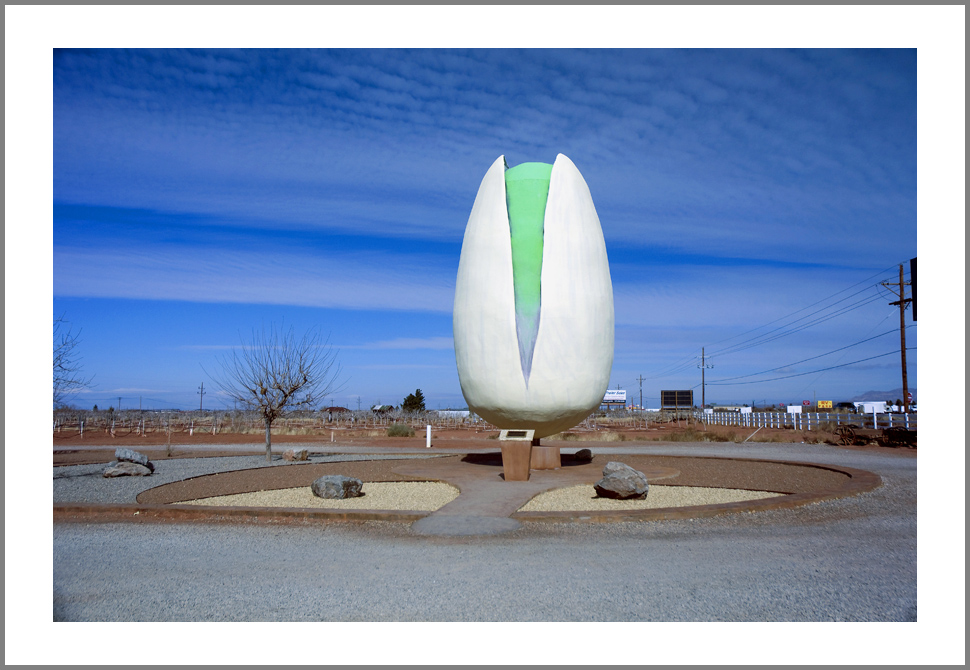
CORRECTION:
Just got a very welcome announcement from a Border Blog viewer. He pointed out that the above image is a representation of a pistachio not a pecan.
Correct!
We don’t have much of a defense, but really, when this was posted on April 24, your Border Blog photographer, Bruce Berman, wasn’t much Bruce Berman either. That’s what happens when one “does what one has got to do as opposed to doing what you do.”
We at Border Blog are pleased to announce that the real Bruce Berman is back, on the border, three blocks from the bridge, in his decaying ruin, tape -metaphorically- over his mouth, no longer talking about photography but living his life, and making images that, hopefully, will do, as we wrote almost a decade ago, stating our intention to (see the “About” tab above), “…cover the news, opinions and culture of the 2000 mile border of Mexico and the United States, concentrating on the epicenter of El Paso and Juarez. The Border Blog is not meant to be a news source as much as it is meant to be a news ‘feel’.”
Thank you MB and thank you Bruce (but tsk tsk on your caption!).
-The Editors
A Dear John Letter to ASARCO
by Bruce Berman
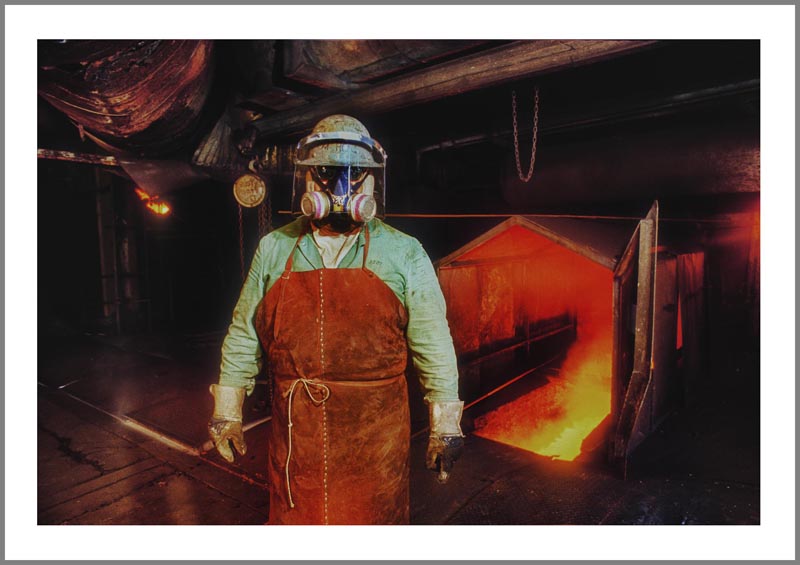
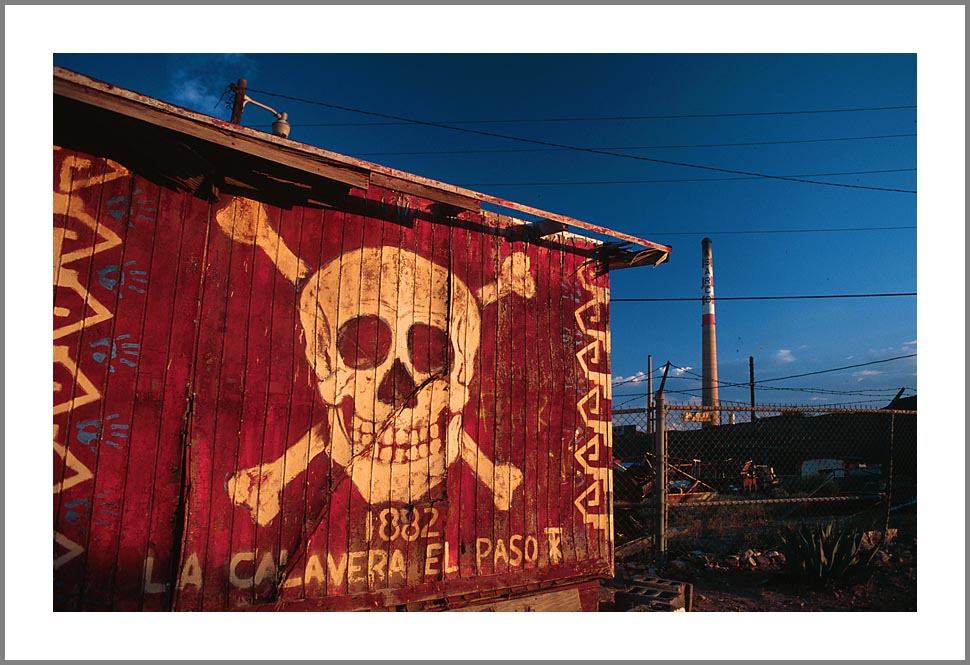
Au revoir ASARCO. You were the spine of the border, a big giant dong sticking up out of the river, pouring flames and sulfur, lead and smoke. The town grew up around you, fed off of you, then outlived you. You looked down on battles and traffic, always with the bifocals of looking at two countries at once. Looking east to El Paso, you looked down on the dusty foothills of the Franklins that became Kern Place and Mesa Hills, the sheik and elite (in its own mind). On the other, looking west, down into the dust and turbulence of Juarez, you looked down onto Colonia Felipe Angeles, which, too was foothills, that became a shanty town which became a barrio which became (shhhh..not quite yet) a path to a port of entry into New Mexico. What a vantage point you have had. When I first saw you I stood up straight, saluted and said, Wow, yes sir!
I dug you from the gitgo, had the pleasure of working inside you, being constantly re-awakened by you, of working inside you near those flames with the weather outside 105 degrees, feeling the comradie of your workers, the satisfaction of being inside something that wild and crazy and productive, a caldron of energy and raw power.
Christmas Eve/El Paso
A Personal Narrative
Lost and abandoned. Christmas Eve reminds me of that, right now, as I look out my south-facing window to Juarez (three blocks away) across the valley of Juarez, to the foothills of the Sierra Madre, where Creamac sits, CREAMAC, the “mental Institution” there, where the people huddle, people with trouble, trying to be warm, trying to make sense of the world, trying to live. CREAMAC, the House of the Abandoned and Troubled and Hurt.
I should be there. Today. Often. More often. I struggle with that. It’s snowing outside. Excuses to stay home, safe, just wrestling my own demons. I should cross the bridge (would my car get back over the ice on the bridge later tonight?), I should do SOMETHING!
Do I?
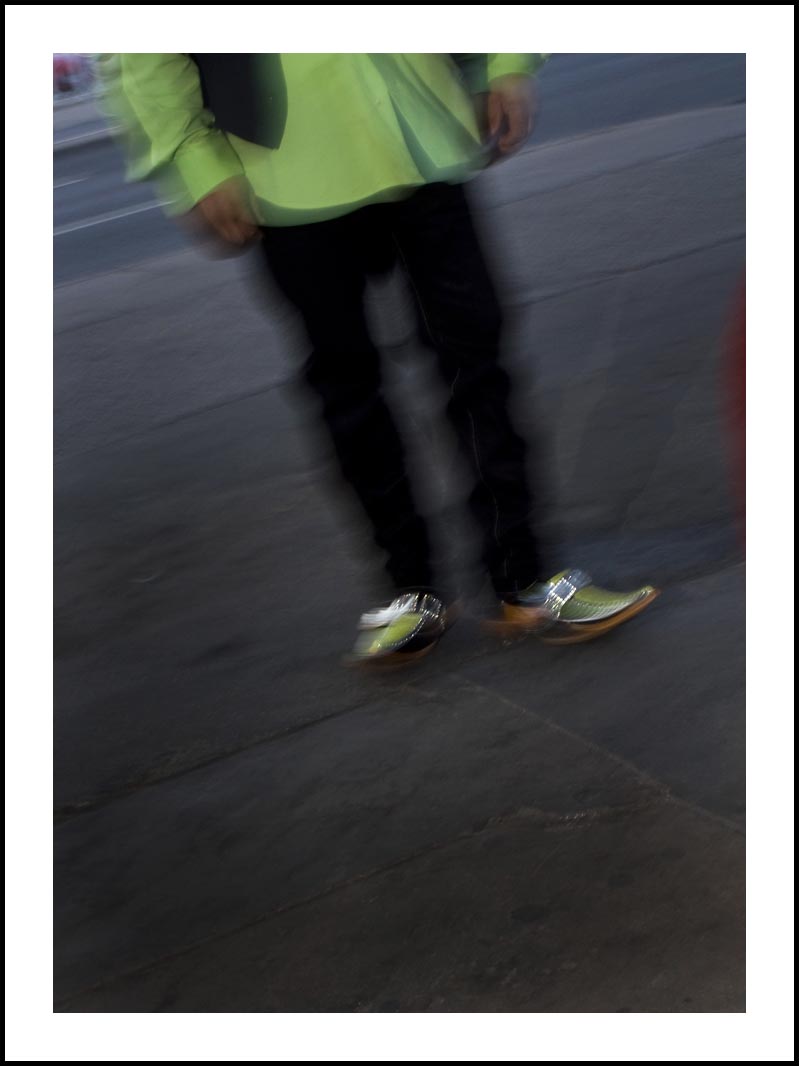
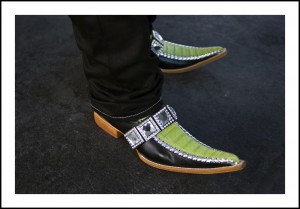
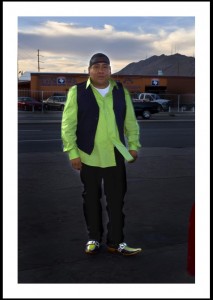
El Paso –Six blocks to the border. There are diamonds. Well, they ought to be diamonds. He says they cost $250. I believe him. Sunday drive. Family in the Dodge. Stylin’ on Paisano Street by Bowie (Boooie). If you know El Paso you know the references. If you don’t it wouldn’t matter. Chuco street.
One of the riddles of photography for me is that every once in awhile there is an image that must be in color. Most everything I see and shoot is in B/W, but every once in awhile…
This dude is in color.
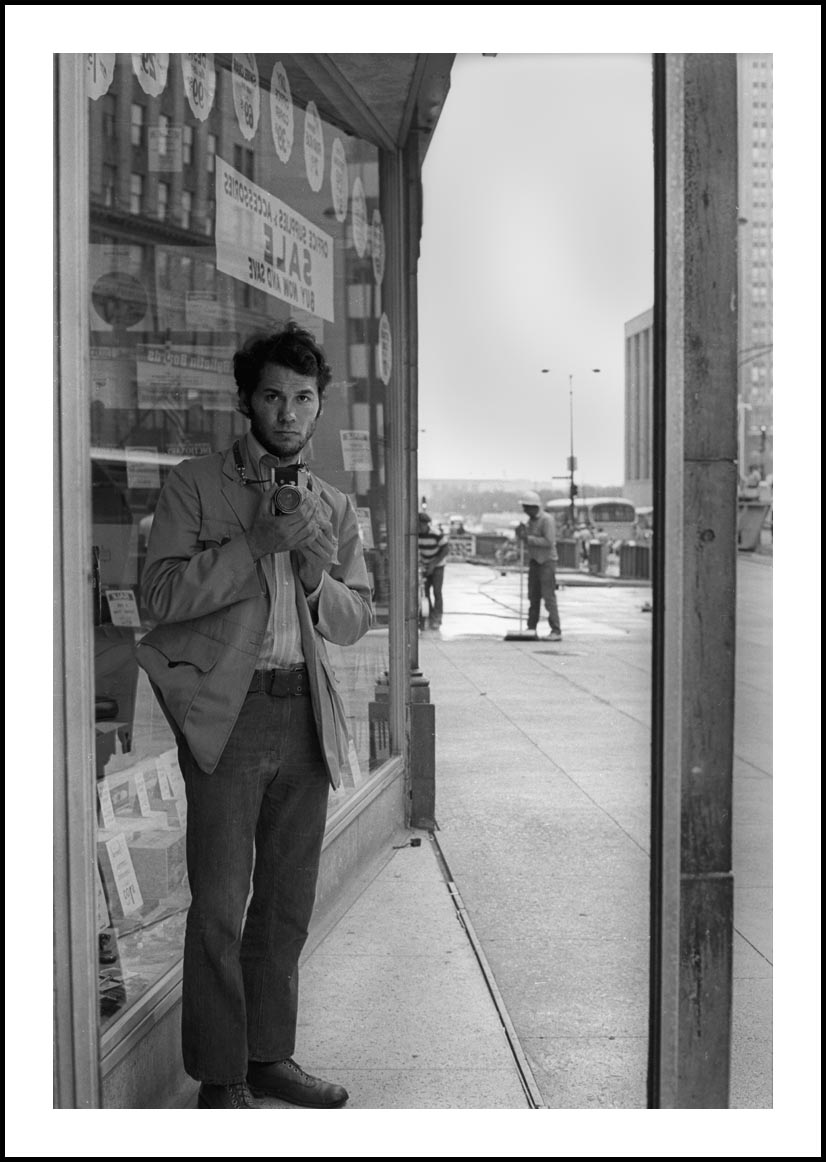
Garry Winogrand. Off kilter. Off beat. And right on in capturing the milliseconds of the oblique.
Watch this video and think about Garry lassoing the non-monumental. He was a wild puppy and full of life. Just enjoy the fun.
A memoir: Meeting Garry Winogrand
by Bruce Berman
Garry was a photographer and a winner of prizes: three Guggenheim Fellowship Awards (1964, 1969, and 1979) and a National Endowment of the Arts Award in 1979. He was a street guy and he was, most of all, a New Yorker. His photos reek “NYC.” He was hugely famous and revered in the 1970s and 80s.
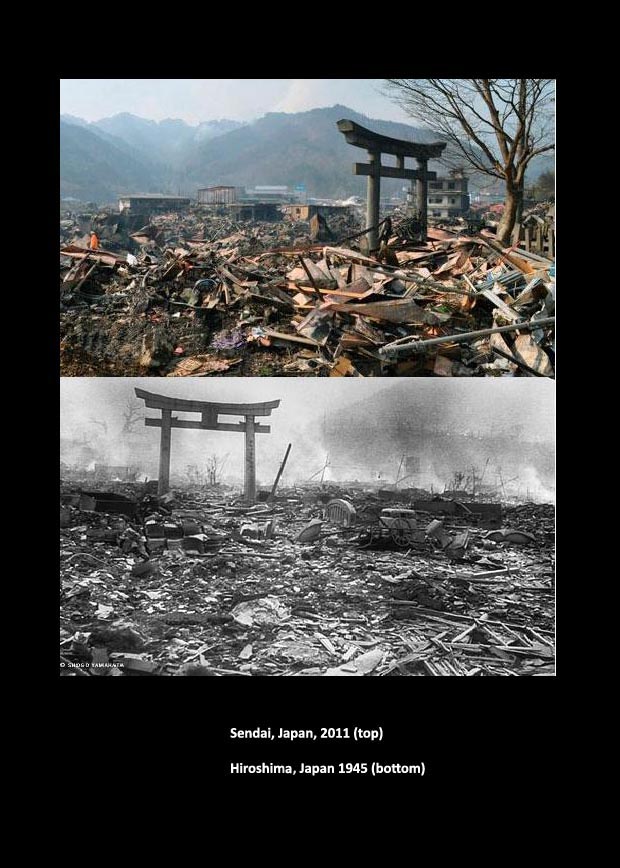
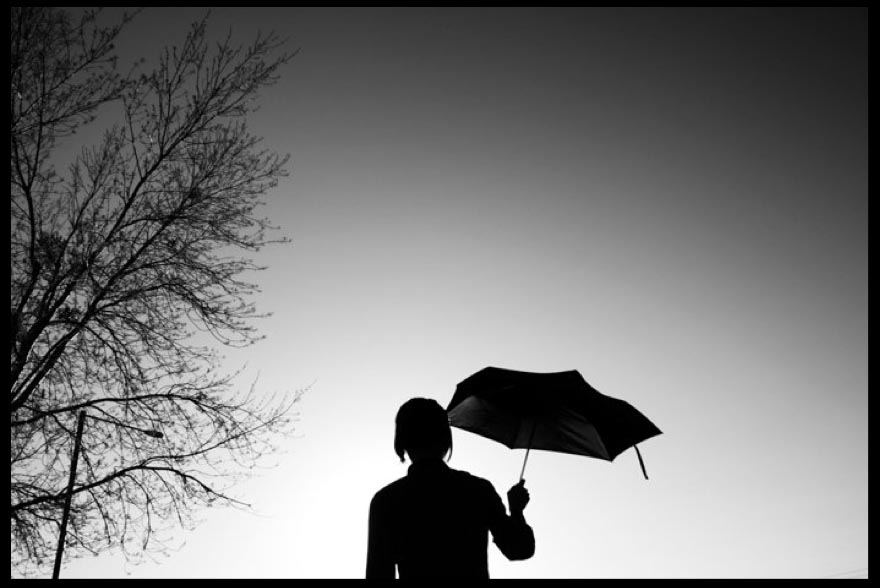
Japan –One takes one’s blows. Japan, oil-less for so long, bitten by the need for energy for so long, powered by spirit, hard work and, now, uranium, has received a blow. A blow is either fatal or forgettable.
We will see.
I receive a message from my old student, in Osaka. He is going to have an exhibition in September (and begin his studies in photography anew). Yeah! Forward. The horizon. Onward. His show will be work that he began in my documentary class: Smokers. Pure defiance! So cool.
What do you die from first: smoking, radiation or loss of defiance?
Go Keita! Go Japan! Live your future. It’s good .
Life goes on.
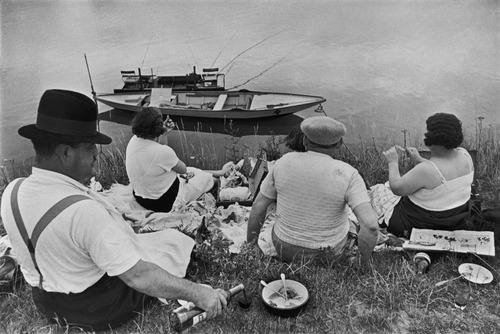
Is Photojournalism Dead Yet?
by Steve Ettlinger
Born in the 1930’s, come of age in the 1950’s and 60’s, and pronounced near dead in the 1970’s and virtually buried by the closing of magazines/rise of the internet–you have to wonder how it is that some aspects of this wonderful world are still around.
A piece written to my photography students at the end of a fine semester at New Mexico State University. Forgive the “first person.” Originally posted on their class website at www.nmsu.documentaryshooters.com:

So it comes to this, the semester ends, we go our own way, we know more for having known each other.
We have had our ambitions and we have had our disappointments but, what we mostly have had, I think, is a journey of discovery.
At least, it’s has been that way for me.
I was given something wonderful today: a very warm blanket from a very good and thoughtful friend (she had heard that my Loft is frigid in the winters, a concrete old factory building of a palace, not designed to be lived in).
I stopped on the way home for some Christmas lights. First time in my life I have bought any. How can one not succumb to this Season when such kind gestures are extended?
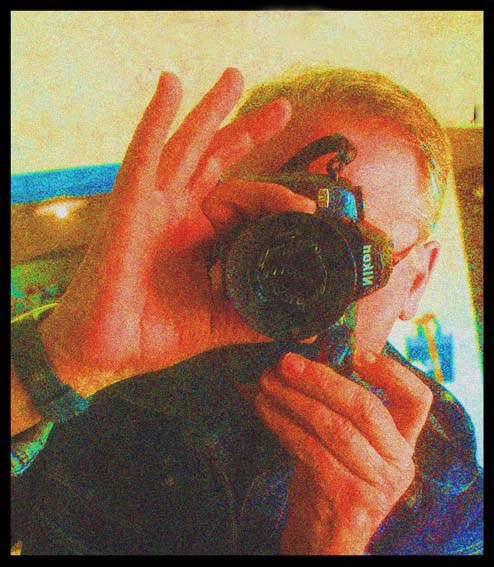
About Bruce Berman
Bruce Berman has been a professional photographer for over four decades. He works in what some have called, “The Concerned Photographer,” style of photography, but brings a poets vibe to his images. His initial documentary projects were in Chicago where he photographed Appalachian migrants to the big city, Black Panthers during the tumultuous 1960’s and the gritty street life of Chicago in its Rust Belt years.
His main work for the past forty years has concentrated on the United States/Mexico border, particularly the narrow stretch of land that encompasses El Paso, Texas and Juarez, Mexico. He also “plows” the southern New Mexico landscape, its people and the vast mysterious lands of West Texas.
After coming back from one of his earliest forays on Alameda Street on El Paso’ south side, in 1980, Berman wrote in his journal, “…I have seen a new world. It is both physical fact and mythical idea. It is a place with a line drawn through it and on each side of that line there are metaphoric mirrors that are reflecting back at each other, perhaps distorting each other, perhaps magnifying each other. It is the US/Mexican border. I will make my stand here. I will try to ‘give face,’ to this place so others can know it, perhaps, even, so those who live in it will know it more deeply.”
The aggregate result of that effort resides in two main bodies of work: The Border Project: 1985-2007, and Juárez: Cartel War Years (2007-2011) .
Additionally -concurrently- he is a chronicler of the disappearing lands beyond cities. He calls this series The Funklands, and notes, “Nothing is just laying around anymore. It’s scooped up, trucked away, rebuilt and becomes a mega buck treasure. My treasure has been the texture of the land and the stuff laying around that attests to who was on that land before… well.. before the homogenization of America.”
Berman lives and works deep in the borderlands of El Paso and Juárez, three blocks from the international bridge that connects Juarez and El Paso, surrounded by and isolated in the the vast lands of West Texas and northern Chihuahua. He refers to this as the “City-State of No Man’s Land.”
Berman continues to cover his “beat,” for major publications throughout the world and for his own book publishing enterprise. The Border Blog Press. His recent book, Walking Juárez is a compilation of photographs and stories covering the years 1975-2018.
Since 2008, Berman has added “Professor” to his name. He now teaches photojournalism at New Mexico State University (NMSU), 50 miles north of the El Paso/ Juárez ports of entry, in Las Cruces, NM. His teaching concentration is on Documentary Photojournalism and multimedia reporting. He still does occasional assignments and personal documentary work but spends equal time “Passing the torch,” he says.
Lately Berman has concentrated on doing books: Walking Juárez, 2017, Cutting the wire, 2019 and his newest, BACKLAND, 2022.
Many of his students don’t know about the border too much, but for the most part are of it. The G Generation, he says, “… are the hope of photojournalism, and maybe the world.”
He thinks working with them is his best project ever.
About the Website
The Border Blog covers the news, opinions and culture of the 2000 mile border of Mexico and the United States, concentrating on the epicenter of El Paso and Juarez. The Border Blog is not meant to be a news source as much as it is meant to be a news “feel.”
Another “border,” of interest to Berman is less obvious, the border between The Grid (his descriptor) and and those on the margins, unwilling or unable to keep up with “development,” and “progress.”
The site is a collaborative project. Besides Bruce Berman, who acts as editor and photographer and sometimes writer, the staff includes writer and painter, Juarez native and resident, Nathan Zarate, and, Beatriz Andino Zamora, a poet and writer from Zacatecas, Mexico. Zarate and Zamora post occasional articles concerning the politics and history of Mexico, in general and La Frontera, in particular. The site is always appreciative of the creative inspiration, brilliant chutzpah and deep goodwill -as well as extensive Web skills- of Manuel Rivera, a fronterizo “to the bone.”
Contributions to the site are welcome. Diverse viewpoints will be cherished. The site’s point of view and orientation will be no mystery to its readers, however, there will always be plenty of room and appreciation for other voices as long as they are informed, well articulated and sincere and fueled by passion tempered by reason.
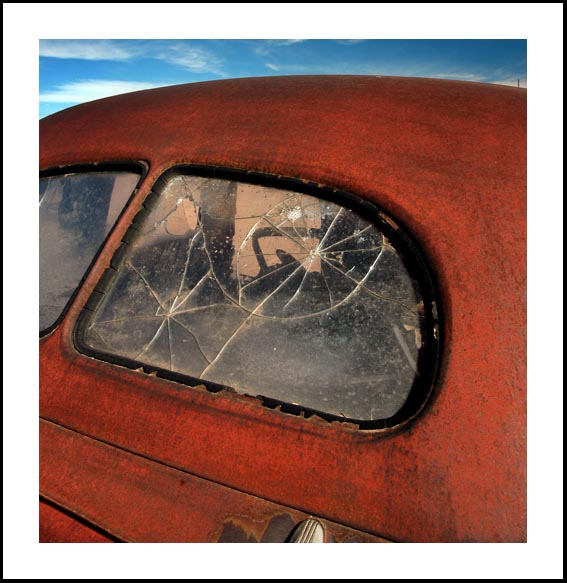
There I am, tooling through the vast landscape of West Texas, working for an English language newspaper working out of Abu Dubai, Arab Emirates. Don’t ask. I’m not sure I understand the assignment. Something about Bush returning to Texas and illustrating what two brothers, who were doing a road trip, saw (except, according to my editor, they were really bad photographers). What that has to do with West Texas, I can’t figure.
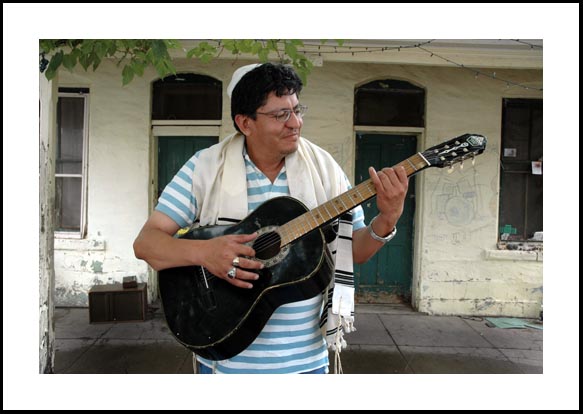
Why do I ever leave my loft?
Went to the gym where a friend of over three years, a retired professor at the local university, someone who has never displayed anything but kindness and goodwill, out of the clear blue, no warning, told me “…the Jews got what they deserved after all the stuff they did as bankers in Germany, don’t you think?”
Wha-a-a-a-a-a?!
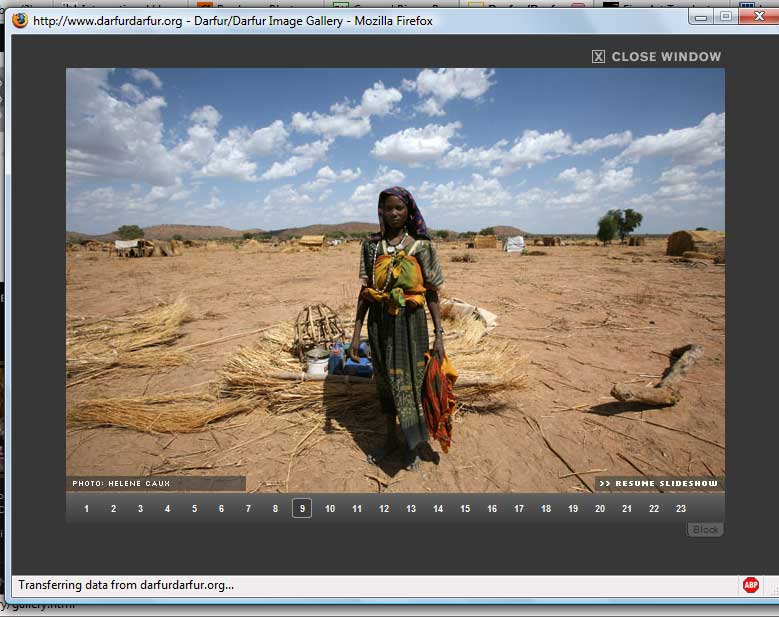

Please check out: An internationally touring multimedia exhibit on Darfur.
Darfur is another border between Europe and sub-Sahara Africa, between Muslim and Christian, between (whatever is left of) sanity and outright brutal lunacy.
Learn more from some of the world’s best photographers.
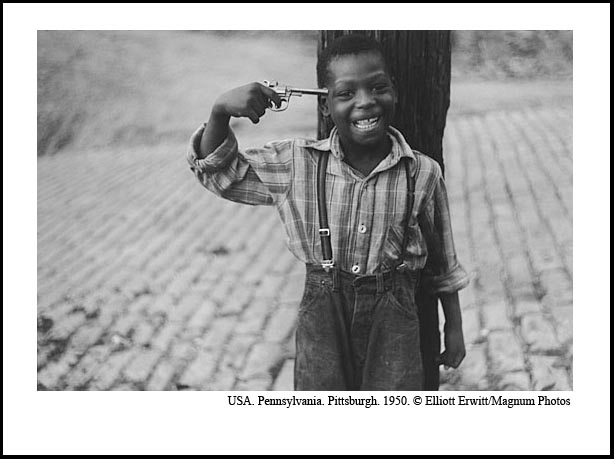
Editor’s note:
This is an interview with Magnum photo greats, Elliott Erwitt and Burt Glin.These are the oldest current members of Magnum, the great photography cooperative founded, in 1947, by Henri Cartier-Bresson, Robert Capa, Robert “Chim” Seymour and George Rodger. For a certain kind of photography -our kind- this is a group of top notch shooters with really interesting work. If one needed to summarize the “vibe,” of Magnum, the word we would choose is, “Humanistic.” We’d define that as a passion for telling the truth -visually and emotionally- about humanity, all of it, with a predisposition to the idea that, as Anne Frank said, “I still believe…most people are good.” Magnum shows the full range, always entertainingly. These two photographers, are its heart and soul and treasure.
April 22, 2008

Magnum’s reputation is not just based on extraordinary photography. What distinguishes the members of the photoagency, which was founded in 1947, is character. The legendary Magnum photographers Elliott Erwitt and Burt Glinn talk about moments of opportunity, courage, independence – and humor. This interview was conducted by Pia Frankenberg in December 2006 and was first published in Frankfurter Allgemeine Zeitung in January 2007.

USA. New York. Dance School. 1977. The image is from part of a photo story about “upper class” children getting dancing lessons and being taught the “social graces”. © Elliott Erwitt/Magnum Photos
Pia Frankenberg: Since when do you two know each other?
Burt Glinn: We first met in 1952 or ´53 I guess.
Elliott Erwitt: In the morning, I think.
PHOTO OF THE WEEK: April 11-18, 2008
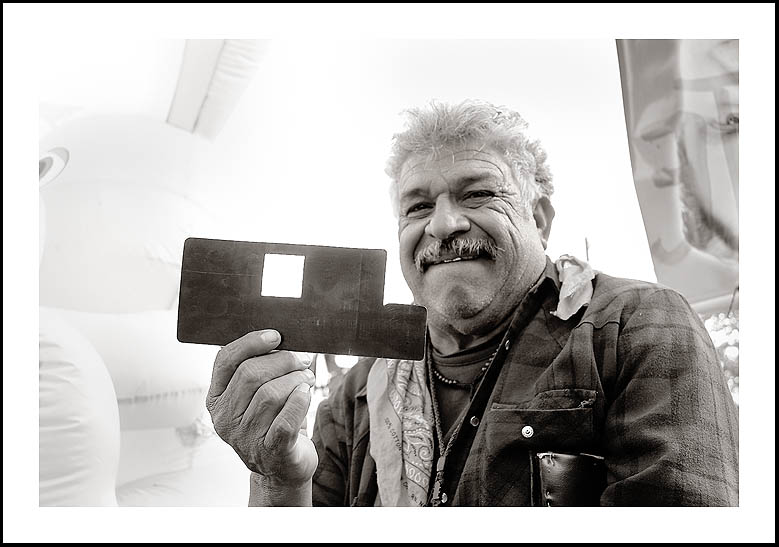
Polaroid Corporation announced in early February that they no longer will make Polaroid instant cameras or film.
This announcement, world wide was greeted, mostly, by a collective shrug of the shoulders and a “ho-hum.”
For Juarez street photographers the news was immediately alarming, living-threatening, and was a call to action for a new learning curve to transition to digital photography.
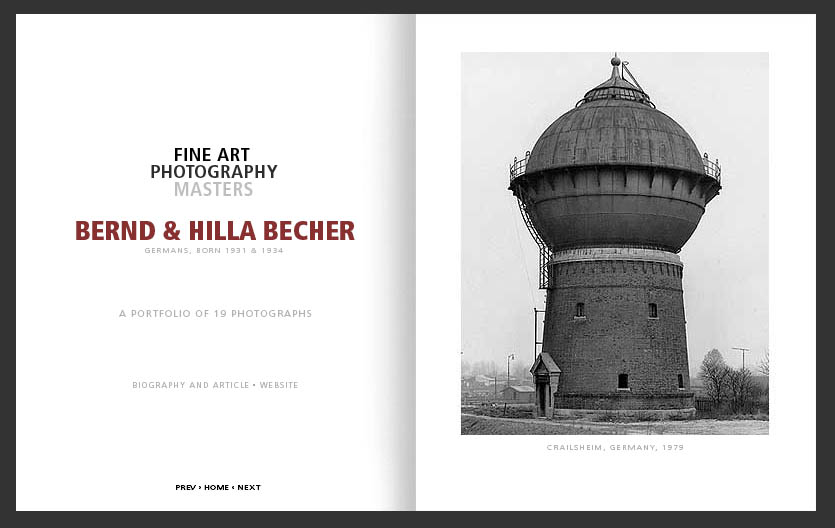
The mainstream of photography, from its inception, has been Documentary Photography, the straightforward act of visual description for distribution to an interested audience. Some would argue that its utility as a means of information has passed and that other media -video for example- serve that function in more effective ways.
Hog wash.
Still photography is the perfect abstraction of reality. It is based in reality, works best when trying to describe reality and becomes pure magic when used in the service of learning -usually beyond the control of the photographic practitioner.
Check out the new and updated Blogroll (right) and suck in the inspiration and knowledge that these documentary photographers provide. Nothing, for me, does information better than photography.
See and feel the work. That’s why it was created.
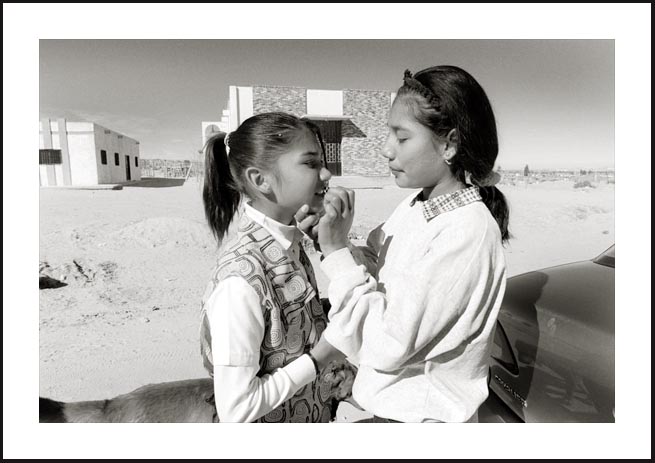
It’s the little moments that work for me.
It’s an exquisite privilege to disappear. It doesn’t always happen. It’s really great -for the photographer- when it does. Photography out in the open, in other people’s realities, nobody even noticing.
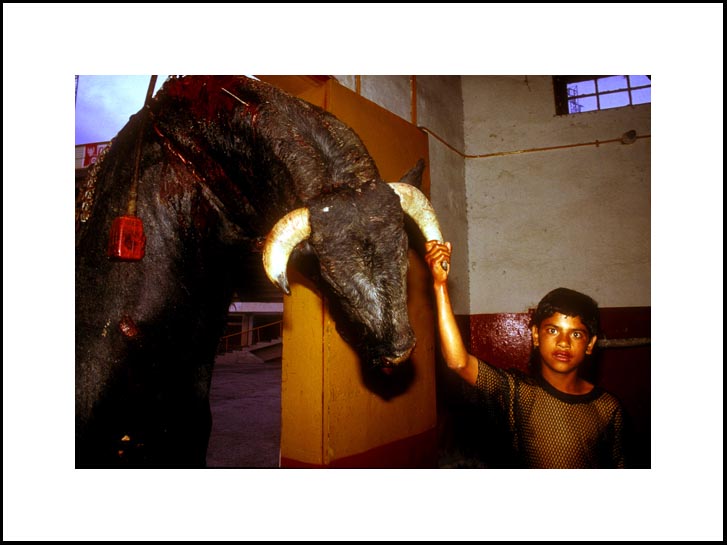
I’m a little weary of border politics, for now.
I return to the streets and hope the disorder of life gives me shape and form.
Politics and News seem to work on a linear arc.
Facts. Information. Plenty to tell. Endless detail and weight and nuance. Narrative is interesting but one of the things I’ve always liked about doing photography is the occasional punch in the gut you get from just being somewhere (often where you shouldn’t be).
Photography can work as a fact machine, but when it doesn’t and it’s just image, impression, reaction, light, when there is more than the sum of the parts, I like it the most.
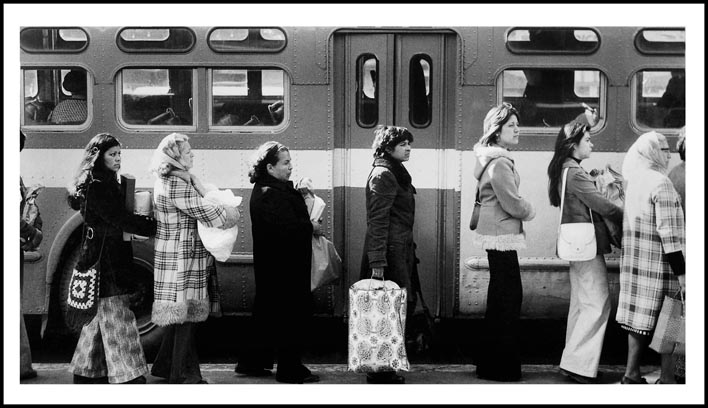
October 5, 2007
A funny thing about photography and time: it can capture milliseconds and it can capture decades, and all in the same photograph.
