Search results
18 results found.

On The Edge of the Edge – The U.S. – Mexico Border
18 results found.
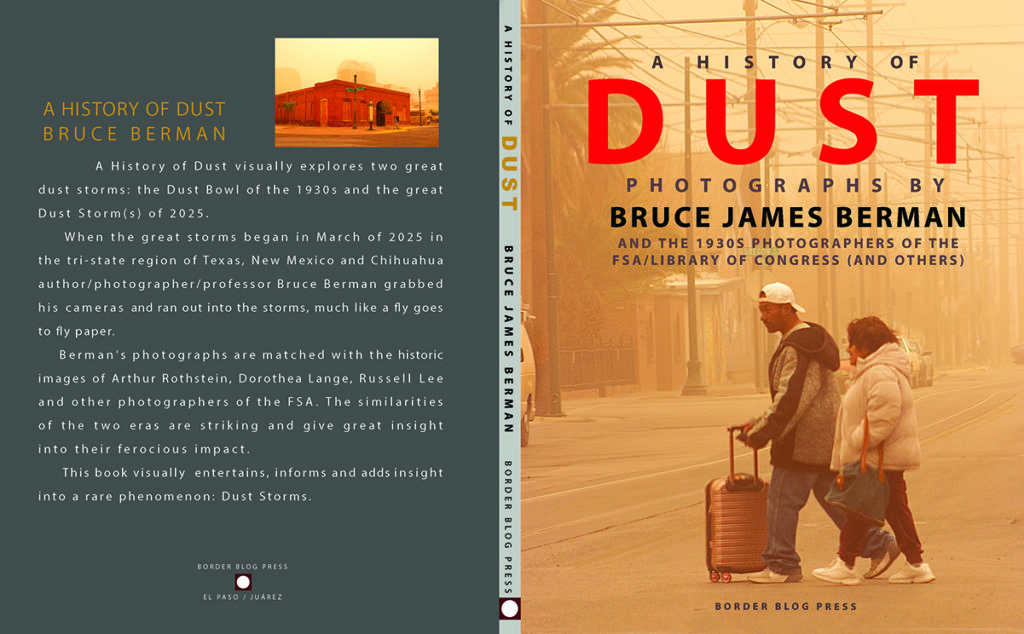
The HISTORY OF DUST book is out. Available on Amazon as of now.
The book explores two different major dust seasons, both record-setting: The 1930’s Dust Bowl and the 2025 tri-state Great Dust Storm, that enveloped New Mexico, West Texas and Chihuahua.
The book features the photography of Bruce Berman (2025) and the 1930’s FSA (Farm Security Administration) photographers of the Dust Bowl, including Dorothea Lange, Arthur Rothstein, Jack Delano and others. With quotes and narrative the book show the similarity of the storms but points out the differences as well.
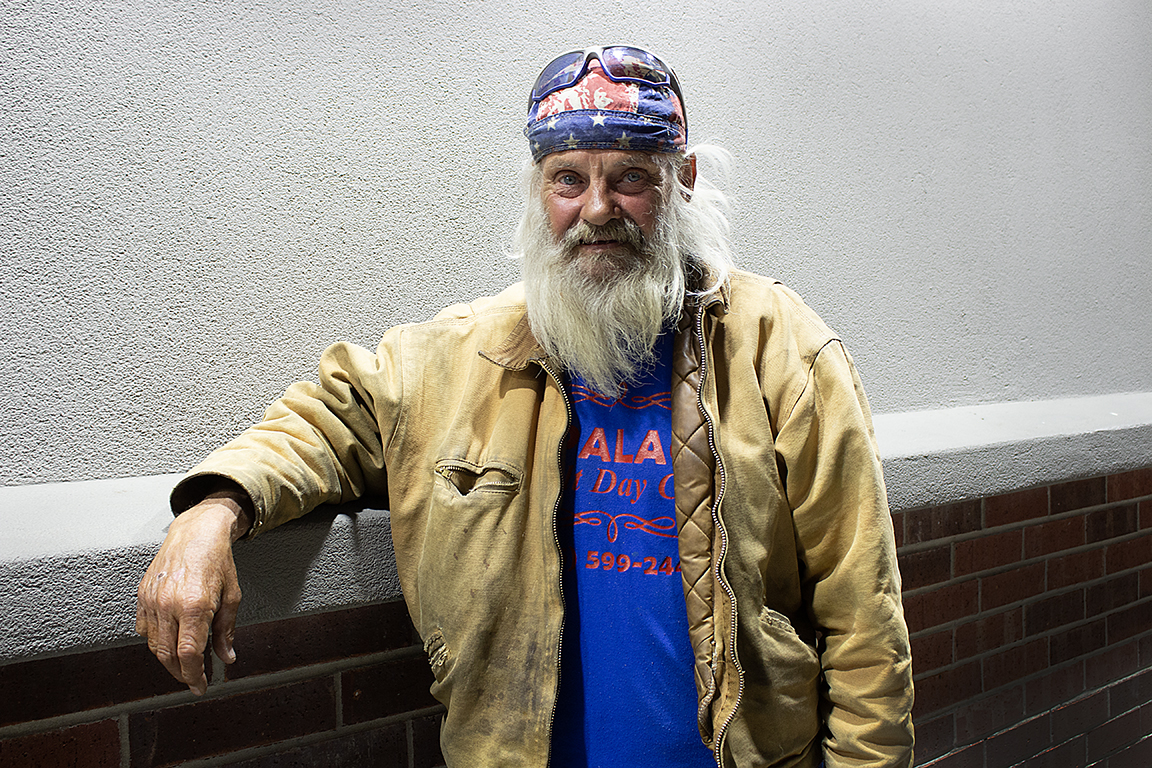
Ghost, Exit Zero, Anthony, Texas, May 18, 2023
Text and Photograph by Bruce Berman
This is the first photograph I’ve taken in a long time that actually means anything to me.
I’ve been a photographer for fifty-five years. So that’s kind of a sad statement, eh?
I’ve been teaching photography at New Mexico State University for the past seventeen years. It takes its toll.
All the energy I ever put into my own work and the work of the work that allowed me to live off of it gradually but inevitably goes into inspiring others to do what I used to do.
Anyone that teaches can tell you there are some great students that make it all worth it. They’ll probably also tell you there are a plethora of others that didn’t treasure the gift you gave. It’s part of “the biz.” You roll with it.
I do think there comes a time, a rubicon, where your own creative desires become endangered. It’s not just the endless repetition about the mechanics, and the history and the nuances of doing photography, it’s also the endless drivel of academia, the business of being in a university, the committees that mean nothing to me personally, seemingly a bubble of detachment from reality, the occasional obscenity of human behavior, acting so massively vicious because, the stakes are so low. Politics are vicious and low. The feeling of irrelevance can be very high.
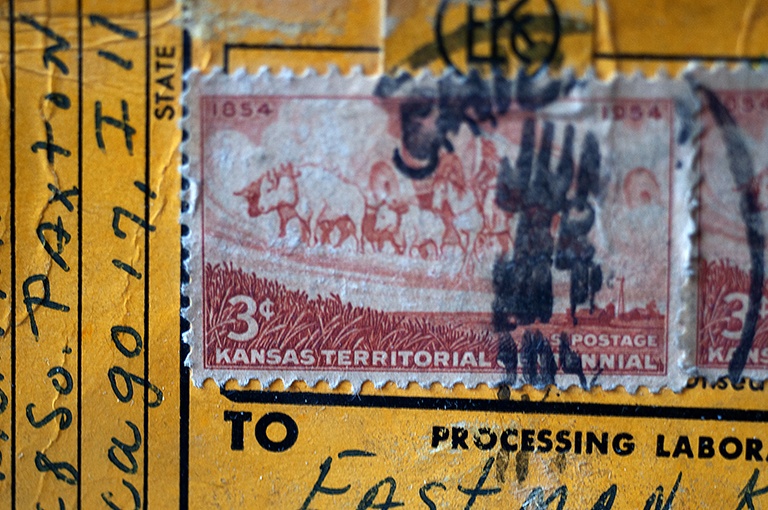
Cancellation #93, Mom’s Kodak film, Chicago, 1950s
I once did an entire series of photographs called “Cancellations.”
It started because one day I was looking at a stack of shipping boxes of my photographs that I had sent to various galleries and museums (pre Internet) that had been summarily rejected. Thanks. No thanks, return to sender. There were a lot of stamps on those heavy boxes. The post office cancellations were ruthless, slashing, colorful. It’s like the post office knew I was unworthy, as well. I half jokingly wondered if the galleries hadn’t done it themselves.
I got lucky here and there, exhibited them for awhile. Dallas. Houston. Cologne, Germany. The art world thought they had found a new star. I knew I was a fraud.
Opinion/Observation
by Co-Editor Bruce Berman
___________________
I drive my old routes. Camera on the passenger seat or my lap. As always, these days it usually stays there, untouched. There are things along the way that spark memories. Object that aren’t there anymore. Gorgeous commercial signs constructed by craftsmen in the 1950s and 60s (not the least of which from the Jimenez Sign Company) were carted off to other cities that were twenty years ahead of El Paso in their bourgeoisie ambitions.You can drink under some of El Paso’s “Motel, Vacancies,” signs in various bars from Austin to Houston to Baton Rouge. There’s a withering away now, aging and weathered, but mostly not endearing anymore, not worth stopping for (to make images). There came a year, a month, a day when the treasures of El Paso were either gone, carted off or just left to rot.
There are whole swaths of this incredible and authentic city that are gone, at least for the long gaze of a photograph: Alameda. El Centro (downtown). Segundo is shrinking fast, bordered by El Paso Street on the west (with nasty tentacles of them all over it) and Cotton on the far east, with old residents living out their days, youth getting out fast and them with their bulging eyes all over it. Off of Delta there are condominiums and some revamped industrial buildings, residents living an almost urban lifestyle (sans humanity). Even the Gay Bars have fled, a sure sign of urban renewal/removal.
It’s not my job to do anything about any of this. My job, as I saw it, at the beginning, in 1980, was to give face to a face that was not known and I have tried. As The Grid lays out its future in the city with two hearts, it’s clear to me that my mission isn’t to pick sides in land rights, power exchanges, or to watch -or judge- the inevitable blandification. But blandification has come. Oh happy day. Some loudly exhale and go, finally! The city is becoming presentable to visitors again. It’s cleaner. It’s newer. There’s baseball. Soccer is coming (watch out Chamizal! The final blow that started in the mid 1960s is finally here). There are restaurants with the preface Le with Foo Fo thing-a-ma-jig dishes with little portions of things that look like they squiggle -vegetables- on top of things it’d be hard to identify below. Fancy. Plates of Foo Foo. There are young people downtown again, well, the kind of young people that look like they’d also be comfortable up in Kern Place on Cincinnati and the upper Westside.
Finally, there’s a Starbucks downtown near the Plaza and the Westin. The kids from the ‘hood can serve the hipsters that come in from outer Zaragosa Road and beyond.
Boring? Not to everyone and I wish them the best. I am not part of this. I left this scene in three other places I lived before this very long stretch here. It’s the same message: you’re in the gentry or you’re equitied out of the gentry.
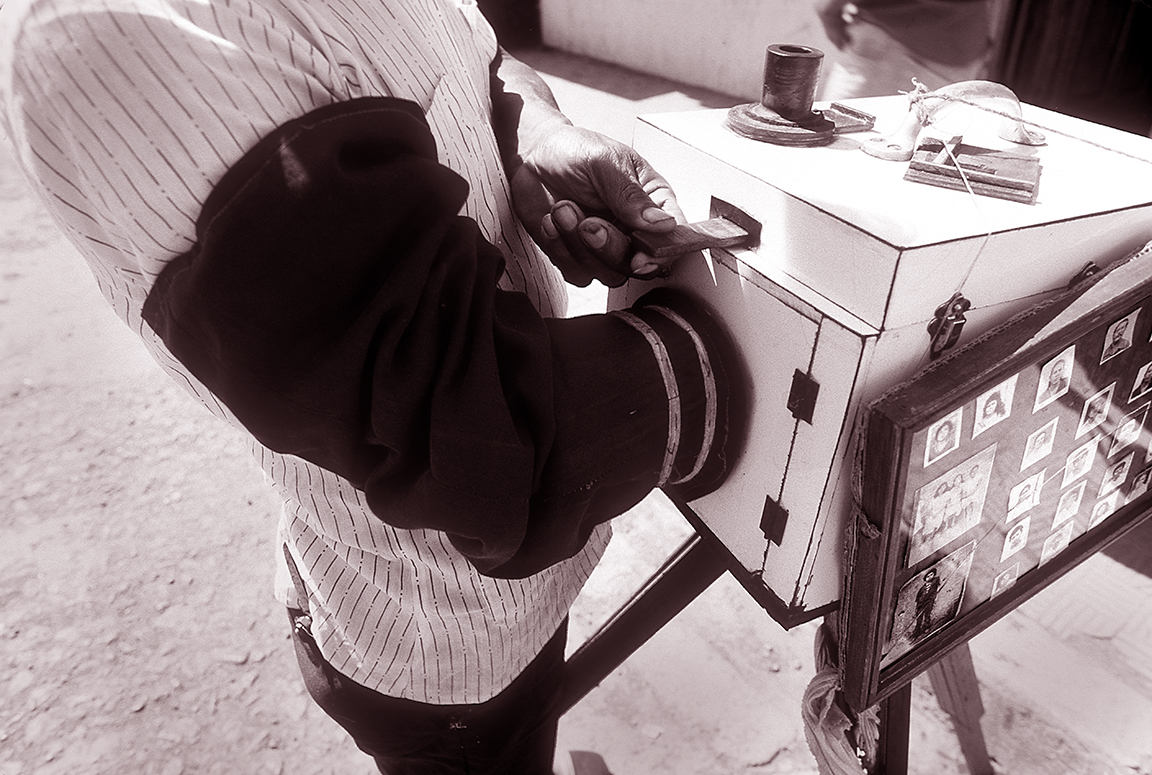
This photographer in the Plaza of Granada in Nicaragua is developing a portrait that he just made. Inside the box are the normal developing chemicals of Developer, Fixer. Once he has the photograph captured -on portrait size paper- he goes inside the camera through the light tight sleeve and goes from one mini tray to the next until he has the image “fixed.” He then pulls the photograph out and washes it on a tray of water that he has set up in a little bucket attached to the tripod under the camera.
His process was not as fast as the 60 second time for a Polaroid, but, close!
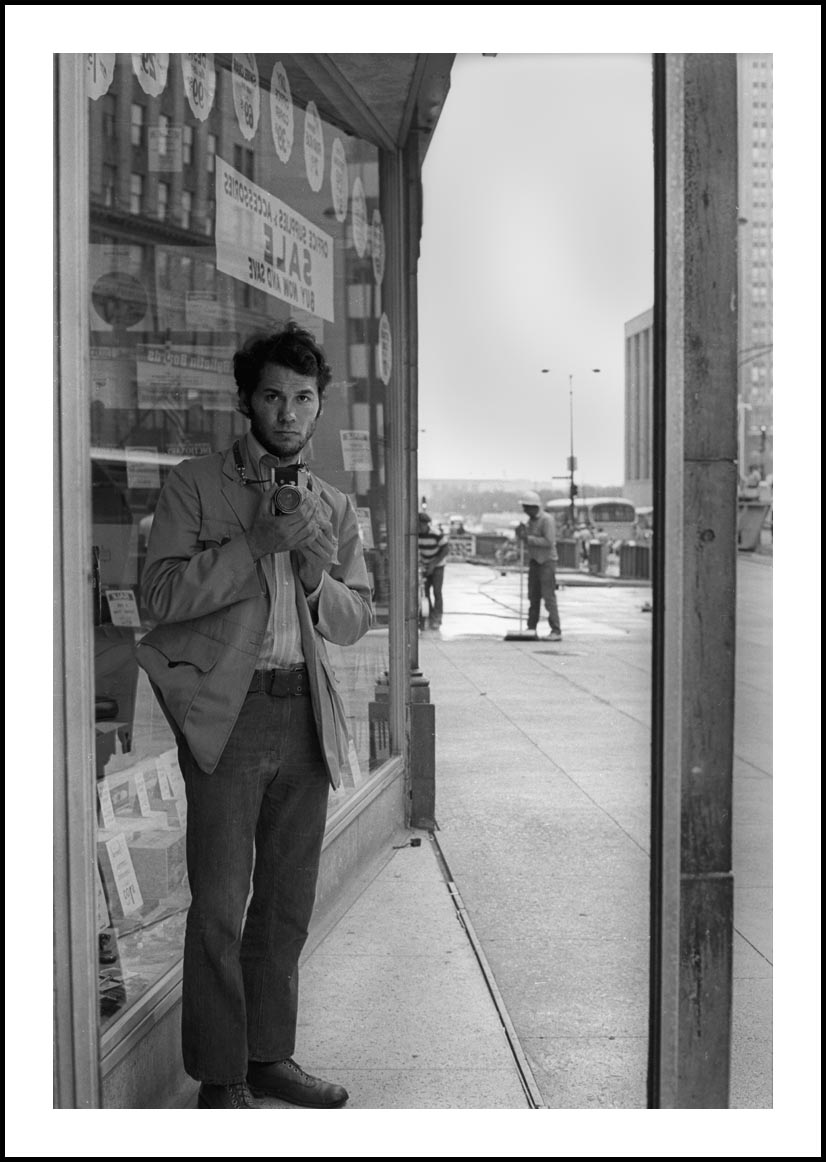
Garry Winogrand. Off kilter. Off beat. And right on in capturing the milliseconds of the oblique.
Watch this video and think about Garry lassoing the non-monumental. He was a wild puppy and full of life. Just enjoy the fun.
A memoir: Meeting Garry Winogrand
by Bruce Berman
Garry was a photographer and a winner of prizes: three Guggenheim Fellowship Awards (1964, 1969, and 1979) and a National Endowment of the Arts Award in 1979. He was a street guy and he was, most of all, a New Yorker. His photos reek “NYC.” He was hugely famous and revered in the 1970s and 80s.
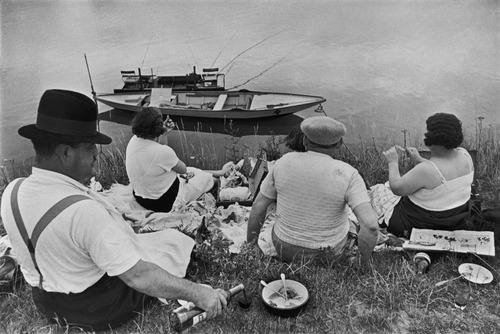
Is Photojournalism Dead Yet?
by Steve Ettlinger
Born in the 1930’s, come of age in the 1950’s and 60’s, and pronounced near dead in the 1970’s and virtually buried by the closing of magazines/rise of the internet–you have to wonder how it is that some aspects of this wonderful world are still around.
Pictures?
More pictures of dead bodies in the streets of Juárez?
Hard to want to do. I’m not visiting. I live here. It’s better when you have to get the images for your boss/editor and then high-tail it to the airport.
But, I’m not working for a daily paper anymore.
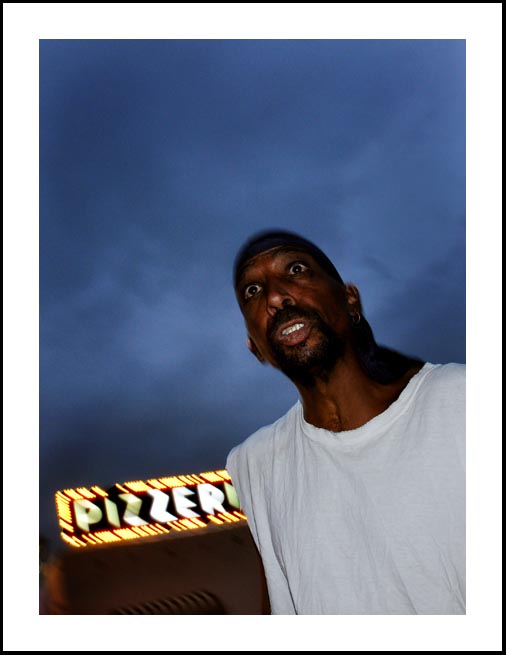
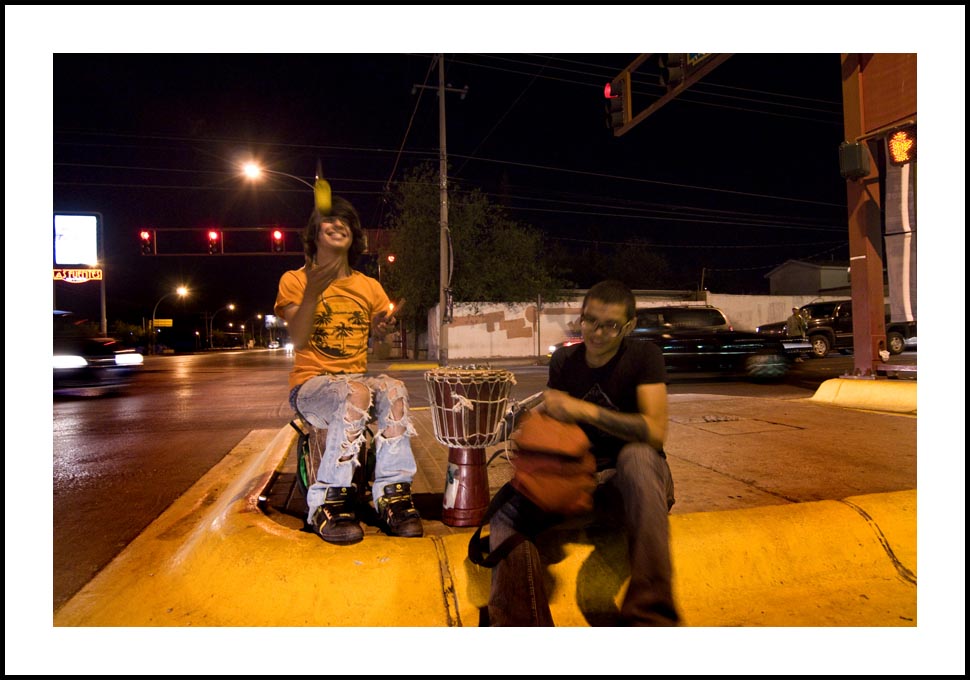
Been thinking about this guy and borders and the idea of the Big Picture versus the small picture ever since I made it (the photo) this summer, on an almost rainy night, in the northeast section of town, out by the military base.
John Hughes.
Angry. Joyous. Funny. Dangerous. Sweet. Full of love, hate and ambivalence. Boozed up, half mad, half brilliant.
“I am free,” he shouts at the night. “I am free and I am in hell.”
I ask him if he ever goes across the border?
“I am borderless,”he replies, “aren’t you?” He shakes his hand and does a twirl, almost stepping into busy Saturday night traffic.
He does a little dance and steps so close to the edge of the curb that I go to grab him but he spins back onto the sidewalk and does a very theatrical bow. He is a tight rope walker and it looks like he has done this toe dance forever.
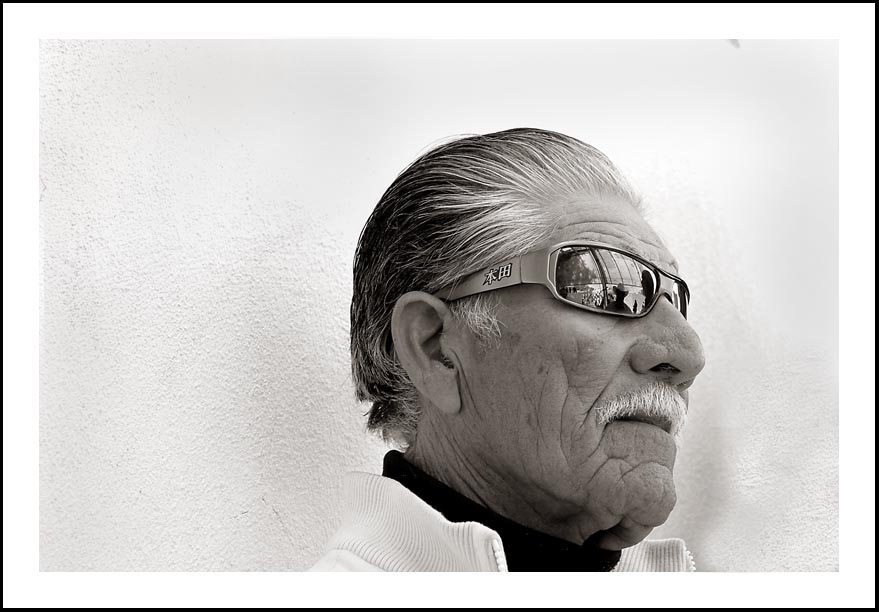
Juarez/13 June 2009
So what else is there in Juarez besides murder and catastrophe?
Right now, it doesn’t seem like anything.
But, then, there are those moments.
Tender Mercies.
I walk the streets. I walk the beaten down downtown. I bus through the factory landscape with For Lease signs more plentiful every time. I walk through the night clubs on Avenida Lincoln, defying myself, defying my fear.
But it’s there. The noise comes out of the clubs, loud, but not the joyous sound, more like the power-driven sound of defiance and booze.
People wait for the situation to end. It will. Someday.
Daily, the murder rate climbs, like an upward missile, slicing through the inherent good nature of this state and city, through this sunny northern Mexico metropolis that was turned into, first, a factory for first world consumption and, then, a monument to the future of world global wage reality. It was that, just a few years ago.
Seems like an entire epoch ago.
The great Brazilian photographer Sabastio Salgado talks about his work. He is one of the premier “Socially Concerned,”photographers in the world:
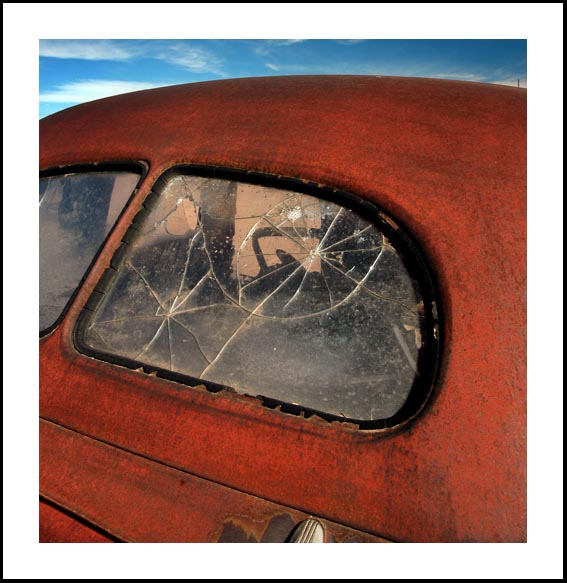
There I am, tooling through the vast landscape of West Texas, working for an English language newspaper working out of Abu Dubai, Arab Emirates. Don’t ask. I’m not sure I understand the assignment. Something about Bush returning to Texas and illustrating what two brothers, who were doing a road trip, saw (except, according to my editor, they were really bad photographers). What that has to do with West Texas, I can’t figure.
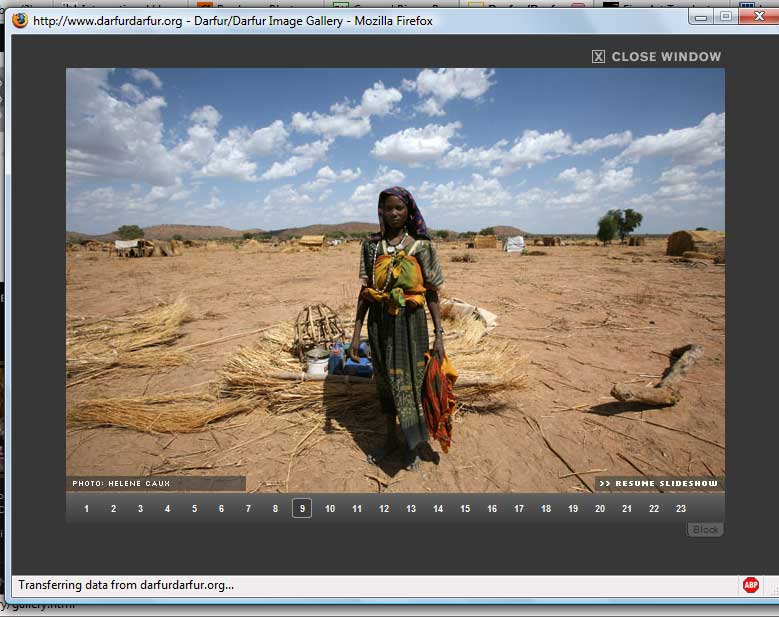

Please check out: An internationally touring multimedia exhibit on Darfur.
Darfur is another border between Europe and sub-Sahara Africa, between Muslim and Christian, between (whatever is left of) sanity and outright brutal lunacy.
Learn more from some of the world’s best photographers.
Editor’s note:
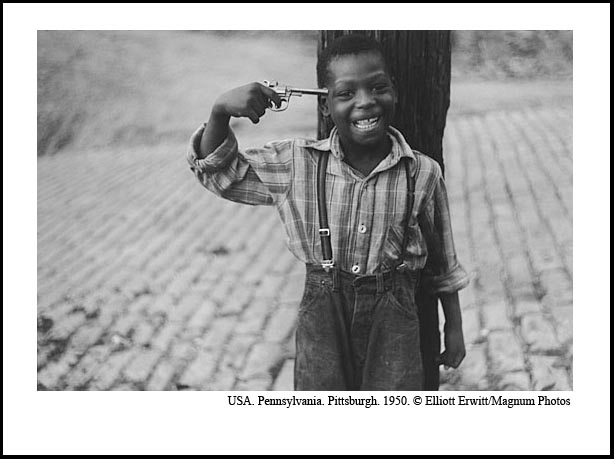
This is an interview with Magnum photo greats, Elliott Erwitt and Burt Glin.These are the oldest current members of Magnum, the great photography cooperative founded, in 1947, by Henri Cartier-Bresson, Robert Capa, Robert “Chim” Seymour and George Rodger. For a certain kind of photography -our kind- this is a group of top notch shooters with really interesting work. If one needed to summarize the “vibe,” of Magnum, the word we would choose is, “Humanistic.” We’d define that as a passion for telling the truth -visually and emotionally- about humanity, all of it, with a predisposition to the idea that, as Anne Frank said, “I still believe…most people are good.” Magnum shows the full range, always entertainingly. These two photographers, are its heart and soul and treasure.
April 22, 2008

Magnum’s reputation is not just based on extraordinary photography. What distinguishes the members of the photoagency, which was founded in 1947, is character. The legendary Magnum photographers Elliott Erwitt and Burt Glinn talk about moments of opportunity, courage, independence – and humor. This interview was conducted by Pia Frankenberg in December 2006 and was first published in Frankfurter Allgemeine Zeitung in January 2007.

USA. New York. Dance School. 1977. The image is from part of a photo story about “upper class” children getting dancing lessons and being taught the “social graces”. © Elliott Erwitt/Magnum Photos
Pia Frankenberg: Since when do you two know each other?
Burt Glinn: We first met in 1952 or ´53 I guess.
Elliott Erwitt: In the morning, I think.
PHOTO OF THE WEEK: April 11-18, 2008
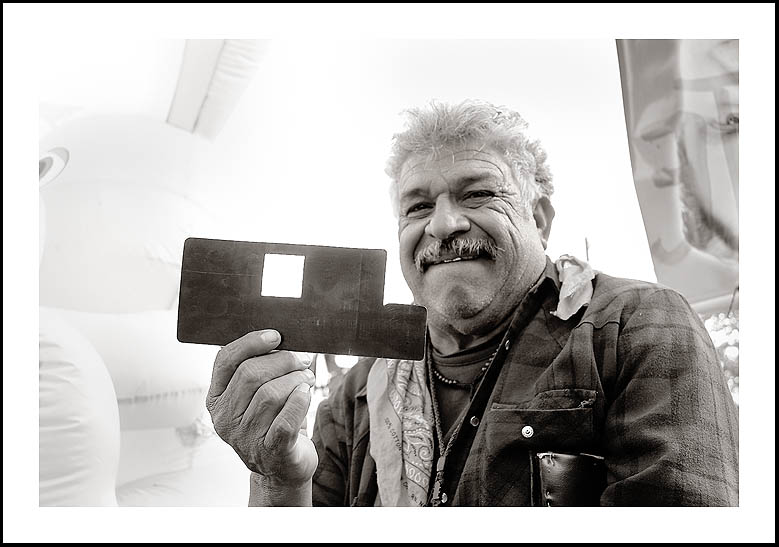
Polaroid Corporation announced in early February that they no longer will make Polaroid instant cameras or film.
This announcement, world wide was greeted, mostly, by a collective shrug of the shoulders and a “ho-hum.”
For Juarez street photographers the news was immediately alarming, living-threatening, and was a call to action for a new learning curve to transition to digital photography.
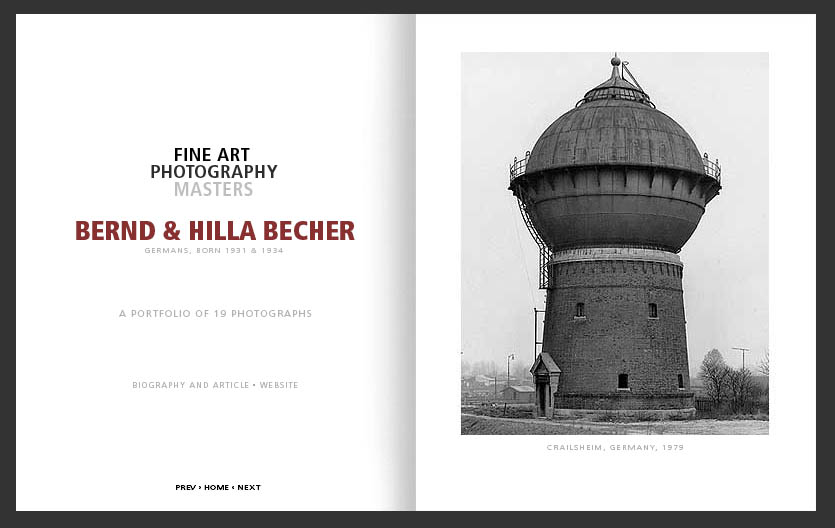
The mainstream of photography, from its inception, has been Documentary Photography, the straightforward act of visual description for distribution to an interested audience. Some would argue that its utility as a means of information has passed and that other media -video for example- serve that function in more effective ways.
Hog wash.
Still photography is the perfect abstraction of reality. It is based in reality, works best when trying to describe reality and becomes pure magic when used in the service of learning -usually beyond the control of the photographic practitioner.
Check out the new and updated Blogroll (right) and suck in the inspiration and knowledge that these documentary photographers provide. Nothing, for me, does information better than photography.
See and feel the work. That’s why it was created.
October 5, 2007
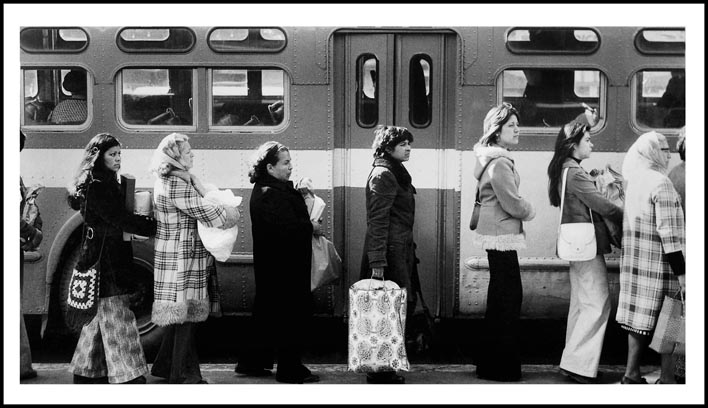
A funny thing about photography and time: it can capture milliseconds and it can capture decades, and all in the same photograph.
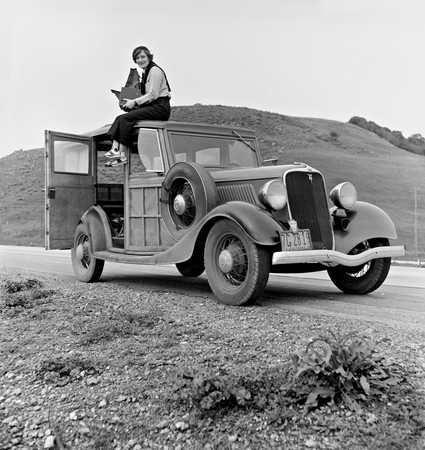
Photograph of Dorothea Lange,
Resettlement Administration photographer,
in California, c. 1936
The car is a 1933 Ford Model B (AKA “V8”).
She is -as well as Russell Lee and the other FSA photographers- the spiritual “Godmother,” of this site.
_______________________________
This is a picture of Dorothea Lange, at work. She was one of my earliest influences (the other was Weegee).